Contents · About 7 min read
- Gallowgate: the road that once led to the gallows
- Why Sela left and Coca-Cola stepped in
- Reading the Stack through visitor and operating numbers
- Space and F&B: the two faces of a container park
- Ad inventory: a two-layer sponsorship structure
- Friction with local businesses, and a trip to court
- A comparison with the KBO and K League
📱 View as card news
Last month I wrote about how Newcastle United had signed a new shirt sponsorship deal with KNOX, replacing Sela, the company tied to the club’s ownership group.
Less than a month later, another Sela-related story surfaced. This time it’s not about the shirt but about a space just outside the stadium: St James’ Stack, sitting on Strawberry Place by the Gallowgate End of St James’ Park.
On September 24, Coca-Cola was announced as the venue’s new partner.
Let’s clear up a point of confusion first. Newcastle’s home ground is still called St James’ Park, and it carries no corporate name at all.
Since the PIF consortium’s takeover in 2021, the club has stripped away the Sports Direct branding and revived the original-era clubname signage, going out of its way to keep the stadium name traditional.
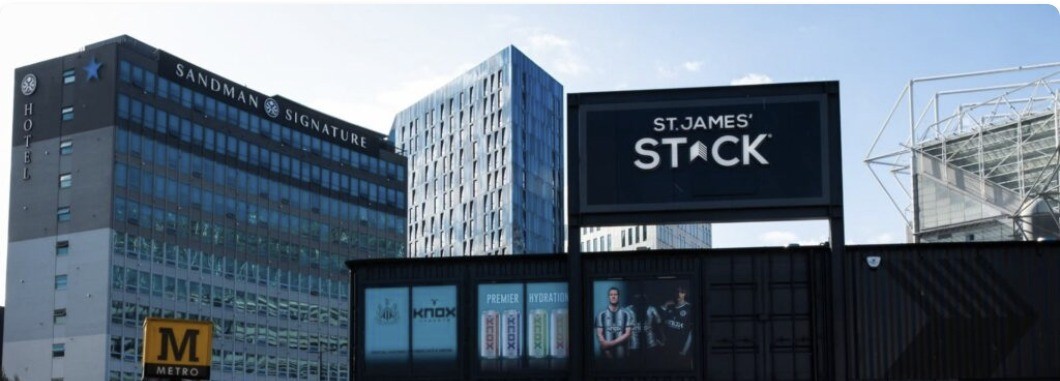
St James’ Stack, on the other hand, isn’t part of the stadium building itself — it’s a separate structure built from stacked shipping containers right next door, under the overhang where the Gallowgate End stand’s roof extends. So the Stack isn’t part of the ground; it’s an independent commercial space attached to the stadium’s outer wall, which is why anyone can walk in without a match ticket.
Gallowgate: the road that once led to the gallows
The name “Gallowgate,” where St James’ Stack sits, has its own story. It literally means “the road to the gallows,” and it’s old enough to appear in written records as far back as 1378.
Convicted prisoners were actually marched along this road to the gallows on Town Moor, and between 1650 and 1829, 44 people were executed there. The last public execution took place in 1844 — meaning the name was still grimly literal well into the mid-19th century.
Today, part of that same road holds a memorial garden for the late Sir Bobby Robson, and right next to it, the Stack draws crowds every night with live music and cocktails.
The same patch of ground has served completely different purposes across a few centuries — knowing that a road once walked toward the gallows is now a road football fans walk down for a pint gives this neighborhood a different feel entirely.
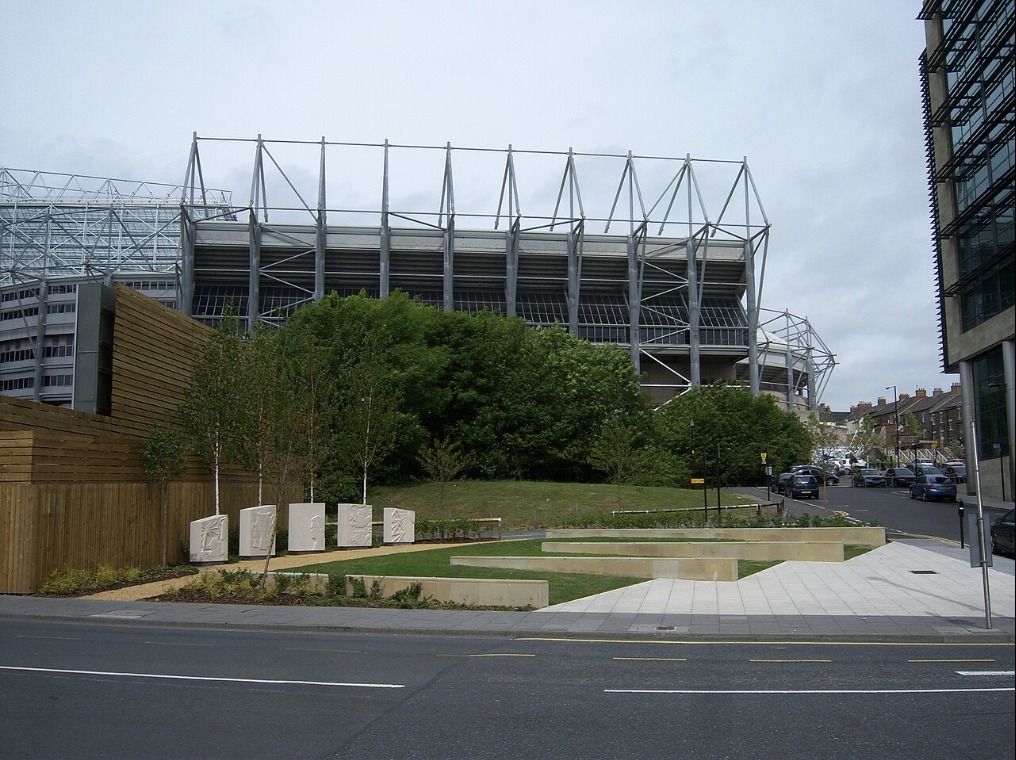
Source: Wikimedia Commons, photo by Ultra7, Public Domain · Sir Bobby Robson memorial garden
Why Sela left and Coca-Cola stepped in
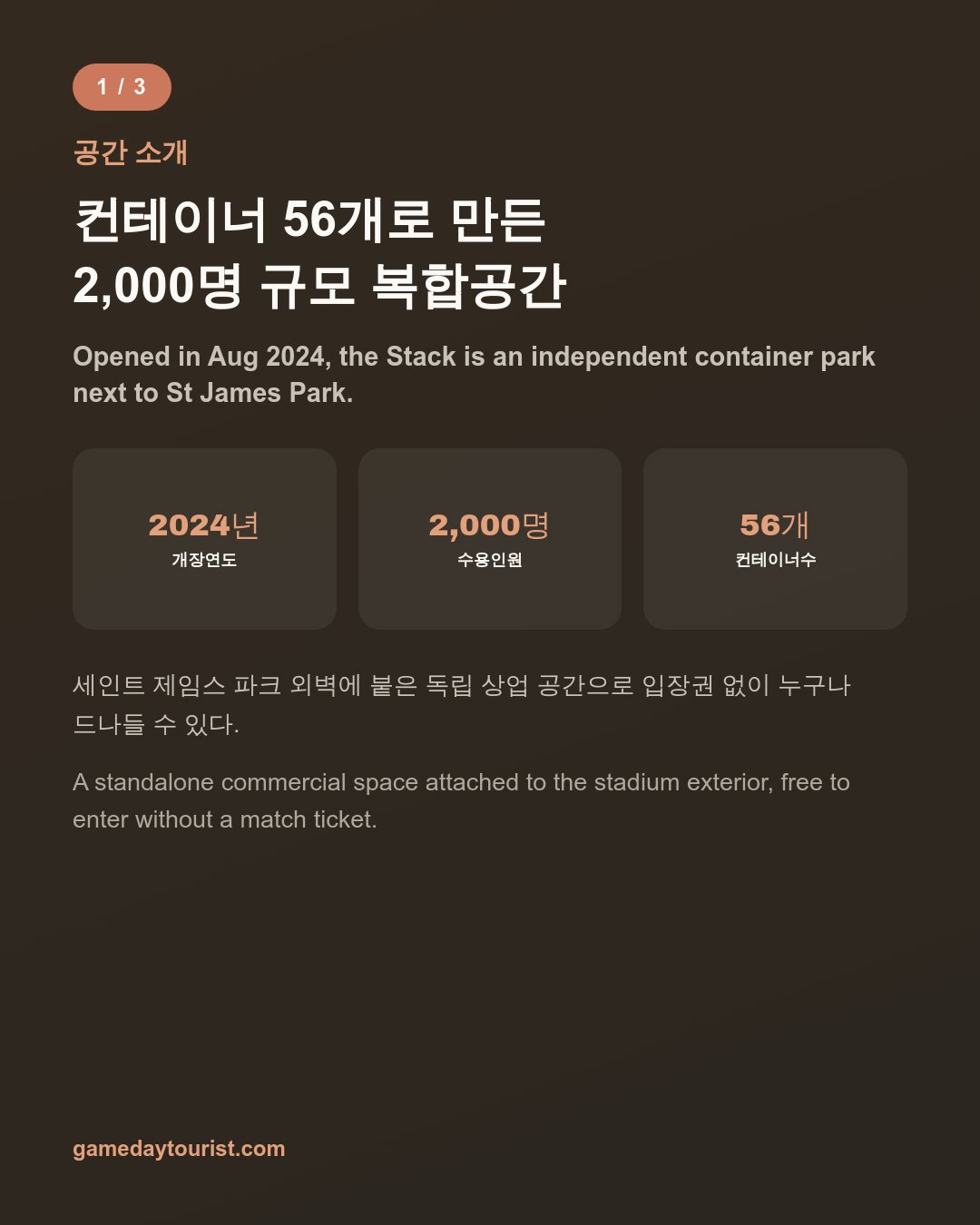
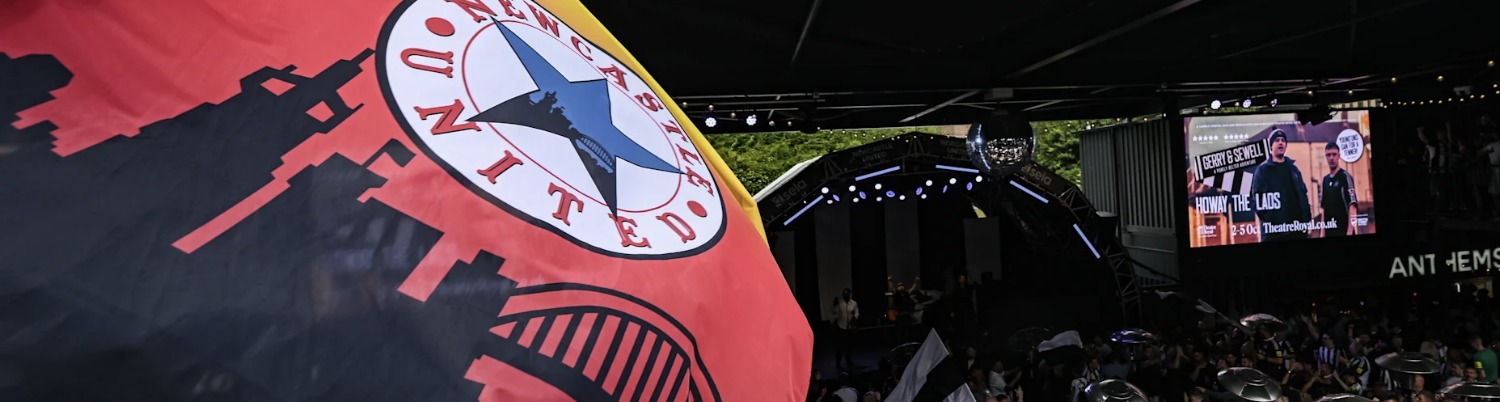
St James’ Stack is a 2,000-capacity venue that opened in August 2024, built from 56 stacked shipping containers and packed with a stage, big screens, and multiple food and drink outlets.
At launch it carried the name “St James’ Stack, presented by Sela” — Sela being the Saudi events company tied to PIF through shared ownership, which was also Newcastle’s shirt sponsor at the time, as covered earlier.
That three-year deal simply ran its course this summer, and Sela’s Chief Experience Officer released an official statement expressing fondness for the club as the partnership ended. KNOX has taken the shirt slot, and this time Coca-Cola has stepped into the Stack’s presenting-partner role.

Source: Newcastle United’s official website, Coca-Cola partnership announcement image (September 24, 2026)
What’s interesting here is that Coca-Cola is already the Premier League’s official drinks partner league-wide. Coca-Cola signed a three-year deal with the Premier League in May 2025, holding official soft-drink partner status across the whole league from 2025-26, and now it has layered on a separate, multi-year deal with an individual club on top of that.
It’s not common for a league-wide sponsor to also sign a separate deal for one specific space at an individual club. Newcastle’s chief commercial officer Dave O’Connor said the partnership would “celebrate everything that makes Newcastle a proud, distinctive city — football and personality, music and culture, and above all, a sense of festival.”
Reading the Stack through visitor and operating numbers
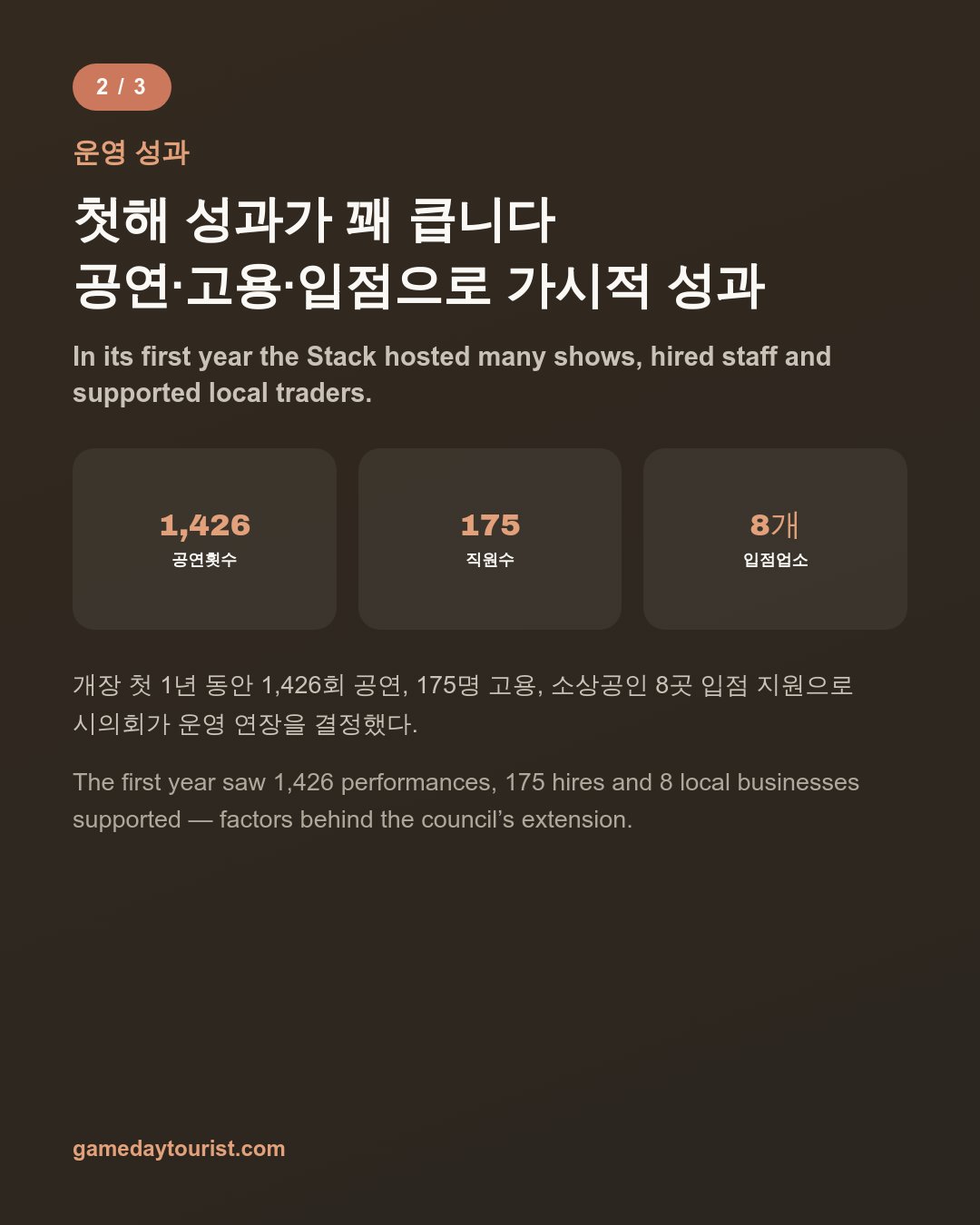
The Stack’s numbers are sizeable. The club says the venue hosted 1,426 live performances in its first year, employed 175 people, and supported 8 small local businesses in setting up shop there.
On the strength of that track record, Newcastle City Council extended the venue’s operating permission in June 2025, from the original three years to a further five, running through 2031. It’s also worth noting the venue isn’t limited to matchdays — it runs seven days a week, 10 a.m. to midnight, functioning as a permanent fixture rather than a matchday-only space.
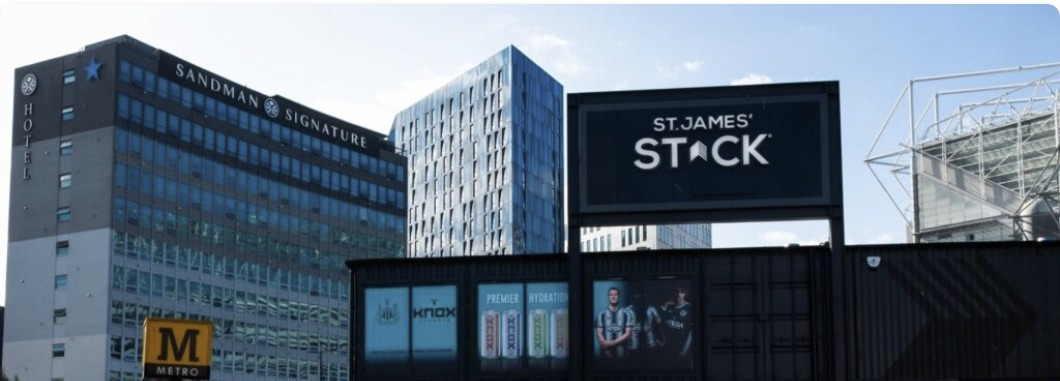
Source: The Stadium Business, St James’ Stack exterior (reported September 25, 2026)
Space and F&B: the two faces of a container park
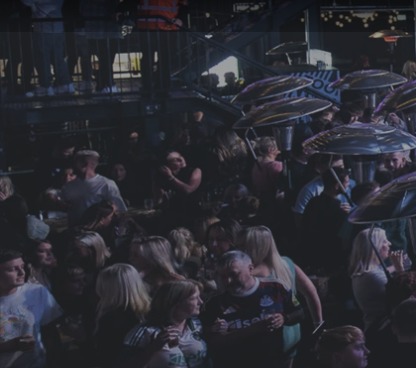
A local matchday-review site has a number of visitor comments about the Stack, and the split in opinion is telling.
Plenty praised it — “so many food options you can pick whatever you’re craving,” “the live music always makes for a good atmosphere” — but there were complaints too: “it gets really crowded on weekends and matchdays,” or “even with the patio heaters, your head’s hot and your feet are freezing.”
It reads like a venue that’s popular enough to get crowded while still carrying the basic limitation of being an outdoor space. From a marketer’s perspective, the plan seems to be offsetting that weather vulnerability with live music, big screens, and touches like a disco ball.
Source: St James’ Stack’s official website
Ad inventory: a two-layer sponsorship structure
Look at the container walls and the Stack’s sponsorship structure is right there to see. The Coca-Cola logo sits next to the KNOX brand, and as covered earlier, KNOX is also the sponsor behind the shirt deal and the training-ground naming rights.
That means one single space carries both a shirt sponsor (KNOX) and a presenting partner (Coca-Cola) at once — and with a global brand like Coca-Cola buying activation rights at the club-and-venue level separately from its league-wide sponsorship, it’s a clean example of a commercial model that slices ad inventory into multiple layers to sell separately.
Friction with local businesses, and a trip to court
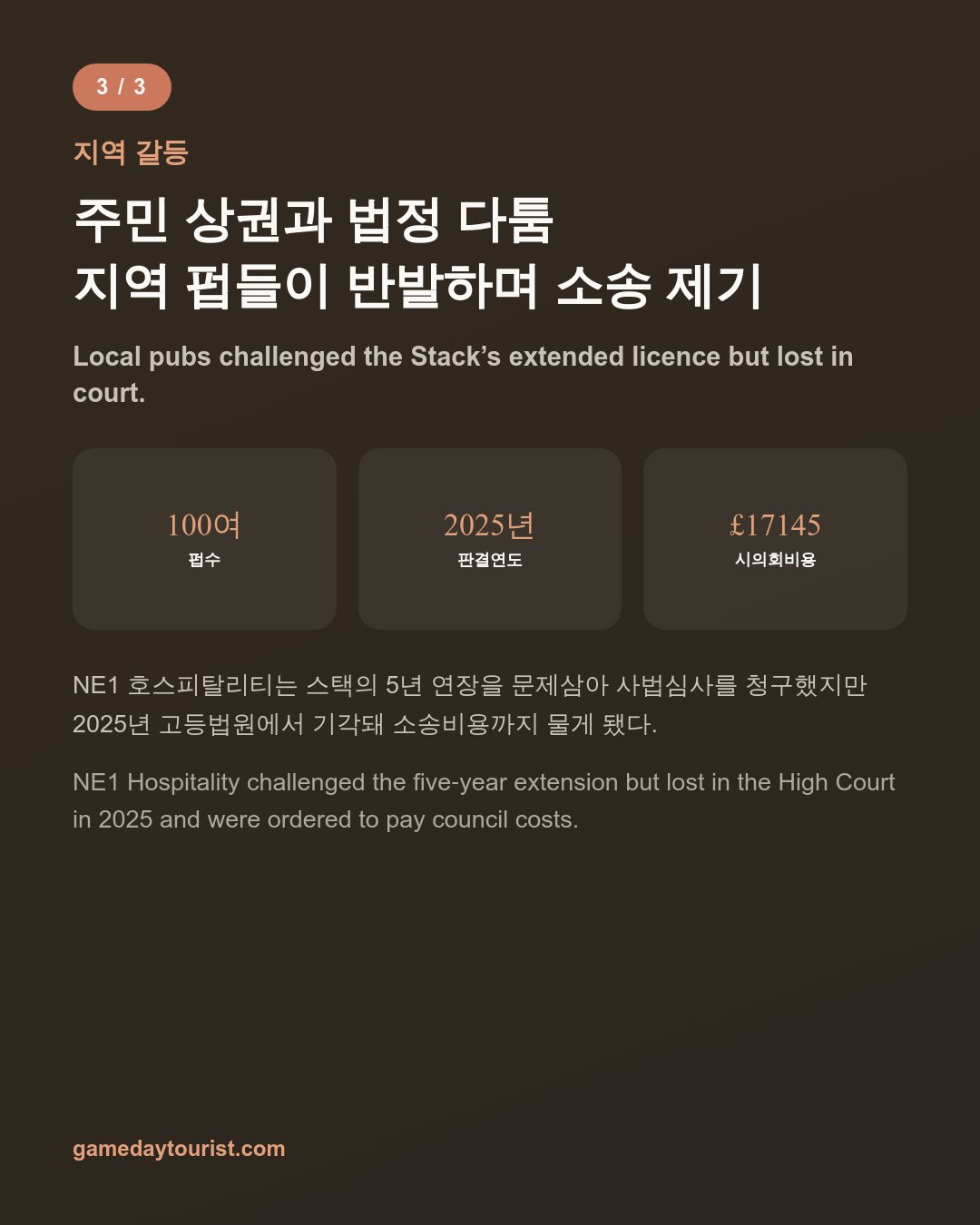
The Stack’s run hasn’t been entirely smooth. In August 2025, NE1 Hospitality, a group representing over 100 pubs and bars across Newcastle city center, filed a judicial review (a legal process where a court examines whether a public body’s decision-making process was lawful) arguing that the council’s decision to extend the Stack’s operating permission by five years was unlawful.
Their argument was that “this isn’t growth, it’s displacement — the Stack is taking customers away from the very venues that built Newcastle’s hospitality reputation,” pointing specifically to the fact that the Stack operates seven days a week rather than only on matchdays.
The case was dismissed by the High Court in December 2025. The judge ruled that any challenge should have been raised back when the original permission was first granted in 2023, finding for the council and ordering the claimants to pay the council’s legal costs of £17,145 (about ₩30.9 million at the September 28 rate of £1 = ₩1,802).
Since that ruling, the Stack has expanded rather than pulled back, opening a second city-center location on Pilgrim Street.
Source: Newcastle United’s official website, image related to St James’ Stack’s five-year extension (June 2025)
A comparison with the KBO and K League
I haven’t yet come across a case in Korea where a club builds a permanent commercial space of its own right outside the stadium and ends up in court with local business owners over who gets to run it.
If anything, the beneficiaries of this season’s attendance boom in Korea seem to be the surrounding neighborhood businesses rather than the clubs themselves, according to a domestic news report. Around Daegu Samsung Lions Park, short-term hiring postings this spring rose 34% year over year, the largest increase nationwide, with similar upticks reported around Jamsil Stadium (24%) and Gwangju-Kia Champions Field (22%).
Newcastle’s model, where the club directly owns and operates the commercial space, sits at the opposite end from Korea’s pattern, where the overflow of new customers spreads naturally into existing nearby shops. It’s worth watching which approach ends up serving club revenue better, and which builds a better relationship with the local community.
Between the shirt sponsor, the training ground, and now this space just outside the stadium, it’s striking how many layers Newcastle has stacked into its commercial partnerships. Whether each of those layers can settle in without friction with the local community is something this court case suggests is still worth watching.
Leave a Reply