Contents · About 13 min read
- The “Prince Rupert’s Tower” in Everton’s crest is really a lock-up
- What kind of club are Everton? A Football League founder that gave birth to Liverpool FC
- What to know before watching Everton
- Attendance and tickets
- Naming rights and sponsors
- Space usage and F&B
- Club finances and broadcast rights
- Local ties and events
- A comparison with the KBO and K League
📱 View as card news
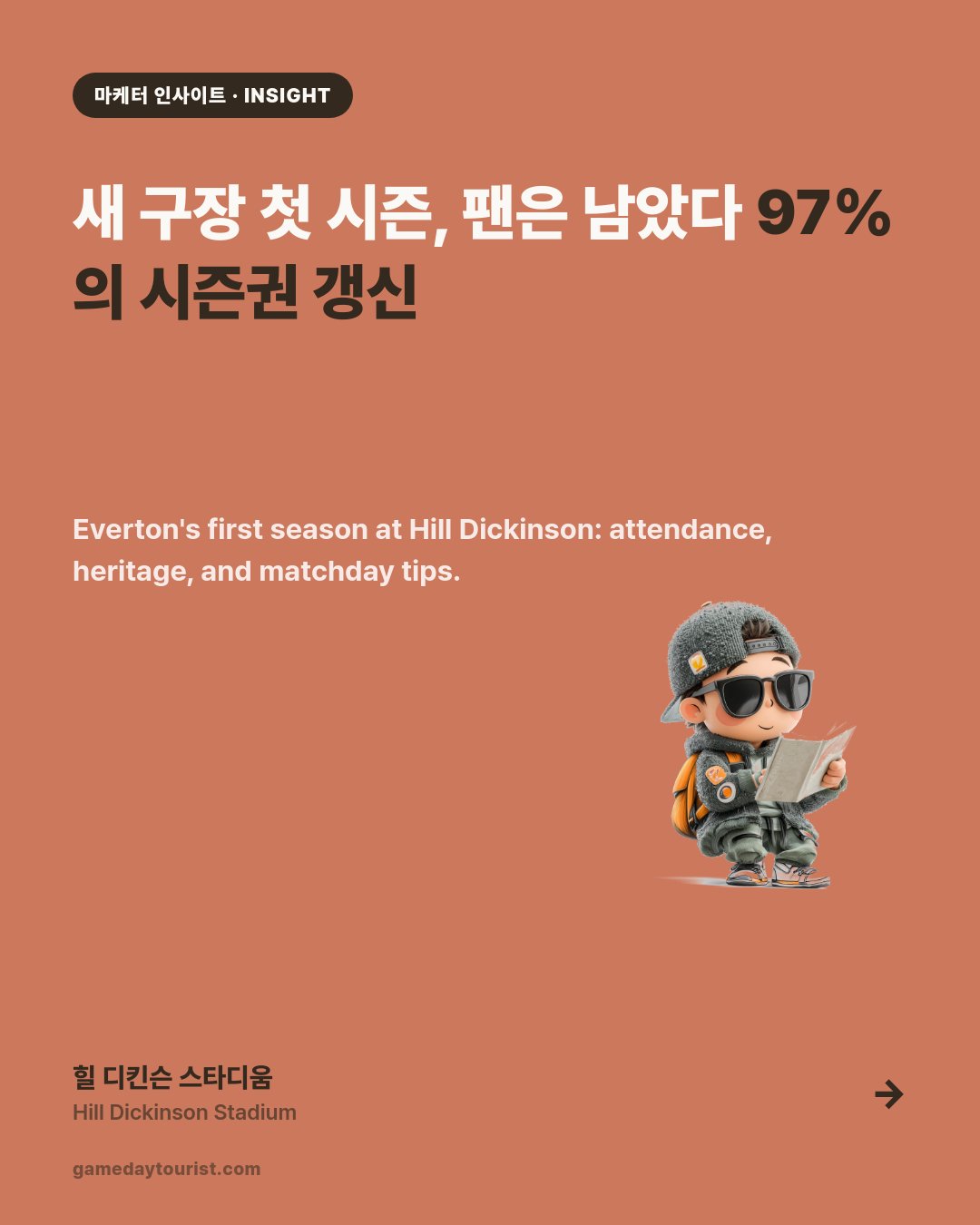
Six wins in 19 home games — 14th in the league on home form alone. For the club it’s a disappointing first season in a new stadium, and yet season-ticket renewals topped 97%.
Whether the experience a stadium offers, rather than results on the pitch, can hold on to a crowd is a question sports marketers have wrestled with for a long time. First-season data from Hill Dickinson Stadium, which Everton began using in 2025-26, offers a surprisingly interesting answer, so I pulled it together.
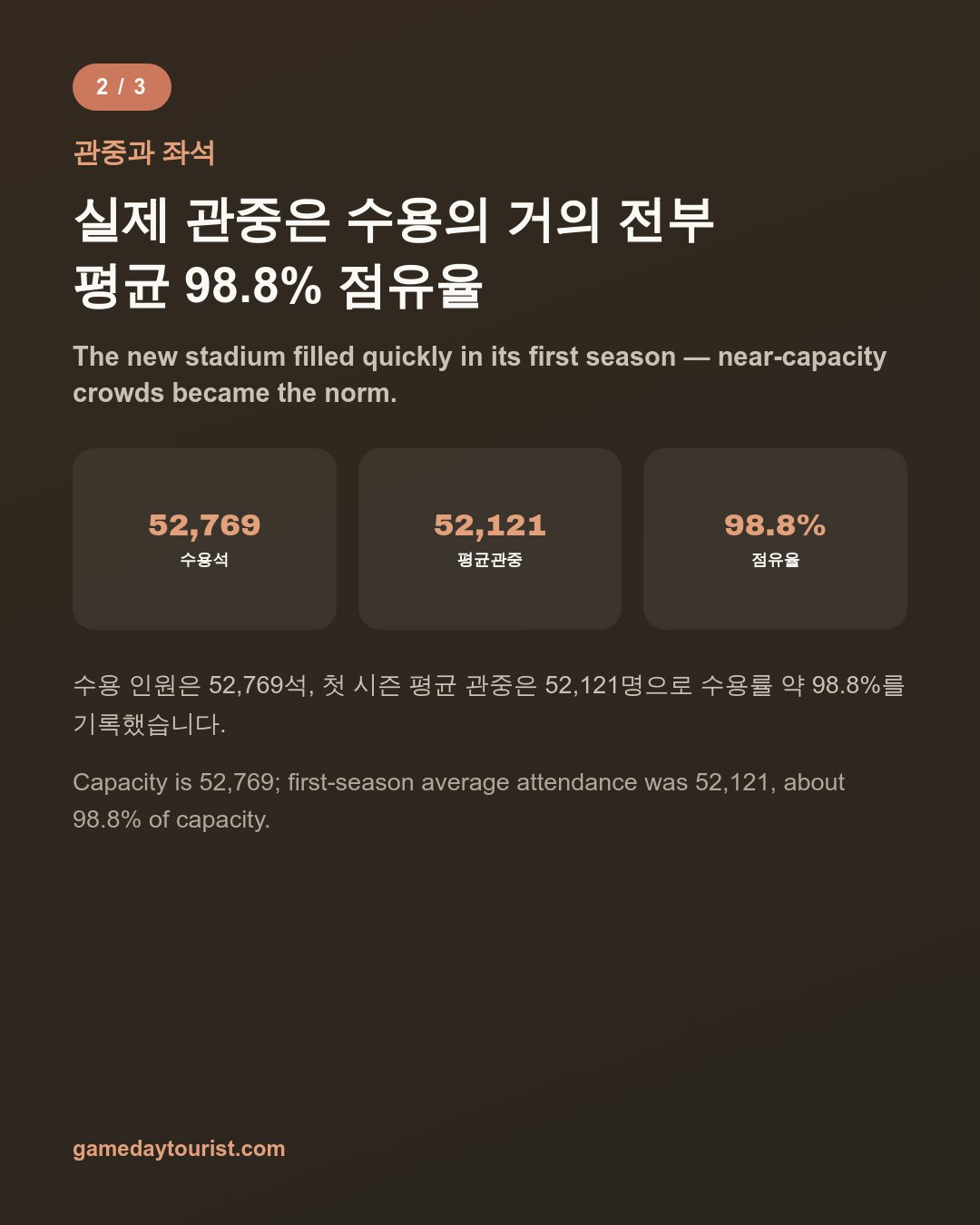
The stadium was built on the site of Bramley-Moore Dock (a former dock facility) on the River Mersey waterfront in Liverpool, and holds 52,769. The first competitive match, against Brighton on August 24, 2025, was a 2-0 win in front of 51,759 fans.
Wikipedia says the construction cost came to about £750 million, well above the original estimate of £500 million. I’ll leave the architecture there, because this piece is about how the stadium sells its name, gathers people, and protects its stories.
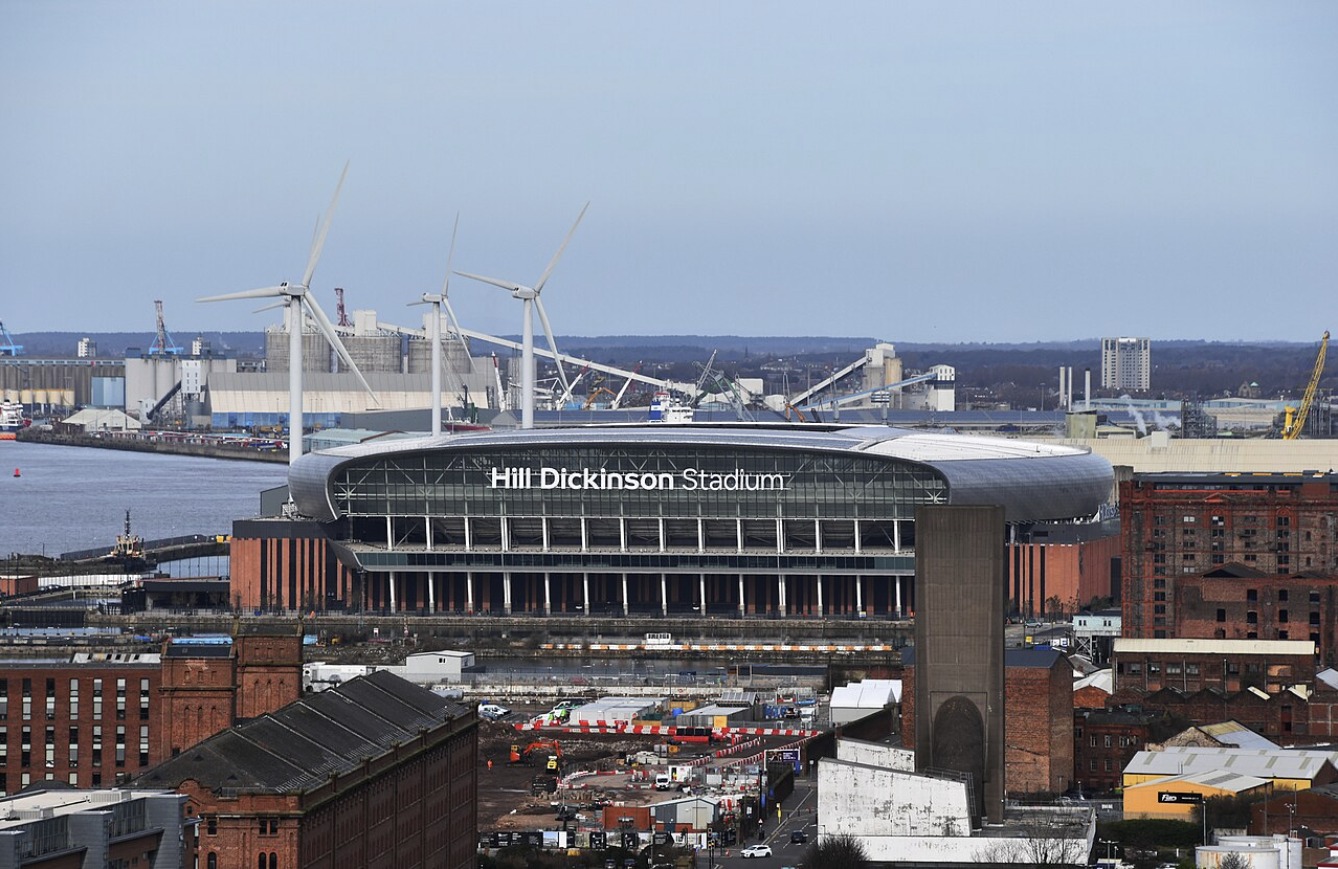
Photo: Anthony Parkes / geograph.org.uk · Wikimedia Commons · CC BY-SA 2.0 · Taken from the roof of the Royal Liver Building
The “Prince Rupert’s Tower” in Everton’s crest is really a lock-up
Look closely at Everton’s crest and you’ll see a small tower with a conical roof standing in the middle of the shield. Fans call it “Prince Rupert’s Tower,” but the name and the reality don’t match.
The building is a temporary parish constable’s lock-up built in 1787 on Everton Brow, where people who were drunk or disorderly were held overnight. Prince Rupert was the Royalist commander who attacked Liverpool during the Civil War in 1644, more than 140 years before the lock-up was built, so even the timeline doesn’t line up.
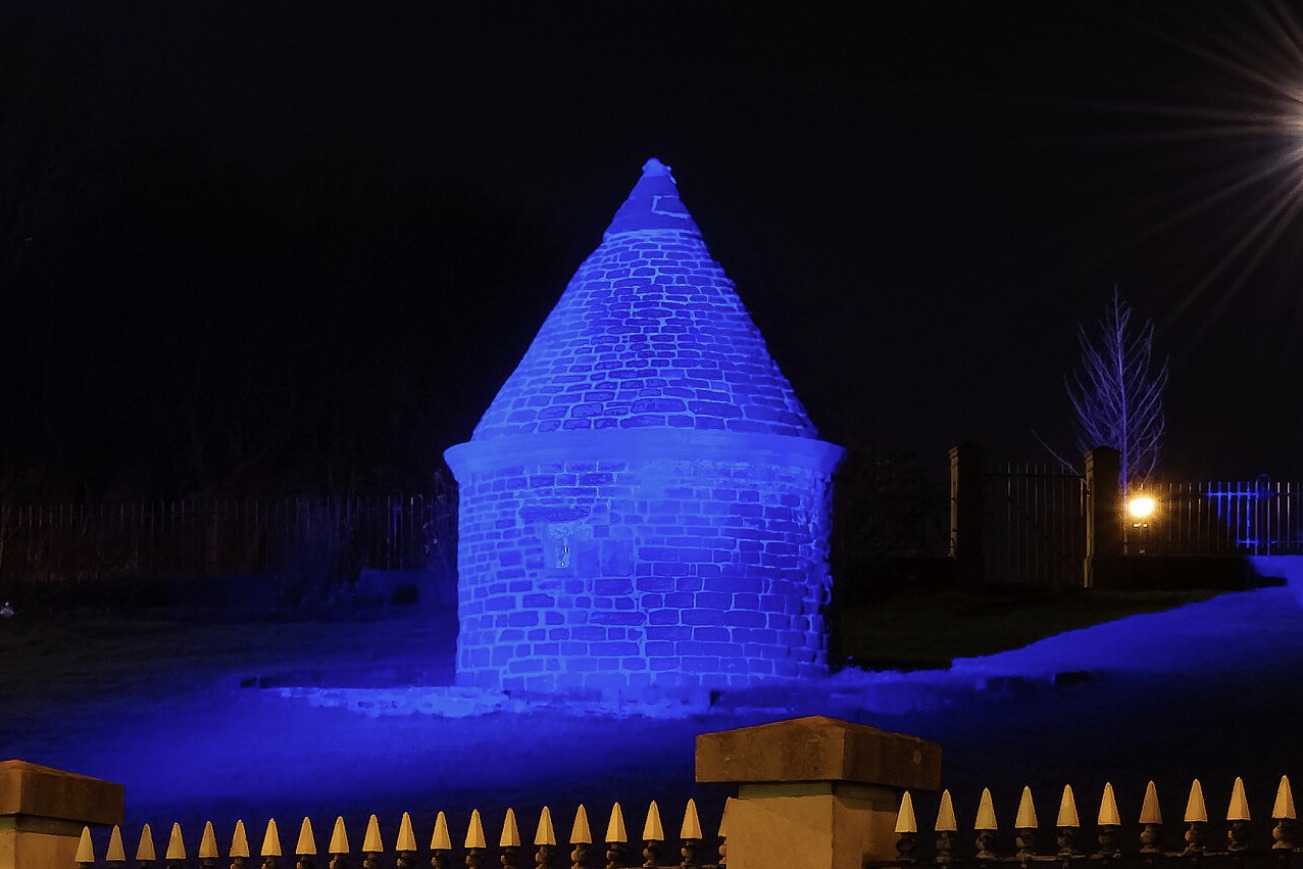
Photo: Bob Edwards · Wikimedia Commons · CC BY 2.0 · Taken January 2016
The man who put the tower on the crest was Theo Kelly, the club secretary, in 1938. By his own account he spent four months thinking it over before settling on a local landmark like the “beacon” that stood in the middle of the village, and the Everton Heritage Society notes he even drew in lookout windows and railed steps that the real building doesn’t have.
The club helped fund the lock-up’s restoration in 1997, and since February 2014 it has been lit up blue every night.
The “Toffees” nickname is tangled up in the same neighborhood story. Everton village was famous for its toffee (caramel-style candy) shops from the 18th century, and the story goes that after Molly Bushell’s shop came a “Mother Noblett” shop on the road to the ground.
Mother Noblett’s reportedly made black-and-white striped “Everton mints” in the club’s colors, and before matches a “Toffee Girl” would walk around the pitch throwing the mints into the stands. That said, even NBC Sports tells it as a story that has been passed down, and the details differ from source to source, so treat it as folklore rather than settled fact.
That tradition has come back at the new stadium. According to the club’s announcement, since late November 2025 a “Toffee Lady” appears at every home game, handing out Everton mints on the plaza, pitchside, and in the family stand, and posing for photos with fans.
Blue toffee doughnuts have even made it onto the menu at the stadium’s food court, Dockyard Kitchen. The club sold the stadium’s name to a local law firm but protects the stories fans love instead of selling them, and to me that’s the grammar of this stadium’s marketing.
What kind of club are Everton? A Football League founder that gave birth to Liverpool FC
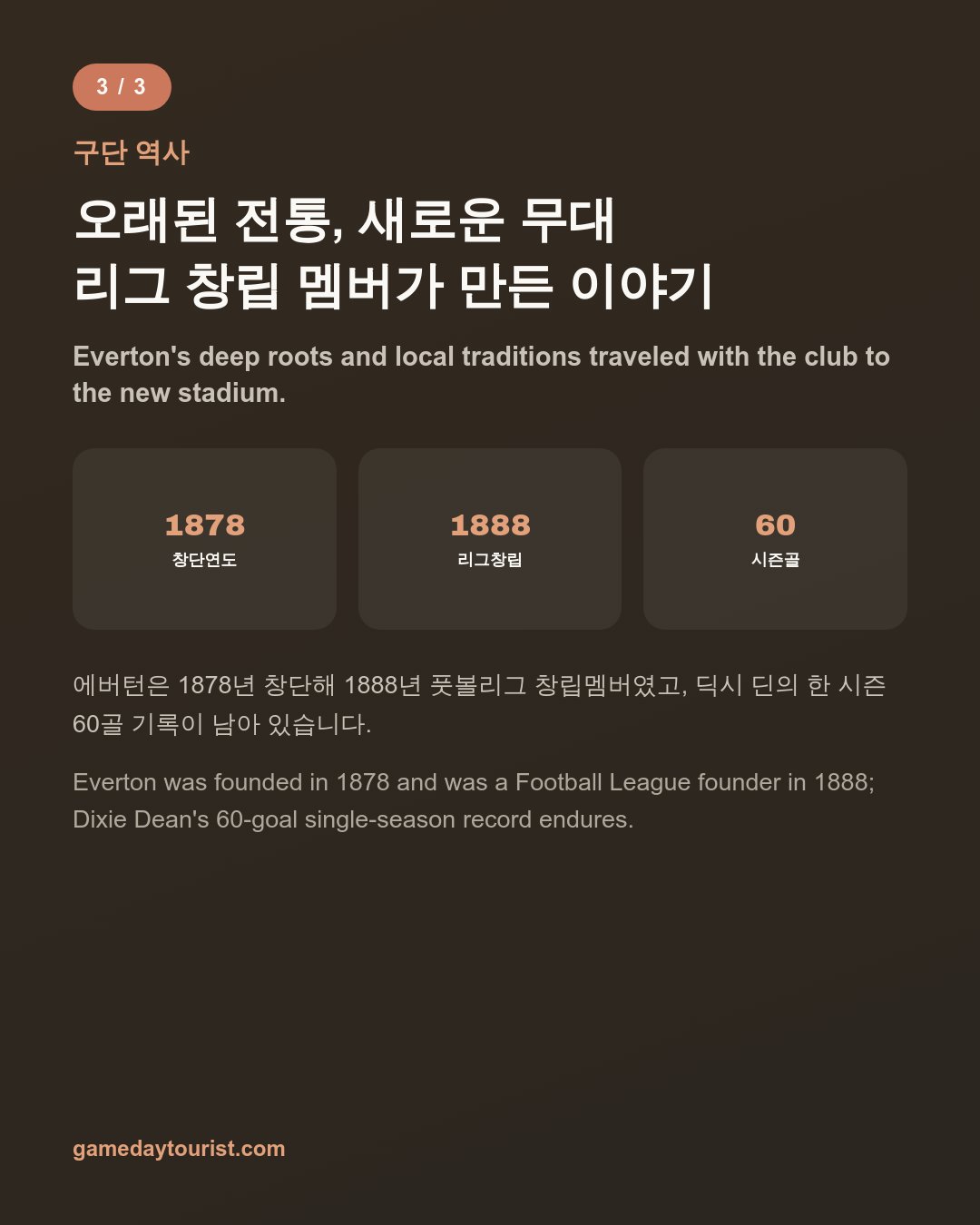
Everton began in 1878 as “St Domingo FC,” founded by members of a Methodist church, and took its current name the following year. They were founding members of the Football League in 1888, are one of only three clubs that were founding members of both the Football League and the Premier League, and have spent more seasons in England’s top flight than anyone else (122 of 126) (club history).
Their major honors are nine league titles (the last in 1986-87), five FA Cups (the last in 1994-95), and the 1985 European Cup Winners’ Cup, and the 60 league goals Dixie Dean scored in 39 games in 1927-28 still stand as the record for a single top-flight season in England.
What’s fun is that Everton are directly tangled up in the birth of their neighbors and rivals, Liverpool FC. Everton’s original home was Anfield, but in 1892, after a dispute over rent with their landlord John Houlding, Everton left for Goodison Park, and Liverpool FC was created to fill the vacated Anfield.
That’s why the Merseyside derby reads less as a fight between two clubs in one city than as a story about two sides that split from one house. Everton spent 133 years at Goodison Park before moving to Hill Dickinson Stadium in 2025, and Goodison is now home to Everton’s women’s team.
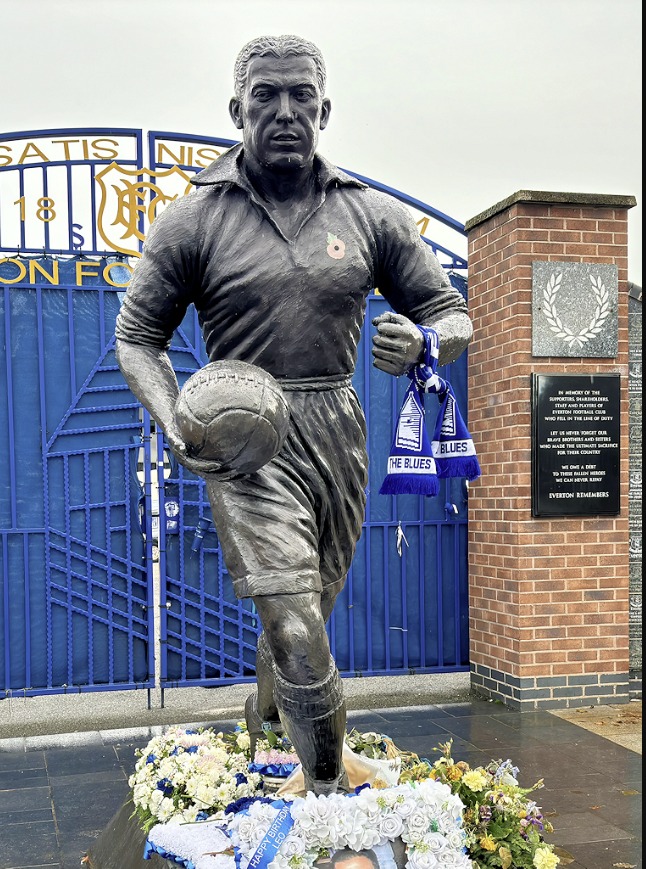
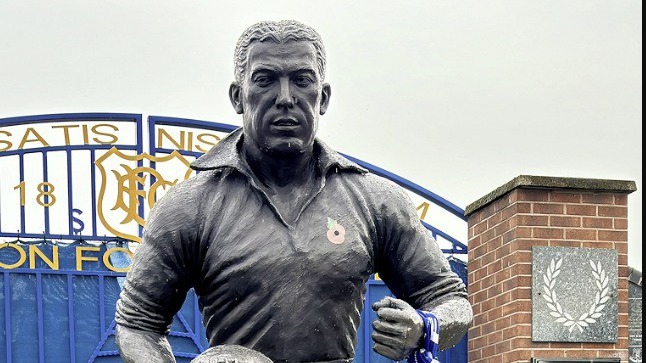
Photo: David Dixon / geograph.org.uk · Wikimedia Commons · CC BY-SA 2.0 · The Dixie Dean statue outside Goodison Park, October 2024
Today’s Everton is run by the US-based Friedkin Group, which bought the club in December 2024 (and also owns AS Roma), with David Moyes, who left in 2013, back in charge since January 2025.
Their 2025-26 season, the first in the new stadium, ended with 13 wins, 10 draws and 15 losses for 49 points and 13th place, with striker Beto the top scorer on 10 goals. This summer, Iliman Ndiaye, who scored the first official goal at the new stadium, was sold to Manchester City for about £65 million, and Beto left for Fiorentina.
In came Hayden Hackney, Tyrique George, Brennan Johnson and others, and Jack Grealish returned from Manchester City, on loan again. The captain is defender James Tarkowski.
The 2026-27 season has Everton unbeaten through the September 19 match, with two wins and three draws in five league games, and sitting fifth. They opened with a 2-0 home win over Crystal Palace.
As a marketer, selling the player who scored the first official goal at the new stadium after only a year feels like a bit of a waste. A player tied to the memory of opening season is a story asset in his own right.
Still, creating room under the financial rules through net transfer income while protecting their early results suggests the second season has started well enough.
What to know before watching Everton
As the attendance and tickets section below shows, season-ticket renewals above 97% mean few seats are released for general sale. A local matchday guide also says season tickets are sold out, members get priority, and general sales for big games go quickly.
If you’re coming from abroad for a single game, the realistic options are to join as a member and enter the ballot, or to look at match-by-match hospitality packages from Seat Unique, the club’s official premium ticketing partner.
There’s no parking at the stadium, and the nearest station, Sandhills, is a 10-15 minute walk. Many visitors recommend a 30-minute walk along the waterfront from Pier Head in central Liverpool if the weather is good.
The Fan Plaza opens three hours before kickoff, bags up to A4 size are allowed, and there is no bag storage. It’s also worth knowing there’s no re-entry once you leave, and the stadium is fully cashless (card and mobile).
Attendance and tickets
Average attendance in the first season was 52,121, about 98.8% of capacity. According to the club’s own figures, that beat the previous club record average of 49,531 from the 1969-70 title season, and the number of individual fans attending at least one match during the season rose 68% over Goodison Park’s final season.
What impressed me most was that the share of members attending three or more matches jumped from about “one in four” to about “half.” It means the stadium didn’t just add seats, it changed how often people come.
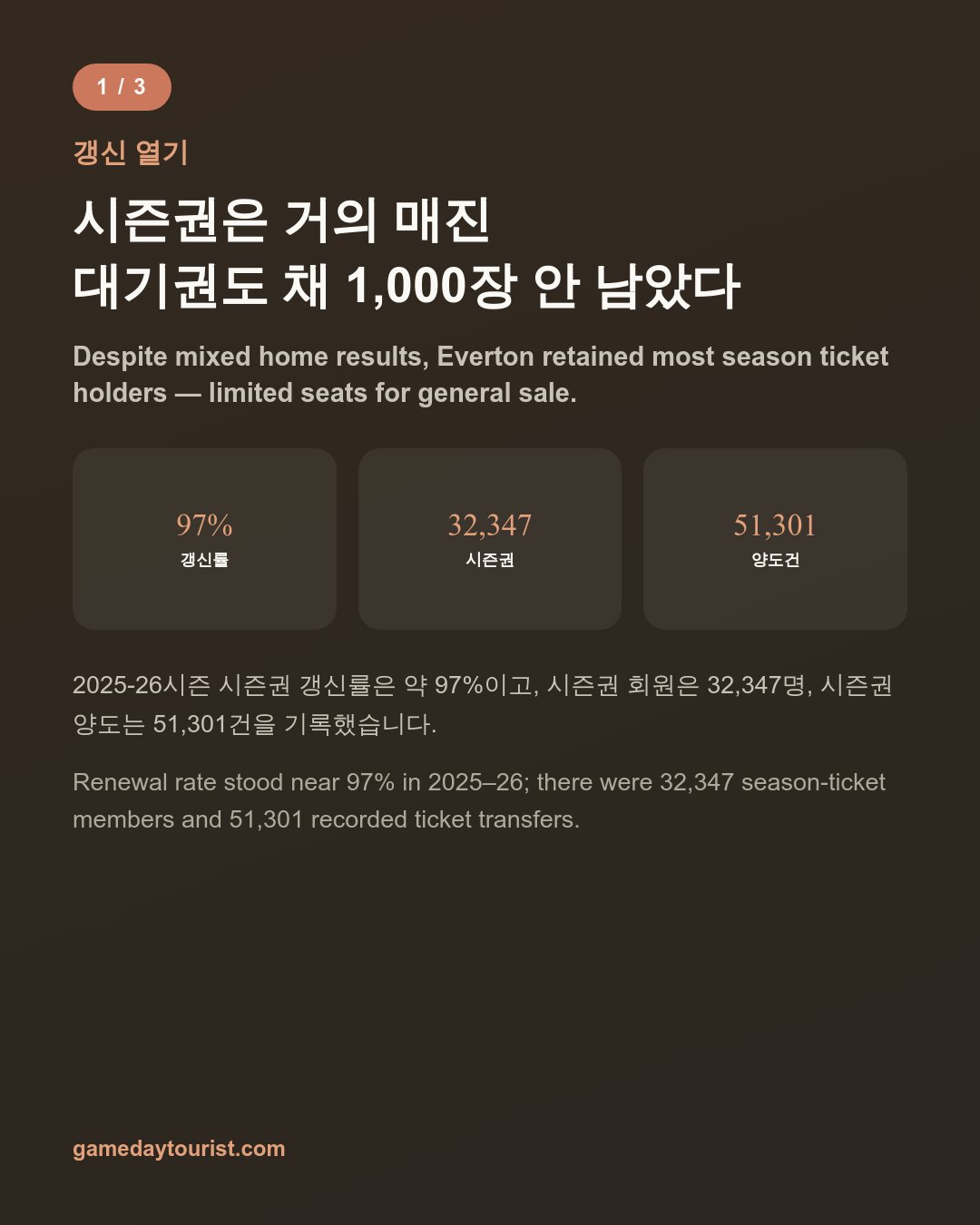
By membership, 2025-26 had 32,347 season-ticket members, 2,807 Club View (premium lounge-type) members, and 4,139 premium season members. There were 51,301 transfers of season tickets people couldn’t use (about 2,700 per match), 21,896 member-to-member resales and 50,624 away tickets sold (about 2,664 per match), and the 28,521 people who entered the ballot had an average success rate of about 80%.
With the old ground’s capacity at about 39,400, the extra 13,000 or so seats were filled within a single season.
Renewals for 2026-27 stand at just over 97%, and fewer than 1,000 season tickets were released from the waiting list. The club also raised adult season-ticket prices by £45, and reports noted that this conflicts with the three-year freeze recommended by the fans’ advisory board.
A 97% renewal rate is proof of loyalty, but it’s also a sign of supply failing to keep up with demand. The club probably knows it has room to raise prices, but how long an increase beyond its fan advisory body’s recommendation can keep renewals this high will only be answered by the numbers after the second season.
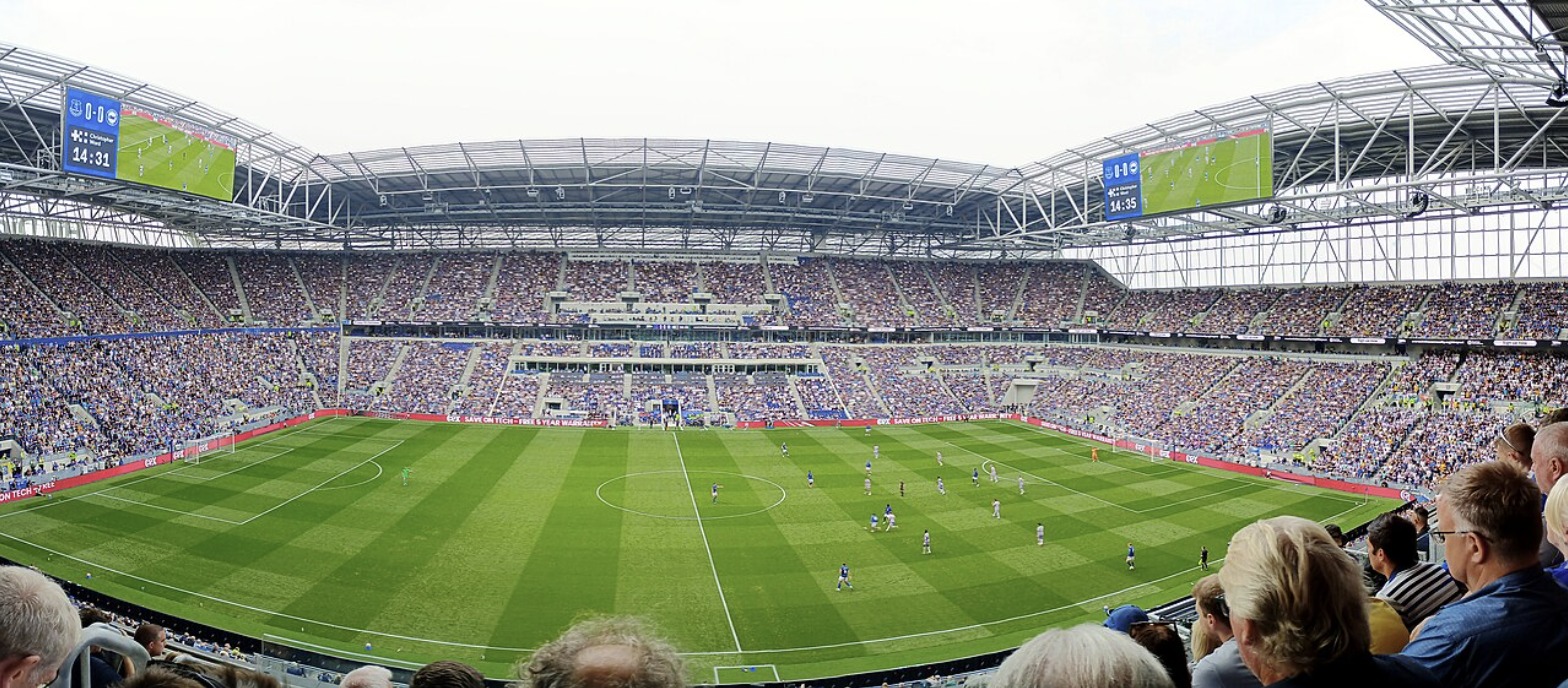
Photo: Pete · Wikimedia Commons · CC BY 4.0 · Taken at Everton vs Brighton on August 24, 2025
The premium side was different even before opening. Seat Unique, the match-by-match premium ticketing partner, introduced products new to British football such as cinematic “loge” seating, where four seats are grouped in an enclosure with individual TV monitors, and pre-opening material forecast more than 1.4 million annual visitors.
The club says premium seat occupancy in the first season was close to 95%.
Naming rights and sponsors
The stadium’s name went to Hill Dickinson, a law firm headquartered in Liverpool. Founded in 1810 as a shipping-focused law practice, the firm had an operating profit of £57 million in 2024, according to sales agency Elevate.
The club has not officially disclosed the fee. SportsPro reported £10 million a year for 10 years, while the legal trade publication Law Gazette only wrote that it was “reportedly up to £10 million a year, with terms undisclosed.”
It’s safest to treat the figure here as press-report level only.
What’s worth learning from this deal is less the amount than how it was sold. Elevate took on the sales mandate in September 2022 and spent nearly three years on it before opening, through setbacks that included a change of club ownership and a points deduction for breaching financial rules.
The sales side explained that when they scored candidate brands on financial performance, marketing spend and community work, companies with some attachment to Liverpool or the North West stayed in the conversation longer.
So they pitched the stadium not as a mere football ground but as a “365-day programmed sports and entertainment destination” with a run of concerts and events. At the time Everton joined, they say, only six Premier League clubs had a naming-rights partner.
Locking in the name early, in May 2025, three months before opening, is also a notable choice. SportsPro’s analysis is that the aim was to get fans used to the name before the first match and cut down on naming resistance later.
In my view, it’s one of the best examples of understanding that selling a name is no longer advertising but a negotiation with fan culture.
Space usage and F&B
The Fan Plaza outside the stadium is an open-air space for up to 17,000 people and, according to a local matchday guide, opens three hours before kickoff with food stalls, music and a club store (in the south-east corner).
Inside, food service is run by Aramark, entirely cashless. The lineup has widened to self-service EBars where fans pour their own drinks, “Just Walk Out”-style Through Pass outlets, chicken (Flightbirds), pies and sausage rolls (Dockyard Kitchen), burgers (Pit and Pickle) and pizza.
One local fan review welcomed the fact that the self-service bars had done away with the “missing the second-half kickoff in the queue” problem that was common at the old ground. The same first-match review also reported sighs inside the concourse over prices like £6.20 for a pie, £7 for a sausage roll and £4.50 for sweets.
A sports-business newsletter pointed out that on a big event day the upper-tier bar in the South Stand ran out of drink at half-time and closed.
Putting these two reviews side by side as a marketer, what bothers me is that “price” and “supply” became problems on the same day. Even with good payment technology, if stock and staffing can’t keep up, what fans remember isn’t the technology but the beer they couldn’t get.
The lower South Stand has safe standing for home fans (an area with safety rails in place of seats so people can watch standing up), and according to the guide the sections are fixed, so you can’t move between blocks.
A fan in the same review said there are no pillars, so even from the upper tier you can see the opposite stand in full. It read to me as a stadium that sells experience, not just seats.
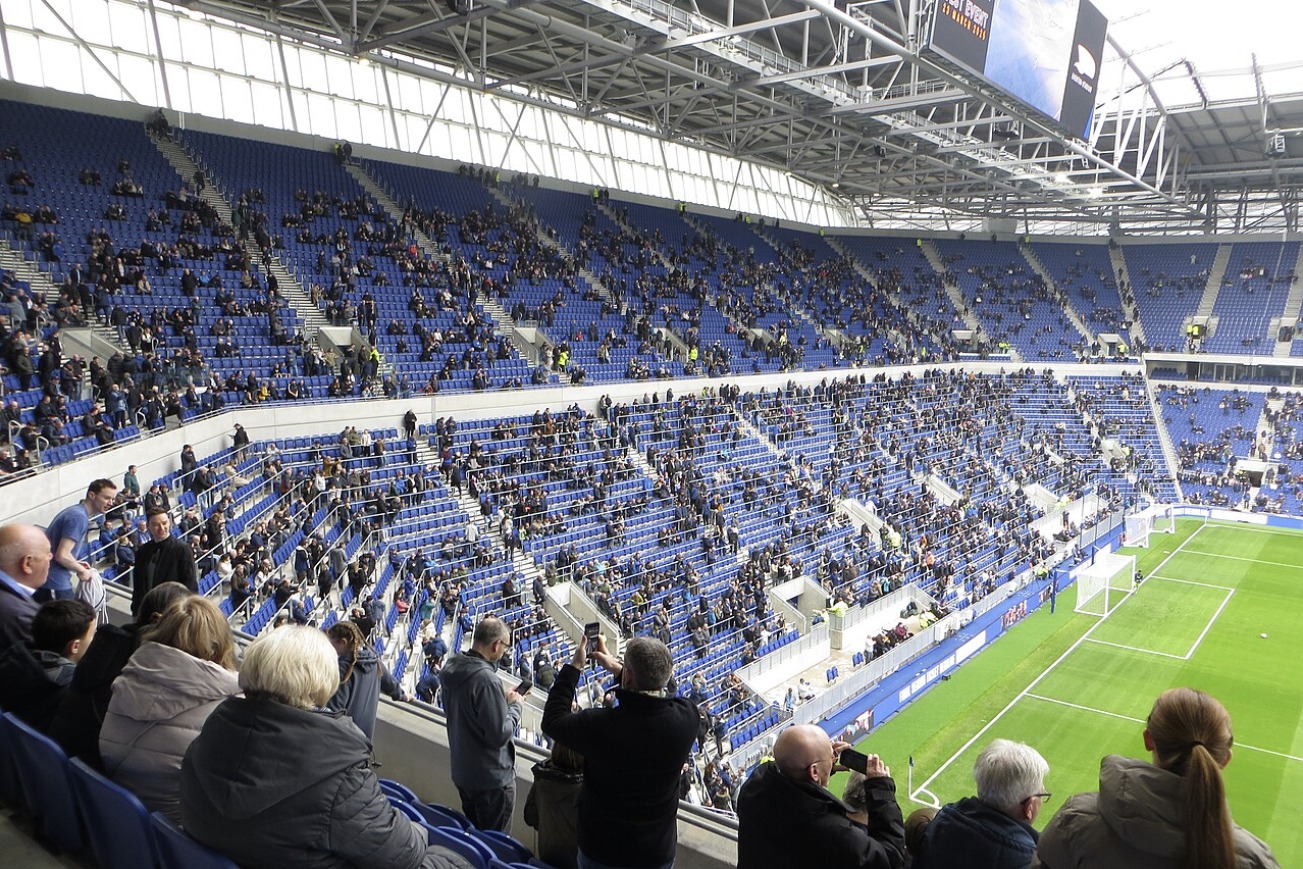
Photo: Pete from Liverpool, UK · Wikimedia Commons · CC BY 2.0 · Taken on the day of a pre-opening test event, March 23, 2025
Club finances and broadcast rights
In 2024-25, the final season at the old ground, Everton’s revenue was £196.7 million. By facilities outlet Coliseum’s tally, matchday income was £20.3 million (up £1.2 million on the year), sponsorship, advertising and merchandise £24.3 million (up £2.7 million), other commercial income £22.9 million (up £5.9 million), and broadcast income £129.2 million.
That means about 66% of revenue came from broadcasting and just over 10% from matchday income. The net loss was £8.6 million, sharply down from £53.2 million the year before.
So the new stadium’s real test lies in matchday and commercial income. One industry expert projected that the new stadium’s matchday revenue could rise to around £45 million a season, and that commercial income could soon reach £100 million.
These figures are only projections, though, and the real results for the new stadium’s first season will have to be confirmed in later accounts. More than the old £20.3 million in matchday income simply doubling, I think what matters more is how much non-football events and commercial income fill in around that number.
Local ties and events
The stadium has no car park and is reached on foot from the train station, with the nearest station, Sandhills, 10-15 minutes away. Sefton Council cites a Bootle trader who said foot traffic rose around the test events.
The site once lay within the UNESCO World Heritage area of Liverpool Maritime Mercantile City, and after the development became controversial, Liverpool lost its World Heritage status in July 2021. Because the stadium’s development was cited as one of several reasons, its local ties will always be judged in the shadow of that debate.
The stadium has been confirmed to host five matches at Euro 2028, four group-stage games and one round of 16 game. In July 2026 it was announced as host of the Rugby Union Nations Championship match between Fiji and England, and bids for events to fill the non-football days keep coming.
A comparison with the KBO and K League
Changwon NC Park was completed in 2019 at a construction cost of ₩124 billion, owned by the city of Changwon and used as the home ground of the NC Dinos (Wikipedia).
Reports at the time of opening put its capacity at around 22,000. Hill Dickinson Stadium holds 2.4 times as many, and the construction cost is roughly ten times as much depending on the exchange rate.
With such a gap in scale, a comparison that ranks one above the other with the same yardstick would be meaningless.
What’s worth watching instead is who holds the authority to bundle and sell a stadium as one product. In Korea, where many stadiums are owned by local governments, my understanding is that a club often needs to consult the owner first when it wants to sell the name or reconfigure commercial space.
Everton, as a club that built its new stadium itself and could design everything from the name to the use of the site, could pursue strategies like “three years of naming-rights sales” and “a 365-day program.”
In Korea too, what needs deciding before selling a stadium’s name is what story a club still has left after selling it. If for Everton it was a lock-up tower on the crest and a mint candy, I find myself wondering what ours have.
Leave a Reply