Contents · About 8 min read
📱 View as card news
When I hear that a club has been put up for sale, I usually reach for its stadium data before I even glance at the transfer rumors.
This time, the club that caught my eye was Leicester City.
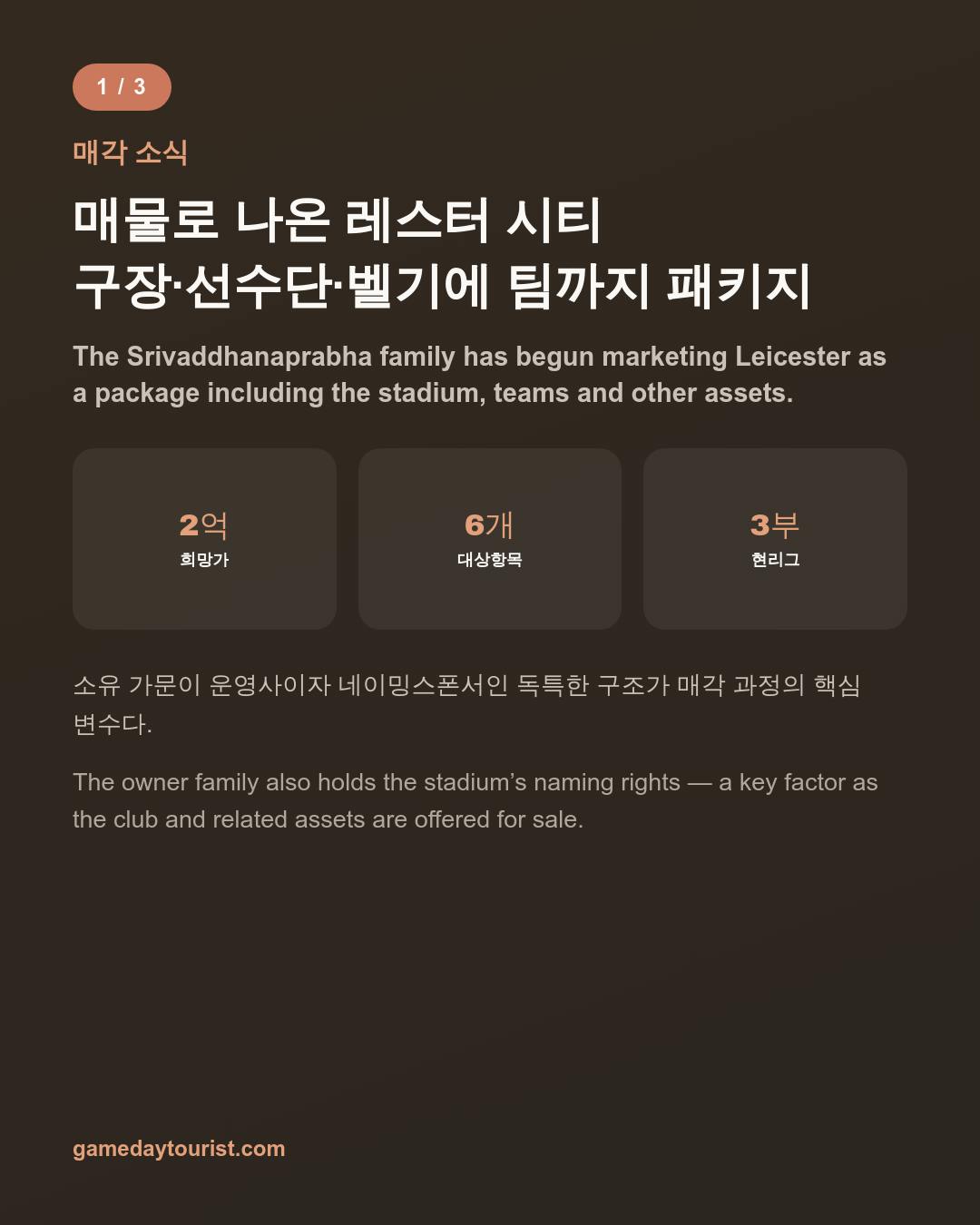
According to reports across the British press around August 11, 2026, the Srivaddhanaprabha family, the Thai owners of Leicester, have begun circulating a sale prospectus to prospective investors through the US investment bank Citigroup.
The asking price is reportedly north of £200 million (about ₩382.5 billion), and the sale is said to include King Power Stadium, the Seagrave training ground, the men’s and women’s first teams, the academy, and even the family’s Belgian club, OH Leuven.
The fact that the most famous underdog story in Premier League history is now on the market was interesting enough on its own, but as a marketer, something else caught my attention.
King Power Stadium has an unusual structure: the owning family’s company holds both the club and the stadium’s naming rights at the same time.
I wanted to dig into how that structure intersects with the current sale, and what the attendance, merchandising, and broadcast numbers actually look like for a club that has fallen all the way to League One, the third tier.
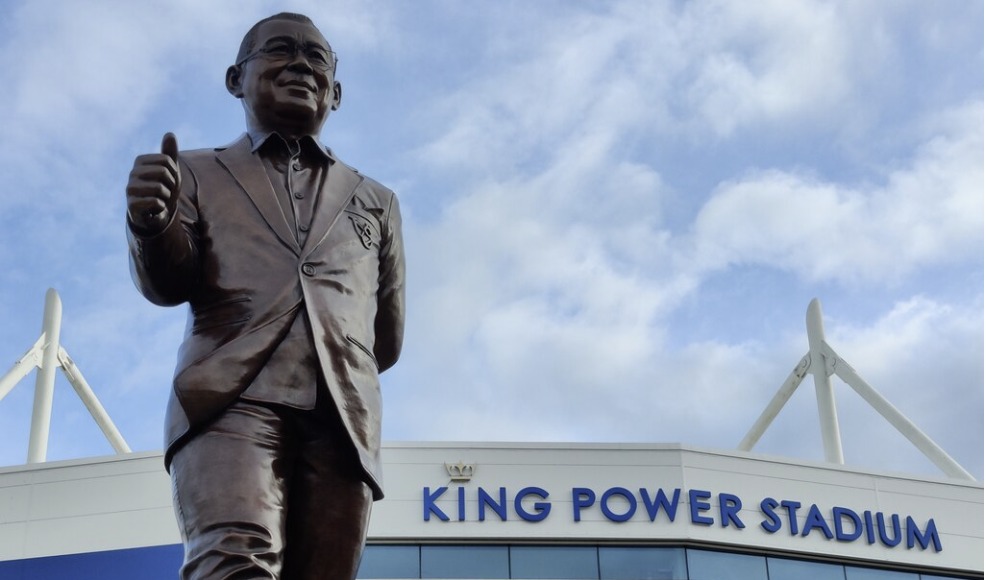
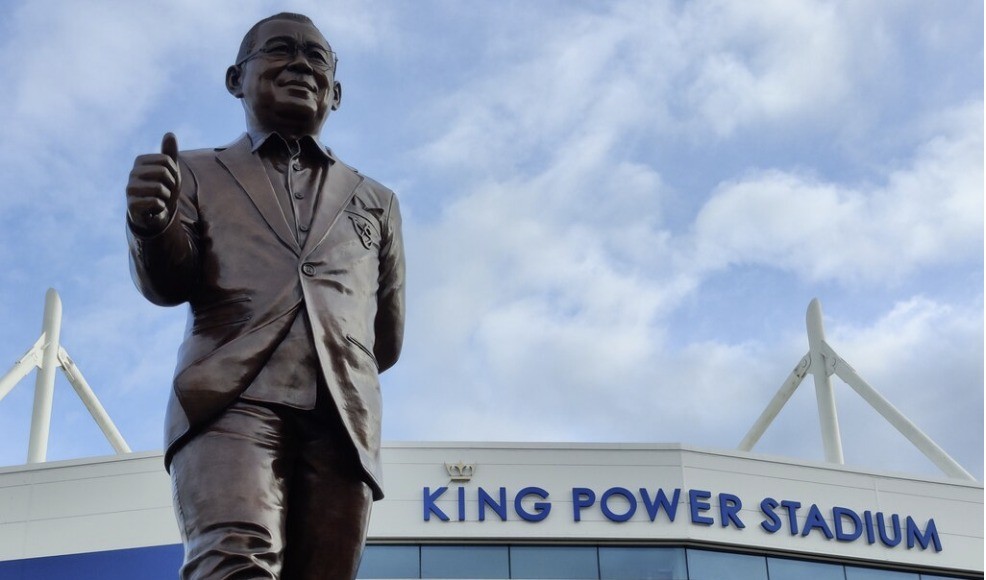
Source: Geograph Britain and Ireland (Mat Fascione), CC BY-SA 2.0
A bronze statue of the late chairman Vichai Srivaddhanaprabha, who died in a 2018 helicopter crash, stands outside the main entrance of King Power Stadium.
The statue, famous for its thumbs-up pose, was officially unveiled on what would have been his birthday, and a memorial garden honoring the victims of the crash sits right beside it.
The statue is accessible around the clock, and the memorial garden welcomes visitors during the day.
Even now, with the club relegated to League One and up for sale, this spot has remained untouched, which felt like a reminder that a brand asset doesn’t simply disappear because of a bad season.
Attendance and Tickets — Filling a League One Ground
Leicester confirmed their relegation to EFL League One (the third tier) with a draw against Hull City on April 22, 2026.
Having bounced between the Premier League and the Championship over the past four years, the club has now dropped all the way to England’s third division.
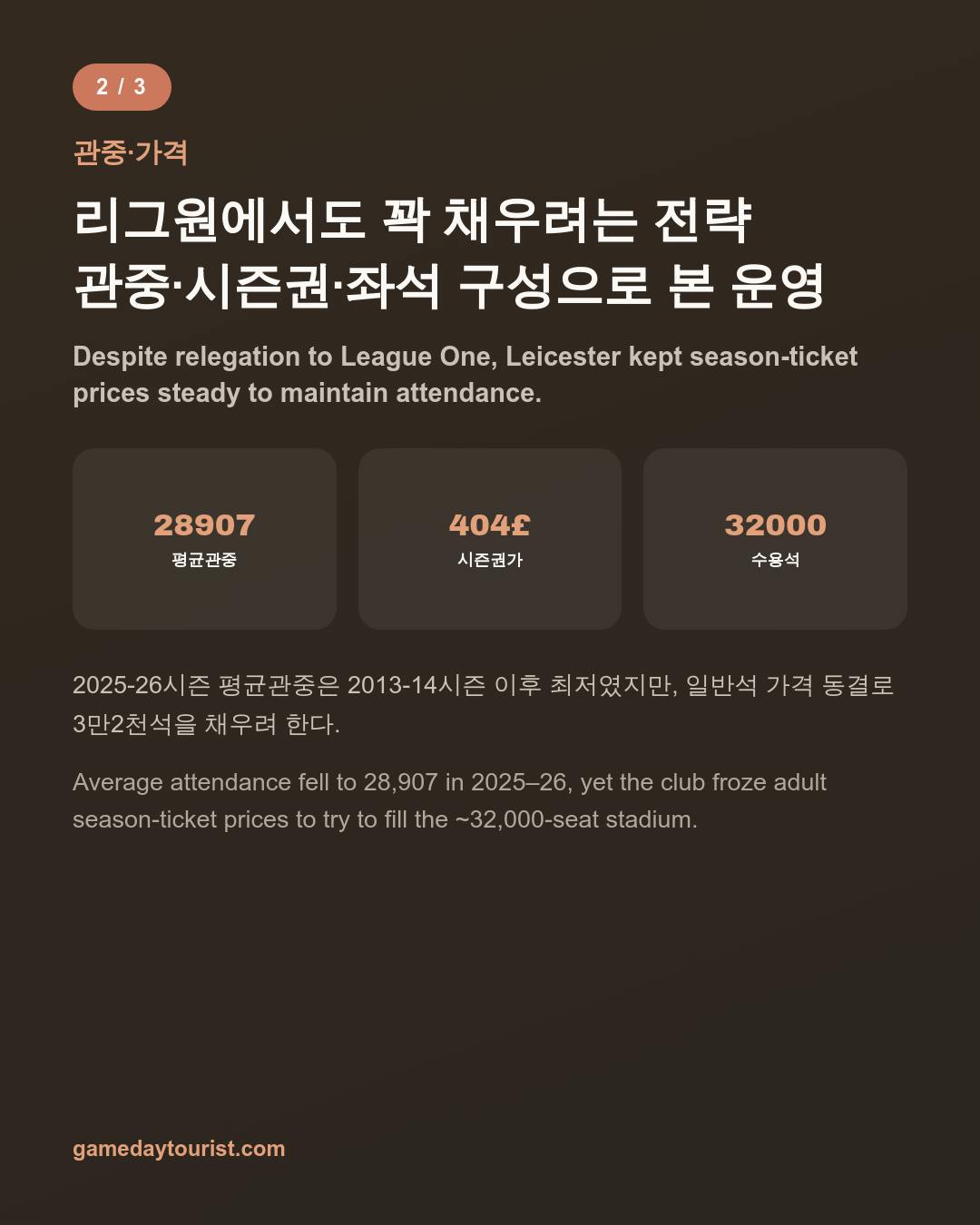
Average attendance in the 2025-26 season was 28,907, the club’s lowest since 2013-14.
Even so, the club froze the price of a general adult season ticket for 2026-27 at £404 (about ₩770,000), the tenth freeze in the last twelve seasons.
Even the cheapest adult season ticket for new buyers is £457 (about ₩870,000), which works out to under ₩20,000 per League One match across 23 home games.
The pricing makes clear that Leicester wants to keep its roughly 32,000-seat stadium as full as possible, even in the third tier.
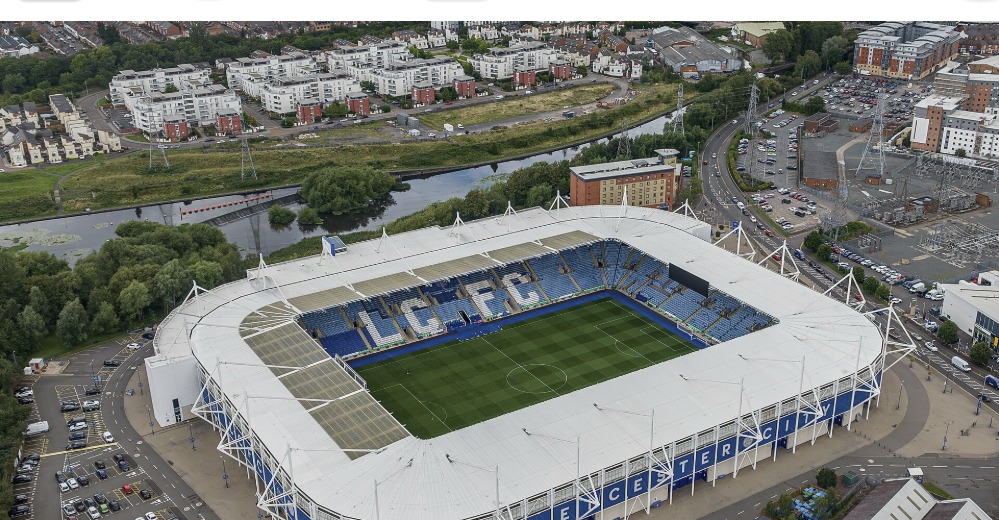
Source: Arne Müseler (arne-mueseler.com), Wikimedia Commons (CC BY-SA 3.0) · Aerial view of King Power Stadium beside the River Soar
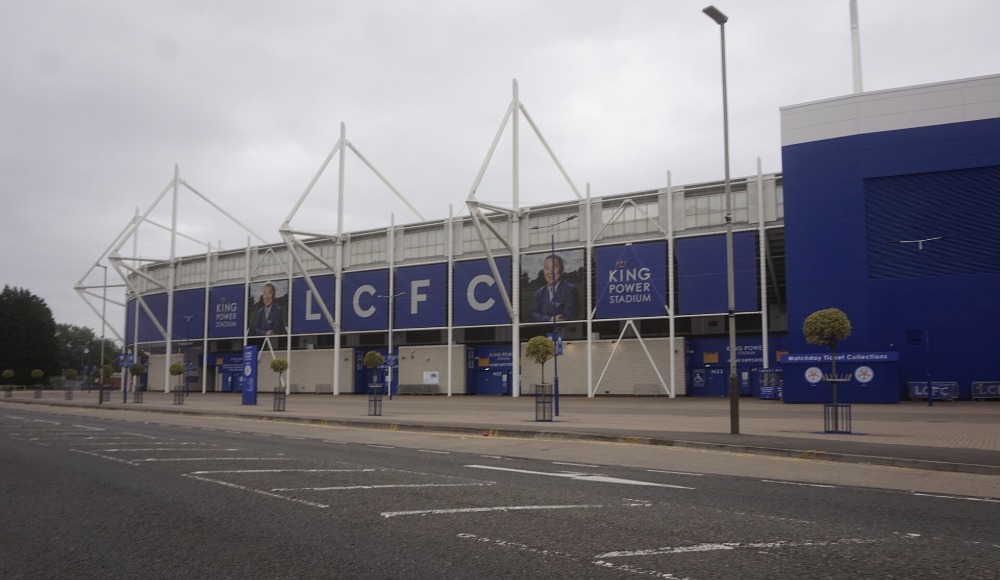
Source: Geograph Britain and Ireland (Ian S), CC BY-SA 2.0 · No watermark, reuse terms confirmed
Naming Rights and Ad Inventory — When the Owner Is the Sponsor
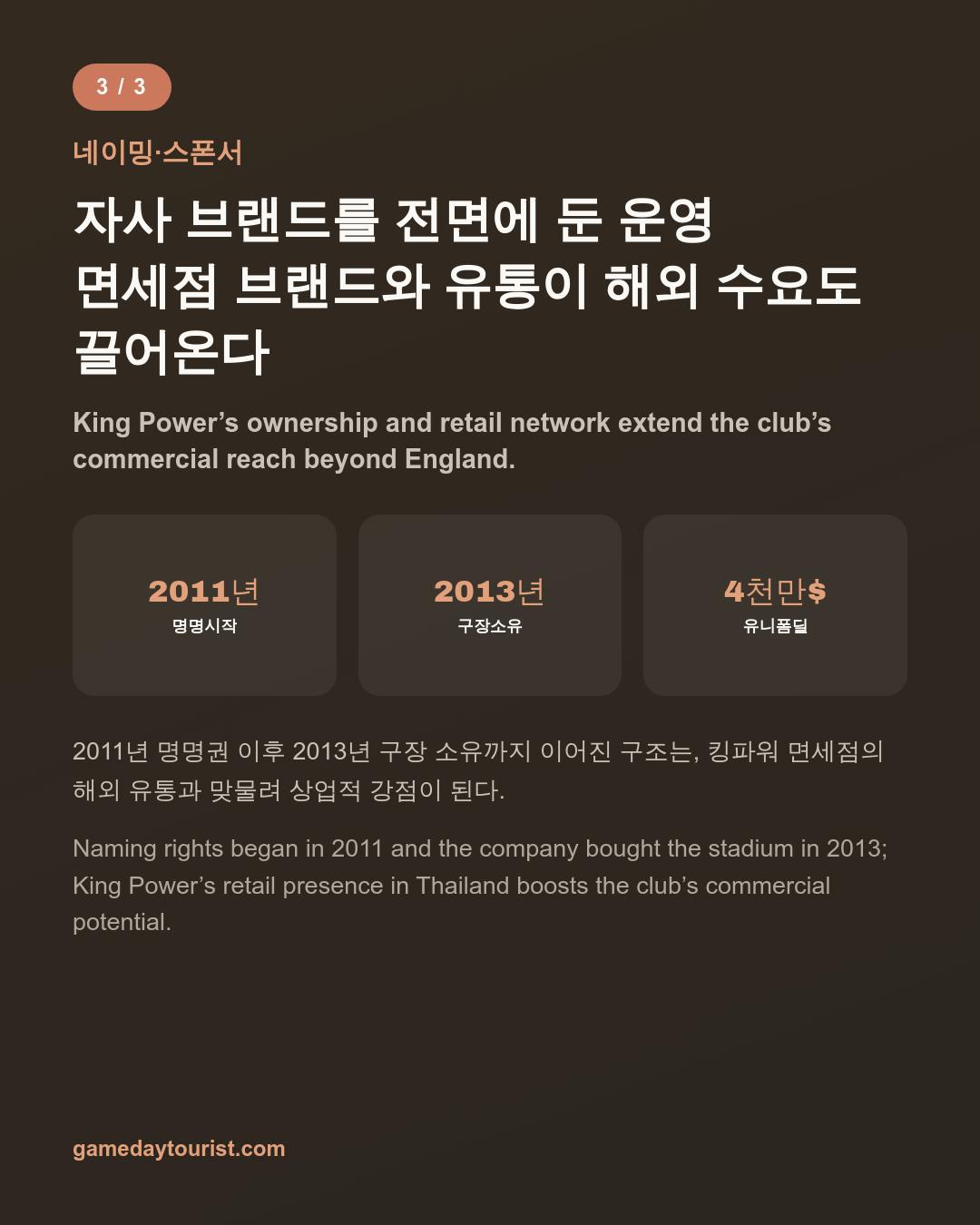
The stadium has carried the King Power name since July 2011.
It was originally called Walkers Stadium under a sponsorship deal with the crisp maker, but once King Power, the Thai duty-free retailer that bought the club, took over the naming rights, it became King Power Stadium — and by 2013 King Power had bought the stadium outright.
It’s a bit like a Korean chaebol putting its own name on its own KBO ballpark, except King Power is Thailand’s largest duty-free chain, so the branding actually generates real commercial value outside England, too.
Leicester’s official merchandise is sold not just through the lcfc.com online store but permanently in King Power duty-free outlets across Thailand — a retail footprint few EPL clubs can match.
The shirt sponsorship, on the other hand, follows more conventional market logic.
Crypto betting platform BC.Game has held the chest sponsorship since 2024 on a two-season, $40 million (about ₩55.2 billion) deal, and has now extended for a third year into 2026-27.
As it happens, the Premier League banned front-of-shirt gambling sponsorships starting in 2026-27, but Leicester had already dropped out of the league it applies to, so the rule doesn’t touch them.
Adidas remains the kit supplier, and fans can choose between versions with and without the BC.Game logo.
Merchandise and the Matchday Experience
Inside the stadium is the club’s official flagship store, Foxes Fanstore.
It stocks everything from kits to casual wear, and runs separate concourse discount events around Black Friday and at the end of the season.
The club doesn’t disclose ticket or merchandise revenue directly, but away-fan review sites tend to rate the matchday experience here fairly generously.
There’s praise for the fully enclosed, uniform stand design that keeps the acoustics tight — one review called it one of the best atmospheres among away grounds they’d visited — alongside complaints that there’s little to do around the ground beyond a pub or two and a supermarket.
A local matchday hospitality reviewer singled out the lounge facilities and accessibility for praise — which, from a marketer’s perspective, sums up the picture: strong product and service inside the ground, weaker matchday economy outside it, a gap that ties directly into the redevelopment plan below.
In December 2023, the club did in fact win local council approval for a redevelopment plan that would add an upper tier to the East Stand and raise capacity to 40,000, alongside a 220-room hotel, a multi-purpose event arena, new retail space, and offices.
The club estimated the project would create 1,000 jobs during construction and 1,000 permanent jobs afterward, but with financial strain compounding the ongoing sale process, the start date keeps slipping.
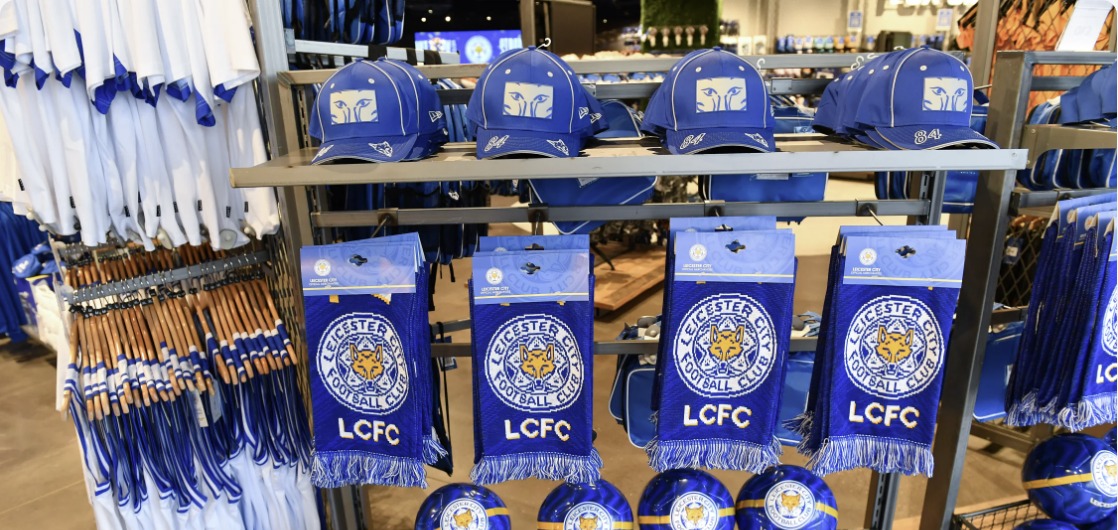
Source: Leicester City official website (lcfc.com) · Merchandise shelves at the Foxes Fanstore inside King Power Stadium, official club promotional image

Source: Leicester City official website (lcfc.com) · Official club promotional image, used for editorial/reference purposes
Broadcast Rights and the Local Economy
The number that best illustrates Leicester’s financial squeeze is the broadcast revenue gap.
The Premier League sold its 2025-2029 broadcast rights to Sky Sports, TNT Sports and others for £6.7 billion (about ₩12.8 trillion), while the combined EFL rights covering the Championship, League One and League Two went to Sky Sports for £935 million (about ₩1.79 trillion) over five years, from 2024-25 through 2028-29 (£895 million guaranteed plus £40 million in marketing support).
League One fixtures get 248 broadcasts a season with five matches shown live each weekend, but that fee is split among all 72 EFL clubs across the Championship, League One and League Two.
Because Leicester borrowed against its remaining parachute payments — the temporary Premier League support paid out over several seasons to cushion relegated clubs’ revenue drop — and cashed them out early through a bank loan this past January, the actual broadcast income landing in the club’s hands this season is projected at just over £2 million (about ₩3.8 billion), and its share of the EFL’s solidarity fund is expected to fall to a base rate of around 12.6%.
Broadcast revenue that once ran to £30-50 million (about ₩57-96 billion) has collapsed sharply, and that drop-off is considered one of the key reasons behind the rush to sell.
King Power Stadium has been the home of football in this part of Leicestershire for nearly 130 years, and the redevelopment plan itself states a goal of “strengthening Leicestershire’s identity as a world-class sporting city.”
But since the sale could change the ownership structure entirely, whether that blueprint for local economic impact survives is something that will only become clear once a new owner is in place.
How This Compares to the KBO and K League
The starkest difference from Korean pro sports is relegation itself as a variable.
The KBO has no promotion-and-relegation system, so no matter how badly a team performs, its league membership and its broadcast and sponsorship revenue structure never collapse overnight.
The K League does have promotion and relegation between K League 1 and K League 2, but because broadcast revenue was never as dominant a share of the pie there as it is in the EPL, the absolute financial shock of relegation is simply a different order of magnitude.
The very existence of the EPL’s parachute payment system is proof of how large the broadcast revenue gap is between the first and second tiers.
Leicester’s case is an extreme example of how fast a club can be pushed to the brink once even that safety net runs out and it drops all the way to the third tier.
The naming rights structure, by contrast, actually felt closer to home than I expected.
With the owning company holding both the club and the stadium and putting its own brand front and center, King Power Stadium looks less like the American model — where a third party simply pays market rate for naming rights — and more like Samsung Lions Park or Hanwha Life Ballpark.
But because King Power operates in duty-free retail, a consumer business, its branding has a real shot at converting into overseas tourist spending, which struck me as a step beyond how naming rights are typically used domestically.
The fairy-tale title run of 2015-16 is still an asset that hasn’t lost any of its value.
A story built on 5000-to-1 preseason odds, among the longest ever recorded for a single-event title win, is still retold among football fans around the world today.
But how that asset gets used going forward now looks likely to be up to a new owner rather than the Srivaddhanaprabha family.
How the sale process ultimately plays out, and whether the King Power name survives under new ownership, is something worth watching.
Leave a Reply