Contents · About 6 min read
📱 View as card news
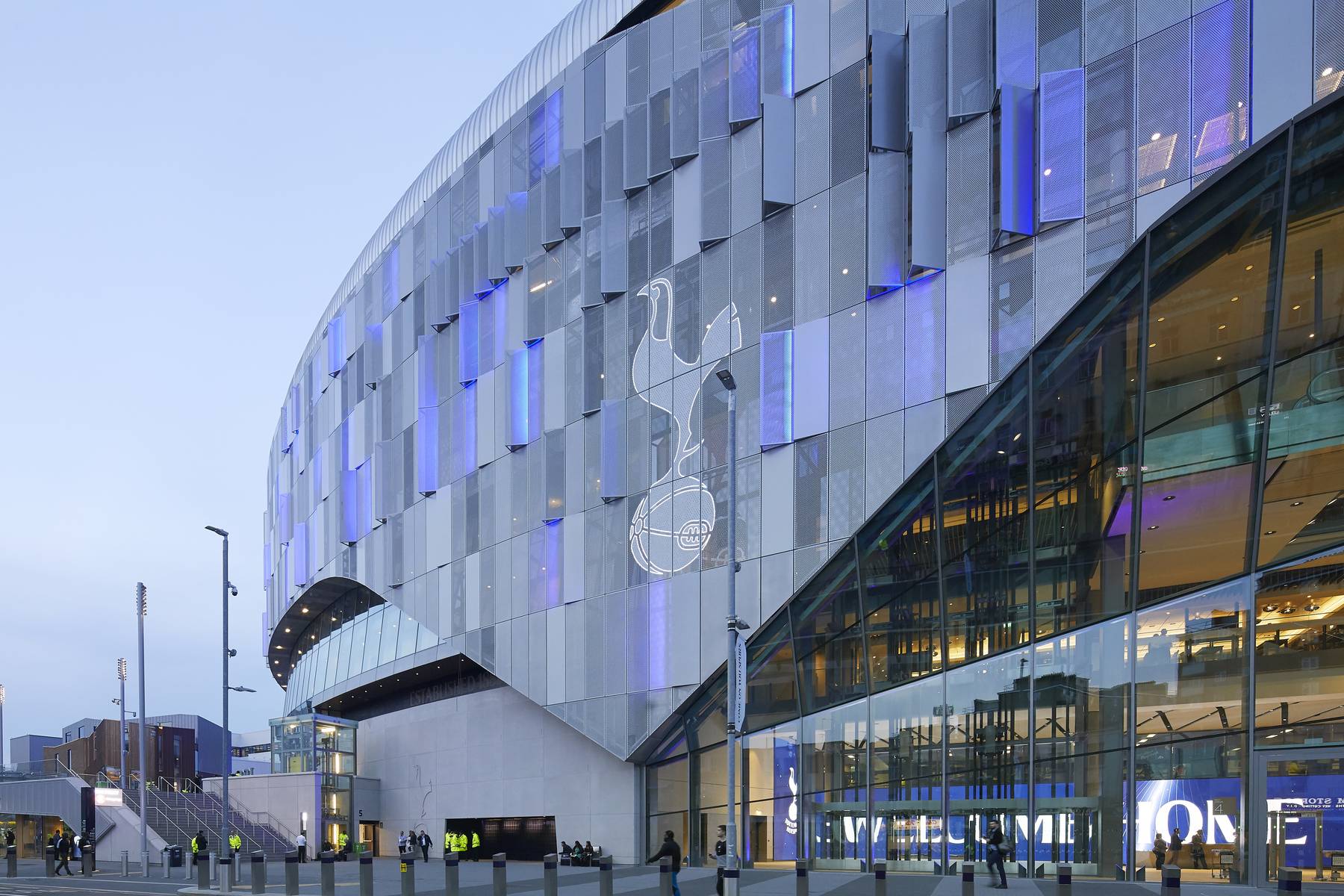
The new Tottenham Hotspur home ground, which opened in April 2019, set a different goal from day one.
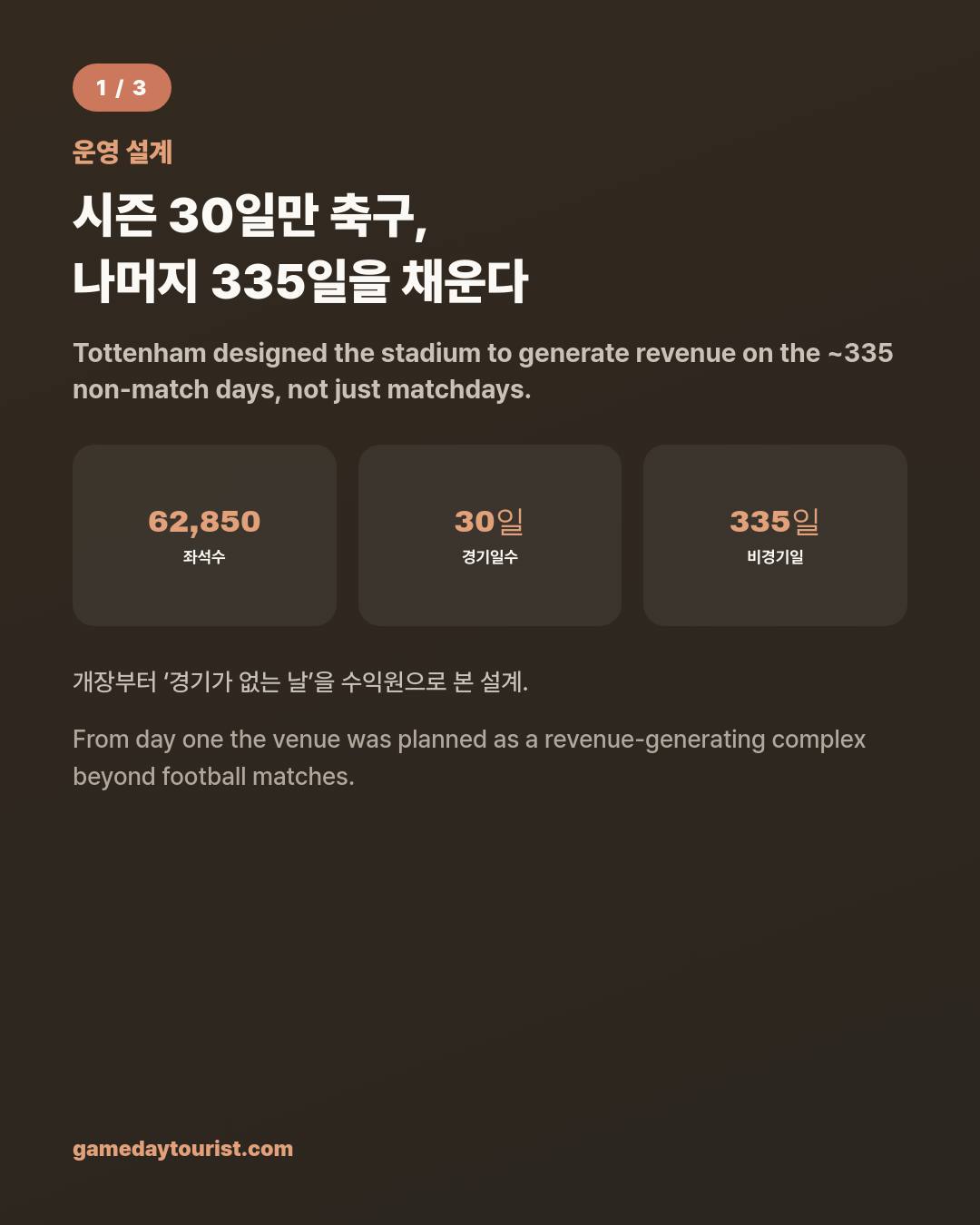
Even if you add domestic cup and European home matches to the 19 Premier League fixtures, actual football match days amount to at most around 30 days per season; the conventional wisdom for existing stadiums was to leave the remaining roughly 335 days idle. Tottenham overturned that assumption from the design stage.
With a total project cost of about £1 billion, this venue feels less like a stadium and more like a mixed-use revenue complex centered on football.
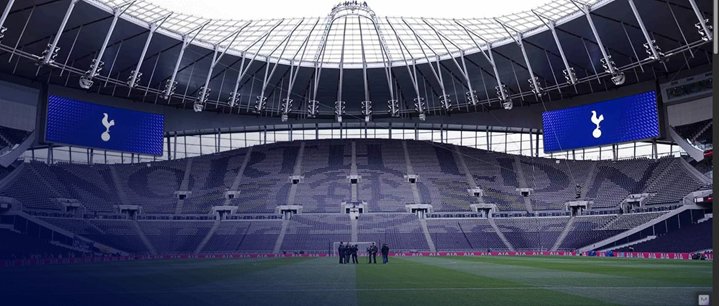
Source: tottenhamhotspur.com (club official website)
Stadium Layout — 62,850 Seats
The spatial configuration and the numbers are unusual. With 62,850 seats it is the largest club stadium in London, and the distance between the stands and the touchline is only 4.9 to 7.9 meters, making it known as the closest among stadiums of similar scale.
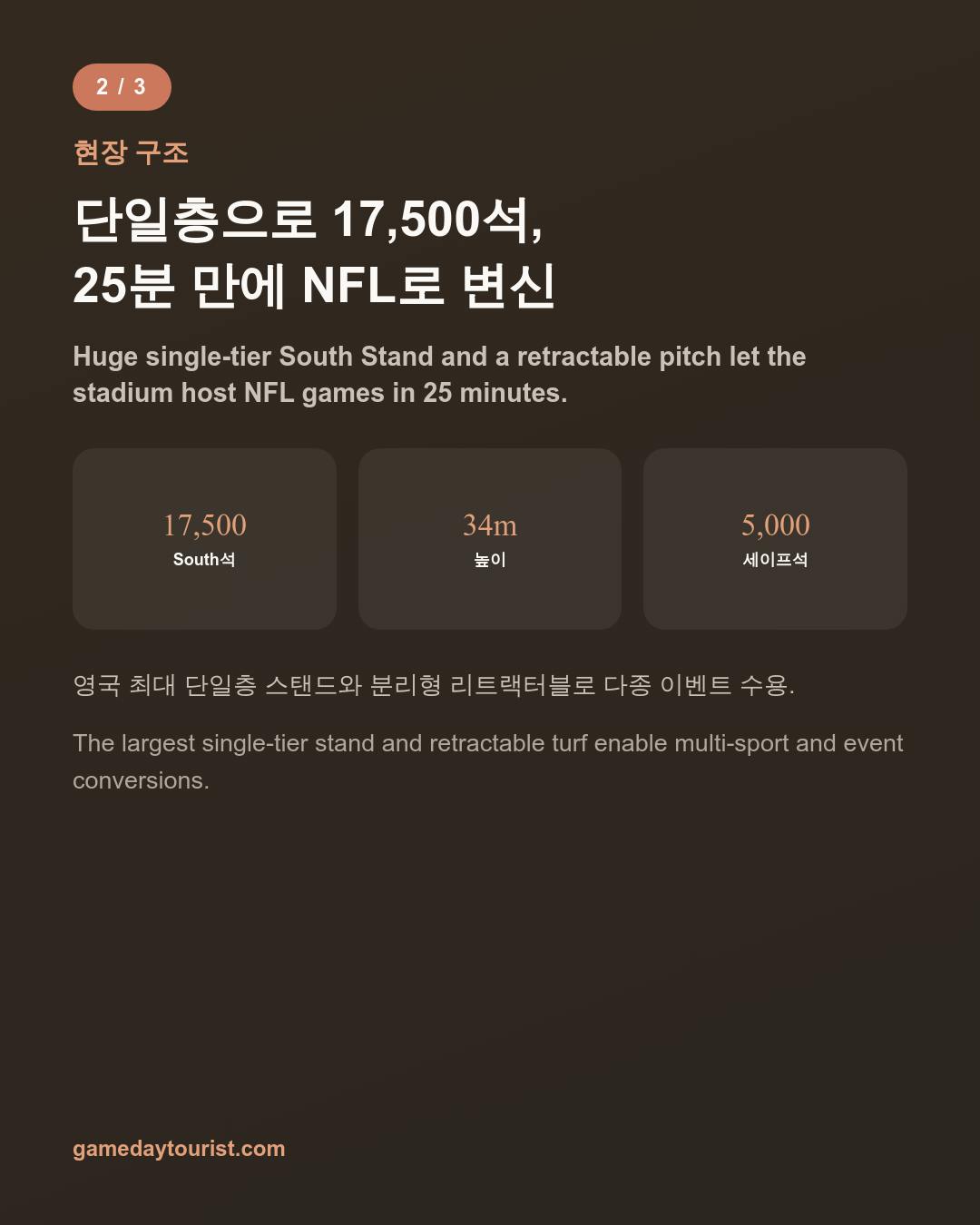
The single-tier South Stand holds 17,500 seats, making it the largest single-tier stand in the UK; it rises to a height of 34 meters and includes 5,000 safe-standing seats.
On top of that, they installed a world-first removable retractable artificial turf, creating a system that can convert the football pitch into an NFL field in 25 minutes.
Thanks to this single device, Tottenham has hosted at least two NFL regular-season games each year since 2019, and recently extended their agreement with the NFL through the 2029–30 season, securing this revenue stream for a longer period.
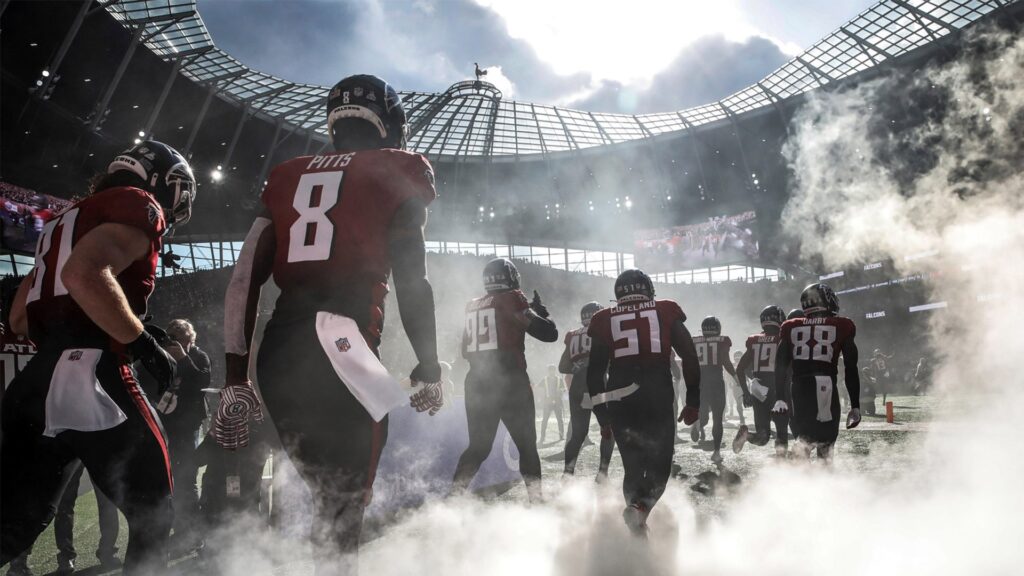
Source: https://populous.com/
Merchandise (MD) — Tottenham Experience
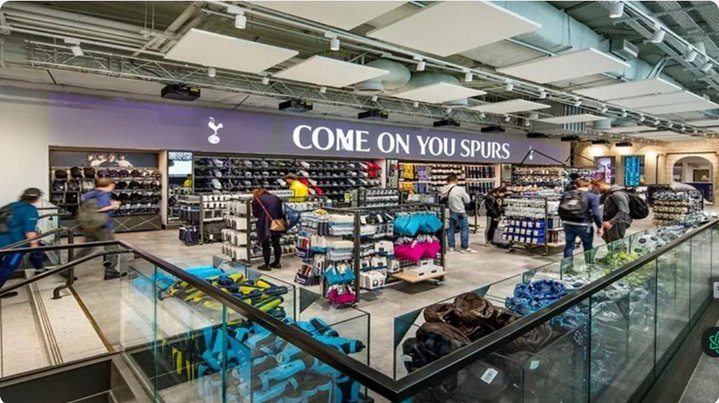
On the merchandise side, the most notable feature is the megastore called “Tottenham Experience.” It spans 23,000 square feet — roughly 640 pyeong in our units — and is said to be the largest store inside a European stadium.
It’s more than a big shop — it’s built as an entertainment space, with a 100-seat auditorium and a video wall composed of 36 screens, and it hosts fan meetings and promotional events there before and after matchdays.
Source: https://populous.com/
The store building itself was reconstructed preserving the façade of the Grade II-listed Willmington House built in 1910, so attaching brand heritage even to a retail space is impressive. The store sells replica kit customization as well as limited-edition goods exclusive to non-football events such as NFL games or concerts.
Source: tottenhamhotspur.com (club official website)
Advertising Inventory — The “Don’t Sell” Strategy
The way they manage advertising inventory is interestingly a “don’t sell” strategy.
Daniel Levy reportedly wanted a naming rights deal worth £25 million per season for 15 years (a total of £375 million) when the stadium opened in 2019.
They were aiming for what would have been the largest naming-rights deal in sports history, but for more than six years no sponsor met those terms, and recently they are said to have lowered expectations to a total of around £200–250 million.
Even so, they still have not placed a sponsor’s name on the stadium. Instead, they recently launched an initiative called “The Collective,” shifting from selling the entire stadium naming rights to offering individual partnerships for each stand.
The deal with Sports Illustrated Tickets was the first example of this approach. In practice, more than 20 official partner logos — including Nike, HSBC, AIA, Salesforce, HPE, BetMGM, Monster Energy, and Cadbury — are displayed around the stadium, diversifying inventory by breaking it into smaller pieces rather than relying on a single large contract.
Fan Convenience and F&B
From a fan convenience perspective, the stadium operates entirely cashless. They do not accept cash anywhere in the venue and use only cards and mobile payments like Apple Pay and Google Pay, which they say speeds up transactions and addresses hygiene concerns.
The official app includes wayfinding, a “Fan Cam” feature for taking and sharing selfies from seats, and digital tickets, guiding fans through the entire matchday from entry to exit.
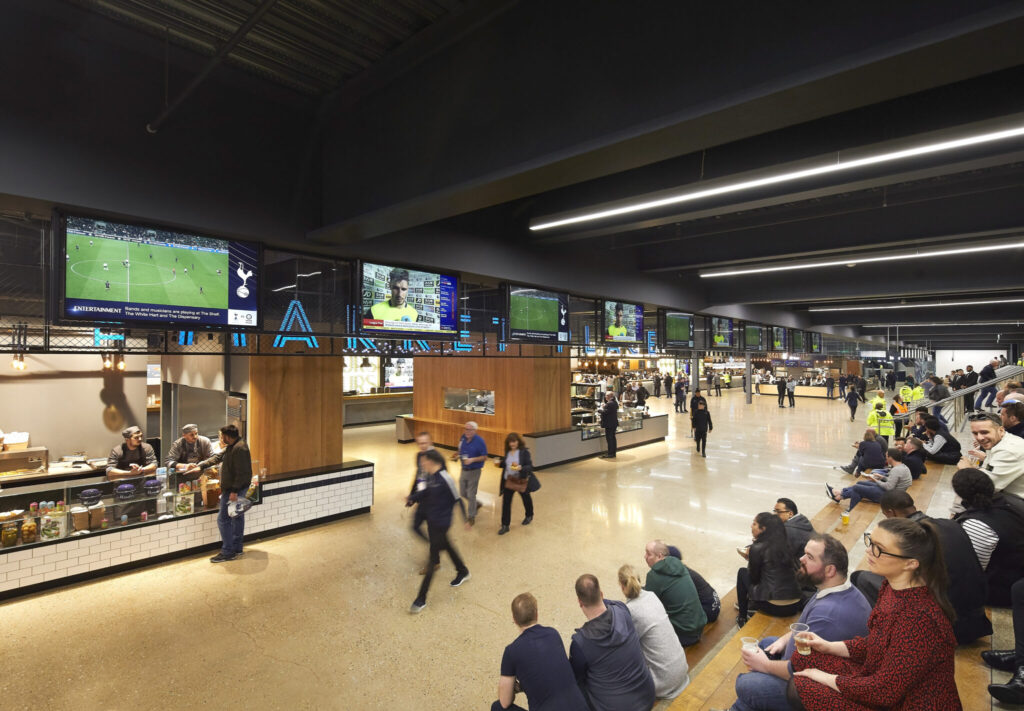
On food, more than 60 outlets are promoted as bringing London’s street food scene inside; plant-based menus are available at every outlet, and the South Stand “Marketplace” even houses a 65-meter-long bar — the longest in Europe.
It is also notable that Michelin-starred chefs participate in premium matchday dining: Bryn Williams of Odette’s, Indian cuisine specialist Diphna Anand, and members of the Roux family each handle different menus, and reportedly all dining is operated by 265 chefs and 1,600 bar staff — remarkable figures.
IT, Data Use, and Sustainability
The use of IT and data is another point to watch. Tottenham has smart stadium partnerships with tech firms like HPE and Scality and even calls itself “the stadium with the most data sources in the world.”
A club official described data, analytics, and intelligence as an “accelerator” for revenue growth, emphasizing that ultimately this data is used as a tool to enhance the fan experience. They also operate the stadium on 100% renewable energy, maintain a zero-landfill waste policy, and have a reusable beer cup scheme, weaving sustainability into the commercial narrative.
The Numbers Behind the Success
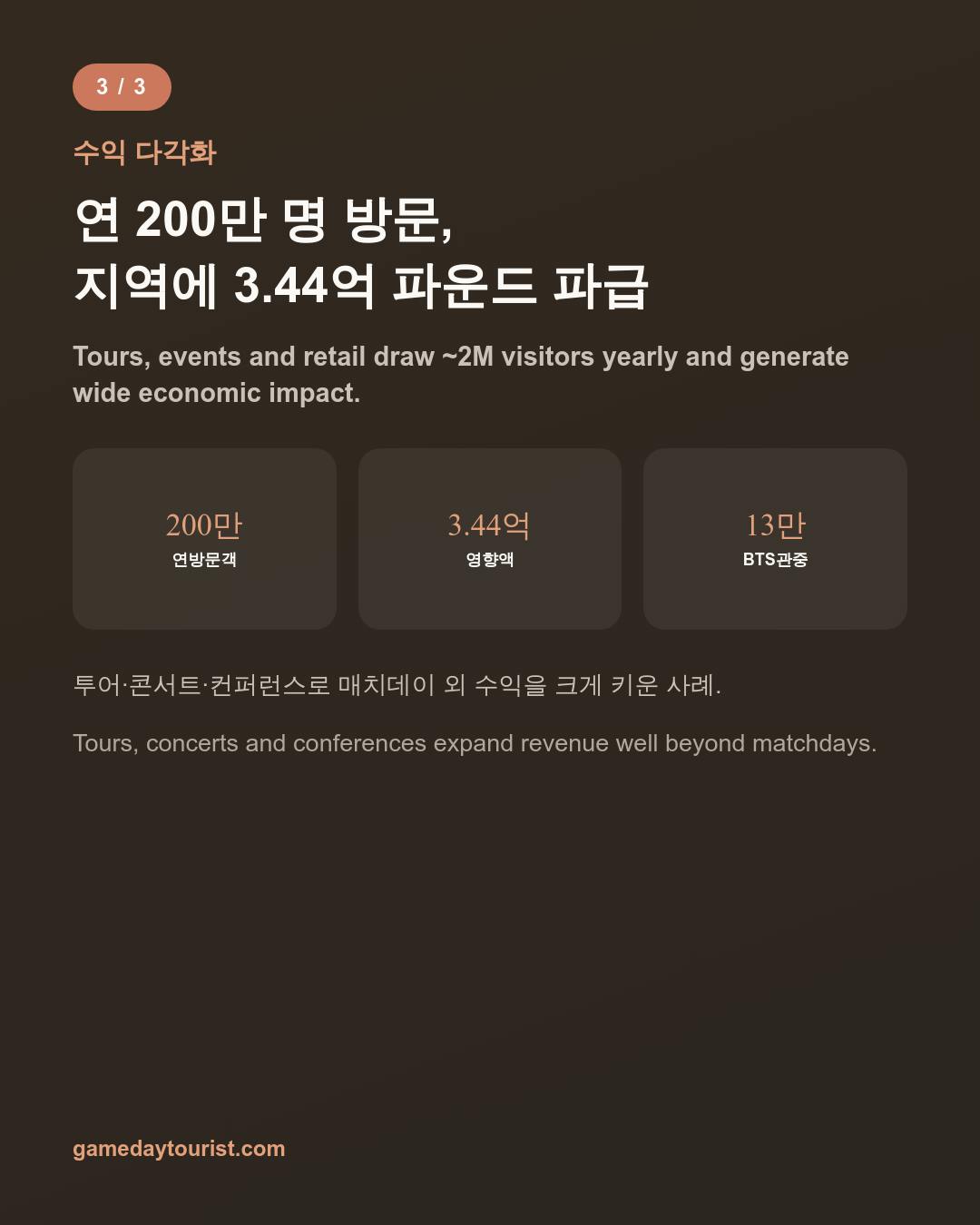
The numbers this structure actually produces are significant. Including stadium tours and visitor attractions like “The Dare Skywalk,” plus conference and event spaces, about 2 million people visit the stadium annually, and the club says it generates an annual economic impact of £344 million for the local area.
In July 2026 BTS held two concerts that attracted a total of 130,000 people, setting the record for the largest single-event attendance since the stadium opened in 2019 — the fact that a football club’s venue holds the record for the largest K-pop concert attendance well illustrates this stadium’s identity.
In design and operations the stadium has won more than a dozen industry awards since opening, including Building Awards Project of the Year 2019, the RIBA National Award 2021, and Stadium Business Awards Venue of the Year 2020.
Comparing with Domestic Pro Sports
Compared with domestic professional sports, the implications are clear. Most KBO and K League stadiums still heavily rely on matchday revenue, so cases where stadiums generate income on non-match days are still rare.
Designing to fill the other 335 days like Tottenham did is difficult to transplant directly given domestic constraints like land availability, noise regulations, and local resident complaints, but the direction is worth noting.
In particular, the “The Collective” approach of selling advertising inventory in smaller pieces by stand or zone instead of selling naming rights in one lump is effectively aligned with the practical direction for domestic clubs, aside from parent-company sponsors. It’s a model domestic clubs could reference to reduce dependence on parent-company sponsorships and diversify advertising revenue sources to achieve self-sufficiency.
The idea of designing a 640-pyeong megastore not merely as a sales floor but as an experiential content space with an auditorium and video wall also has implications for many domestic clubs that still run merchandise mostly as shelf displays.
In summary, Tottenham Hotspur Stadium is close to being a case that demonstrates the upper limits of revenue structures imaginable within the framework of a football stadium. While there are many aspects that are difficult to compare directly with domestic conditions, breaking down advertising inventory and turning retail spaces into content-driven experiences are approaches that domestic clubs could try step by step.
Leave a Reply