Contents · About 7 min read
📱 View as card news


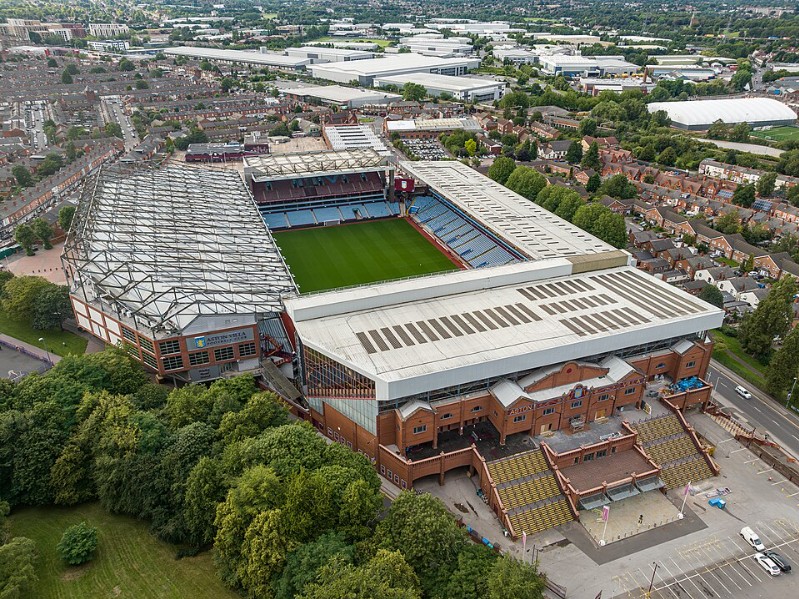
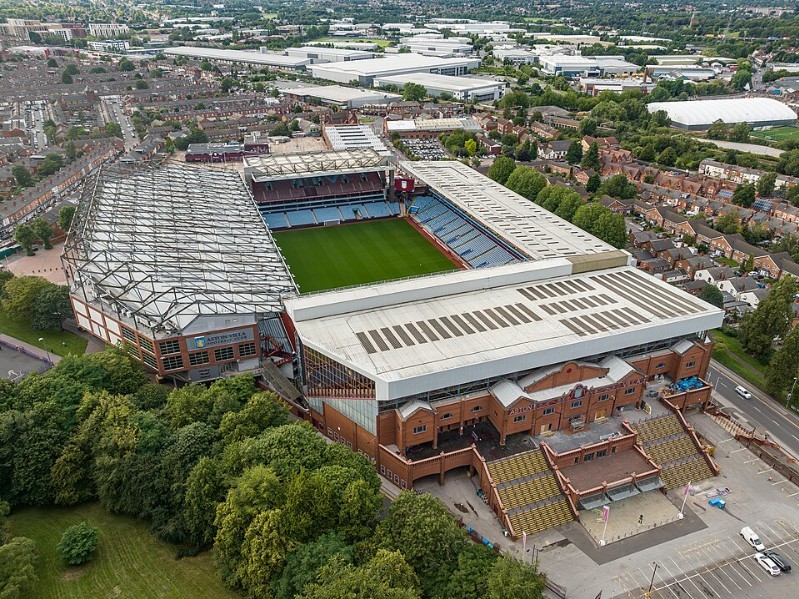
Aerial view of Villa Park (August 2023). Source: Wikimedia Commons (Arne Müseler) · License: CC BY-SA 3.0 DE
Two unfamiliar names paired up in a way that caught my eye while I was watching this summer’s transfer window.
According to reports, Aston Villa had reached out twice about Kim Min-jae, who plays for Bayern Munich.
A follow-up report said the club contacted his agent again after the preseason friendly against Munich in Asia in August, but with manager Vincent Kompany’s trust in him running deep, no move ended up happening.
It amounted to nothing more than transfer interest, but it did give me a reason to take a fresh look at Aston Villa as a club, through a marketing lens.
Once I actually dug in, though, what caught my attention wasn’t the transfer market at all — it was the front of the shirt.
On July 14, the club unveiled a new shirt sponsor, and the partner wasn’t a company — it was a country.
It was Rwanda’s national tourism board, “Visit Rwanda.”
Merchandise and Ad Inventory
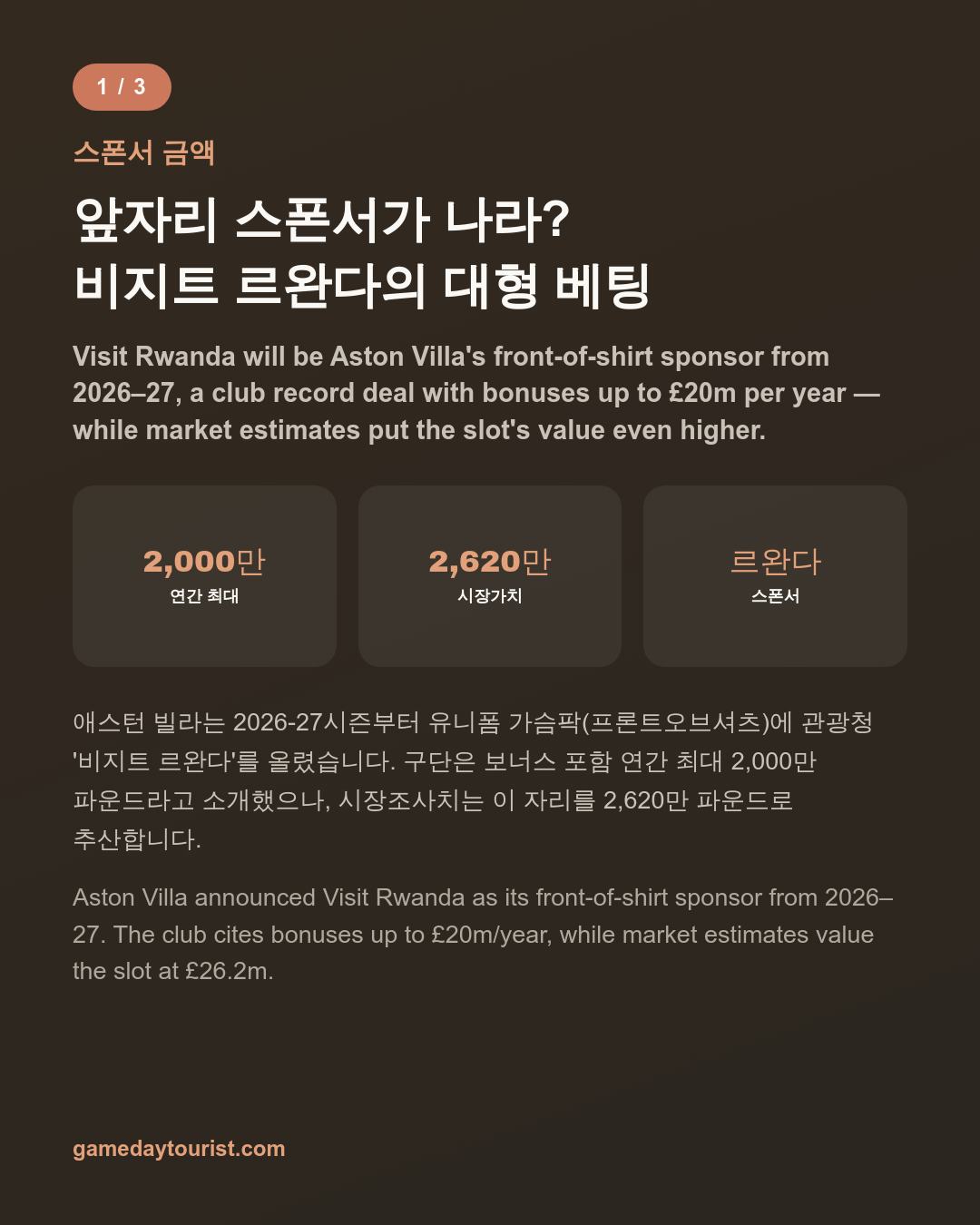
Visit Rwanda took over Aston Villa’s front-of-shirt sponsorship slot starting with the 2026-27 season.
The deal is worth up to £20 million a year, roughly ₩37.4 billion, if bonus conditions are met, and the club itself has called it the biggest sponsorship deal in club history.
What I found interesting is that market researchers actually estimate the “fair market value” of this slot even higher, at £26.2 million (up from £23.2 million the prior season).
The fact that the actual deal falls below that market value suggests there’s still room for a sponsor to come along and offer more for this spot.
The sleeve sponsorship went to online betting company Betano for £6 million a year, roughly ₩11.2 billion, and the kit supplier switched to Adidas starting in the 2024-25 season.
That deal is worth £17 million a year, roughly ₩31.8 billion — a jump of more than four times the previous Castore deal (£3-4 million a year).
Castore had drawn complaints from players over kit that reportedly didn’t wick sweat well, the so-called “wet look” jerseys, so the switch to Adidas was tied to player welfare concerns as much as it was a simple sponsor swap.
It’s also worth noting, as the industry has, that club owner Nassef Sawiris happens to hold roughly a 7% stake in Adidas.
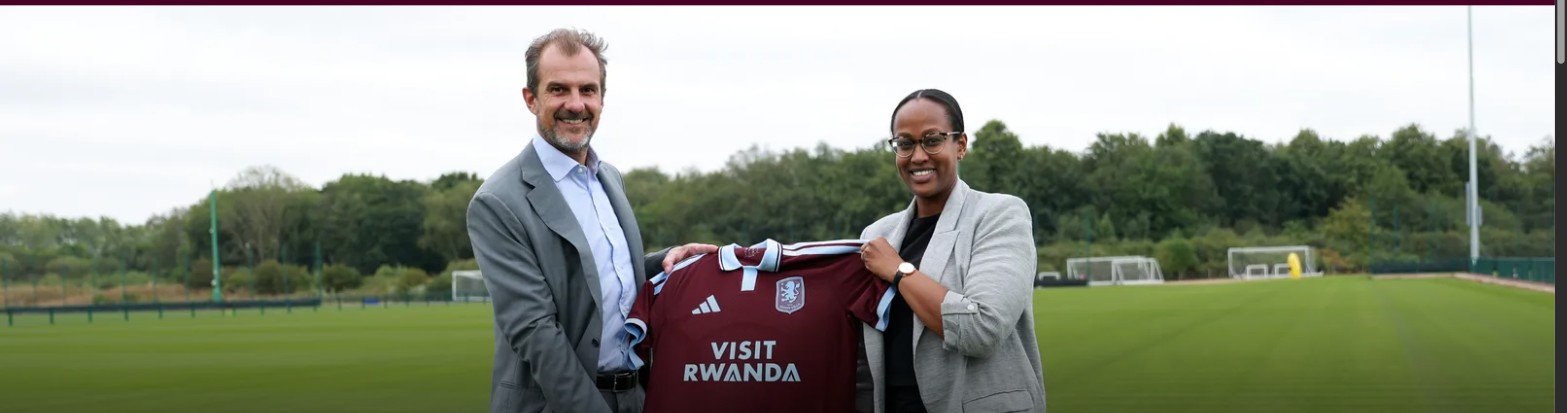
The “Visit Rwanda” sponsored kit unveiled on July 14, 2026. Source: Aston Villa’s official site, press photo
Attendance and Tickets
Villa Park’s average home attendance in the 2025-26 season was 41,969.
The high was 43,157 for the Manchester United match on December 21 last year, and the low was 29,429 for the Europa League match against Maccabi Tel Aviv — though that low figure reflects competition-specific factors like away-fan restrictions, so it’s a different number from a read on league-match popularity.
Adult season tickets for 2026-27 run £703 to £997.50 for 19 league matches, roughly ₩13.1-18.6 million, and a 23-match package that includes four Champions League group games runs £969 to £1,297.50, roughly ₩18.1-24.2 million — both up 5% on the year.
Even so, season tickets for 2026-27 are already sold out and only available via waiting list, and this is reportedly the first time in club history a waiting list has had to open, back in April — a rare case of demand outrunning supply.
Space and F&B
Villa Park is currently in the middle of a full rebuild of the North Stand.
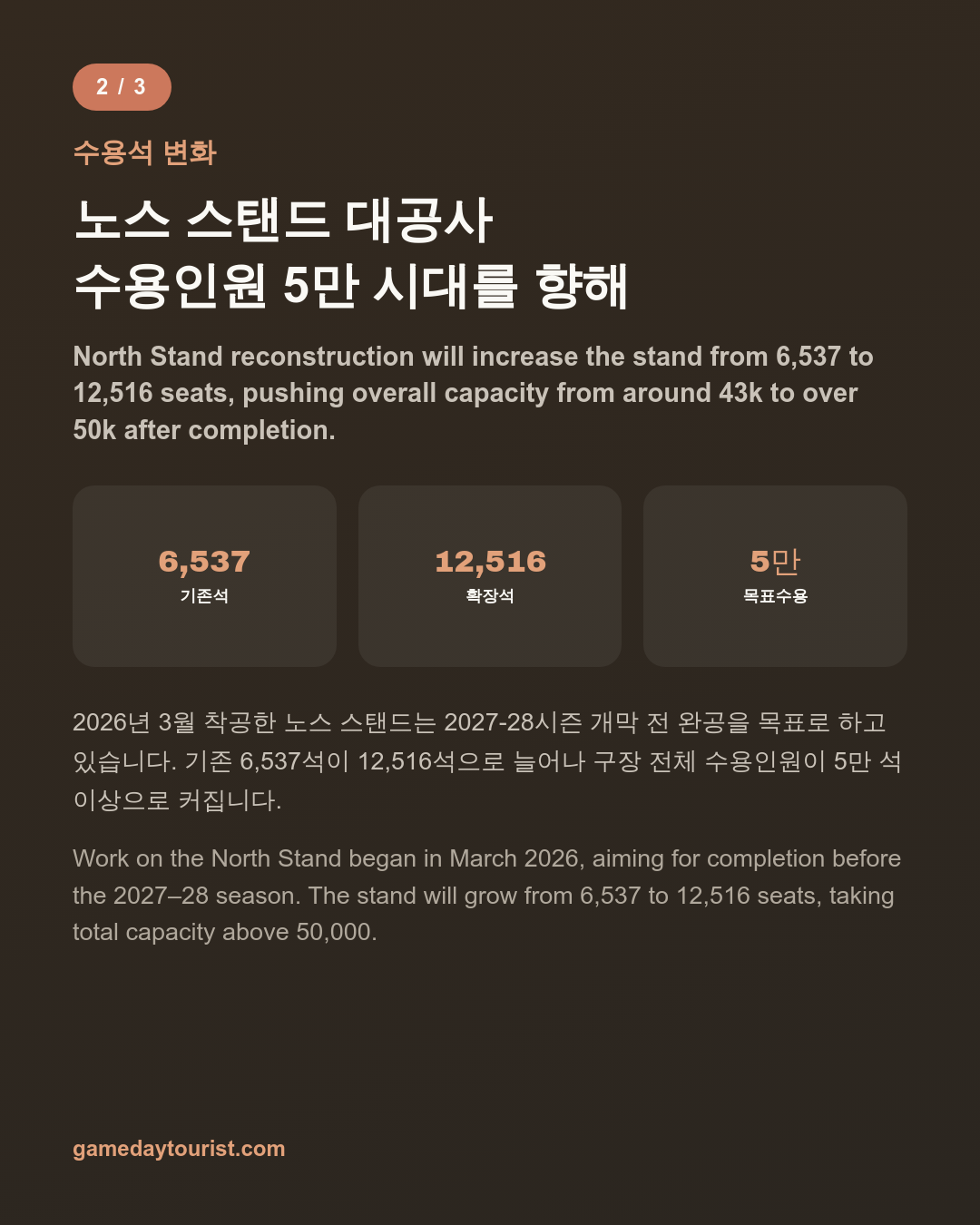
Construction started in March 2026 and will keep the North Stand closed through the entire 2026-27 season (temporarily cutting capacity to around 37,000), aiming for completion before the 2027-28 season kicks off; once finished, the North Stand will grow from 6,537 seats to 12,516, pushing total stadium capacity from around 43,000 up past 50,000.
Word has come through that the first phase of construction, worth £100 million, roughly ₩187 billion, has recently wrapped up.
On the fan-experience side, “The Warehouse,” which opened around Christmas last year, stands out.
Built on the North Ground site in partnership with US live-entertainment company Oak View Group, it’s a 3,500-capacity multipurpose venue that turns into the Premier League’s largest beer hall on matchdays — free entry for any ticket holder regardless of seat — and runs as a dedicated concert and event space on non-matchdays.
It’s a textbook space-diversification strategy, not settling for just being a football ground but capturing revenue from the hours around matchday too, and one blogger who specializes in overseas football travel writing has noted that Villa Park’s amenities, like the restrooms, feel “generously sized enough to move through easily” — which left me with the impression that this kind of infrastructure investment is genuinely translating into the visitor experience.
Broadcast Rights and Finances
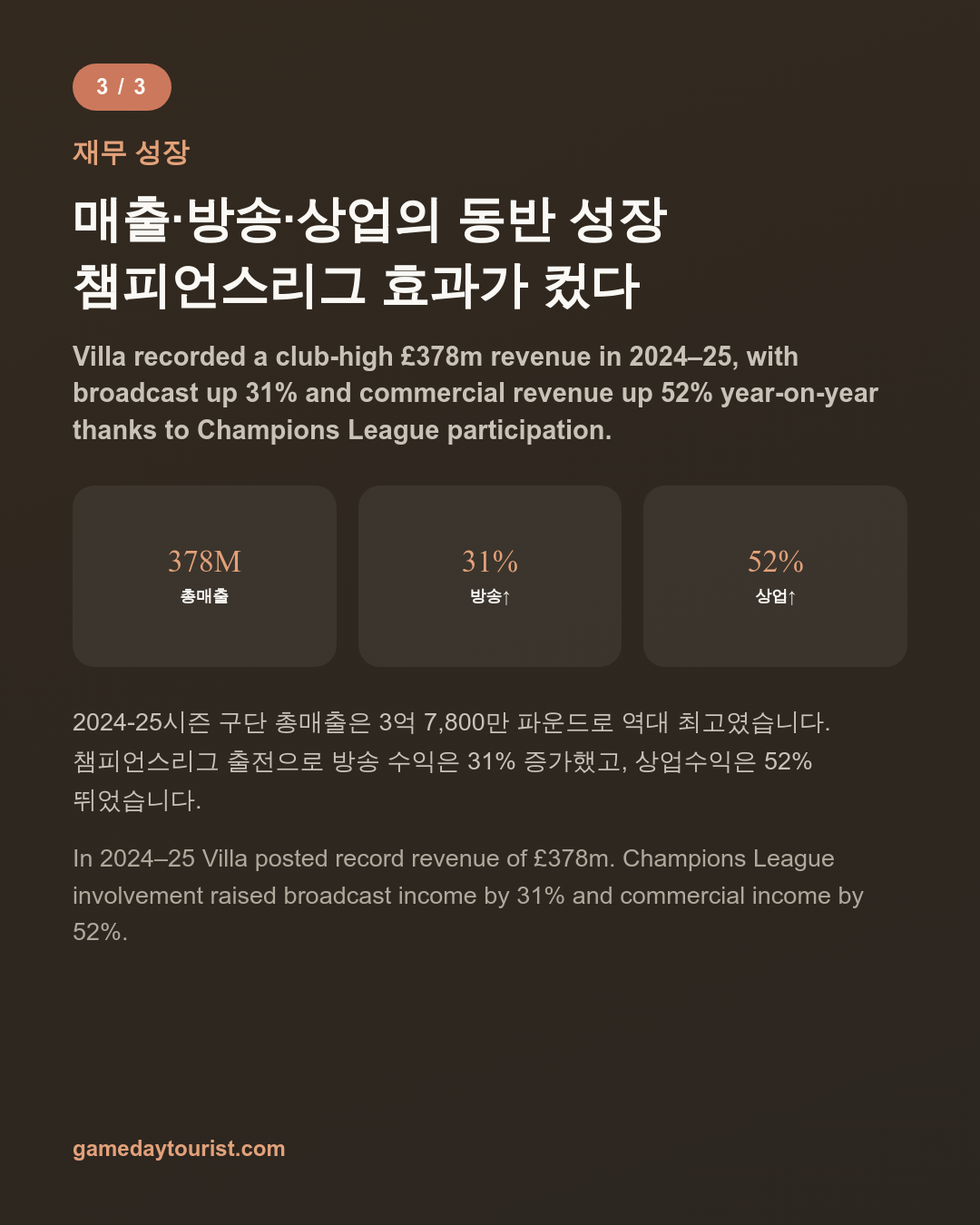
Aston Villa’s total revenue for the 2024-25 season hit £378 million, roughly ₩709 billion, a club record, and was assessed as the fastest-growing revenue in the Premier League over the past three years.
Champions League participation made a big difference: broadcast revenue rose 31% from £184 million to £241 million, commercial revenue jumped 52% from £60 million to £91 million, and matchday revenue climbed 37% from £28 million to £38.4 million.
Average matchday revenue per fan also rose from £25.10 to £32.40, and on the strength of that performance the club climbed from 21st to 14th in the Deloitte Football Money League, the global club-revenue rankings.
Regional Economic Impact
Birmingham City Council estimates the North Stand redevelopment will bring in 255,580 additional visitors a year and roughly £13 million a year, about ₩24.3 billion, in additional impact for the local economy once complete.
That estimate gets extra weight from the expanded Villa Park having been confirmed as a host venue for Euro 2028.
On the community side, the club’s Aston Villa Foundation runs programs reaching more than 30,000 people a year, and researchers at nearby Aston University are reportedly involved in verifying the impact of this project.
Ownership is interesting too: the club runs under V Sports, with Egyptian billionaire Nassef Sawiris and American billionaire Wes Edens each holding 34.4% and the rest split with investment firm Atairos — a case where a 55% stake bought for just £30 million in 2018 has grown to be worth more than £1 billion in eight years.
The Stadium’s Signature Feature
If you had to pick the single most iconic space at Villa Park since it opened in 1897, it would have to be the Holte End.
Named after Sir Thomas Holte, the site’s former landowner, the stand is where the chant “Holte Enders in the Sky” — lyrics set to the melody of Johnny Cash’s “Ghost Riders in the Sky” — first started, and it remains the song most associated with Villa Park to this day.
The stand’s brick facade carries “ASTON VILLA” in giant lettering, with a mosaic of the club’s founding emblem added by then-owner Randy Lerner in 2008 at its center, and it’s apparently common to see tour buses stop just to photograph this facade on its own.
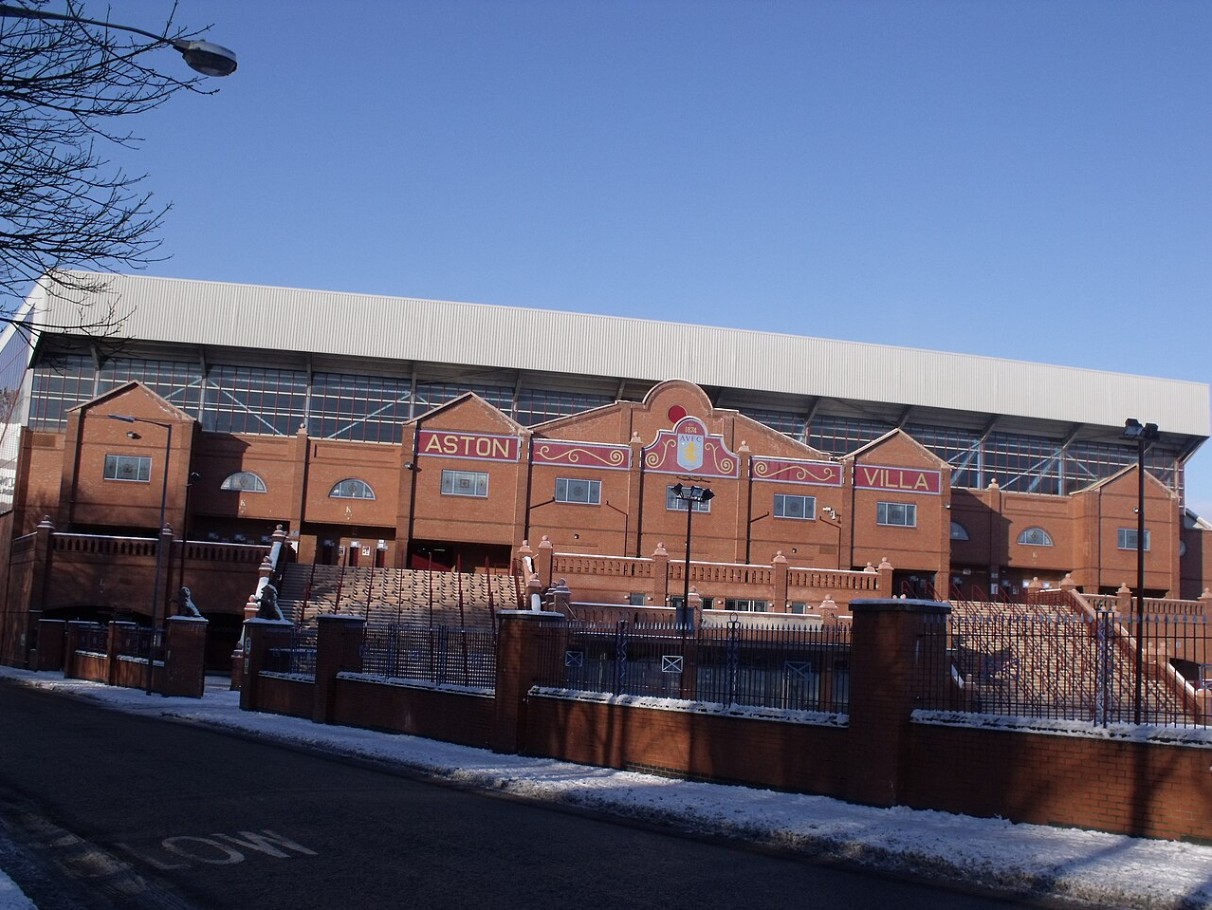
The brick facade of the Holte End stand. Source: Wikimedia Commons (Elliott Brown, 2010) · License: CC BY 2.0
A Comparison With the KBO and K League
It’s hard to find a Korean stadium with a country’s name attached to it.
Every case involves the parent company that owns the club putting its own name on things, and jersey sponsors are also mostly filled by the parent company or an affiliate.
Aston Villa’s Visit Rwanda arrangement is different — a country’s tourism board, with no ownership ties to the club, simply paying market price for the front of the shirt — and it’s a form that hasn’t shown up yet in either the K League or the KBO.
It’s also notable that a single jersey sponsorship can carry both an actual deal value and a separate market-estimated value, with the gap between the two used as leverage in the next negotiation — quite different from how the Korean market tends to operate.
And a boom cycle strong enough to sell out season tickets and create a waiting list is a rare picture outside a handful of the most popular clubs in Korea.
What stuck with me most from this research, which started with a transfer rumor and ended up at a shirt sponsorship, was that even a nearly 130-year-old stadium is turning a North Stand rebuild into an opportunity to add a beer hall and a concert venue, converting the whole thing into a year-round revenue space.
Not treating a stadium as a facility that’s only useful on matchday is an idea worth thinking through carefully when it comes to stadiums back home too.
Leave a Reply