Contents · About 7 min read
📱 View as card news
Last May, after hearing that Arsenal had secured their first Premier League title in 22 years, I thought I should take a proper look at the club’s marketing structure. Busy schedules delayed this, and I’m only writing about it now.
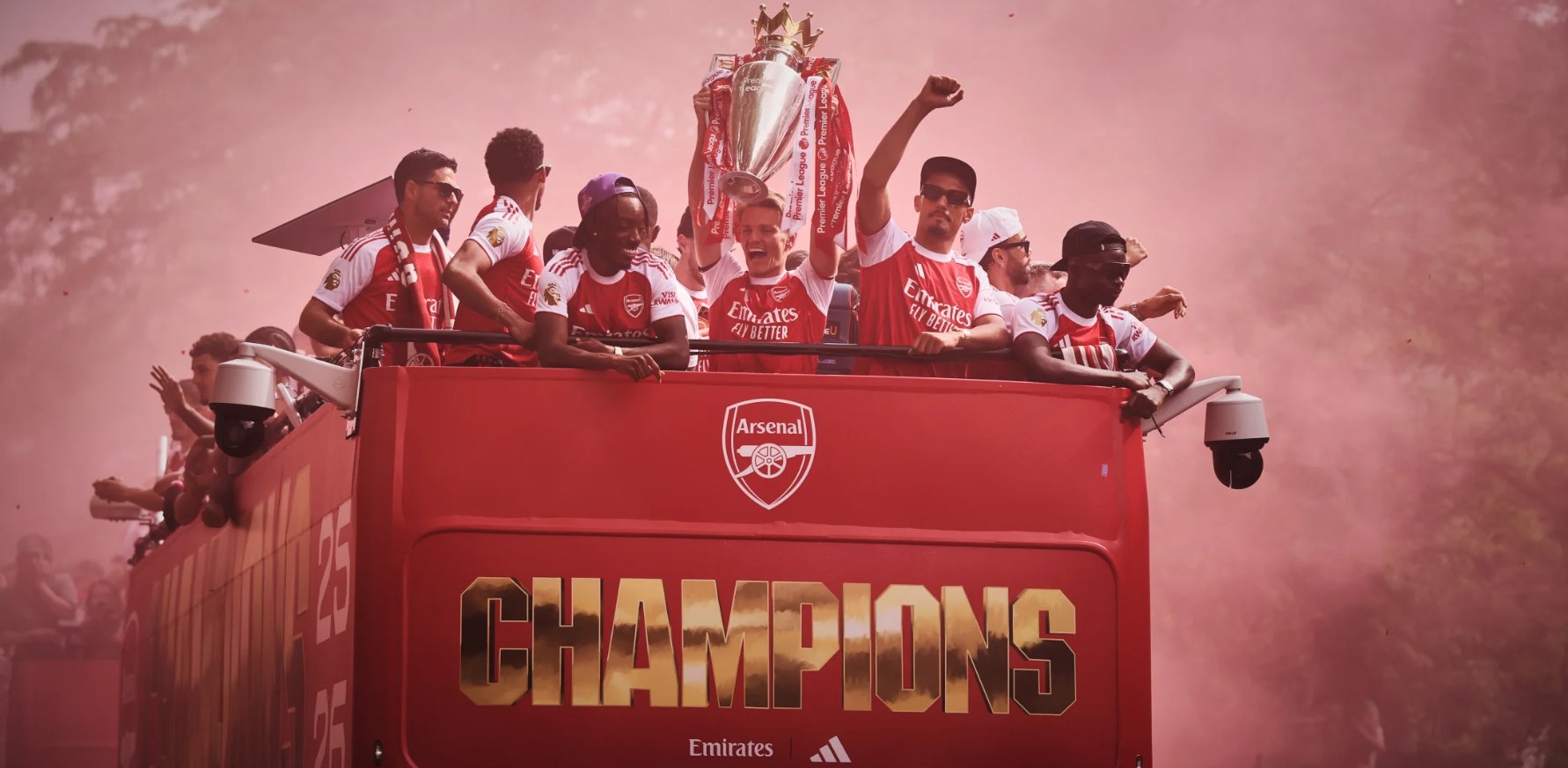
Arsenal finished as runners-up for three consecutive seasons from 2022–23, but on May 19, 2026, they clinched the title after Manchester City drew with Bournemouth. Then on May 24 they lifted the trophy by beating Crystal Palace 2–1 away in the final match of the season.
It’s hard to describe the disappointment of fans whose teams haven’t won for decades — the feeling is similar among some KBO club supporters here. Twenty-two years means a whole generation of fans went without a title, so as a marketer I was curious how the club’s revenue, attendance, and merchandise sales indicators fluctuated this season.
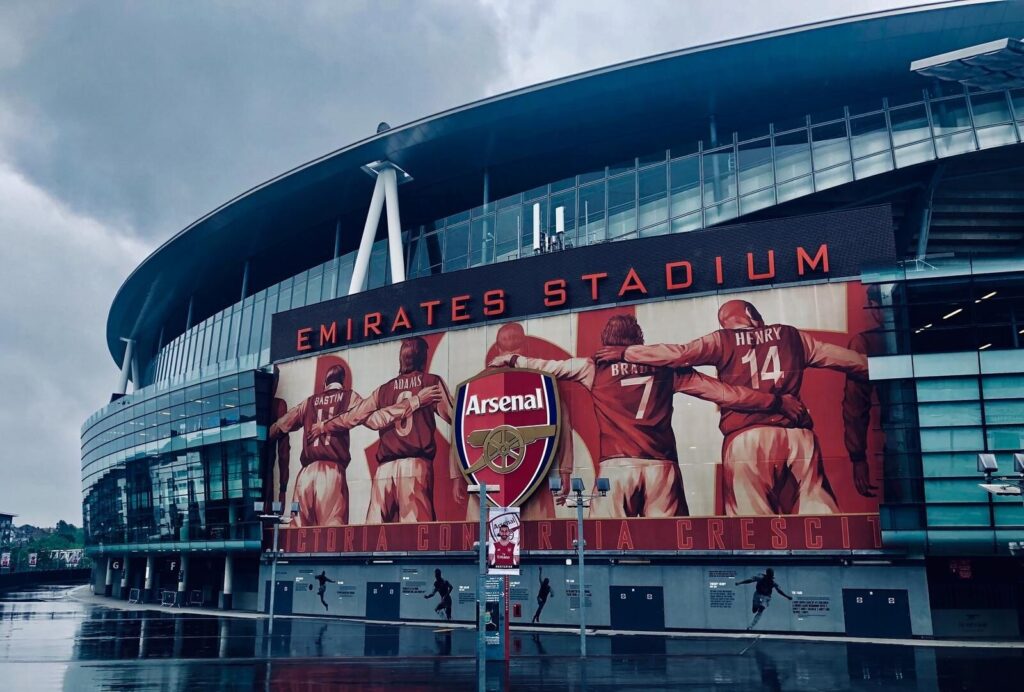
Source: Screenshot from arsenal.com Emirates Stadium introduction page
Fans and Attendance
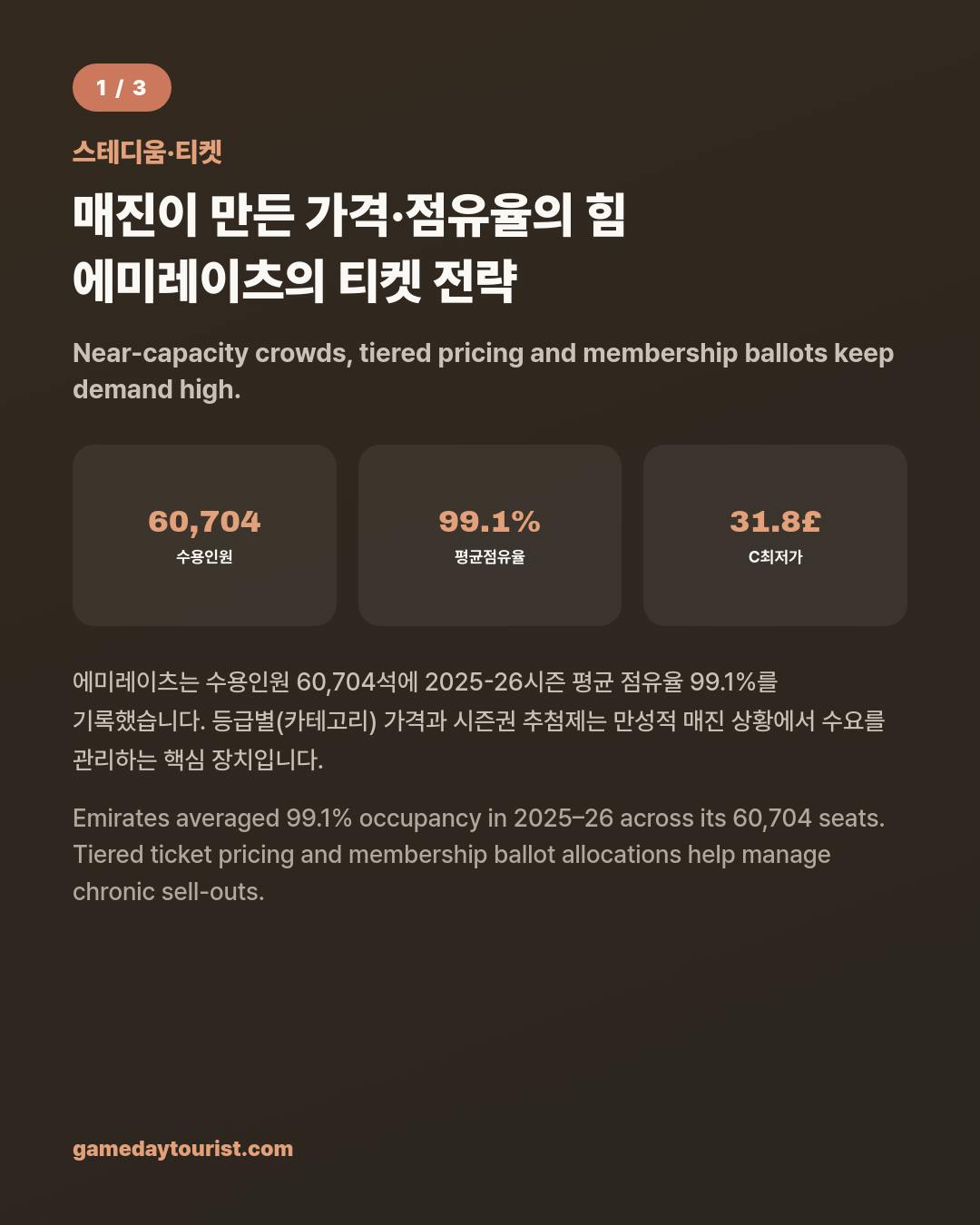
The Emirates Stadium has a capacity of 60,704, and the 2025–26 season average attendance rate (percentage of capacity filled) reached 99.1%.
That means it was effectively sold out all season. Despite maintaining such a high occupancy rate, ticket prices are tiered by category: the lowest price for adult lower-tier (Category C) starts at £31.80, while relatively popular matches (Category B) start at £44.80.
Season ticket allocation is structured by two membership tiers, Silver and Red, and assigned by ballot. Managing demand by tiering memberships like this is a typical ticket marketing strategy to segment fandom and manage loyalty in a chronic sellout situation, and it’s worth noting.
Advertising Inventory and Naming Rights
The most noticeable thing on the advertising inventory side is, of course, the contract structure with Emirates.
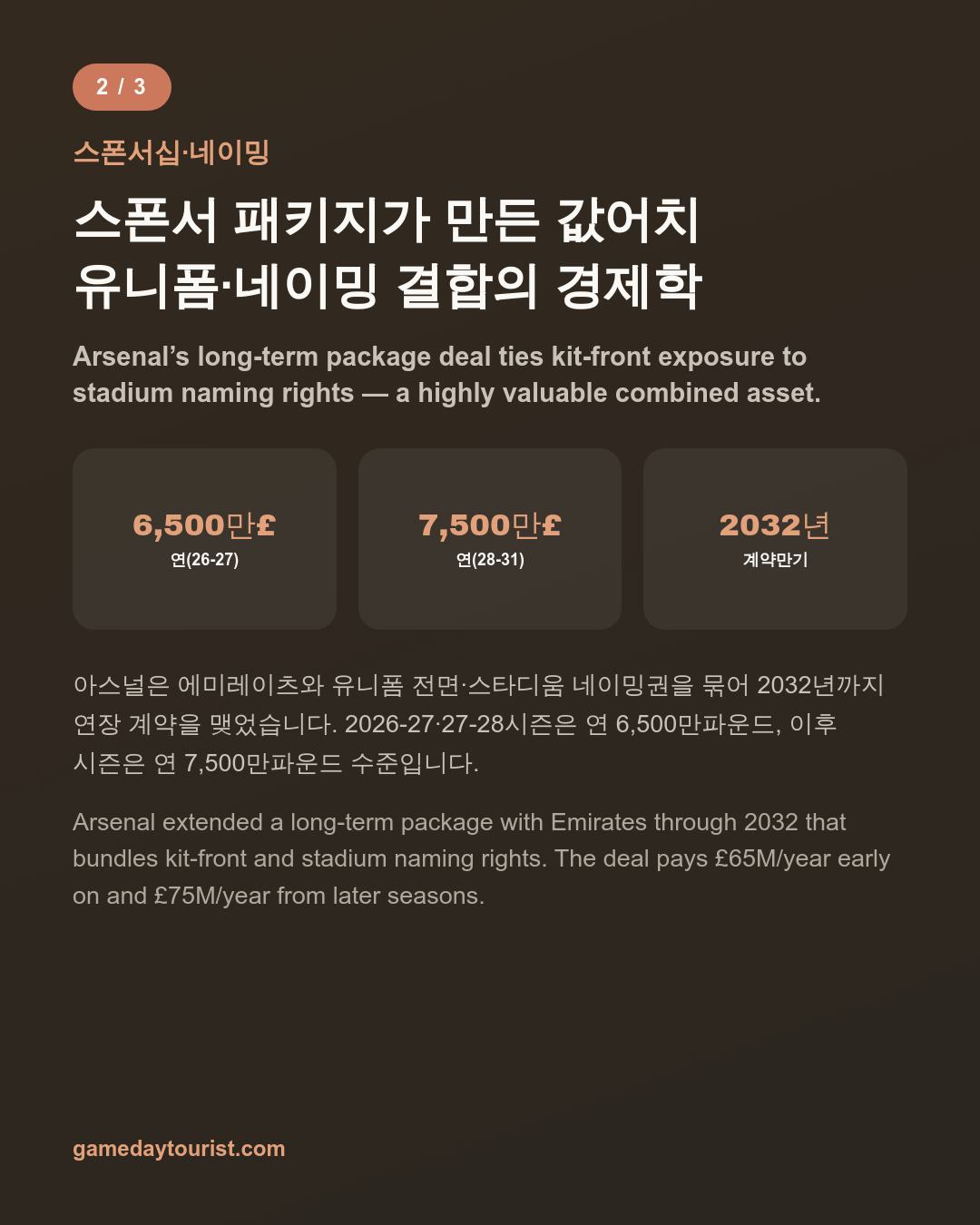
This year the parties extended a long-term deal through 2032 that bundles the kit sponsorship with the Emirates Stadium naming rights: £65 million per year for the 2026–27 and 2027–28 seasons, and £75 million per year from 2028–29 through 2031–32. The total contract value is about £430 million (roughly ₩750 billion if you take the exchange rate as around ₩1,750 to the pound).
However, this figure is the full package price combining front-of-shirt exposure and stadium naming rights. Purely isolating the value of the Emirates Stadium name alone, past deals have been valued at about £2.8–4.0 million per year.
In other words, this differs significantly from domestic pro clubs: because the EPL draws global attention, front-of-shirt exposure can be an overwhelmingly expensive asset relative to stadium naming rights. Once you know this structure, you understand why other clubs often sell packages that bundle naming rights with shirt and sleeve sponsorships rather than selling stadium naming rights alone.
Starting in 2026–27, Arsenal replaced sleeve sponsor Visit Rwanda with global HR and payroll platform Deel in a new deal. Deel will pay £18 million per year, rising to £25 million if performance bonuses are met.
Adidas, as kit supplier, also pays about £75 million per year, so a single kit carries at least three different sponsor logos with different valuations.
Broadcasting Rights
Broadcast revenue figures for this season aren’t officially published yet, so estimates vary. One football finance outlet estimated Arsenal’s broadcast-related revenue for 2025–26 at around £326 million.
Of that, Premier League domestic broadcast distribution was about £199 million (a 16% increase year-on-year), and UEFA broadcast revenue from reaching the Champions League final was about £121 million.
Arsenal, incidentally, drew 1–1 with Paris Saint-Germain in the Champions League final and lost on penalties (4–3), finishing as runners-up. Simply reaching the final boosts their broadcast revenue distribution tier significantly, so European competition results are a major revenue source distinct from league performance.
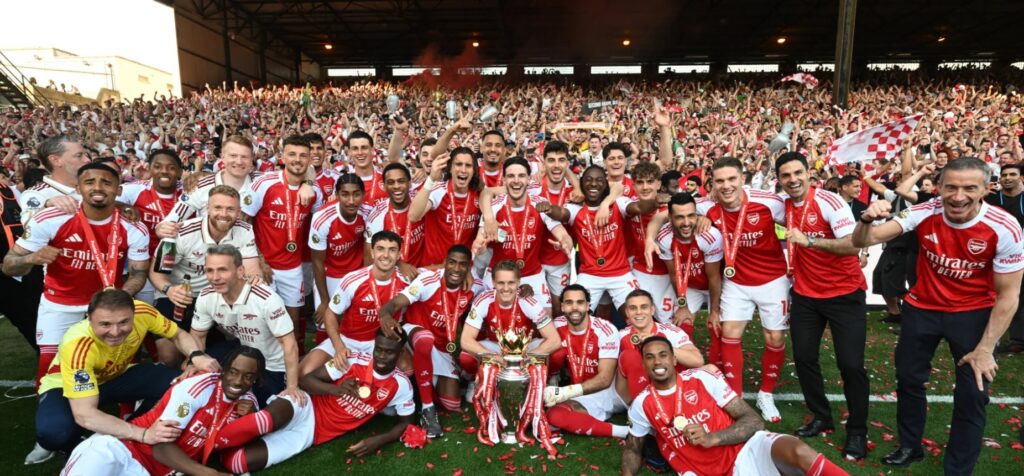
Source: Screenshot from arsenal.com page
Revenue and Financial Performance
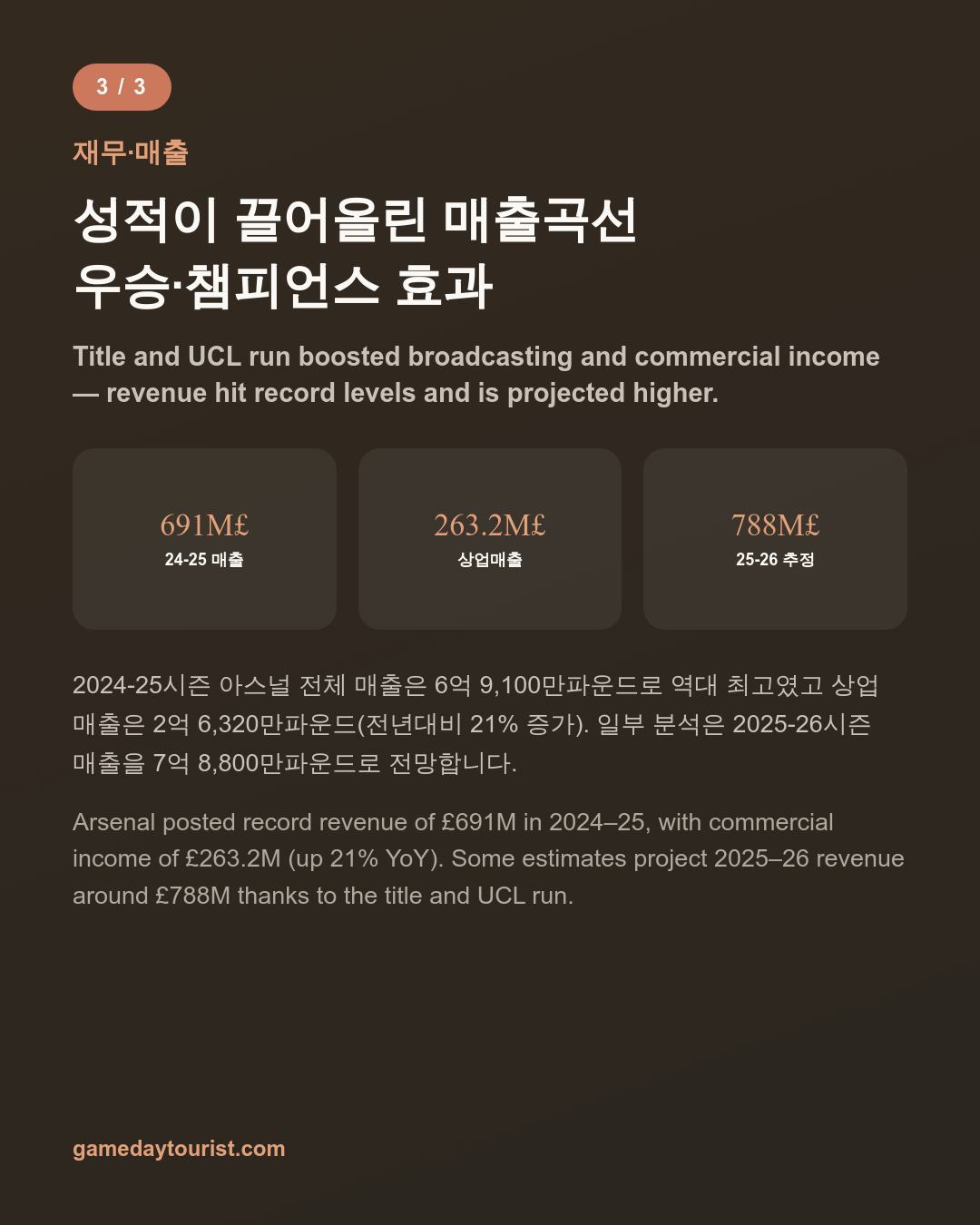
According to the most recent official financial statements (2024–25), Arsenal’s total revenue was £691 million (roughly ₩1.2 trillion), a club record. Commercial revenue (sponsorship, merchandise, etc.) was £263.2 million, up 21% year-on-year.
Although not yet officially announced, some financial analyses predict that with the title and a Champions League final in 2025–26, total revenue could reach a record £788 million. If realized, this would be a classic case of on-field success lifting the club’s entire revenue curve.
This amount exceeds the combined revenues of all professional clubs in our country, not just the KBO. As a marketer, I can’t help but envy it.
Space Utilization and F&B
Looking at the stadium, several local football travel bloggers who wrote matchday reviews noted the Emirates concourses are wide, making movement generally easy.
Even so, at peak times like halftime, even wide concourses don’t entirely prevent queues from forming. Food-wise, steak and chicken balti pies are standard menu items, and vegan pies are also sold — reviewers repeatedly noted that the vegan pies sometimes sell out faster than expected, so they seem quite popular.
The reason clubs invest so much in concourse design and menu selection is that in consistently sold-out stadiums, F&B revenue and dwell time directly translate into average spend per customer. This is something domestic clubs should consider when renovating stadia.
Like the kt wiz park example I wrote about before — where a non-concourse structure still succeeded through careful solutions — this is another instance where increased dwell time and average spend are linked.
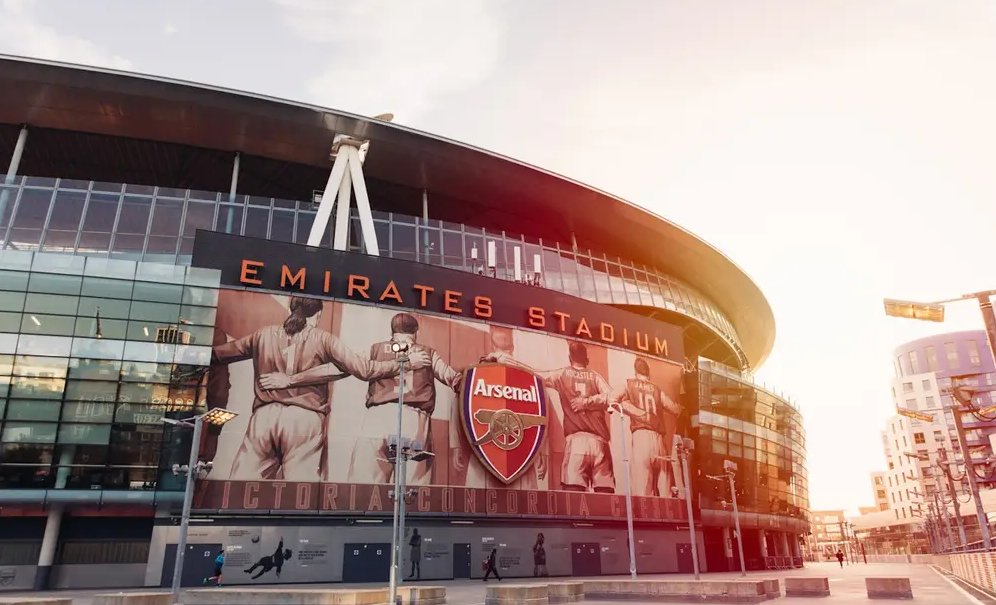
Source: Screenshot from arsenal.com Emirates Stadium introduction page
Community Integration and Economic Impact
In Arsenal’s most recent socio-economic impact report (based on 2022–23), the club stated it contributed £616 million to the UK economy, of which £425 million returned to their home borough of Islington.
They reported supporting over 4,400 jobs across the UK and over 1,600 jobs in Islington alone, contributing £228 million to UK tax revenue. In that season, Emirates attendance totaled 1.6 million people.
The club is discussing expanding capacity to around 70,000 seats with stadium designers Populous, although an early proposal for about 80,000 seats was estimated to cost around £500 million in construction. Given the site’s high residential density, transport infrastructure issues arise, so it will likely take time before construction could begin.
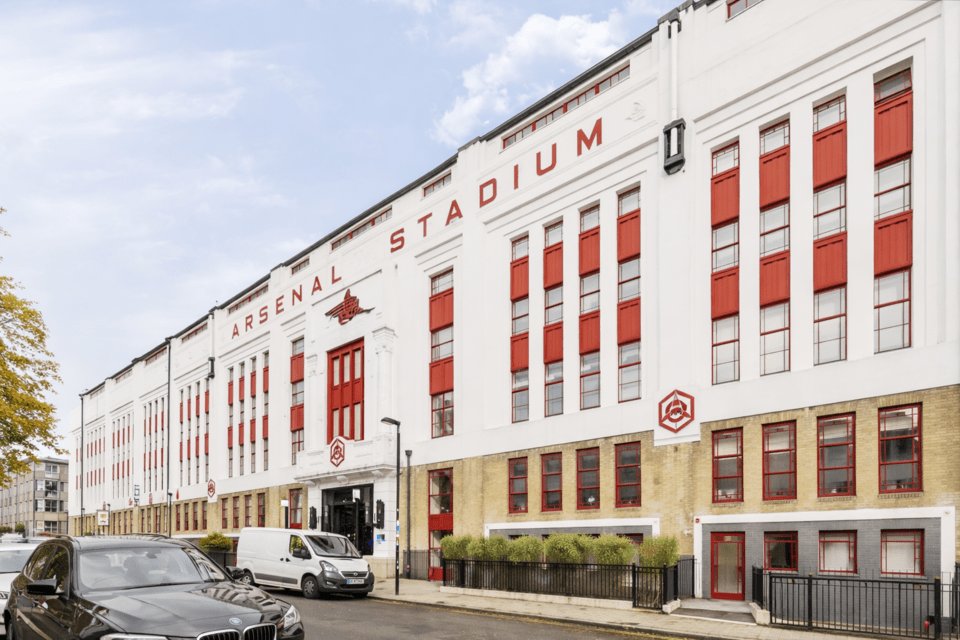
Source: Highbury Square website
The Legacy of Highbury — What a Former Home Left Behind
I wanted to mention this part.
Before moving to the Emirates Stadium, Arsenal played at Highbury (officially Arsenal Stadium) from 1913 to 2006 — 93 years as their home.
The Highbury site, demolished after the move, was redeveloped in 2009 into a residential complex called Highbury Square with 725 units. Interestingly, during redevelopment the club did not completely demolish the stands.
The East Stand façade and the West Stand exterior, built in the Art Deco style in the 1930s and designated Grade II listed, were preserved and apartments were built behind them. The old pitch area was left as a central garden for residents.
The East Stand’s Marble Hall (a marble-finished lobby), a bust of manager Herbert Chapman, and the players’ tunnel remain intact. In 2009 then-manager Arsène Wenger attended the redevelopment completion ceremony, and the project received a special jury award at the MIPIM international property exhibition that year.
What I found interesting about this case is that even if the actual playing ground disappears, retaining the façade and symbolic elements allows the space to continue functioning as a pilgrimage site for fans.
From a marketing perspective, this is not just real estate development but a physical preservation of the brand’s historical assets, passing them on to future generations of fans — which I found personally quite impressive.
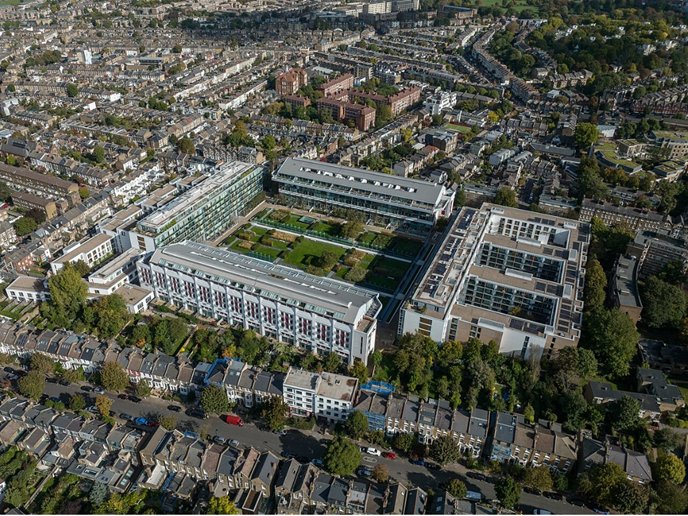
Source: Aerial photo from the Wikipedia ‘Highbury Square‘ article (Wikimedia Commons)
Comparing with the K League 1
Turning to domestic matters, the 2025 K League 1 season also recorded solid attendance figures.
The regular season average attendance was 10,341, season cumulative paid attendance was 2,047,564, and combined with K League 2 the total exceeded 3 million. Average spend per person (ticket and on-site purchases) reached ₩13,419, the highest since official records began in 2013.
Comparing simply with Arsenal’s average attendance of 60,217, the scale is almost six times different, but the trends shown by both leagues are similar.
As stadiums fill and average spend rises, the negotiating power of leagues and clubs in broadcast and sponsorship deals also increases.
Seeing Arsenal’s projected revenue jump from the £700 million range toward £800 million from a single season’s success reinforces the idea that the most important job for a marketing organization is to have systems in place — season ticket and membership structures, brand heritage content, and community programs — to capture and monetize any uplift when on-field performance improves.
This is something all professional sports clubs can learn from.
Leave a Reply