Contents · About 8 min read
📱 View as card news
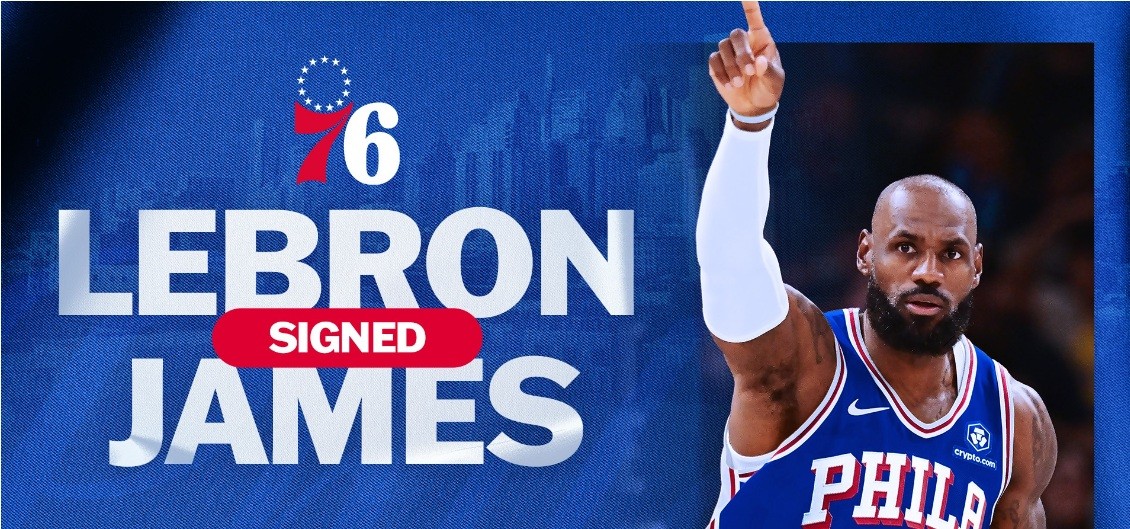
On the evening of Friday, July 24, LeBron James posted a single line on social media. “This might be my last decision,” it read, next to a photo of a Philadelphia 76ers jersey.
The 41-year-old veteran, who had reportedly considered retirement, was headed to Philadelphia. Three days later, on July 27, the club made it official: a two-year, $8 million deal, including a player option.
As a working marketer, the first thing I looked into after hearing the news wasn’t the schedule — it was resale ticket data. The numbers that moved within hours of the announcement were extraordinary.
About a month and a half later, on September 8, the 76ers and the Philadelphia Flyers unveiled the first exterior rendering of a new arena targeted to open in 2030. A club landing a star signing and a major facility investment in the same offseason seemed worth digging into.
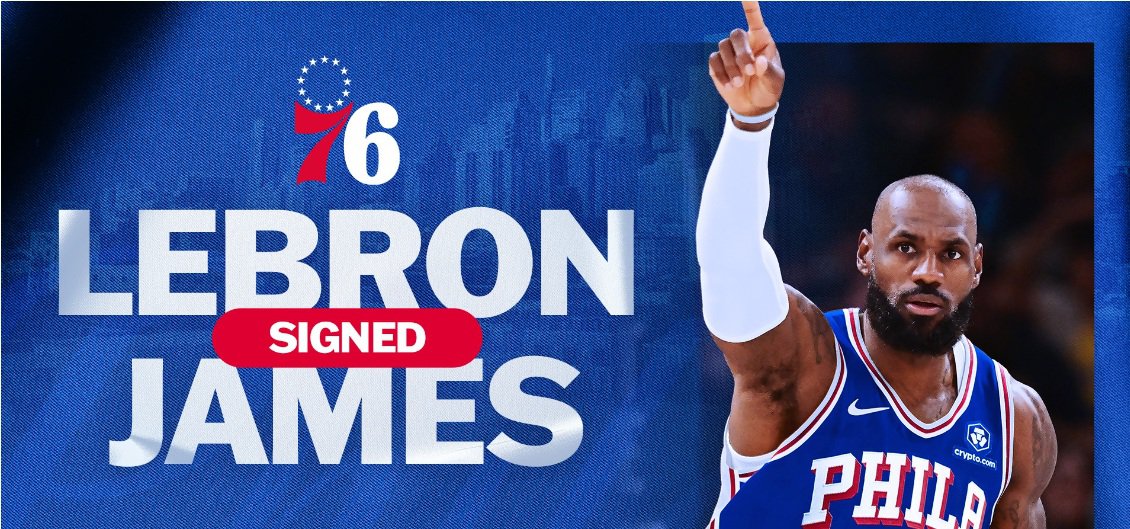
Source: 76ers official website · The 76ers’ announcement graphic for LeBron James’s signing
Crowds and Tickets
The 76ers’ home arena seats 20,478 (21,305 including standing room, or around 21,000 for basketball), and total attendance for the 2025-26 season (before LeBron) was 788,871, ninth among the NBA’s 30 teams.
That’s a respectable number, but it looks ordinary next to what happened after the LeBron announcement. Resale platform StubHub reported that within hours of the news, demand for 76ers games jumped roughly 200x, and searches for the team about 470x.
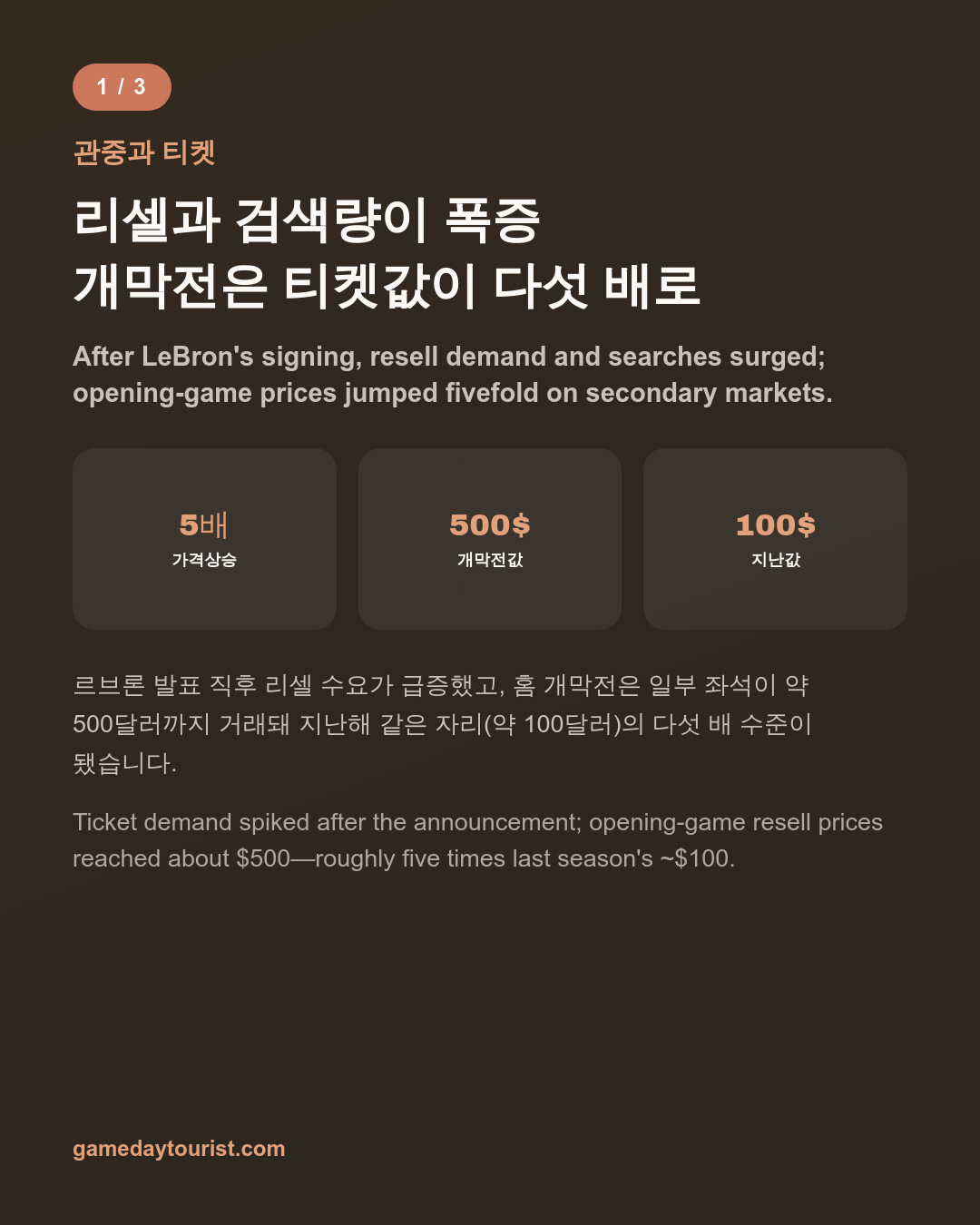
Preseason ticket demand in its first week ran about 15 times higher than the same point last year, and tickets for the home opener climbed to roughly $500 on the resale market — five times what the same seats went for (about $100) last season.
Average ticket prices are up more than 100% year over year, and some seats for the season opener against the New York Knicks traded for close to $48,000.
One analysis found that 9 of the 76ers’ 10 home games this season are projected to rank among the NBA’s 10 most expensive games league-wide.
Season tickets are now flagged as “high demand” on the club’s own website — it’s rare to see a ticket market move this much on a single player’s contract before a season has even started.
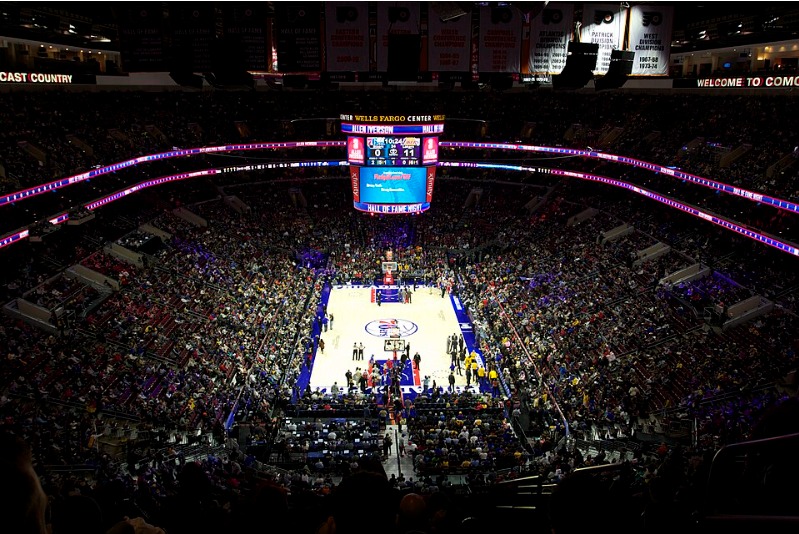
Source: Wikimedia Commons (Peetlesnumber1) · CC BY-SA 4.0 · Interior of the arena during a 76ers-Lakers game, December 2016
Making the Most of the Space, and F&B
The venue is currently called Xfinity Mobile Arena, but the 76ers don’t own it — they lease it from Comcast Spectacor, which owns both the building and the Flyers.
The building wrapped up a multi-year, roughly $400 million renovation in 2025, centered on expanded premium club and suite space, wider concourses, frictionless payment to cut concession lines, and higher-performance Wi-Fi.
Fan reviews are mixed. Complaints about narrow seats and tight legroom show up repeatedly, but so do comments praising the sheer number of concession stands, which kept halftime lines relatively short.
One review advised walking the concourse before the rush hits during breaks — a reminder that no matter how much a facility expands, peak-time flow design is still what actually determines how satisfied fans feel.
Widening the seats themselves has structural limits within the existing building, so improving concourses and concessions was, in effect, the 76ers’ main lever for boosting the felt experience.
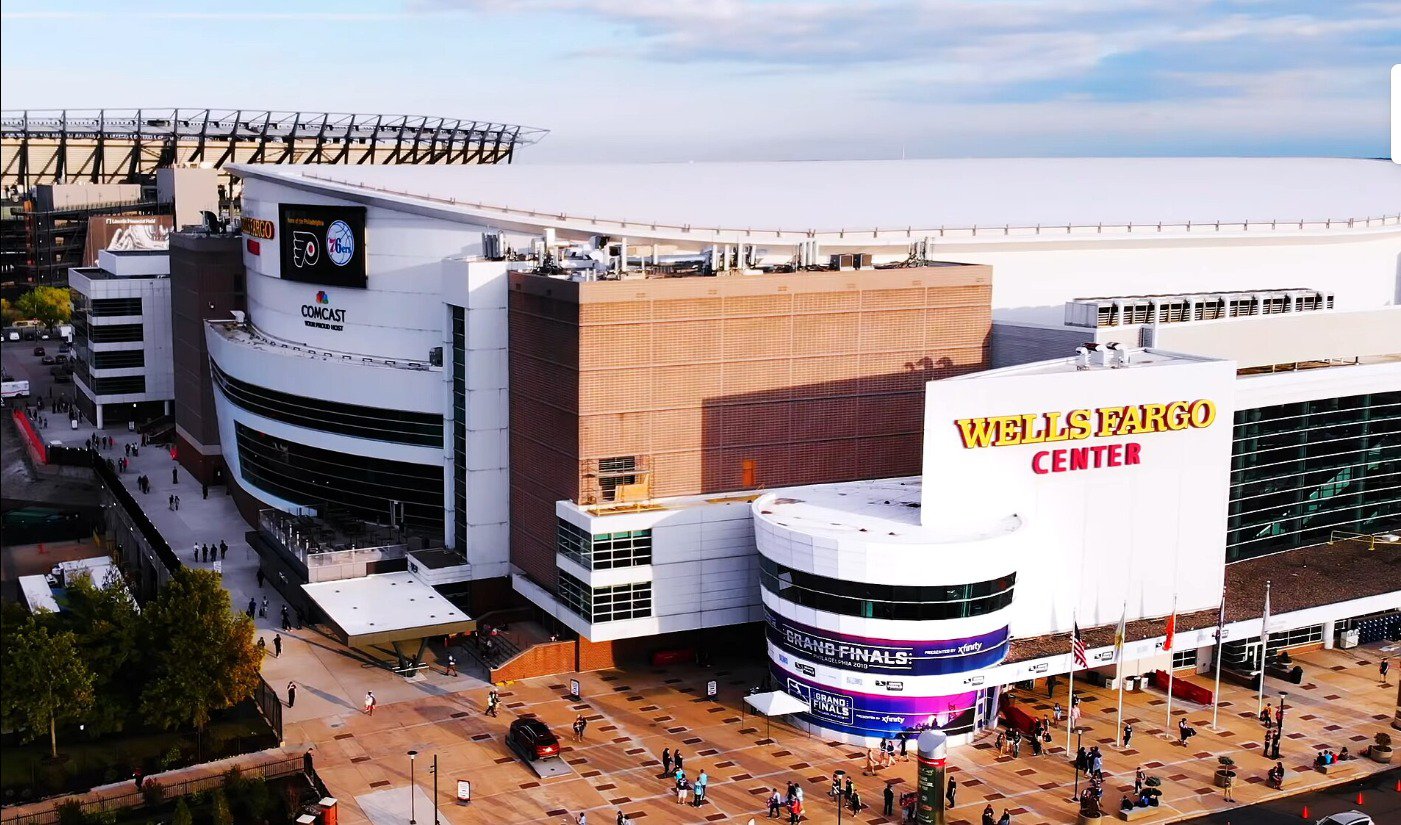
Source: Wikimedia Commons (Jen Smith) · CC BY 3.0 · The arena’s exterior in 2019, when it was still named “Wells Fargo Center” — renamed “Xfinity Mobile Arena” in 2025
Merchandise and Ad Inventory
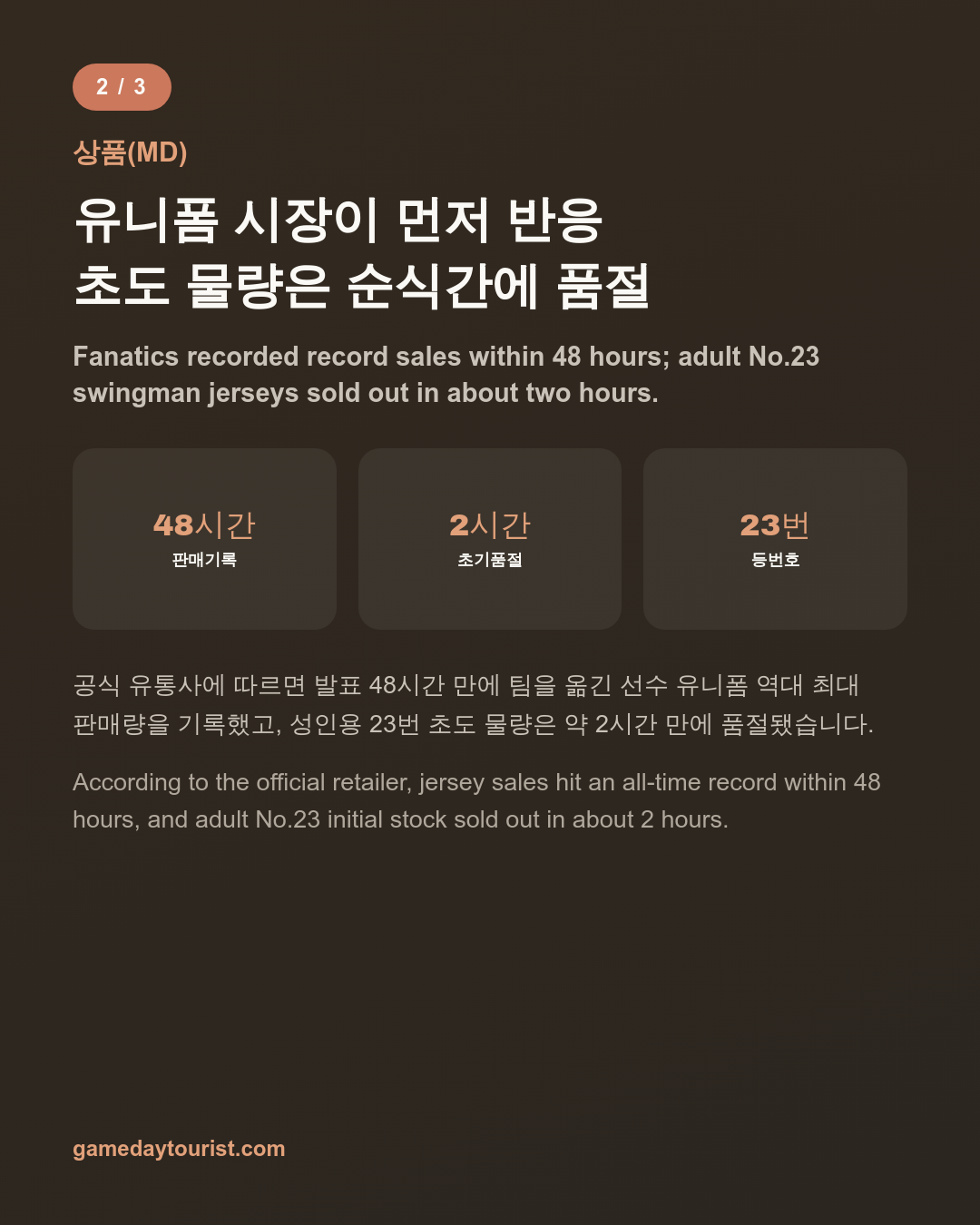
The jersey market reacted fastest of all to the LeBron news. According to official retailer Fanatics, LeBron’s 76ers jersey set an all-time sales record for a player’s jersey after a team change within 48 hours of the announcement, surpassing the mark set by Shohei Ohtani’s move to the Dodgers in 2023.
The initial stock of adult No. 23 swingman jerseys sold out in about two hours. Outfitters Fan Shop, the official store inside the arena, also carries exclusive items from brands like ’47 and Mitchell & Ness.
On the ad-inventory side, the jersey patch is hitting an interesting moment. The 76ers were the club that, together with StubHub in 2016, launched the first jersey patch sponsorship in major American professional sports — and the six-year deal with Crypto.com, which took over that spot, expires at the end of the 2026-27 season.
Industry analysts expect the next patch deal to sell for considerably more, thanks to LeBron’s global profile.
One star signing is lifting both merchandise sales and the going rate for jersey ads — and as a marketer, it strikes me that the timing might not be a coincidence at all, but a byproduct of a signing strategy that factored in exactly when that contract expires.
Broadcast Rights and Local Economic Impact
NBC Sports Philadelphia has held the 76ers’ regional broadcast rights since 1997, and will air 67-69 games this season, also streaming via the Peacock app.
Local reports say NBC Sports Philadelphia started hiring additional staff as soon as the LeBron news broke — a sign of just how much impact the broadcast side felt too.
At the league level, up to 15 76ers games are expected to be slotted into national broadcast windows on ABC, NBC, and Amazon Prime Video.
The new arena project, meanwhile, runs on a different scale of numbers than tickets or jerseys. Co-invested 50-50 by 76ers owner Harris Blitzer Sports & Entertainment and Comcast Spectacor, it’s being billed as the largest fully privately financed development in Philadelphia’s history, with an estimated $6 billion in regional economic impact and about 15,000 jobs over the next decade.
Some of the new tax revenue generated is also earmarked for the Philadelphia school district. Co-founder Josh Harris said at the new arena’s unveiling that “Philadelphia fans deserve a world-class arena, and we’re thrilled to partner with Comcast to build it.”
What’s interesting is that the naming-rights deal for the current Xfinity Mobile Arena runs through the 2030-31 season — which, as it happens, lines up almost exactly with the new arena’s target opening date.
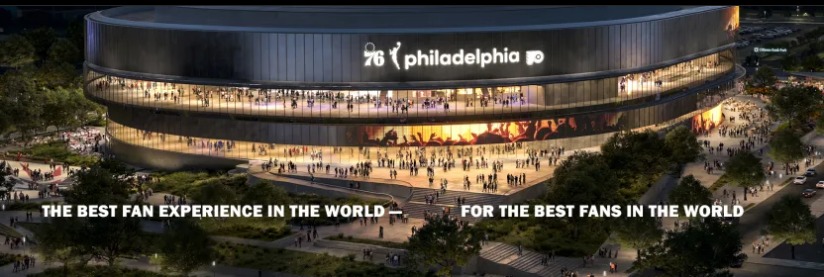
Source: Philadelphia Flyers official website · Rendering of the new arena targeted to open in 2030 (concept image)
The Arena’s Name and Traditions
The 76ers’ arena has changed names quite a few times since opening in 1996: CoreStates Center (1996-1998) → First Union Center (1998-2003, jokingly called the “F.U. Center” by Philly fans) → Wachovia Center (2003-2010) → Wells Fargo Center (2010-2025) → Xfinity Mobile Arena (2025-present) — the building’s name tracking a series of bank mergers along the way.
Even back when the concept of naming rights was still unfamiliar, this building always carried somebody’s name.
The facility itself carries some Philly-flavored humor and history. The 76ers keep up a tradition of ringing a replica Liberty Bell near the locker room after wins — a custom born during “The Process,” the rebuilding era when the team’s results were at their worst and the club borrowed one of the city’s historic symbols.
There’s no fixed rule for who gets to ring the bell — it might be that night’s top scorer, or a player returning from injury.
The mascot role has belonged to Franklin, a blue furry dog character who debuted in 2015, named after the city’s own Benjamin Franklin. Seeing this kind of small, locally rooted tradition sitting right alongside splashy star-signing news feels like how a long-running club manages its brand.
Compared with the KBO and K League
What stands out most in the 76ers’ new arena project is the shift in status from “tenant” to “co-owner.”
The current arena is owned by Comcast Spectacor, so the 76ers have simply paid rent and played home games there. Starting with the new arena, the club takes a direct 50-50 equity stake and shares in naming rights and other ancillary revenue.
A similar shift in structure shows up in Korean baseball. Changwon NC Park is owned by the city of Changwon, but the NC Dinos pay a total of ₩33 billion (including ₩10 billion paid upfront toward construction) to use the stadium for 25 years, from 2019 to 2044 — and in exchange, the club directly holds the naming rights, advertising rights, and concession and parking revenue for that entire period.
Rather than simply paying rent to play, the club took over the whole operating rights and turned the ancillary revenue into its own.
The 76ers’ choice to pursue a 50-50 joint venture with Comcast reads the same way — as a tenant, no matter how popular the team gets, it’s hard to fully capture revenue beyond ticket sales.
To pull as much of the demand created by a single star player into the club’s own financials as possible, who owns and operates the building itself turns out to be the real lever — that’s what this case illustrates.
There’s still time before the season opens, and it remains to be seen what LeBron actually looks like on the court.
Still, the fact that the ticket exchanges, jersey stores, and broadcaster staffing plans all moved the moment the contract was signed is a reminder of just how far star marketing’s ripple effects can reach. Add a new-arena investment landing in the very same window, and it’s hard not to read this timing as a fairly deliberate piece of the 76ers’ playbook.
Leave a Reply