Contents · About 6 min read
📱 View as card news
What would it feel like if an arena never had an empty seat for more than a decade?
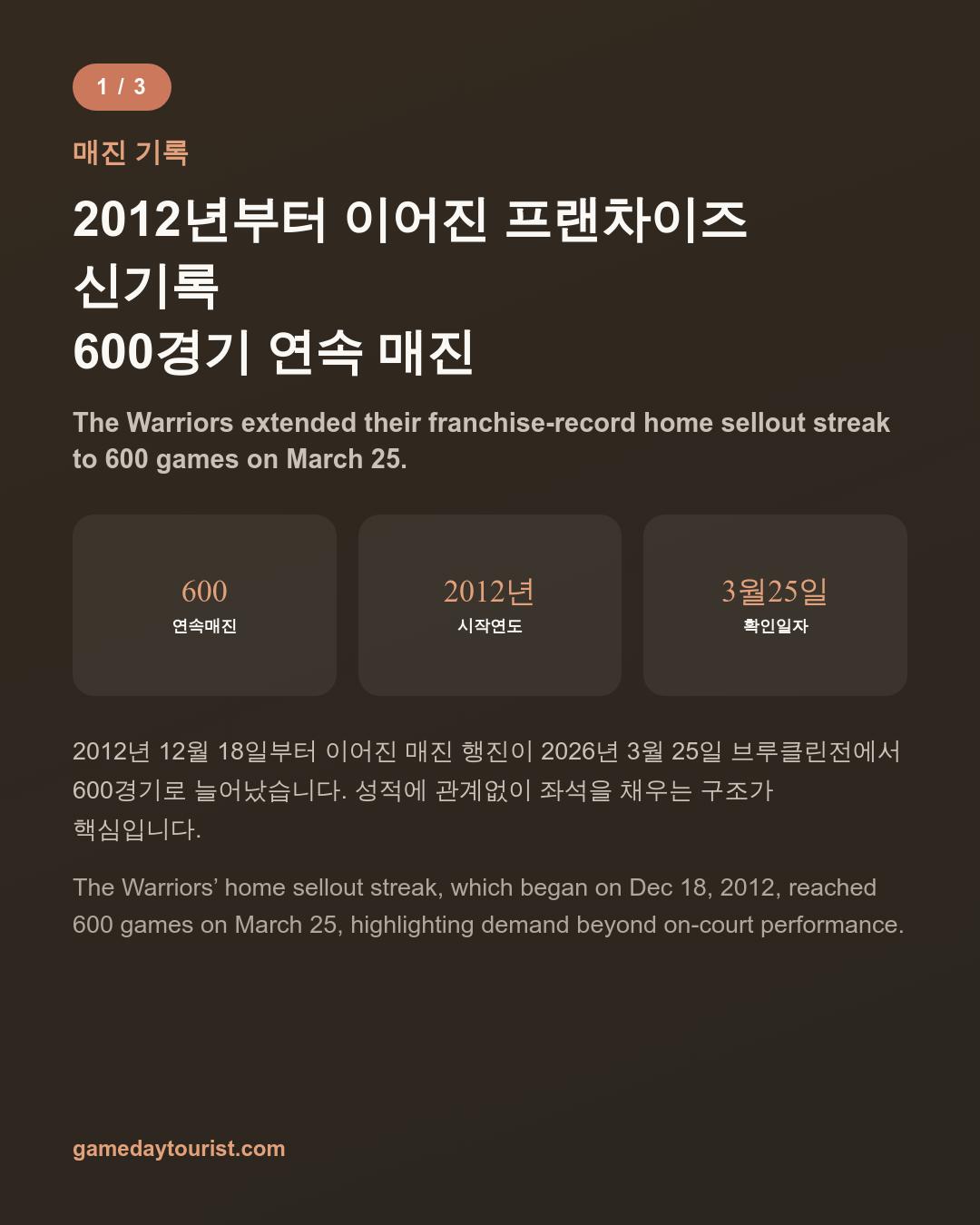
On March 25th, in the game against the Brooklyn Nets, the Golden State Warriors extended their home sellout streak — which began on December 18, 2012 — to a franchise record of 600 consecutive games.
Reportedly this is the second-longest active sellout streak in the NBA after the Miami Heat, and as a marketer I was most curious about what structural factors keep seats filled regardless of team performance. So this time I took a closer look at the Warriors’ home arena, Chase Center, where NBA icon Stephen Curry plays.
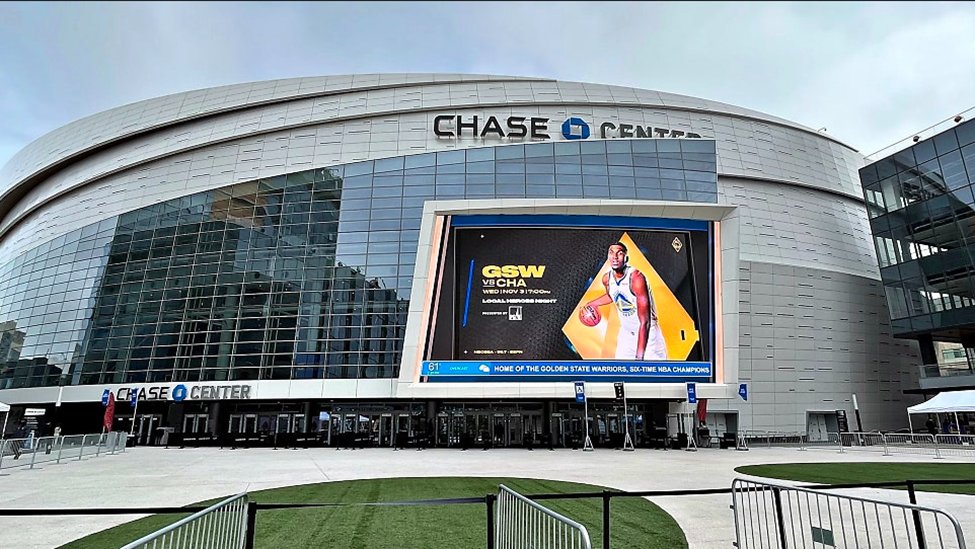
Chase Center — A Privately Financed Arena
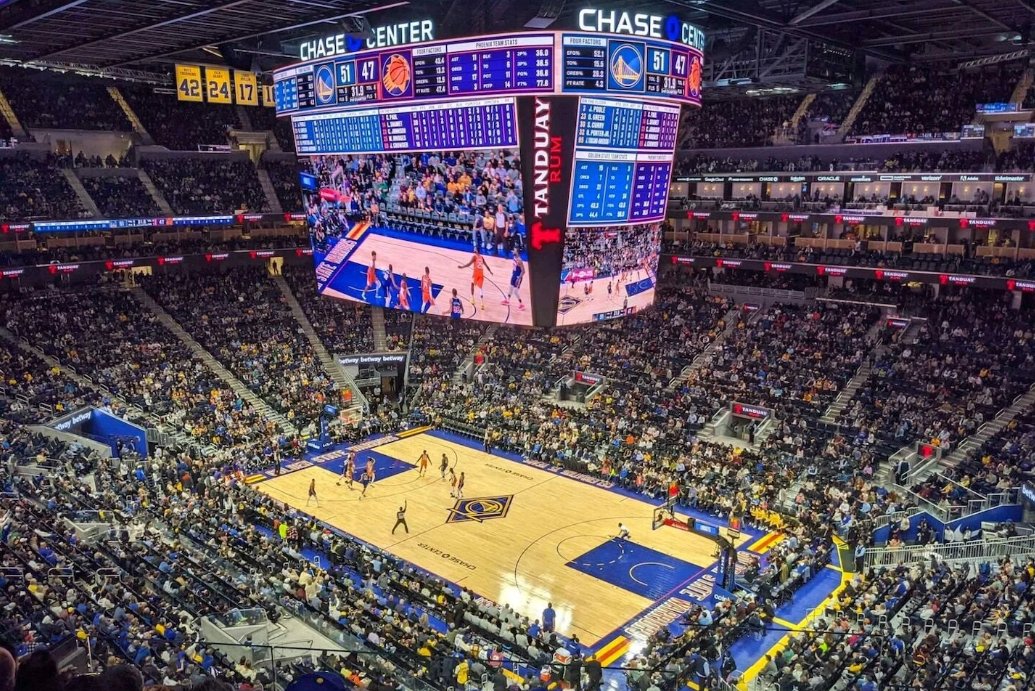
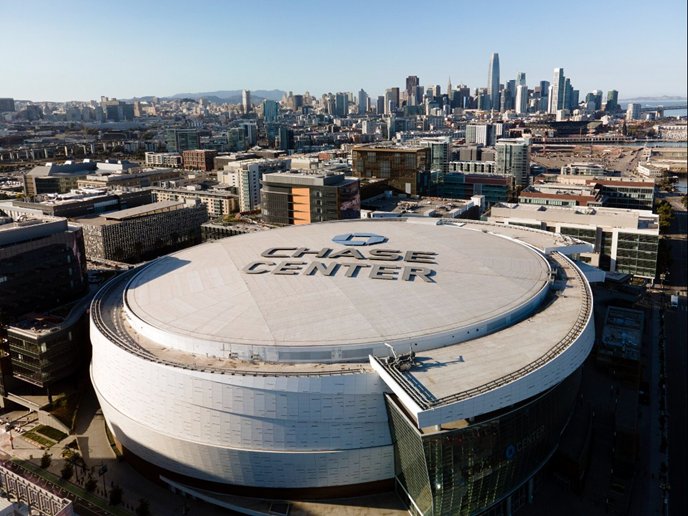
Chase Center opened in September 2019 in the Mission Bay neighborhood of San Francisco.
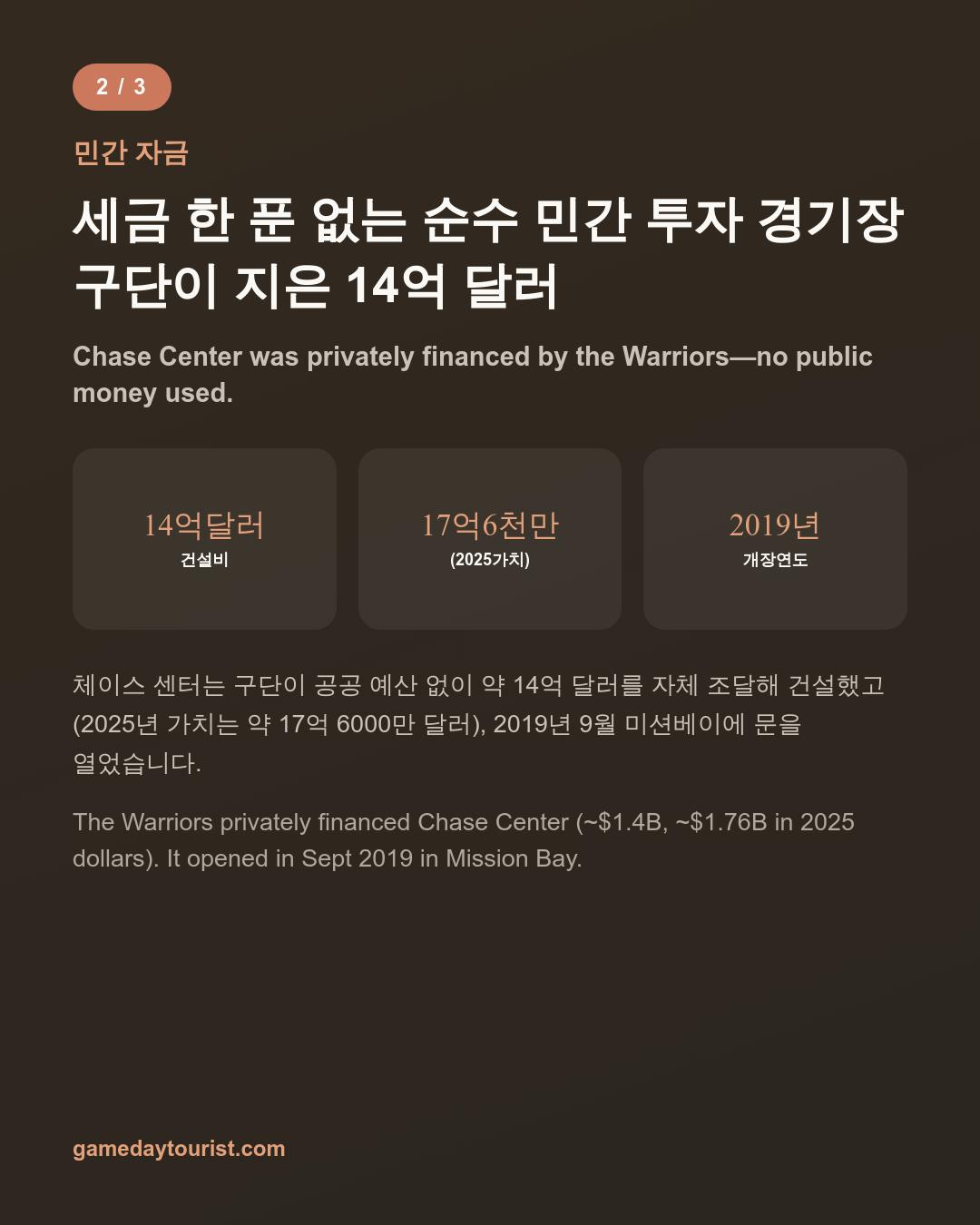
In the U.S. it’s common for municipalities to build pro sports venues with tax money and lease them to teams, but Chase Center is unusual: the Warriors privately financed the arena with about $1.4 billion (roughly $1.76 billion in 2025 dollars) without public funding.
This is commonly called a “private financing” model — in other words, a purely private investment venue with no public tax dollars involved (per Wikipedia and architecture consultant CAA ICON).
The seating capacity is 18,064 for basketball and expands up to 19,500 for concerts and other events.
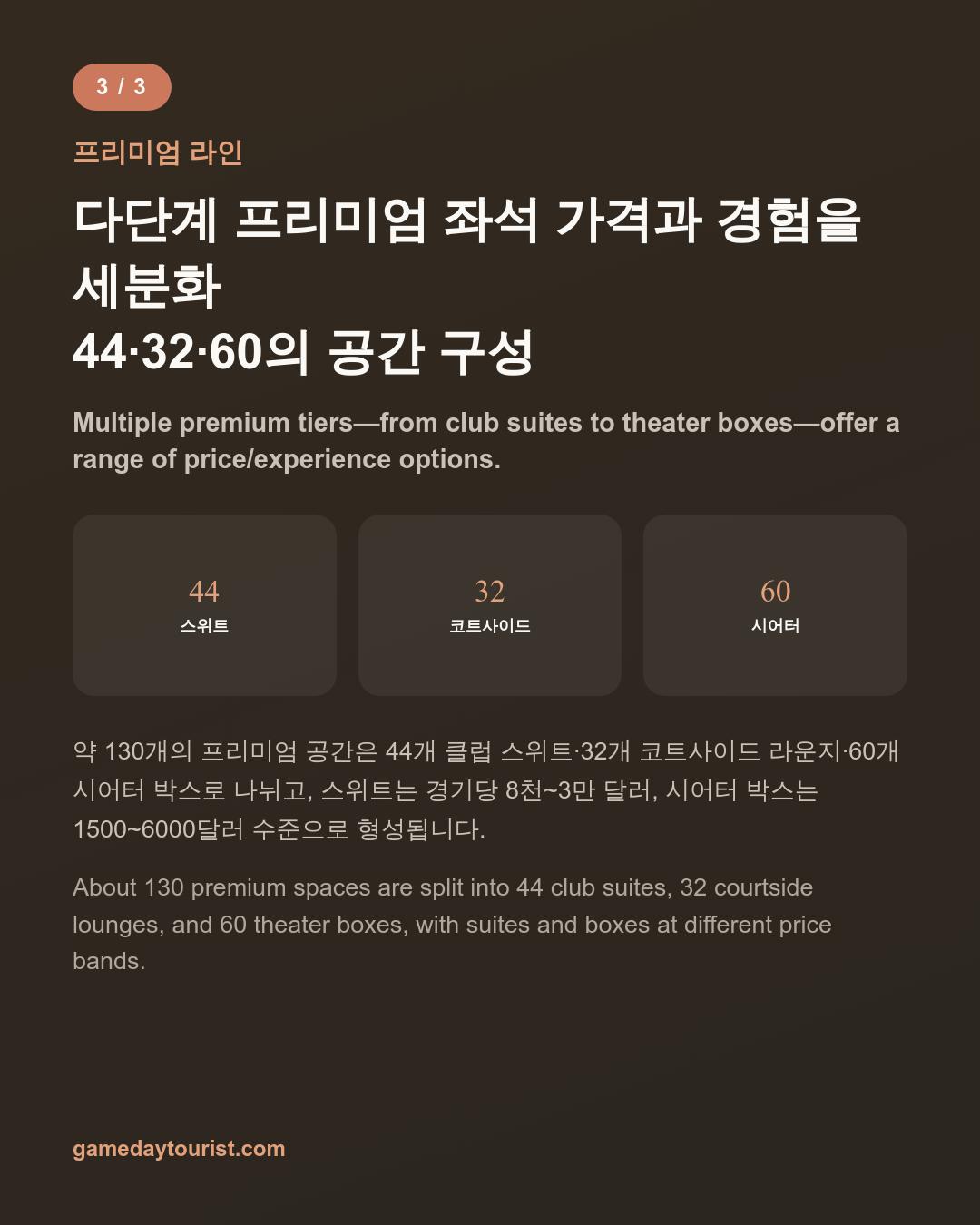
What stood out to me personally was the granularity of the premium seating. The roughly 130 premium spaces are divided into 44 club suites, 32 courtside lounges, and 60 theater boxes. Suite prices vary by opponent and date, ranging from $8,000 to $30,000 per game, while the relatively more affordable theater boxes run about $1,500–$6,000. Rather than a single price point, they created multiple product tiers to fit different budgets and purposes.
Thrive City — A Space That Draws Crowds Even on Non-Game Days
Thrive City, the mixed-use district surrounding the arena, is a development created jointly by the Warriors and Kaiser Permanente.
Kaiser Permanente is a large hospital and health-insurance operator based in California, and the Chase Center official site describes the district as “a community space for health and wellness.”
The completed retail and dining area houses about 20–25 shops, and Uber’s headquarters occupies office space. Famous San Francisco dining brands like Dumpling Time, Che Piko Pizzeria, and Golden Rule are present, and free community programs — yoga and fitness classes, a farmers market, and an ice rink — run regularly. They structurally created reasons for people to gather even on non-game days.
Merchandise (MD)
On the merchandising side, the Golden State Shop is central.
They sell framed jerseys signed by Curry with price tags in the several-thousand-dollar range; they’re quite expensive, but personally they seem to have collectible value.
Located on the Thrive City plaza, this store partners with Nike and sells not only Warriors gear but also merchandise from the WNBA’s Golden State Valkyries — who sold out every home game in their inaugural 2025 season — all in one place.
The Valkyries were recently valued at $850 million by Sportico, and reportedly generated $78 million in revenue in their first season — a WNBA record. I found it interesting that they have over 12,000 season-ticket holders, and only about 8% of those overlap with Warriors season-ticket holders.
Domestically, although kt wiz baseball and the kt sonicboom basketball team don’t share the exact same arena, both are based in Suwon and the clubs actively promote season-ticket sharing in their marketing. Still, fanbases naturally differ by sport.
In effect, they’ve created largely separate fandoms, which means the range of products the merchandise store must handle has broadened accordingly.
Advertising Inventory and Naming Rights
The most symbolic sponsorship in advertising and sponsorship structure is, of course, the arena naming rights. JPMorgan Chase secured the naming rights in 2016 with a 20-year agreement. The parties did not disclose the exact amount at the time, but industry estimates put it well above $10 million per year, with a total value reportedly between $300–$400 million.
At the time, this was the largest naming-rights deal for an American arena (an indoor facility rather than a dome or stadium). As a jersey sponsor, Japan’s Rakuten has been a jersey-patch partner since 2017, and the most recent renewal is said to be worth about $20 million annually.
Rakuten’s involvement goes beyond a jersey logo: as a founding partner of Chase Center, they even have naming rights for spaces like the player entry tunnel called the “Rakuten Runway,” showing how sponsorship extends into actual customer benefits — a point marketers should note.
With partnerships layered like this, sports business outlet Sportico estimated that ticket revenue alone for a Warriors home game is about $5 million, and the franchise’s overall revenue is said to be roughly 35% higher than the New York Knicks or LA Lakers.
Fan Convenience and Technology
On the fan-experience and technology side, there are clear efforts to reduce payment and entry friction.
Starting as a pilot in the 2022–2023 season and now permanently operating, the unmanned store “AMPM ASAP Grab & Go” uses Verizon Business technology: you tag your card to enter, grab the snacks and drinks you want, and leave — payment is processed automatically.
No lines at the register, and staff only intervene when age verification is needed. Additionally, since 2024 they’ve been rolling out facial-recognition-based automated entry systems and face-payment kiosks (a JP Morgan Payments and PopID collaboration) at Big Nate’s BBQ locations.
The system completes payment using only facial recognition, and the team provides information about privacy protection procedures alongside it.
Visitor Reviews
A U.S. sports-travel blogger’s visit notes show that these investments often translate into tangible improvements in the spectator experience.
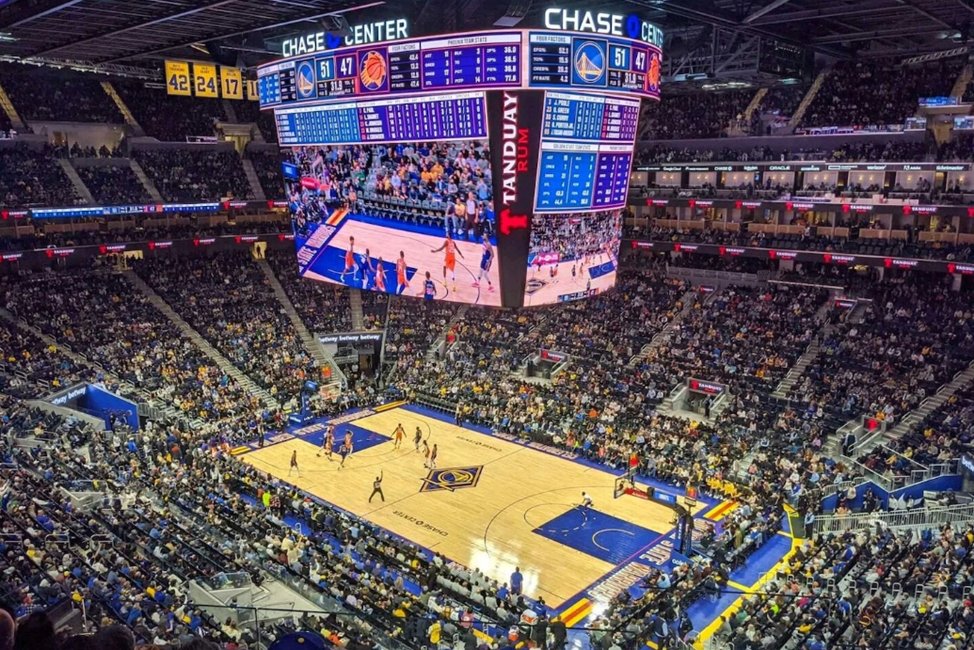
Compared with the cramped concourses of the old Oracle Arena, the Chase Center’s main concourse is much wider, and the center-hung scoreboard that almost covers the length of the court was highlighted as one of the largest in the NBA.
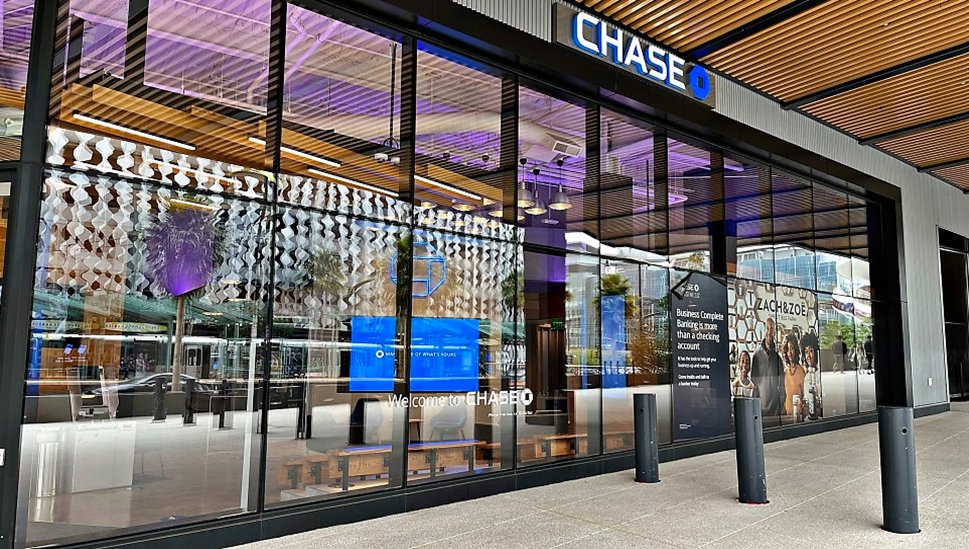
They also mentioned a dedicated lounge exclusively for Chase bank customers. As the naming-rights partner, JPMorgan Chase didn’t stop at branding — they extended the sponsorship into tangible customer benefits, which is noteworthy from a marketer’s perspective.
On the less positive side, the same review pointed out that the buffet fee at the Model Cantina in the 200-level club area is $55, and downtown parking is generally expensive — price resistance being an inevitable challenge for venues selling premium experiences.
Comparing with the KBO and K League
It’s difficult to compare this scale directly with the KBO or K League.
Chase Center is a privately financed facility hosting more than 200 events a year, shared by NBA and WNBA franchises, whereas most domestic clubs operate by renting municipally owned venues.
However, the way premium seating is segmented into multiple tiers — club suites, courtside lounges, theater boxes — instead of a single category, and how the retail shop is developed into a combined retail space that also embraces a women’s pro team, are marketing moves worth noting.
Domestic venues like kt Wiz Park and Hanwha Life Ballpark are experimenting with smart entry and F&B innovations, but examples that have adopted facial-recognition payments or permanently operating unmanned stores at scale are still rare.
The sellout streak is similar: domestic clubs should seriously consider fan-diversification strategies that reduce dependence on a single star, arena remodeling, and upgrades to convenience facilities.
Leave a Reply