Contents · About 9 min read
- Attendance and Tickets
- Sponsorship and Ad Inventory — The End of the Betting-Company Era
- Space Investment — Redeveloping the Selhurst Park Main Stand
- Merchandise, Broadcast Rights, and Financial Structure
- The Stadium’s Own Signature — The Eagle Mascot and “Glad All Over”
- How This Compares to the KBO and K League
📱 View as card news


This is the first season a betting company’s logo has completely disappeared from Premier League shirts.
Watching the season-opener pitches for 2026-27 and tracking which companies moved into the space left by a trend that had run for more than 20 years, one club held my attention longer than the rest: Crystal Palace.
The name actually became familiar to me because of this summer’s transfer market news.
Crystal Palace was one of the Premier League clubs reportedly interested in signing Lee Jae-sung from Holstein Kiel, and although the move never happened, that story is what got me looking at the club again.
Digging through the material, though, one thing surprised me.
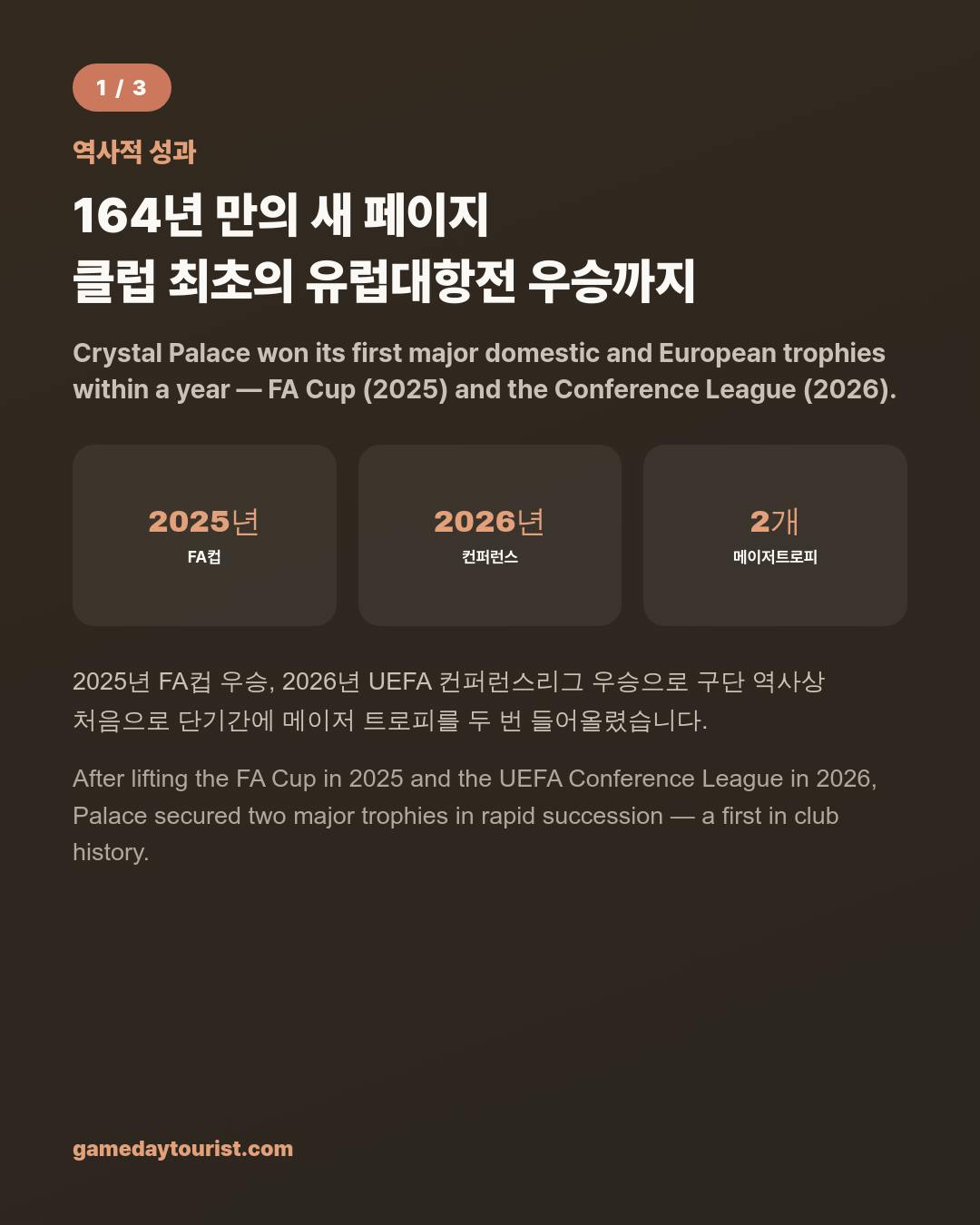
In the space of a single year, this club had lifted two major trophies for the first time in its history.
In May 2025 it beat Manchester City in the FA Cup final to win its first-ever major title, and a year later, in May 2026, it beat Rayo Vallecano to lift its first-ever European trophy in the UEFA Conference League.
That’s a fairly dramatic run of change for a 164-year-old south London club to go through all at once, and as a marketer, it made me want to map out this club’s marketing structure.
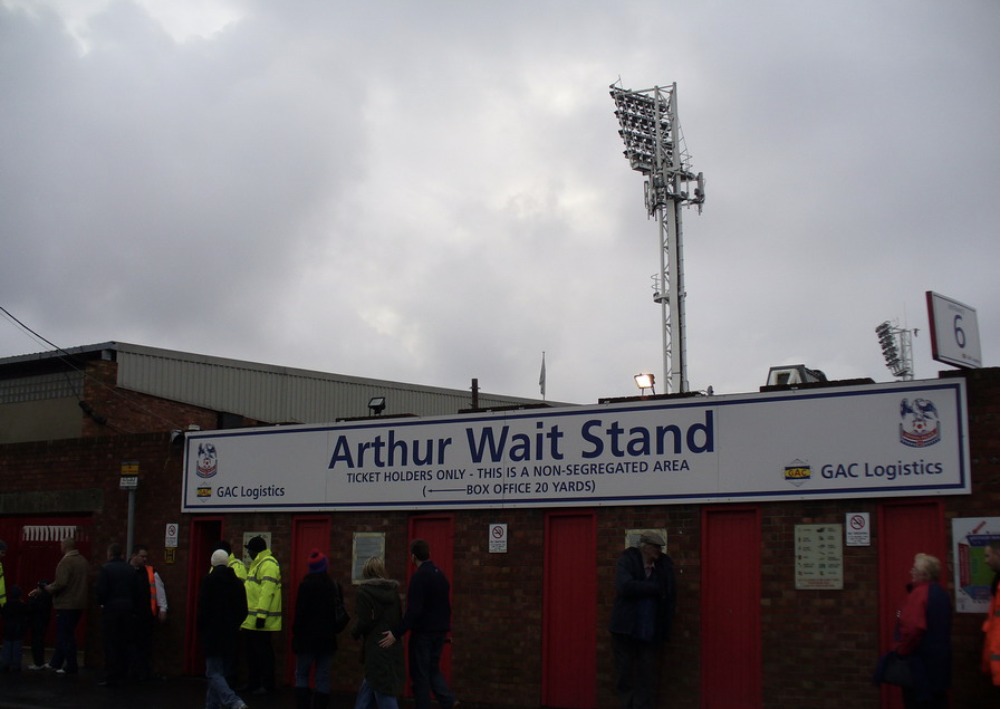
Source: Wikimedia Commons (jeffwarder, 2008), CC BY-SA 3.0, no watermark
Attendance and Tickets
Selhurst Park opened in 1924 and is the fourth-smallest ground in the Premier League.
Current capacity sits at around 26,000, and average attendance in 2024-25 was 25,116.
About 18,000 people hold season tickets, so most matchday admissions are already accounted for by season-ticket holders, and according to financial analysis outlet Matchday Finance, buying a new season ticket means joining a waiting list and waiting one to two years.
What stands out is that even with a season-ticket price for 2025-26 set at £600 (about ₩1.06 million), up 10% from the year before, waiting-list demand hasn’t cooled off.
Interestingly, even while running close to a permanent sellout, revenue per fan sits at just £25.80, the lowest of any London club and the fourth-lowest in the whole Premier League.
That reads as a deliberate pricing choice: protect a long-standing fan base rather than push ticket prices as high as they’ll go.
Even so, in 2024-25, six extra home fixtures on the way to the FA Cup title pushed matchday revenue up from £13.8 million to £15.6 million.
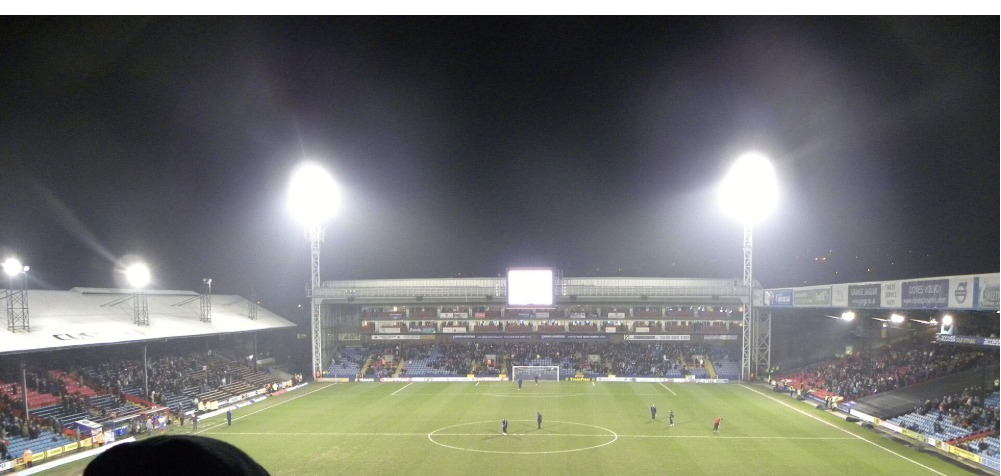
Source: Wikimedia Commons (Ashley Martin/Geograph, 2011), CC BY-SA 2.0, no watermark
Sponsorship and Ad Inventory — The End of the Betting-Company Era
The most visible change on Premier League pitches this summer is that betting-company logos have vanished entirely from the front of shirts.
It’s the end of a run that started in 2006, following the UK’s 2005 Gambling Act, and lasted nearly 20 years — Premier League clubs agreed to a ban back in 2023, which finally took effect this season after a transition period.
As recently as last season, 11 of the 20 clubs carried a betting company’s logo dead-center on the shirt, with the combined value of those deals reportedly around £100 million, meaning a fair number of clubs spent the whole summer hunting for a new main sponsor.
According to Korean coverage citing the BBC and The Athletic, eight Premier League clubs landed new sponsors this summer, and the gap was mostly filled by tech and finance companies looking to raise their public profile.
Crystal Palace was one of them.
NET88, the Vietnamese online gaming company that had occupied the shirt front through 2024-25 and 2025-26 (a deal worth roughly £10 million a year), stepped aside, and this season AI company Temporal moved in as the new main sponsor.
Temporal builds the software platform used by companies like OpenAI, Netflix, JPMorgan Chase, and Vodafone, and the deal covers more than logo placement on the first team and academy kits — it also funds computer science and AI education programs for young people in south London through the club’s community foundation, Palace for Life.
Before that, the spot went to online used-car platform cinch starting in 2022-23, and to yet another betting company before that — a reminder that every time a sponsor changes, it maps exactly where the advertising money of that era is flowing.
From a marketer’s standpoint, what struck me was simply how much a single external variable — gambling regulation — could reshape sponsorship across an entire league.
Source: Crystal Palace FC official website (press release, May 21, 2026) · Official club promotional image, no watermark
Space Investment — Redeveloping the Selhurst Park Main Stand
True to its 1924 roots, Selhurst Park is widely considered one of the older and more cramped grounds in the league.
One overseas stadium-review outlet even wrote that “the very fact that it’s old and tight means the noise has nowhere to escape, so the roar from the crowd goes straight into the pitch.”
The intense reputation of the flags, chants, and card displays produced by the Holmesdale Fanatics, the supporters’ group behind the Holmesdale Road Stand, likely owes something to that same structure.
The club isn’t leaving the cramped space as it is, though — it’s in the middle of a major expansion.
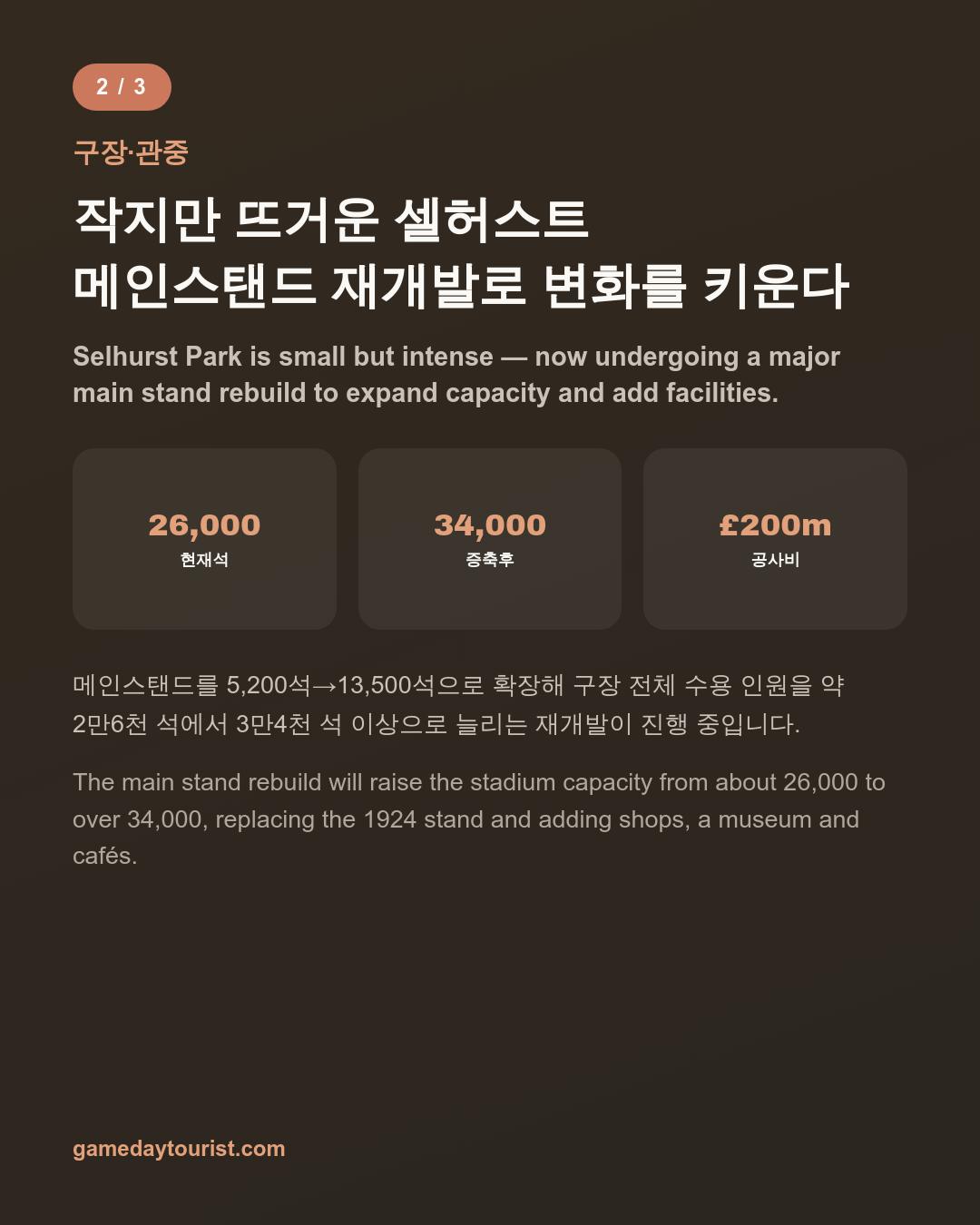
The plan is to completely replace the 1924 Main Stand with a new three-story structure, growing that single stand from 5,200 to 13,500 seats and lifting the ground’s overall capacity from around 26,000 to more than 34,000.
The new stand will stand 41 meters tall with a floor area of 25,072 square meters (about 3.5 football pitches), fully glass-fronted, and will include a new club shop, a museum, and a café.
Construction costs are estimated at around £200 million (about ₩355 billion), funded mainly through equity investment at the parent-company level according to Matchday Finance, with £37.5 million already spent in 2024-25 alone.
The plan itself was first approved back in 2018 but kept getting pushed back by COVID-19 and funding issues, and it wasn’t until January 2026 that the first real construction steps — buying up nearby houses and demolition — actually began.
Worth noting, too, is that the club is building the new stand around the existing one while keeping the ground in operation — meaning a few uncomfortable seasons for fans, but a way for the club to minimize any gap in matchday revenue.
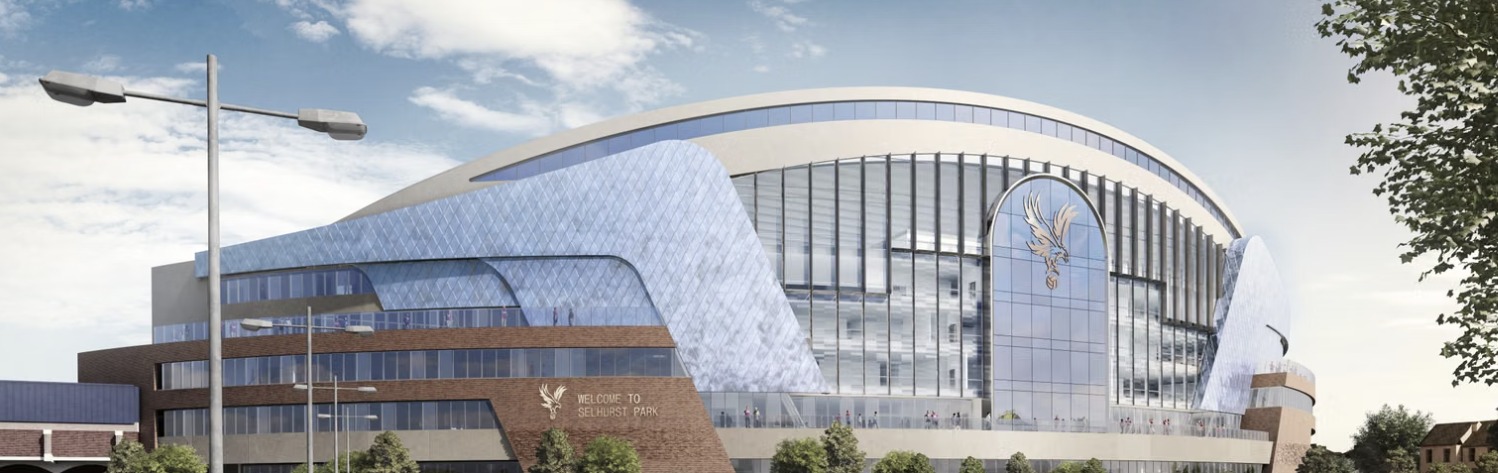
Source: Crystal Palace FC official website (Main Stand redevelopment page) · Official club rendering, no watermark
Merchandise, Broadcast Rights, and Financial Structure
The commercial numbers are worth a look too.
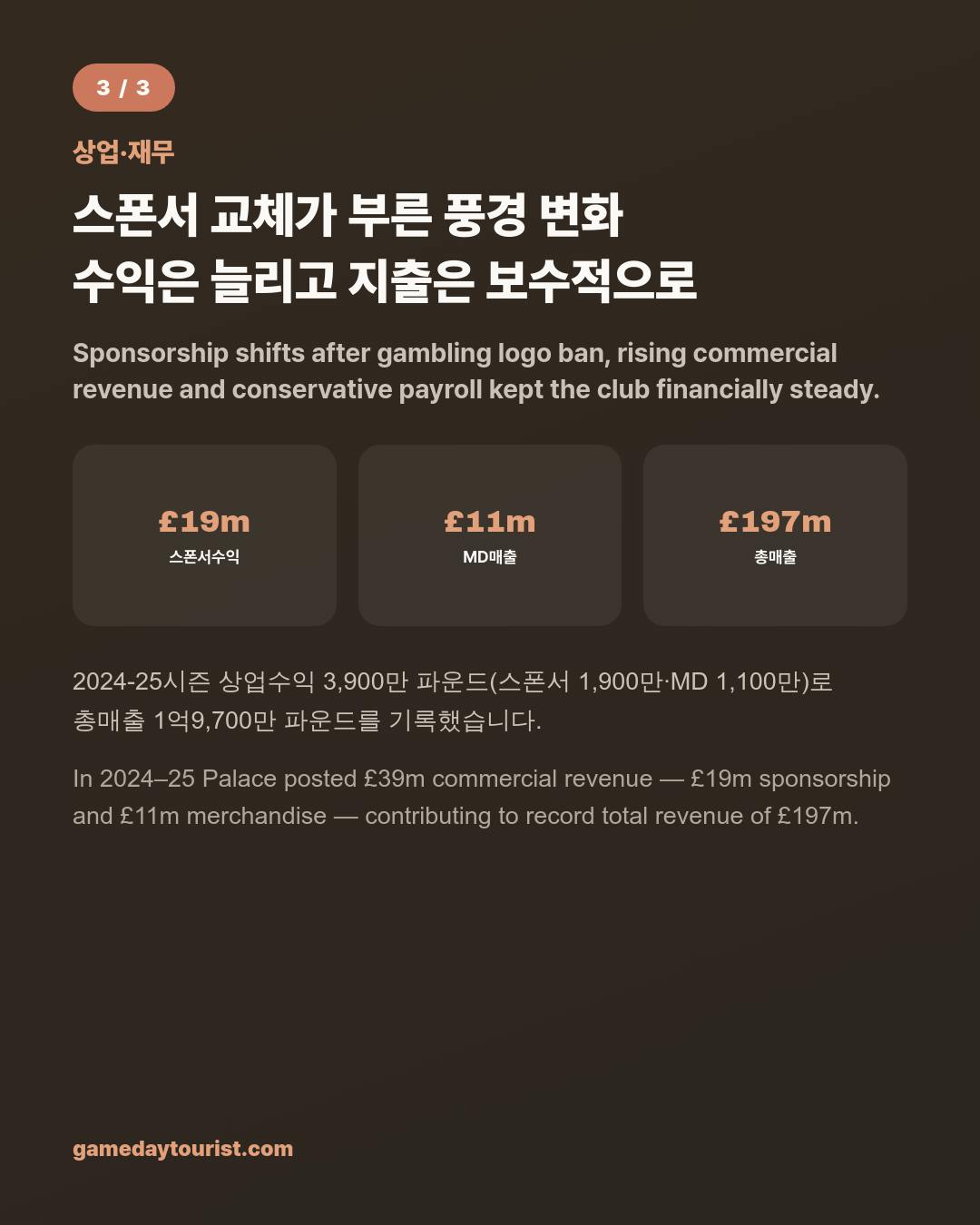
Crystal Palace’s commercial revenue in 2024-25 jumped to £39 million from £31 million the year before, made up of £19 million in sponsorship revenue and £11 million in merchandise (MD) sales from kits and memorabilia.
Add in £136 million from Premier League broadcast distribution (based on a 12th-place finish in 2024-25), and Matchday Finance puts total revenue at a club-record £197 million.
This season, the Conference League title adds an estimated further £10 million or so in UEFA payments on top of that.
What stands out is that the club has kept spending fairly conservative even while generating revenue at this scale.
Total squad wages sit at £110 million, roughly the same level as 2019-20, and total wage costs rank fourth-lowest in the Premier League.
Instead, the club has balanced its books through well-timed transfer profits on players like Michael Olise (to Bayern Munich, £50 million), Marc Guéhi (to Manchester City), and Eberechi Eze (to Arsenal) — a model that helped push the valuation up when John Textor, who held a 44.9% stake, sold his shares to American businessman Woody Johnson in summer 2025: the sale went for £190 million, with the whole club valued at well over £400 million.
The Stadium’s Own Signature — The Eagle Mascot and “Glad All Over”
Selhurst Park has two quirky traditions you won’t find at most other Premier League grounds.
One is keeping a bald eagle as the club mascot.
From 2010 through the summer of 2020, an eagle named Kayla was a huge crowd favorite, circling wide over the stands on every matchday; after she passed away of old age, a new eagle named Phoenix — just four months old at the time — took over in August 2024, coinciding with Selhurst Park’s 100th anniversary.
Now past two years old as of August 2026, Phoenix has been trained enough to meet supporters in the fan zone before matches, but hasn’t yet been able to fly over the pitch the way Kayla did, and the club says training is ongoing.
The name “Phoenix” carries its own meaning: it nods back to 1973, when then-manager Malcolm Allison changed the club’s nickname from “the Glaziers” to “the Eagles,” inspired by the phoenix rising reborn from the ashes.
The other tradition is the Dave Clark Five’s hit song “Glad All Over.”
The band played a concert at Selhurst Park in February 1968, and the song stuck as the club anthem ever since, still blaring out just before kickoff at every home game.
Add in the giant banners and chants of the Holmesdale Fanatics and their fellow supporters, and all three of these — the eagle, the song, the supporters’ culture — struck me as assets built up over decades, the kind money simply can’t buy the way a new sponsor or a new stand can.
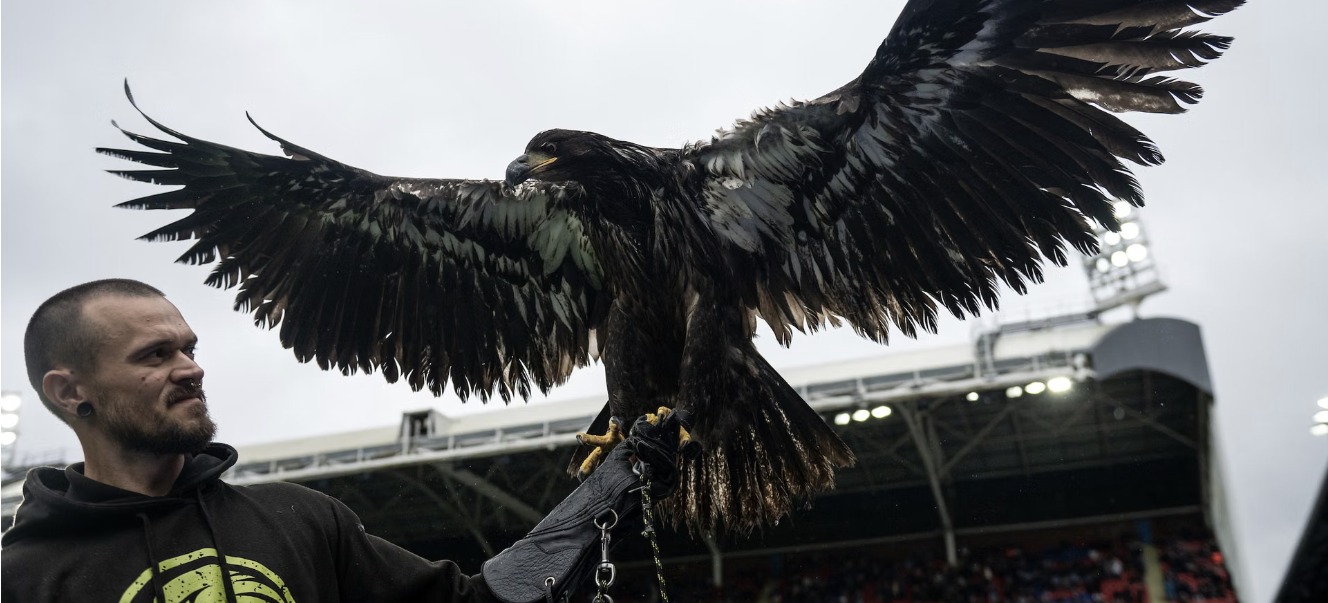
Source: Crystal Palace FC official website (press release, August 30, 2024) · Official club promotional image, no watermark
How This Compares to the KBO and K League
Looking closely at Crystal Palace turned up a few points worth comparing to the KBO and K League.
First, the financial regulation numbers line up in a curious way.
UEFA runs a “Squad Cost Ratio” rule that caps a club’s squad-related costs (wages plus transfer fee amortization combined) at 70% of revenue for clubs competing in European competitions, and Matchday Finance estimates Crystal Palace’s ratio at 78%, above UEFA’s threshold.
The K League, meanwhile, has run a ratio-based salary cap modeled on Spain’s La Liga since the 2023 season, capping squad-related costs at 70% of revenue across every K League 1 and K League 2 club.
Both the rationale behind the rule and the actual number applied are strikingly similar.
Next is the stadium name.
Despite changing hands a few times and now going through a major expansion, Selhurst Park has never once signed a naming-rights deal (the right to attach a corporate name to a facility) since it opened in 1924.
In Korea, too, stadiums owned by local governments — Jeonju World Cup Stadium or Daejeon World Cup Stadium, for instance — often keep their place-based names without selling naming rights, but Crystal Palace’s case is a bit different in that it’s privately owned, not government-owned, and still chose not to sell commercial naming rights.
Last is the ownership structure.
Crystal Palace has operated as a consortium with several shareholders — Textor, Harris, Blitzer, Parish — splitting the equity, and this time only Textor’s stake changed hands; compared to how most Korean pro clubs are wholly owned by a single parent company, the very idea that a partial stake sale like this is even possible felt unfamiliar.
Watching one gambling regulation reshape the sponsorship map, two trophies speed up a stadium expansion, and a single stake sale reset the club’s valuation, all happening within about a year, it’s hard to think of many mid-table clubs that gave a marketer this much to watch.
I’ll be curious to see whether this momentum continues under new manager Pierre Sage, and what the club’s newly earned spot in the Europa League does for its commercial revenue next.
Leave a Reply