Contents · About 11 min read
📱 View as card news

Picture a transparent screen 226 feet wide and 41 feet tall, wrapped across the roofline above an arena’s main entrance. That’s not a rendering anymore — it’s set to be finished for real this fall. The setting is the Mortgage Matchup Center in Phoenix, Arizona, home to both the NBA’s Phoenix Suns and the WNBA’s Phoenix Mercury. The team announced it themselves on August 18, 2026, and the timing turned out to be almost too perfect for the moment I started digging into this piece.
This arena has gone through six names since it opened in 1992 — America West Arena, US Airways Center, Talking Stick Resort Arena, Phoenix Suns Arena, Footprint Center, and now Mortgage Matchup Center. There’s something genuinely unusual about the naming rights deal behind this latest one. I’ll get into that, along with the seating bowl, the building’s layout, merchandise and ad inventory, and the local economic impact — all through the lens of someone who works in this industry.
Crowds and Tickets
The Suns are riding a sellout streak that stretches back to 2021 — 209 games and counting across the regular season and playoffs.
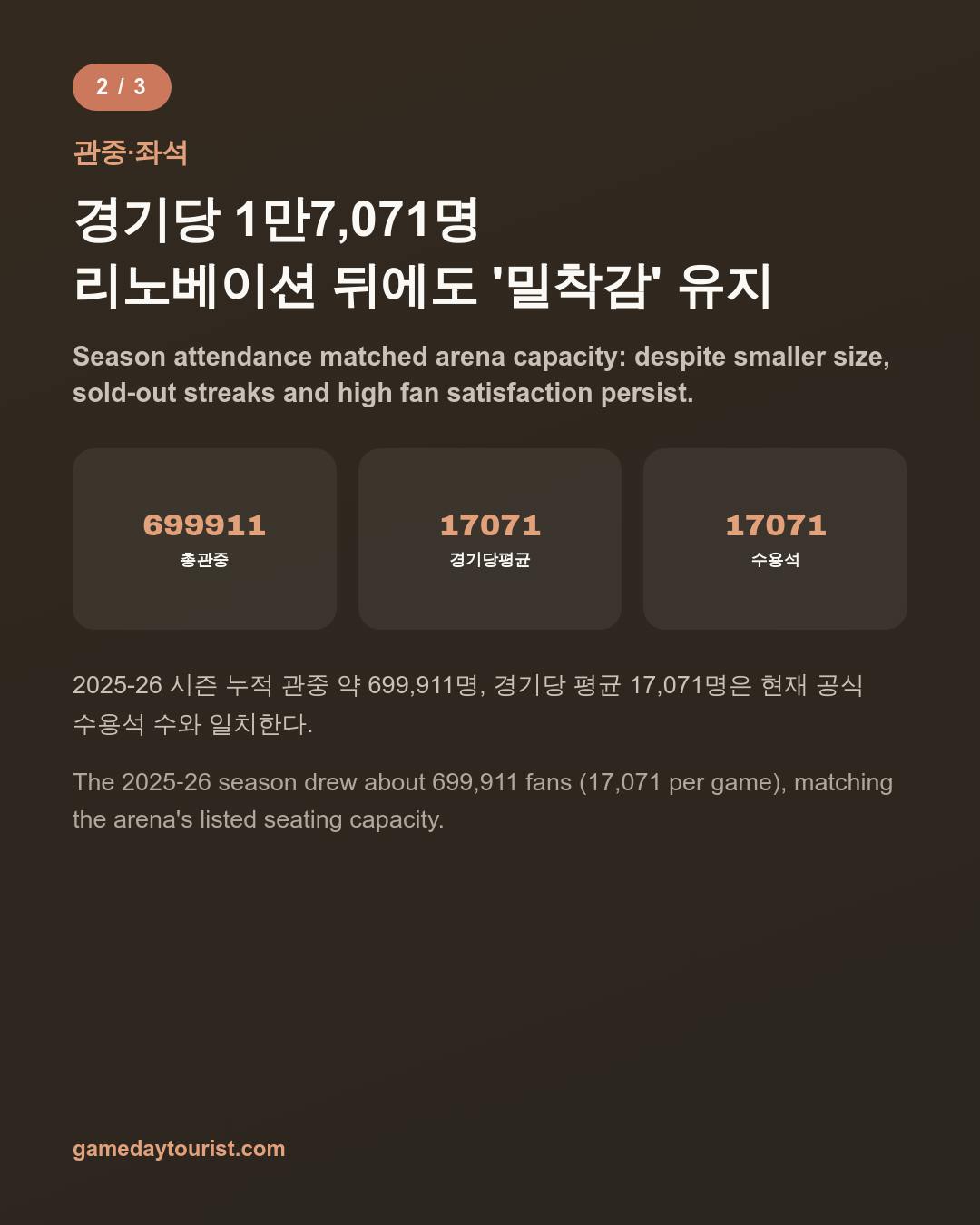
Across 41 home games in 2025-26, total attendance came to roughly 699,911 — about 17,071 fans per game. That figure happens to match exactly with the current listed capacity of the arena, 17,071 seats, according to Stadium Journey. HOK‘s design materials, on the other hand, list the basketball-configuration seat count post-renovation at 16,200 — the gap is likely just the difference between a basketball setup and a concert or other event configuration. Among the NBA’s 30 teams, the Suns rank near the bottom in total attendance, but that’s worth a caveat: it’s not weak demand, it’s simply a smaller building than most of the league’s other big-market arenas.
Ticket prices start around $30 (roughly ₩42,600) for the upper-deck corner seats and climb to about $550 (roughly ₩780,000) at the high end, with courtside going for over $2,400 (roughly ₩3.41 million). Pricing is dynamic, shifting in real time with demand, so the swing can be pretty wide depending on the opponent or the day of the week.
Mat Ishbia, who owns both the Suns and the Mercury, bought the two franchises from Robert Sarver for $4 billion (roughly ₩5.68 trillion) in February 2023 — the highest sale price in NBA history at the time.
Three years later, Forbes’ 2026 NBA franchise valuations put the Suns at $5.425 billion (roughly ₩7.7 trillion), good for 11th among the league’s 30 teams — about a 36% jump from the purchase price. The naming rights deal and arena investments I’ll cover next don’t seem unrelated to that climb.
Phoenix is also hosting the NBA All-Star Game in February 2027 — its fourth time overall and first since 2009. The big new screen I’m about to walk through was clearly built with that event in mind.
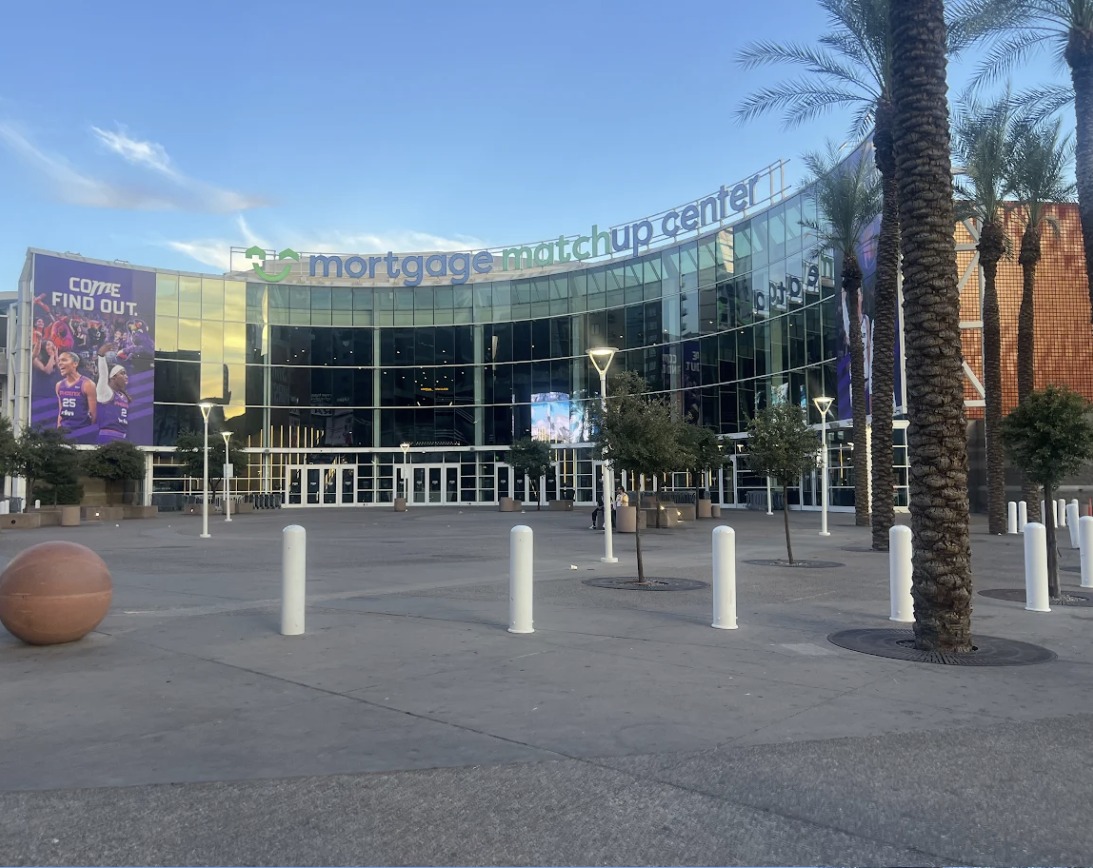
Exterior of the Mortgage Matchup Center · Source: Photo by Wikifan3934564 (2026), Wikimedia Commons, CC BY-SA 4.0
Layout and F&B
The arena went through a $230 million (roughly ₩326.6 billion) renovation between 2020 and the 2021-22 season. HOK, the architecture firm behind it, has said they chose a renovation over a full teardown-and-rebuild for two reasons: the cost came in at about half of what a new arena would run, and it let them preserve the tight, basketball-first seating bowl the building was originally designed around. The main lobby was rebranded as the Casino Arizona Pavilion, and it now features an interactive LED wall spanning roughly 8,500 square feet (about 790 square meters) — reportedly visible from several blocks away.
Food and beverage got a similar overhaul, shifting toward a casual food-hall concept inspired by food trucks and Airstream trailers. Tenants now include Cold Beers & Cheeseburgers, Shaq’s Big Chicken (a chicken concept named for former NBA star Shaquille O’Neal), Benihana Sushi, Los Soles Taqueria, and Spinato’s Pizza, with Kilt Lifter Ale from Arizona’s own Four Peaks Brewing anchoring the draft beer lineup. Over on the east plaza, the Cerveza XX Dos Equis Beer Garden runs as its own standalone spot, built around outdoor seating that takes advantage of Phoenix’s mild fall and winter weather.
Inside the concourse, a FanDuel Sportsbook sits along the Jefferson Street-facing windows, and starting with the 2025-26 season, season-ticket holders get access to a new members-only space, the FanDuel Lounge, complete with an outdoor terrace, a chef-staffed kitchen, and a self-serve market.
A U.S. sports-travel blogger who’s visited the arena multiple times describes it as “a blueprint for what an arena built purely for basketball can be,” noting that unlike a lot of multi-purpose venues, you can walk the entire concourse loop without it taking long — everything feels tight and dense. There’s a fun bit of history behind that: the Phoenix Coyotes (now the NHL’s Utah Mammoth) actually called this arena home from 1996 to 2003, and fitting a hockey rink into a basketball-first bowl left a lot of seats with obstructed views, which was eventually part of why the team moved out to its own building. Committing to a single sport meant giving up flexibility, but it bought the building one clear advantage — intimacy — and that’s a trade-off worth chewing on for anyone back home who’s constantly weighing multi-purpose venues against dedicated ones.
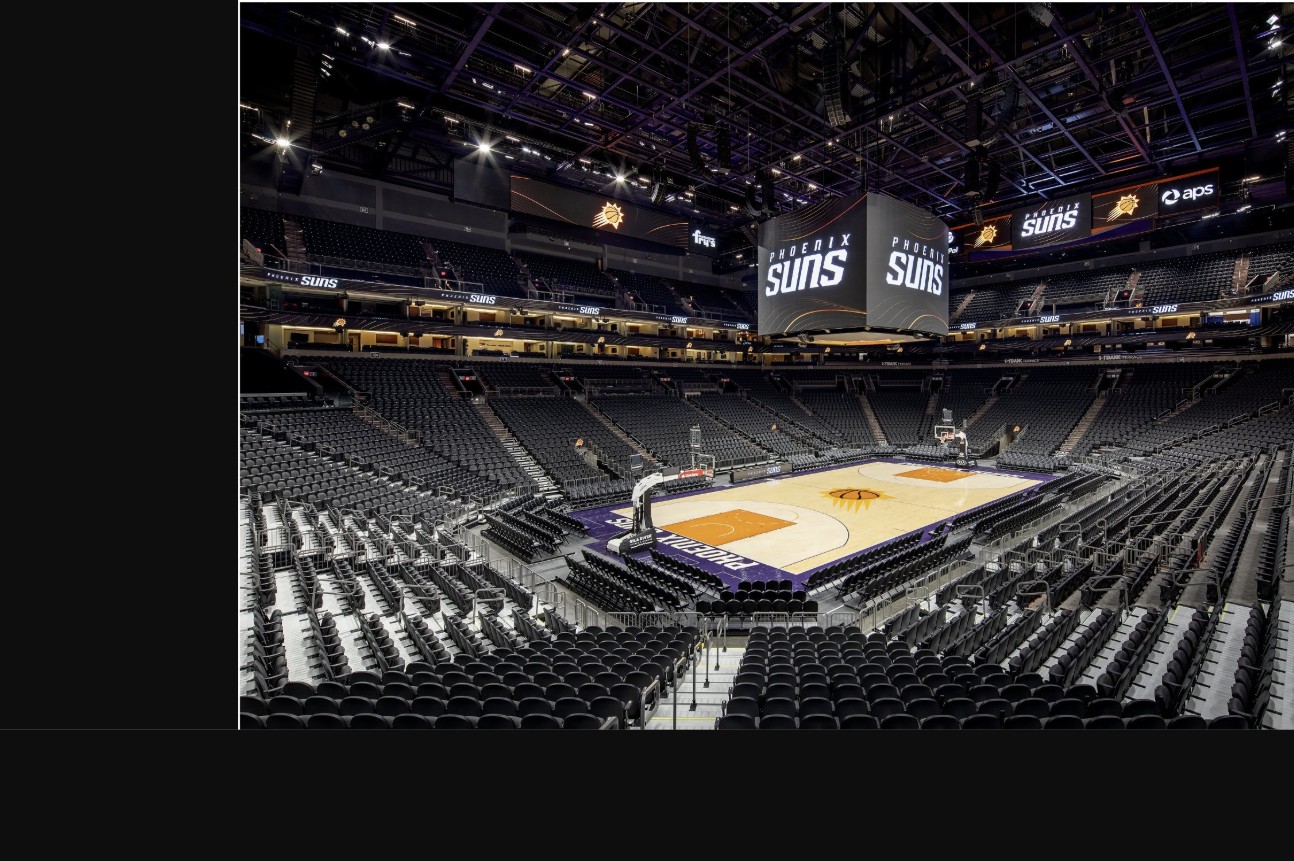
Inside the arena after renovation · Source: HOK’s official project page, an official promotional image from the firm that designed the renovation
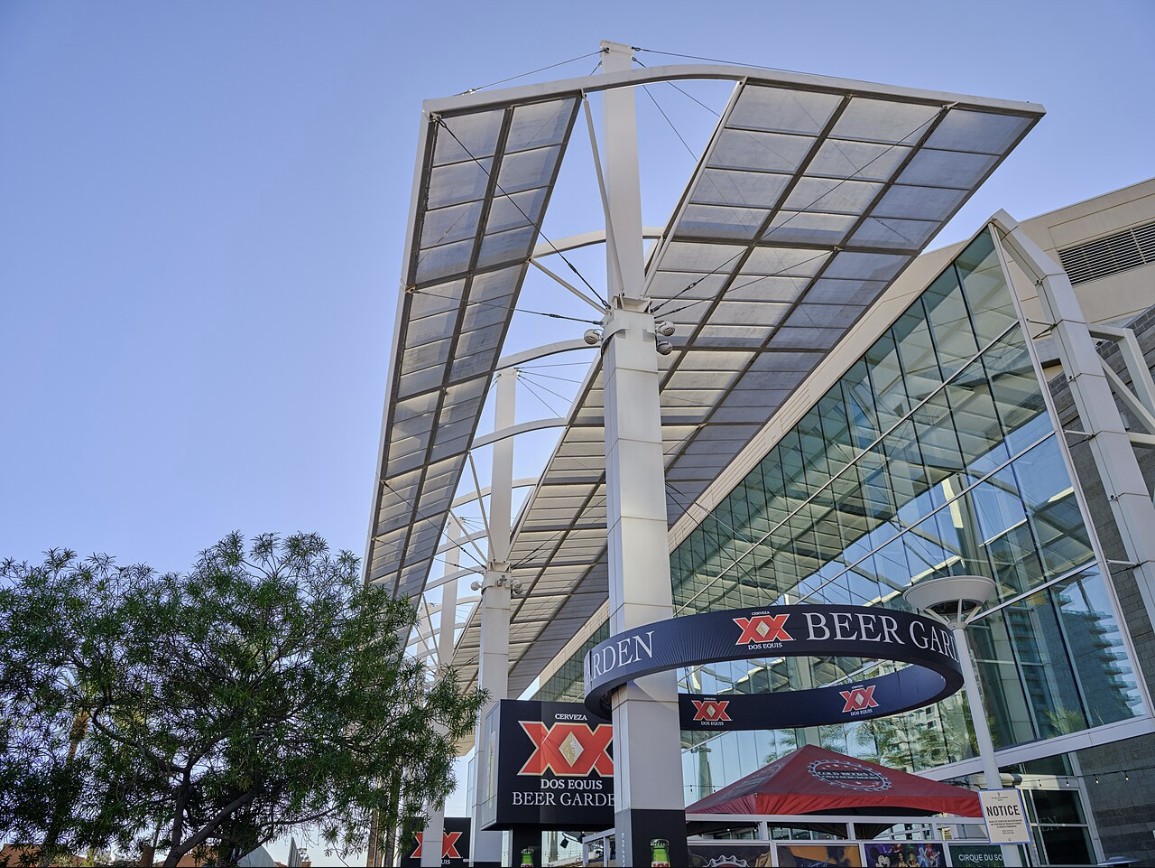
The Cerveza XX Dos Equis Beer Garden · Source: Photo by Tony Webster (2020), Wikimedia Commons, CC BY 2.0
Merchandise and Ad Inventory
The team store operates year-round on the north side of the arena, near the entrance at 201 E. Jefferson Street, and jerseys and other gear are also available through the online store at shop.suns.com and the official NBA Store.
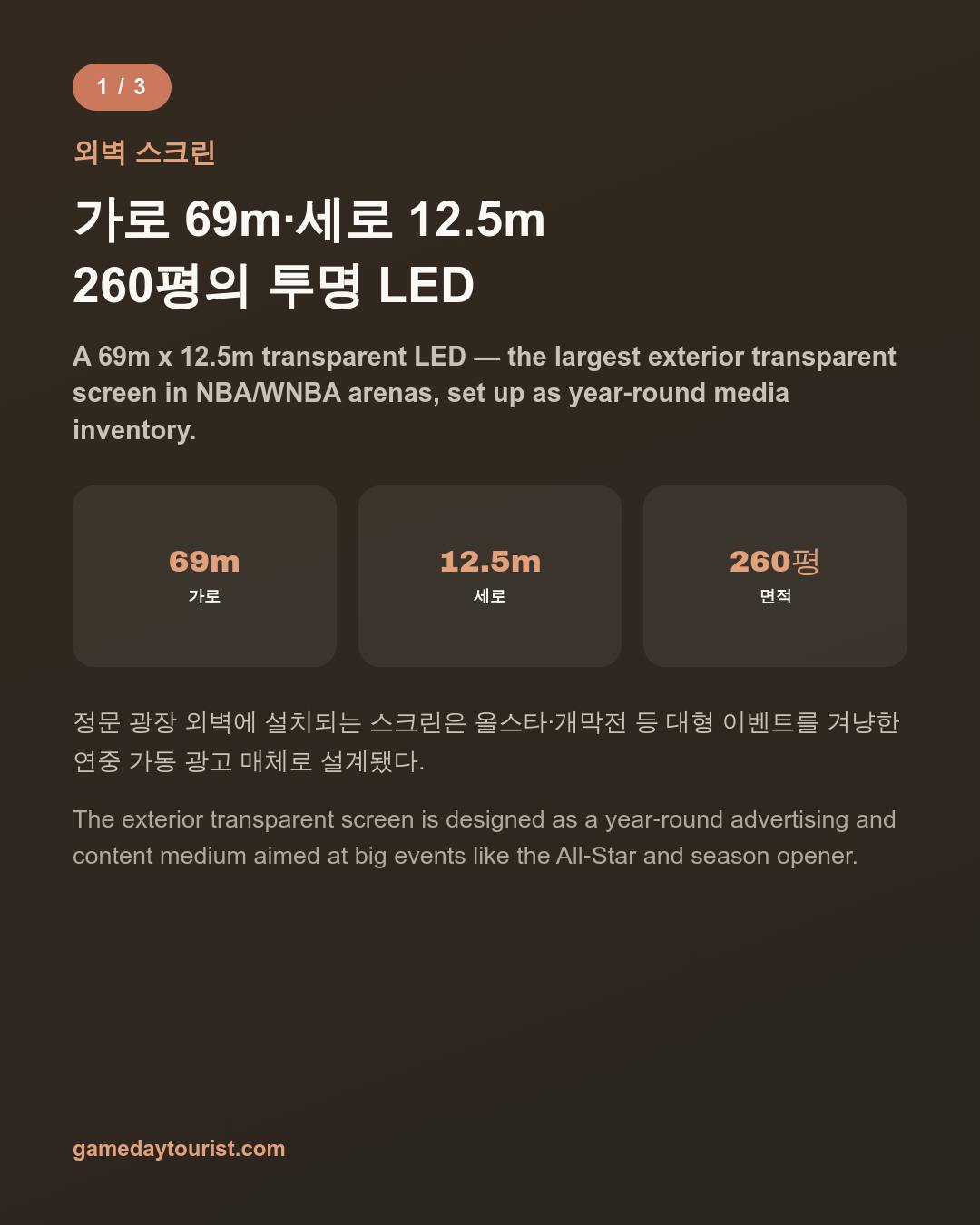
But the news that actually got this whole piece started was something else. On August 18, the Suns and Mercury announced they’re installing a transparent LED display on the exterior wall facing the main entrance plaza — 226 feet wide (about 69m), 41 feet tall (about 12.5m), and 9,266 square feet (about 861 square meters) in total.
Once it’s up, it’ll reportedly be the largest transparent exterior screen of any NBA or WNBA arena. Utah-based screen manufacturer OneRevel is handling the build, with completion targeted for September — timed, it seems, for the home opener against the Golden State Warriors on October 24 and, further out, that February 2027 All-Star Game. The team hasn’t disclosed an exact price tag beyond calling it a “multimillion-dollar” investment.
CEO Josh Bartelstein has said he wants this screen to become a permanent landmark for downtown Phoenix rather than a one-off for All-Star Week, and the planned use backs that up — highlight reels, watch parties for road games, concerts, and sponsor content, all built as an always-on outdoor ad inventory (the total pool of ad space and impressions a team can sell). Until now, the arena’s internal scoreboards and concourse screens were where most of that ad exposure happened. This turns the entrance plaza itself into a separate, year-round media asset.
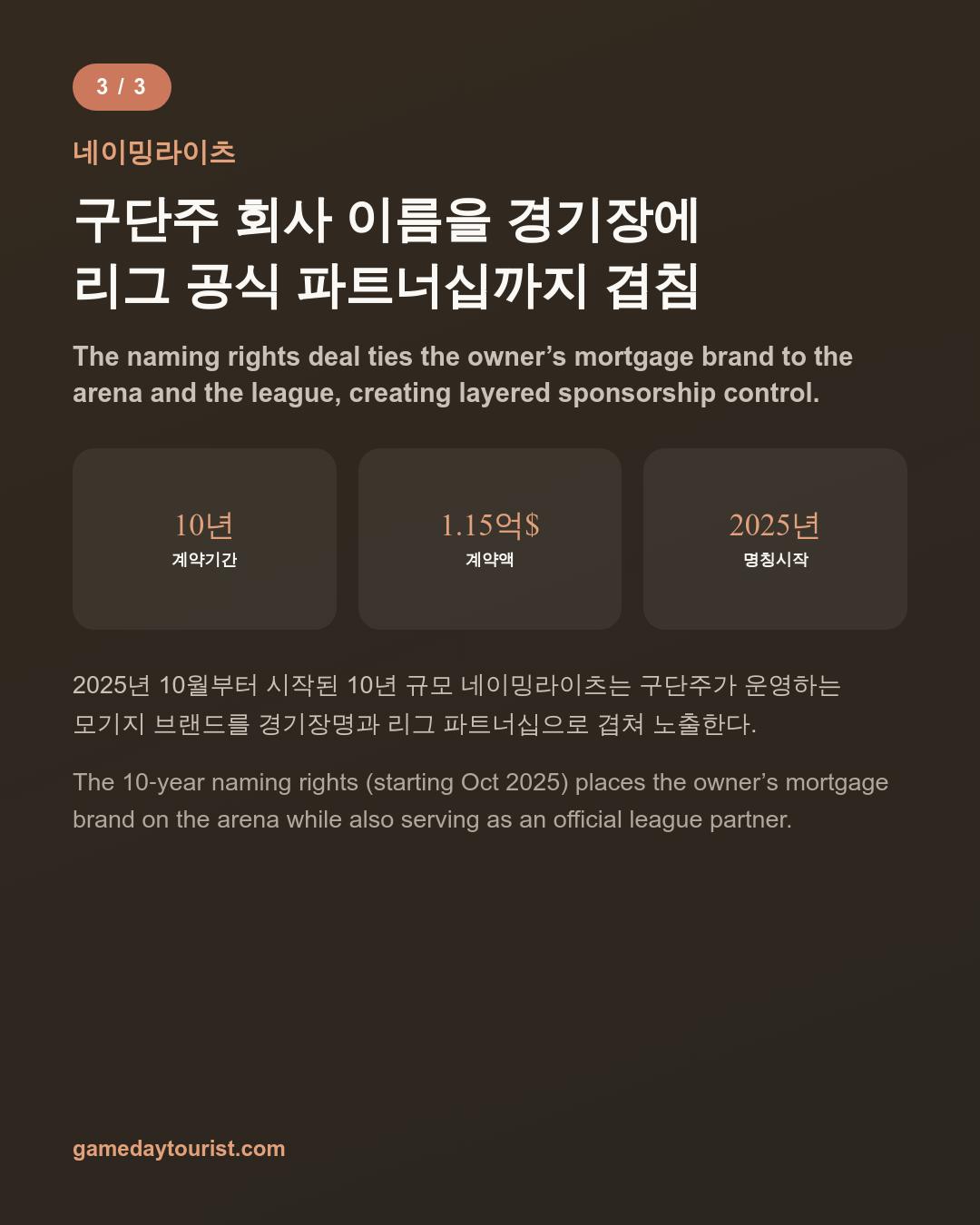
The naming rights side is worth a closer look too. The arena has carried the Mortgage Matchup Center name since October 2025, under a roughly $115 million (about ₩163.3 billion), 10-year deal — one of the bigger naming rights contracts in either league. The sponsor, Mortgage Matchup, is a consumer-facing platform run by lender United Wholesale Mortgage (UWM) that connects homebuyers with local independent mortgage brokers — it’s a January 2024 rebrand of what used to be FindAMortgageBroker.com. And UWM’s chairman and CEO is none other than Mat Ishbia, the same person who owns the Suns and Mercury.
So while the press release language leans on phrases like “landmark naming rights partnership,” what’s actually happening is an owner putting his own other company’s brand on his own arena. And it doesn’t stop there — Mortgage Matchup also holds status as the official mortgage partner of the NBA and WNBA at the league level, meaning one person’s business is layered across the arena name and a league-wide sponsorship at the same time. Worth noting: this same building briefly carried the Footprint Center name from 2021 under a sustainability-focused “plastic-free future” partnership, and after that deal expired, it spent a stretch under the placeholder name “PHX Arena” before this latest deal was signed.
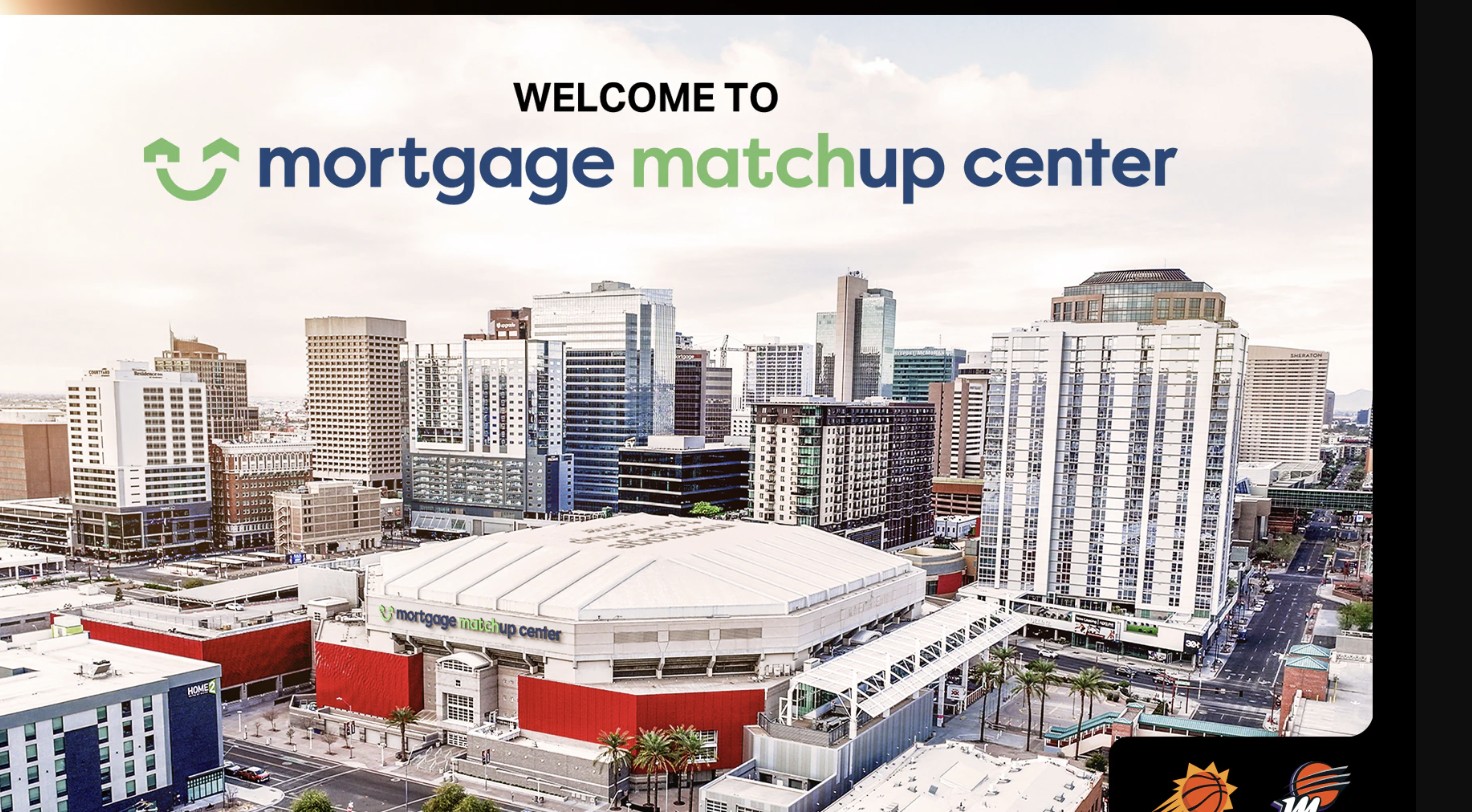
Materials from the October 2025 naming rights announcement · Source: Phoenix Mercury’s official site, an official team press image
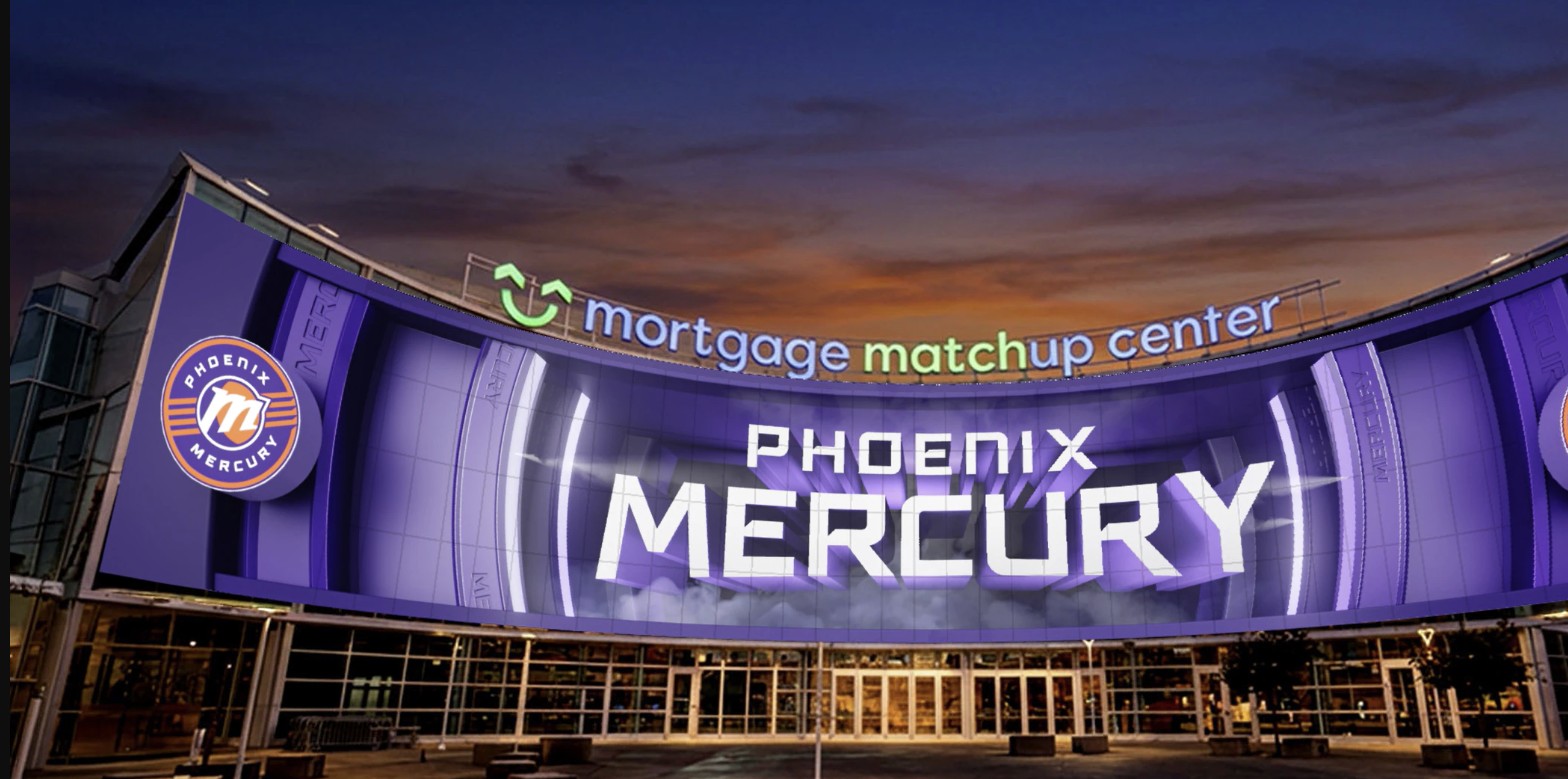
Materials from the August 18, 2026 announcement · Source: Phoenix Mercury’s official site, a pre-completion rendering — the finished screen may look different
Broadcasting and Local Economic Impact
Per an economic impact study cited by HOK, roughly $153 million (about ₩217.3 billion) worth of jobs are tied to events held at this arena. The building went up in the early 1990s, back when downtown Phoenix was relatively rundown, and it’s widely credited as the anchor project that helped revive the area — an effect that only grew a few years later when the Diamondbacks’ Chase Field went up right next door.
Phoenix hosted the WNBA All-Star Game in 2024, and Ishbia made headlines that same week by announcing a $100 million (about ₩142 billion) investment in a dedicated training facility for the Mercury. The LED screen investment ahead of the 2027 NBA All-Star Game looks like the same pattern repeating — pairing every major event the city lands with a facility announcement, so the buzz around the city and the team’s brand rise together. What stands out is that this keeps happening regardless of how the team is performing on the court. That said, within the scope of this piece I wasn’t able to confirm any details on a dedicated regional broadcast channel or the specifics of a media rights deal for the Suns or Mercury — this doesn’t appear to follow the same in-house channel model as, say, the Washington Wizards’ Monumental Sports Network.
What Makes This Arena Its Own
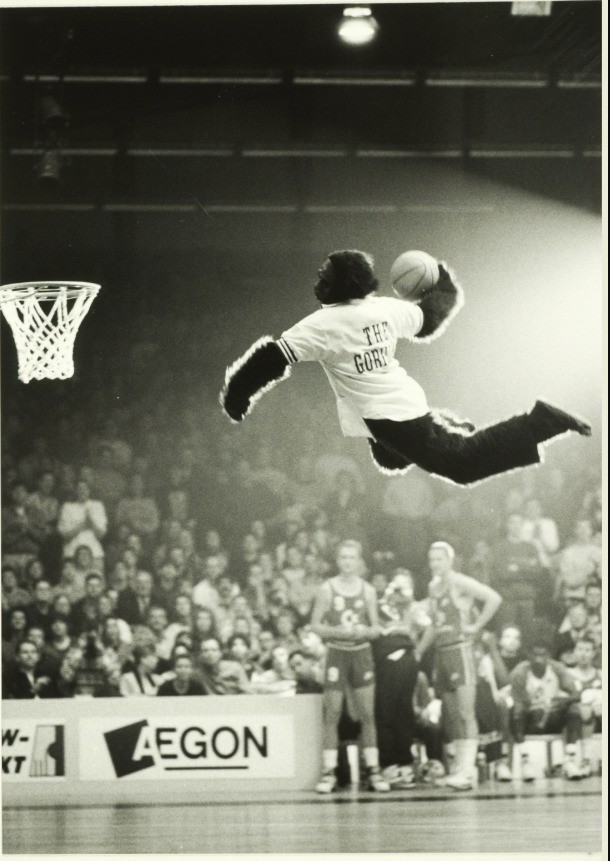
If one thing defines this building, it’s the mascot: the Gorilla. First appearing in 1980, it’s still going strong more than 40 years later, making it one of the longest-running mascots in all of pro sports. Its dunk routine with the trampoline team “Ring of Fire,” performed every game during the break between the third and fourth quarters, has become such a signature moment that basically every travel guide covering this arena tells visitors not to miss it.
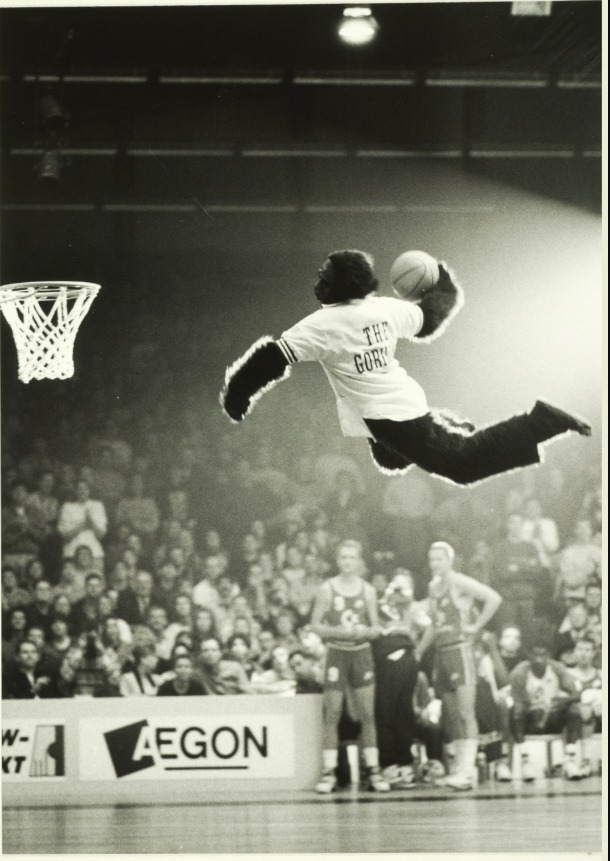
The Phoenix Suns’ Gorilla mascot mid-dunk · Source: Photo by Poppe de Boer (1992, Noord-Hollands Archief), Wikimedia Commons, CC0 — taken during a 1992 exhibition trip to Haarlem, Netherlands, not at the Phoenix home arena
Stadium Journey, a stadium-review outlet, gave this arena its five-point FANFARE rating with perfect 5s for fan atmosphere and neighborhood, and 4s for food-and-beverage/atmosphere and access. Even with total attendance sitting near the bottom of the league because of the smaller seating bowl, the actual satisfaction and sense of connection fans report at games reads as considerably higher.
A KBO and K League Comparison
What stands out most from this case is the structure of the naming rights deal itself. The press materials lean on language like “landmark partnership,” but what’s really going on is an owner putting a consumer brand from a different company he runs onto his own arena — which, at its core, isn’t all that different from how Korean parent companies get their names attached to KBO ballparks. The difference is that Korean deals usually stop at a single team or stadium name, while this one stacks a league-wide official partnership on top of that, meaning one person’s business occupies multiple layers of sponsorship at once. It’s worth flagging that this is a different animal from a pure third-party naming rights deal with no ownership ties — like Capital One with the Washington Wizards or Kaseya with the Miami Heat, both cases I’ve covered before.
The approach to the exterior LED screen — treating it as an always-on ad and content asset — is also worth studying. Korean baseball and soccer venues tend to rely mostly on interior scoreboards or static exterior signage for ad inventory. Turning the entrance plaza itself into a year-round programmable media asset, the way this project does, seems like something domestic clubs planning new builds or renovations should keep an eye on. I’d point to KT Wiz Park in Suwon as a good local example already doing something similar — the media façade at its entrance plaza strikes me as genuinely smart marketing. And the fact that a smaller seating bowl hasn’t stopped this arena from sustaining both a sellout streak and high fan satisfaction is a useful data point for Korea’s small and mid-size venues that have leaned toward intimacy over scale.
An owner’s company putting its name on the owner’s own arena, with the world’s largest transparent screen going up over its front doors — it’s a reminder that facility investment in pro sports is rarely about a single event. It’s about stacking up multiple layers of brand equity at once. How many people actually show up in front of that screen after it’s finished this September, and how the team puts this investment to use during next February’s All-Star weekend, will only become clear with time. I’ll be watching this arena again when that happens.
Leave a Reply