Contents · About 10 min read
- 18,203 seats, 18,203 T-shirts: a playoff ritual born from an improvised 2010 stunt
- What kind of team are the Thunder? A team from Seattle, with a first title in 2025
- Attendance and tickets: a sellout built in an aging arena
- The arena’s names and sponsors: a bankrupt naming partner and the last team to wear a jersey patch
- The new Continental Coliseum and the local economy: $900 million, and the choice of 71% of voters
- A comparison with the KBO: a ballpark that went to a public vote versus 25 years of operating rights
📱 View as card news
With the 2026-27 season opener (October 20) less than three weeks away, the first thing you see on the Oklahoma City Thunder’s official season-ticket page is a line saying full, half and quarter season memberships are all sold out and only a waitlist is being taken.
How did a team from a city considered a small market in the NBA get here, and what happens now that the team is also moving to a new arena targeted to open in late summer 2028? As a marketer, my curiosity was piqued, and today I’m starting with the arena they play in now, Paycom Center.
Paycom Center opened on June 8, 2002, at a construction cost of about $89.2 million, built through MAPS, Oklahoma City’s urban renewal program that began in 1993 (a method of building sports and cultural facilities with a temporary one-cent sales tax). Its capacity for basketball is 18,203.
That’s all laid out in Wikipedia’s Paycom Center entry. The arena was finished six years before the Thunder arrived in 2008, and in 2005-2007, right after Hurricane Katrina, the New Orleans Hornets used it as a temporary home and averaged 18,716 fans in 2005-06, according to the same entry.
In a sense, it was the stage where the NBA first tested whether a relocated team could work.
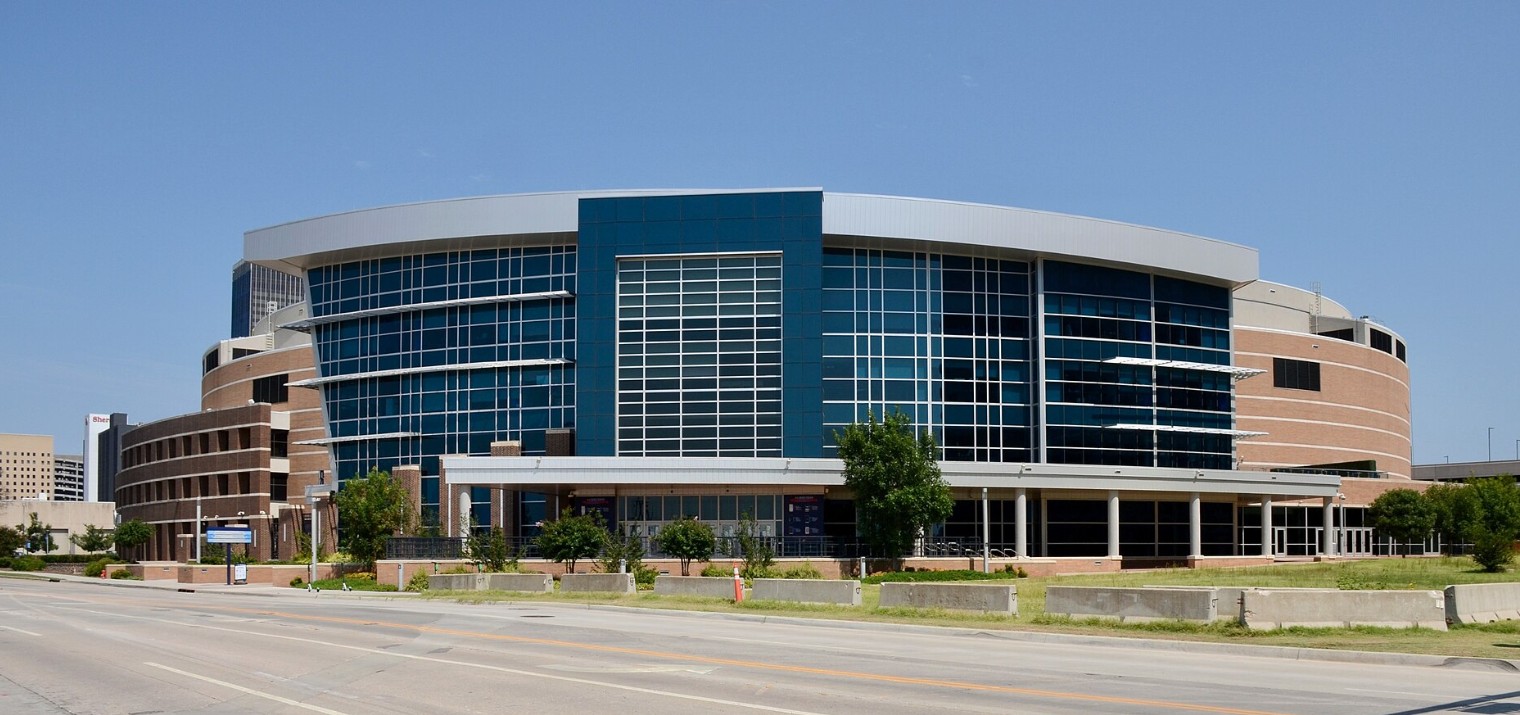
Photo 1. Paycom Center exterior (September 2021) · Photo by Steve Morgan · Wikimedia Commons · CC BY-SA 4.0
18,203 seats, 18,203 T-shirts: a playoff ritual born from an improvised 2010 stunt
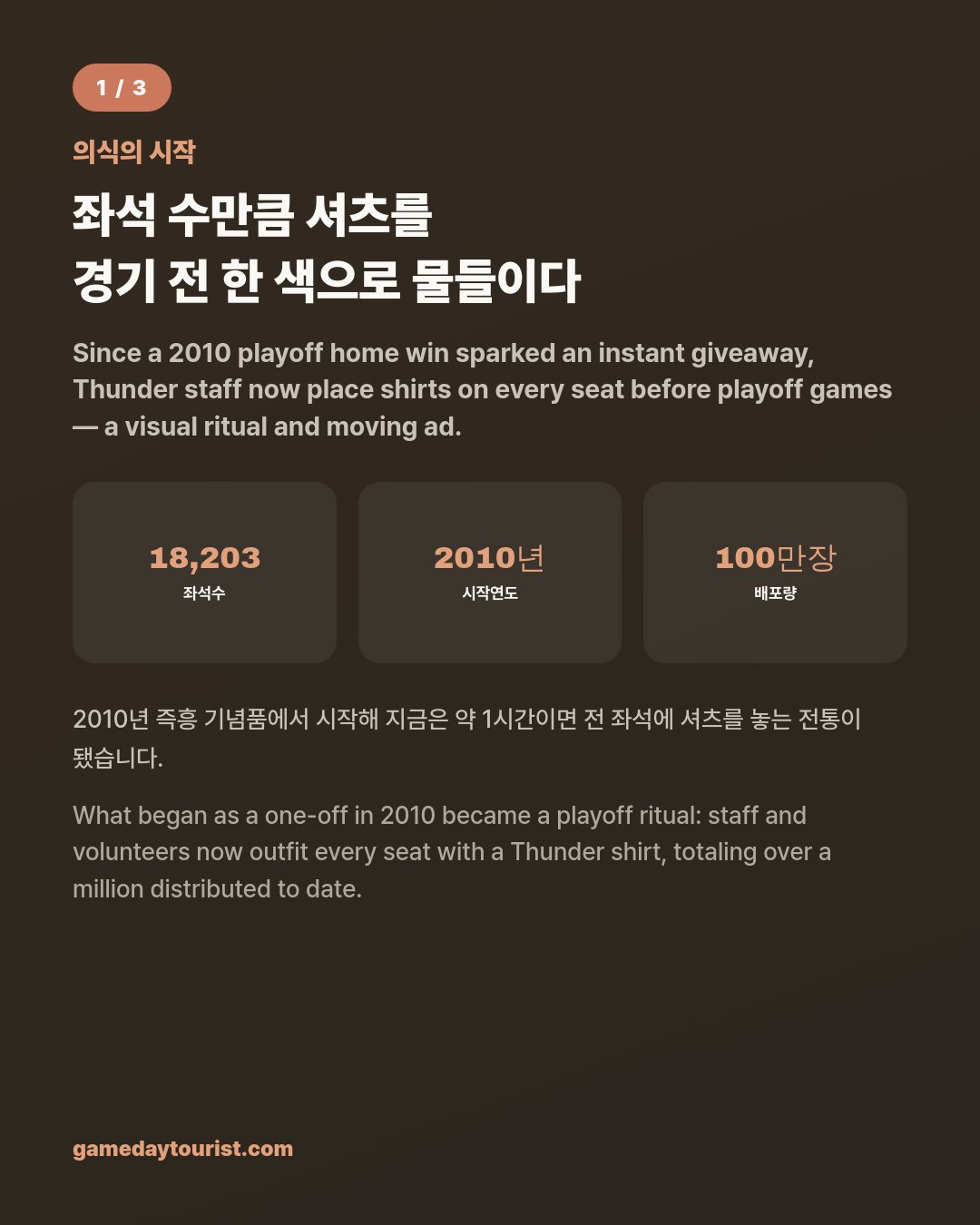
The most famous scene at a Thunder playoff home game isn’t the game itself but what happens before it. A T-shirt made for that round sits on every one of the 18,203 seats, and fans who come in wear it or wave it, painting the arena a single color.
According to a 2024 local report, the tradition began with the Thunder’s first playoff home win in Oklahoma City in 2010 (against Kobe Bryant’s Lakers). The team had thought of it as a one-off keepsake, but the reaction was so good that within an hour of the game ending a staffer had lined up Cox as a sponsor and contacted a vendor in Dallas so that shirts would arrive the next morning.
That staffer said the shirt has become more than a shirt, a symbol of togetherness.
As of a May 2026 report, the ritual is in its 16th year, and staff and volunteers now lay out shirts on every seat in about an hour (it reportedly took two days at first). A 2024 report said the number of shirts given out so far had passed one million.
An interview with a team official even mentions fans calling ahead to ask what color the shirt will be that night. As a marketer, what I envy about this case is the cost structure.
One shirt is advertising space inside the arena, a free visual production that paints the entire broadcast frame one color, and a mobile advertisement that fans take home and wear. What impressed me is that even the structure with the sponsor’s name on it was improvised on day one.
What kind of team are the Thunder? A team from Seattle, with a first title in 2025
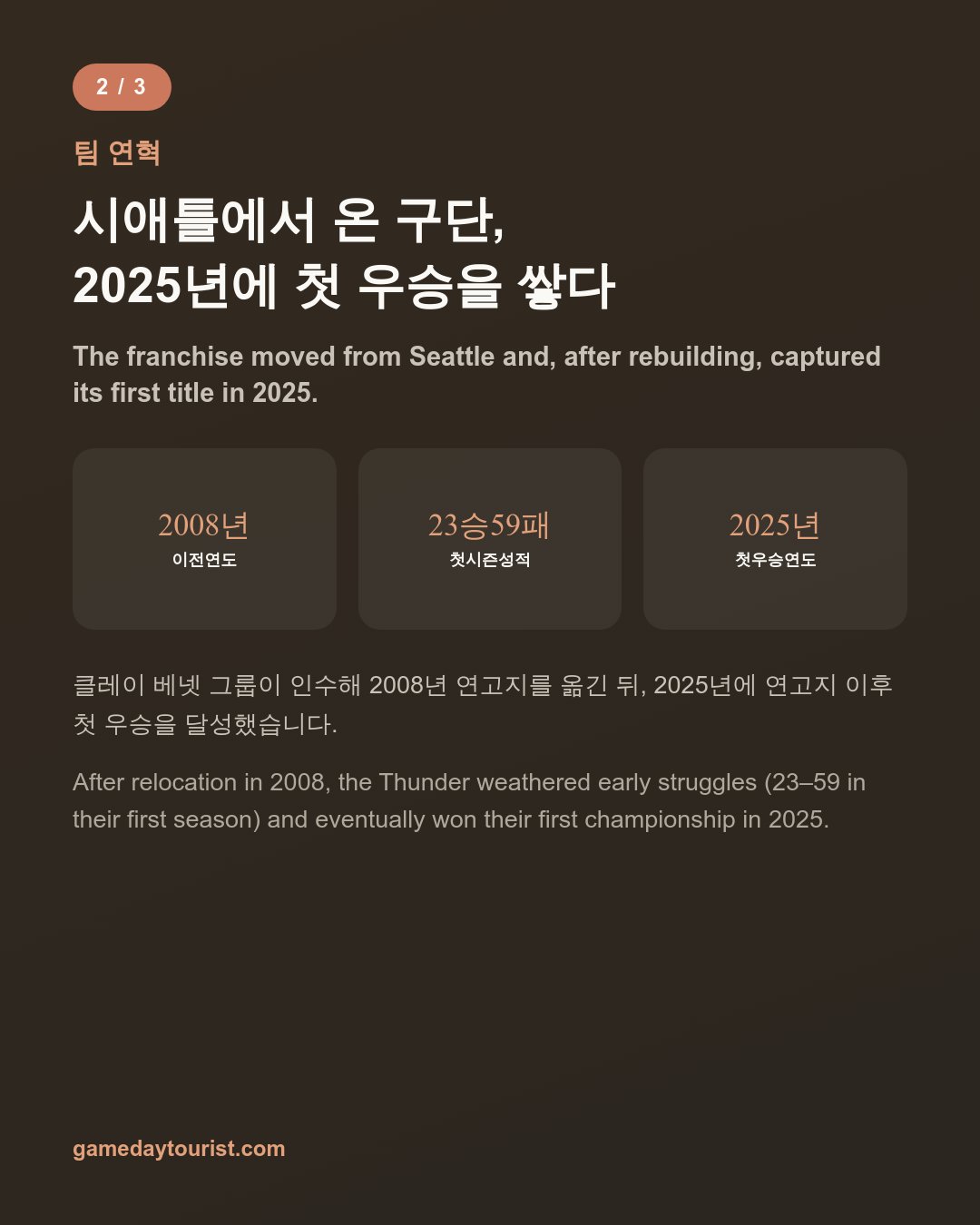
The Thunder’s predecessor was the Seattle SuperSonics. An Oklahoma City investment group led by Clay Bennett bought the Sonics for $350 million in October 2006, NBA owners approved the relocation 28 to 2 in April 2008, and it was settled with the city of Seattle in July of that year (a total of $75 million: $45 million immediately plus $30 million conditional).
It came with the condition that the Sonics name and colors would not be used in Oklahoma City. The process is covered in detail in Wikipedia’s relocation entry.
The team name comes from Oklahoma’s weather in tornado country and from “Thunderbirds,” the nickname of the 45th Infantry Division stationed in Oklahoma City, according to a summary of the club’s history.
Their first season, 2008-09, ended 23-59, they lost the 2012 Finals to the Miami Heat, and in 2025 they beat the Indiana Pacers in seven games for their first title since relocating.
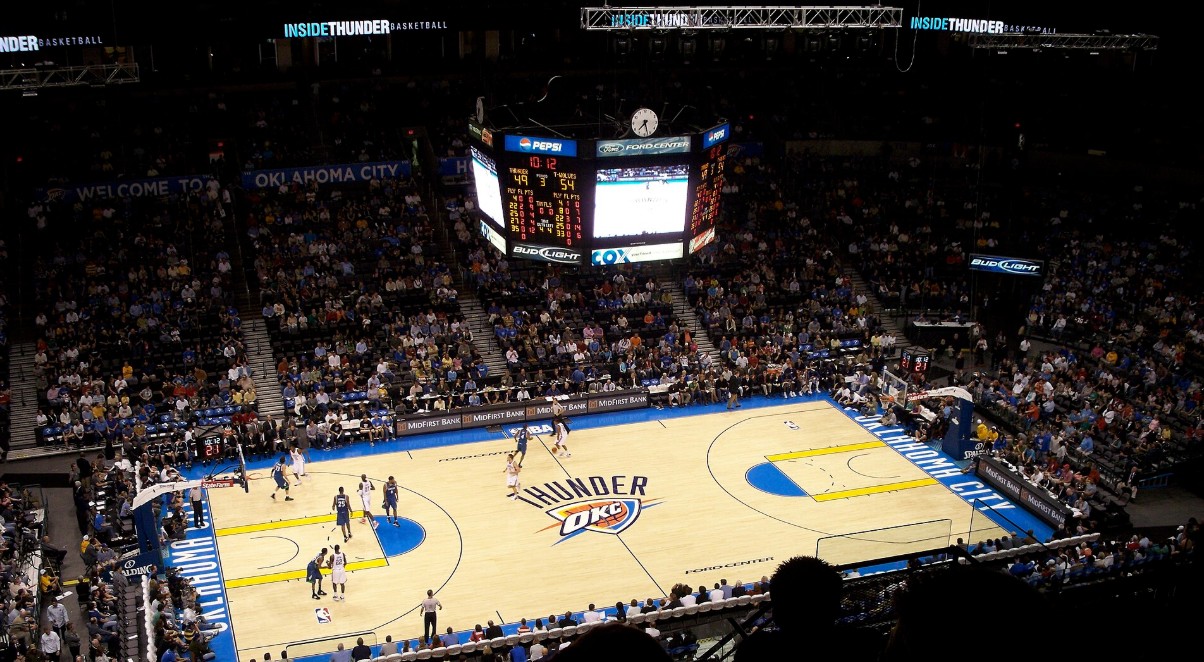
Photo 2. Home game on November 2, 2008 (then named the Ford Center) · Photo by JWay20 · Wikimedia Commons · Public domain (released by the photographer)
Last season (2025-26) they went 64-18, first in the West, and lost the Western Conference Finals to the San Antonio Spurs 4-3. They led 3-2 before injuries intervened, according to the season summary.
Ace Shai Gilgeous-Alexander has won MVP two seasons in a row, and the head coach is Mark Daigneault. The new season starts on October 20 at the Spurs, and the home opener is October 22 against the Denver Nuggets (8:30 p.m. Central Time).
The preseason home games are against Milwaukee on October 7 and Indiana on October 13 (schedule report). No Korean player has been confirmed on the current roster.
Attendance and tickets: a sellout built in an aging arena
According to the official website, 2026-27 memberships come in three types — full season (listed officially as 43 games), half season (21 games) and quarter season (10 games) — and all are sold out. The benefits include a dedicated account manager, playoff purchase priority, renewal priority points and game exchange vouchers, so it’s closer to a relationship-management product than a simple discount package.
Single-game prices are steep too. For the 2025-26 home opener, a local radio report said that on the resale market before general sale began, top-level seats started at $181 and went above $700 the closer you got to the court.
The timing right after a title and the fact that these are resale prices need to be taken into account, but the direction is clear.
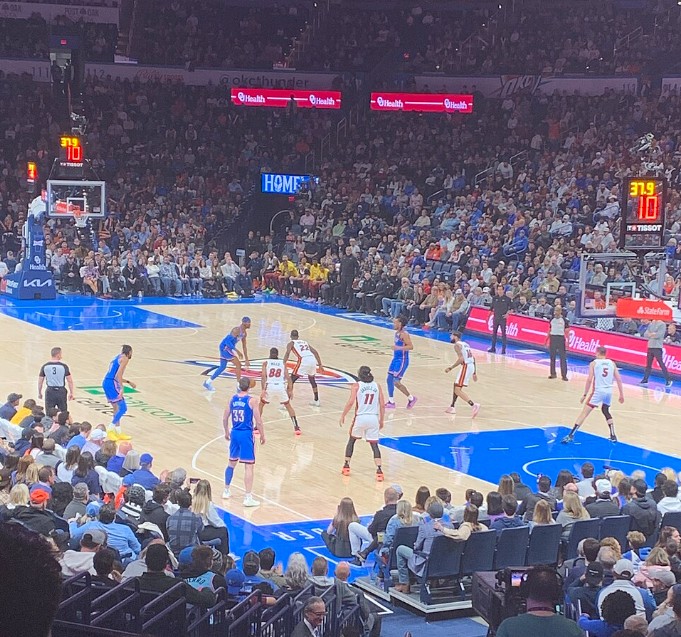
Photo 3. Game against the Miami Heat, March 8, 2024 · Photo by HutchDoesStuff · Wikimedia Commons · CC0
I read some fan reviews as well. On a travel review site, there’s praise that the facility is clean, concession lines move quickly and the view is good even from the upper deck, alongside complaints that the lower concourse (the walkway inside the arena) is narrow, food variety is limited compared with recent NBA arenas, and drinks and souvenirs are expensive.
One visitor wrote that you can feel the whole city standing behind the team. A sports travel agency’s guide even recommends arriving about 45 minutes before tip-off to walk around the in-arena shop and facilities.
Reading these reviews together as a working marketer, the impression is of a place where the facility is inconvenient after more than 20 years but the emotional cost fans pay to be there is low. It also explains why the new arena is designed to expand floor area so much.
Here is the practical information. Parking is on the lot right next to the arena and general parking is about $10, according to one parking guide (there’s reportedly a free lot to the south too, but expect congestion on game day).
Outside food is not allowed, and only clear bags no larger than 14 x 14 x 6 inches are permitted. A travel guide says the downtown loop streetcar (OKC Streetcar) passes near the arena and the Bricktown restaurant district is within walking distance.
Prices and rules can change, so I recommend rechecking the official guidance before you go.
The arena’s names and sponsors: a bankrupt naming partner and the last team to wear a jersey patch
Paycom Center’s name has gone Ford Center (2002-2010), Oklahoma City Arena (2010-2011), Chesapeake Energy Arena (2011-2021), and Paycom Center (2021-). Chesapeake signed a 12-year deal in 2011 worth around $3 million a year, and terminated it after filing for bankruptcy in April 2021.
In July 2021, payroll and HR software company Paycom signed a 15-year deal. The total wasn’t disclosed, but CNBC reported it didn’t exceed $100 million (SportsPro), which works out to about $6.7 million a year or less.
What stands out to me as a marketer is counterparty risk. If an arena’s naming partner goes bankrupt mid-contract, the club loses the name and the revenue at the same time.
But this 15-year deal also ends early. Paycom said it will step away from the naming rights when the new arena opens, with the aim of letting the club find a new long-term partner, according to a local report.
The lesson here is that the partner stepped aside on its own and handed negotiating power back to the club. The club can negotiate the new arena’s naming value from scratch, free of the old contract’s terms, and as a result a new name was settled in March.
Jersey sponsorship has the story in reverse order. In March 2019 the Thunder signed a four-year, $40 million (about $10 million a year) patch deal with Love’s, a gas station and convenience store chain, and became the last of the NBA’s 30 teams to wear a jersey patch.
Love’s had been a sponsor since the 2008 relocation and already held naming rights to a hospitality space inside the arena and a Kiss Cam sponsorship, according to SportsPro. Putting a long-standing partner on the front of the jersey, even though they came in last, shows the club’s priorities.
Wikipedia’s current team overview also lists Love’s as the main sponsor, but I wasn’t able to confirm extension terms after 2019 in this research.
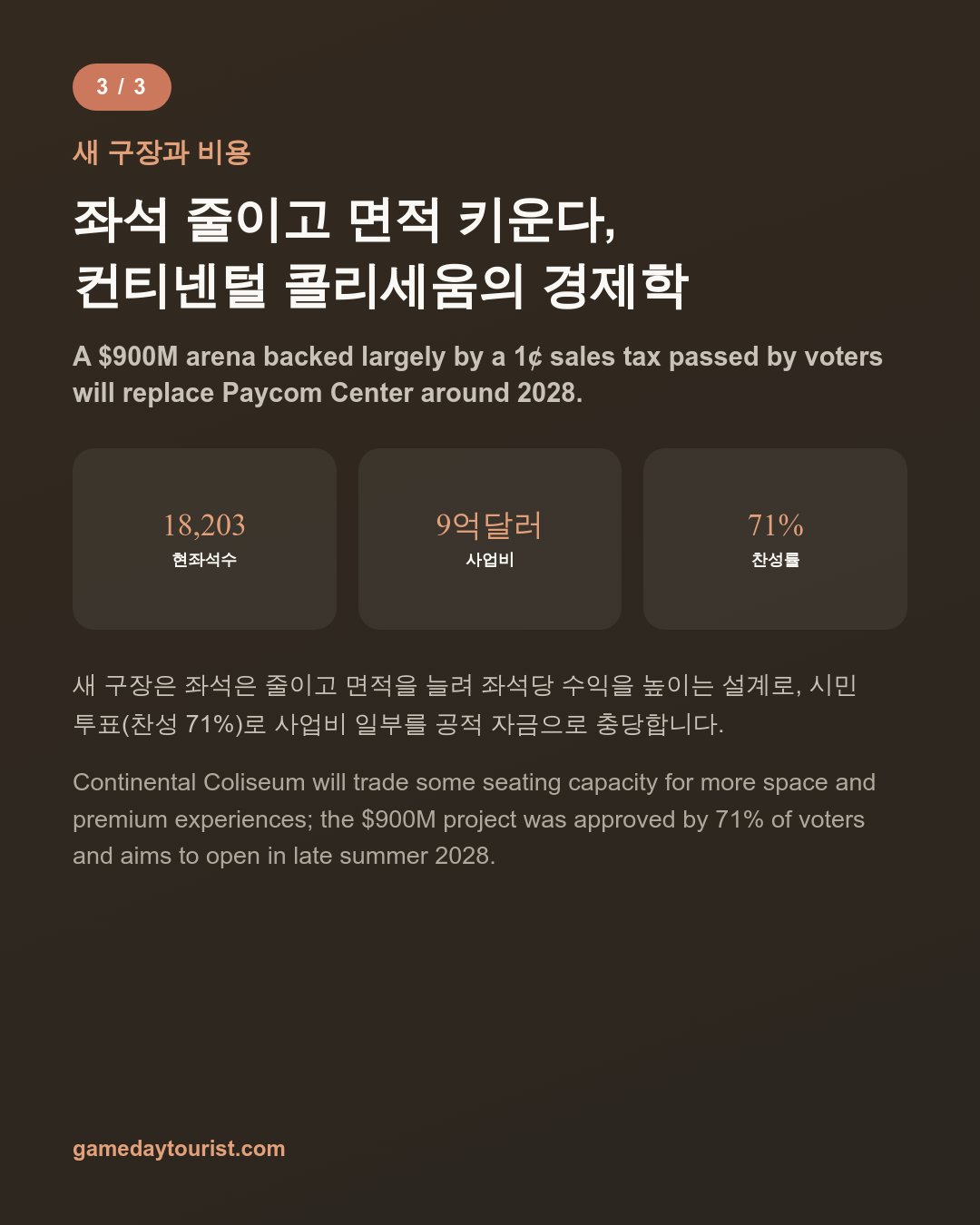
The new Continental Coliseum and the local economy: $900 million, and the choice of 71% of voters
The new arena’s name is Continental Coliseum. On March 24, 2026, the team announced a 15-year naming-rights deal with Continental Resources, the world’s largest privately held oil and gas producer, headquartered in Oklahoma City, and the amount was not disclosed.
The team’s chairman said “we wanted an Oklahoma partner” (NBA.com). The project cost is $900 million: $78 million from MAPS 4, $50 million from the team, and the rest from a one-cent sales tax collected for 72 months (at least $772 million).
In a December 12, 2023 vote, 71% of voters approved it, and construction began on March 26, 2026, with the city owning the arena and Legends Global operating it (Wikipedia). The target opening is late summer 2028.
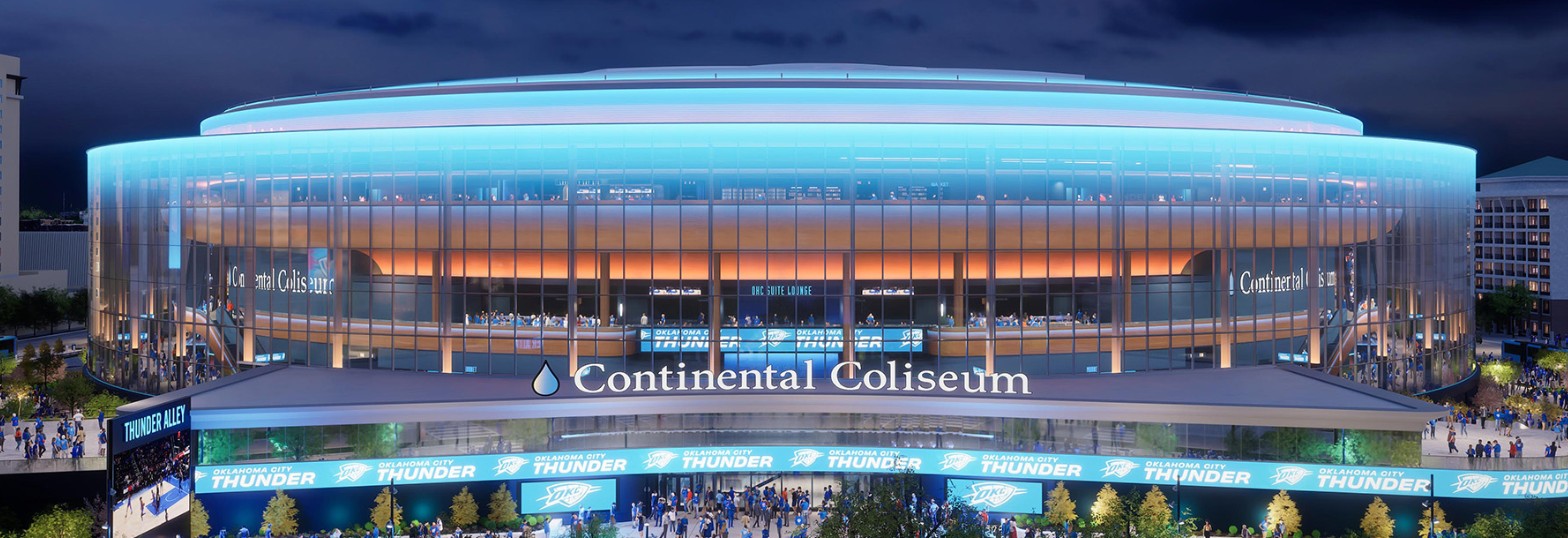
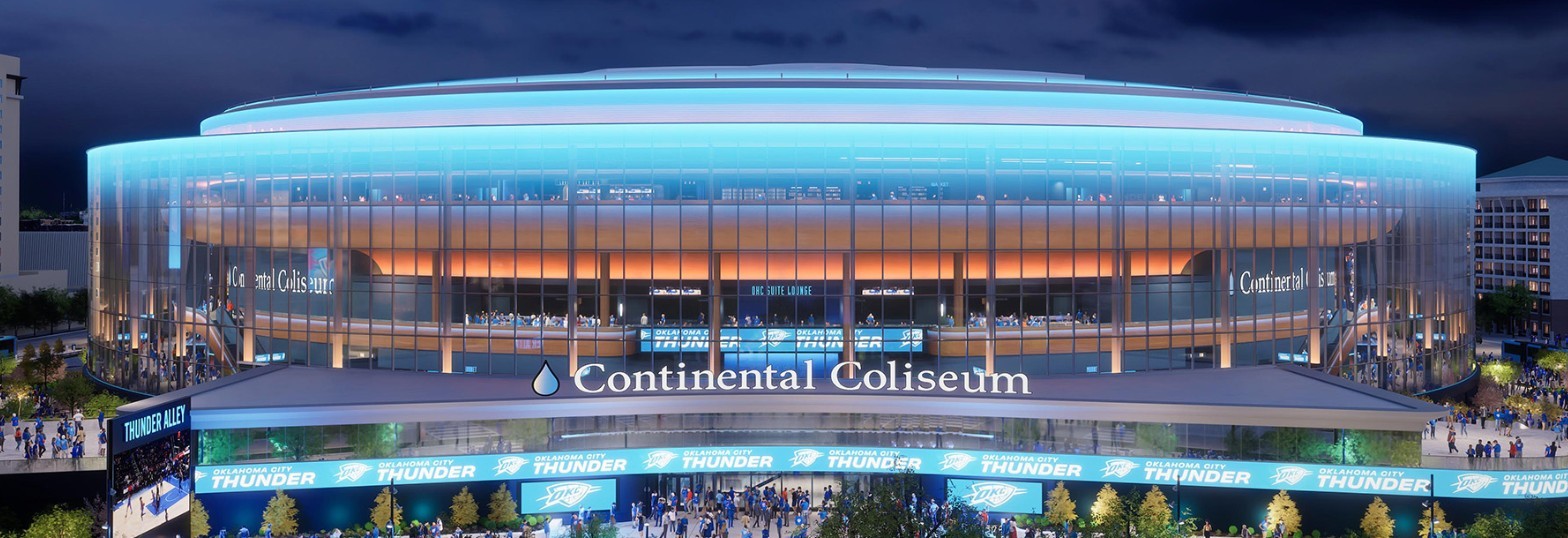
Photo 4. Rendering of Continental Coliseum (captured from the team’s official website) · okcthunder.com/arena
According to a local business outlet, the design description says capacity will be smaller than the current 18,203 seats while floor area grows from about 54,000 square meters (581,000 square feet) to more than 69,000 (more than 750,000 square feet), with a street-level fan zone called “Thunder Alley” and a scoreboard that folds away for concerts.
Cutting seats while adding floor area reads as a decision to grow revenue per seat rather than the seat count.
The local economic impact was cited often while persuading the city council. A study commissioned by the local chamber of commerce estimated that the current arena generates $590 million a year and more than 3,000 jobs, and that visitors exceeded one million in the 2022-23 season.
But the study was commissioned by the chamber of commerce, and its authors themselves say it doesn’t answer whether public money should be used, so the figures are best read as reference points for the supporters’ side.
A comparison with the KBO: a ballpark that went to a public vote versus 25 years of operating rights
The closest case in Korea to this structure is Gwangju-Kia Champions Field. The total project cost was ₩99.4 billion, with Kia sharing ₩30 billion in exchange for 25 years of operating rights (Wikipedia), and Hankook Ilbo reported that the Board of Audit and Inspection said in 2013 that the usage fee was set far too low and that in 2017 a renegotiation was settled with Kia donating ₩3 billion.
Oklahoma City, by contrast, let residents decide by vote whether to pay a one-cent sales tax for another 72 months. I can’t say which of the two structures is better.
Still, I think whether citizens first knew and consented to how much the club gets to take from a public asset is what sets the size of the controversy afterward.
With the season opening on the 20th of this month, this team is looking to make up for its conference finals exit while spending its last few seasons in an aging arena. The moment when a run of sellouts meets the move to a new arena may be the most interesting time to look at Paycom Center.
Leave a Reply