Contents · About 7 min read
📱 View as card news


Right around September 1, with the transfer window deadline closing in, I was putting together an article about Lee Kang-in’s move to Atletico Madrid when it occurred to me that the club that actually developed him deserved a look of its own.
He moved to Spain at eleven and spent his entire youth career there, at Valencia CF’s home ground, Mestalla.
As it happens, Valencia is preparing to leave this stadium, which opened in 1923, at the end of the 2026-27 season and move to a new one in 2027, and as a working marketer that stirred up a mix of envy and anticipation about our own club possibly making a similar move someday — so I decided this was a good moment to take a proper look.
Attendance and Tickets
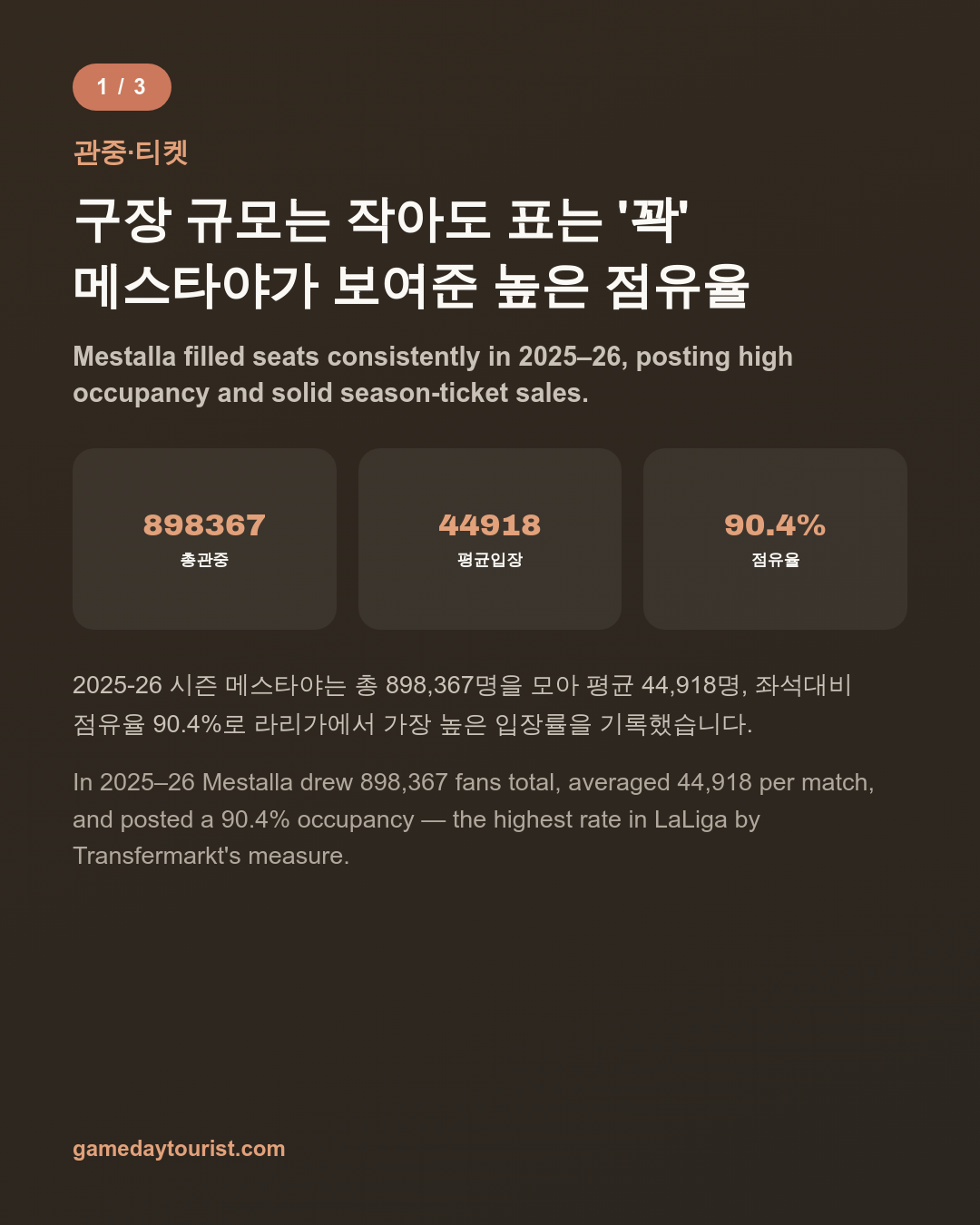
Valencia drew 898,367 fans to Mestalla across La Liga and the Copa del Rey combined in the 2025-26 season.
That’s an average of 44,918 across 19 matches, and per football statistics outlet Transfermarkt, it gave Valencia the highest occupancy rate of any La Liga stadium — 90.4% of seats filled.
Reaching that kind of occupancy in a 49,430-seat stadium means that while the seat count itself isn’t huge, tickets rarely go to waste.
The match against Real Madrid drew as many as 47,537 fans, a season high.
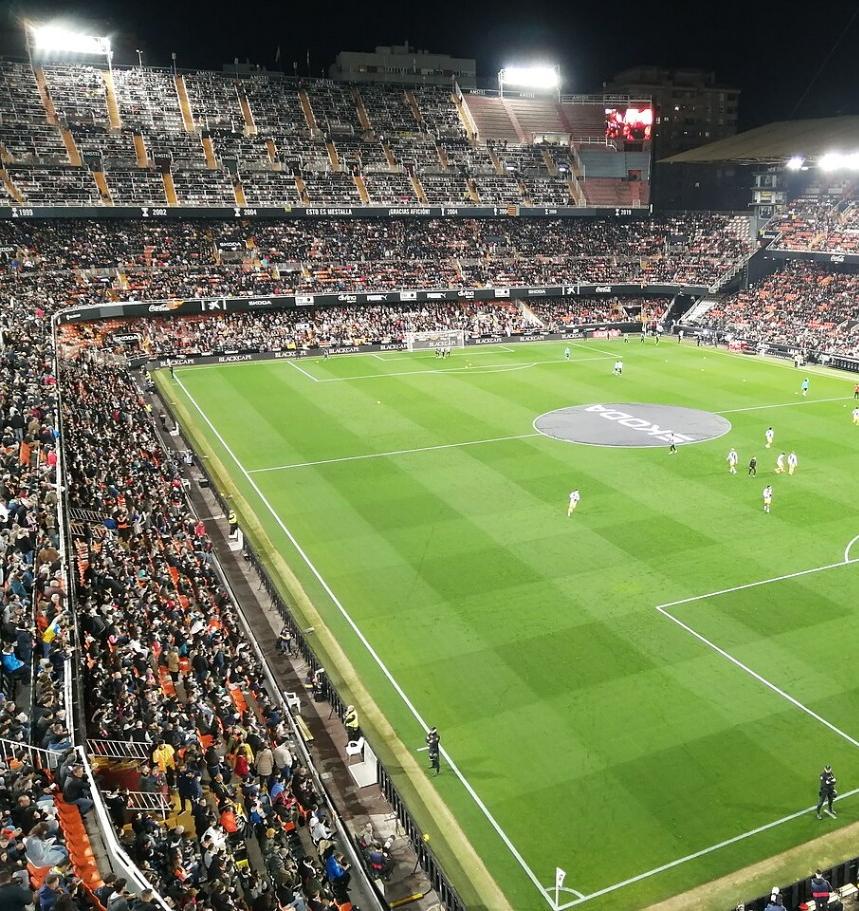
Source: Wikimedia Commons (Anidae, photographed at a Valencia-Barcelona match in December 2023, CC BY-SA 4.0)
The “2026-27 season pass (abono)” campaign kept the base price frozen and instead reworked the discount structure.
Attend 100% of matches in a season and you get 15% off; attend 80% or more and you get 10% off — a setup that rewards regular attendees more generously.
On top of that, this season introduced a dedicated 16-to-30 supporters’ section, the “Grada de Animación,” starting at €310, aimed at bringing in younger fans, and season passes sold out again at around 40,000.
Maybe because of the symbolism of it being the last season before the move, one thing that stood out to me in the local coverage of this season-pass campaign was the slogan — something to the effect of “coming along together.”
Space and F&B
Digging through a few reviews from overseas football travel bloggers who’ve actually visited Mestalla, one word kept coming up: “cauldron.”
The stands are steep enough that even from the upper tiers the pitch feels like it drops away right below you, and that shape is said to keep the noise from escaping and just circling back inside.
That said, the same reviews all pointed to one shared complaint: the facilities can’t hide their age.
The consensus among visitors was that the concourses are narrow and the concession stands amount to little more than basic booths selling drinks and beer.
From a marketing standpoint, this is a fairly familiar dilemma.
The dense, old-stadium atmosphere is an asset in its own right, but boosting matchday revenue tends to require wider concourses and a wider range of F&B outlets — and those two goals tend to structurally clash.
The Nou Mestalla that Valencia is preparing looks like a head-on solution to that dilemma, via new construction.
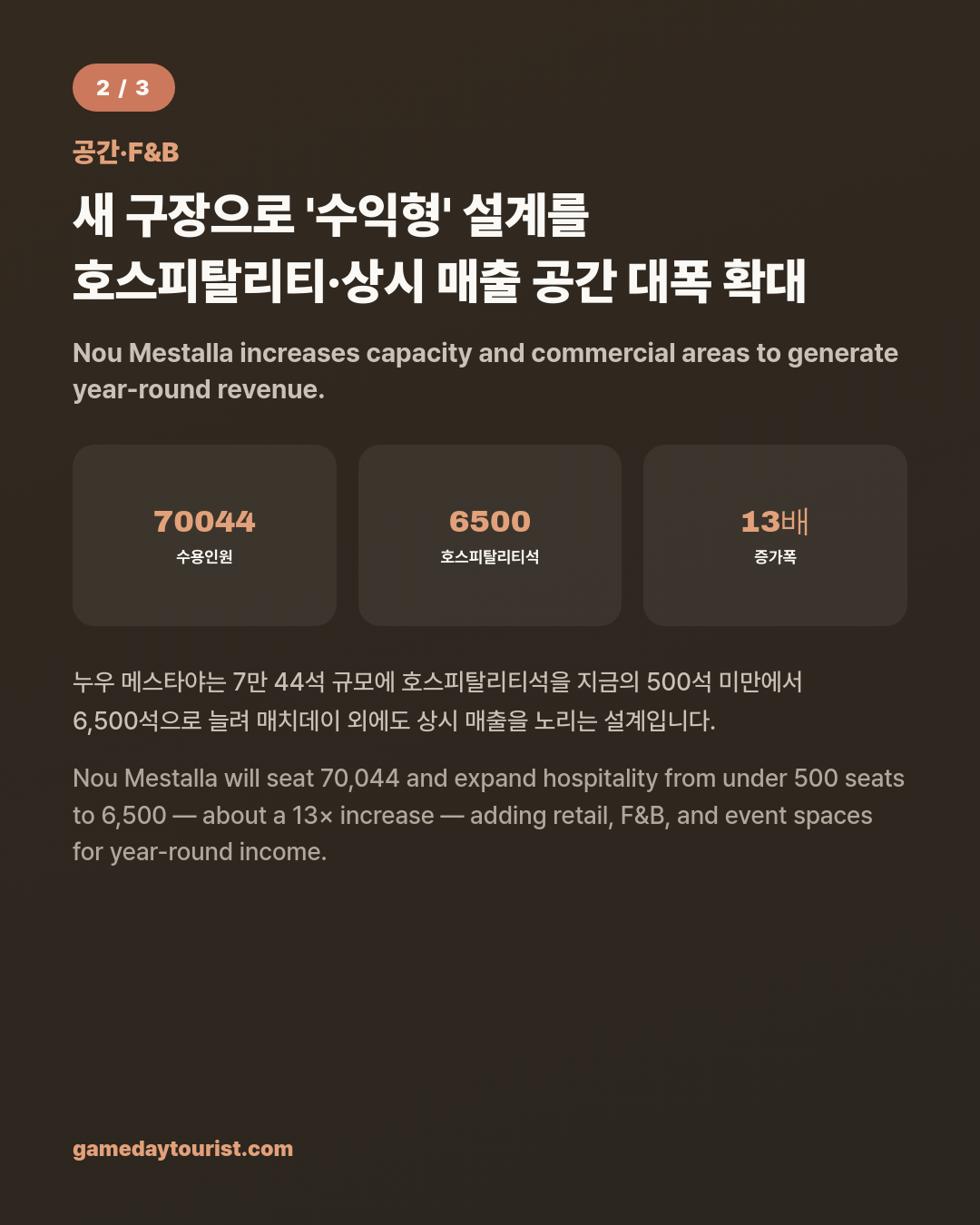
At 70,044 seats it will become the fourth-largest stadium in Spain, but the more notable detail is that premium hospitality seating will jump from fewer than 500 seats today to 6,500 — nearly a 13-fold increase.
It’s also designed with permanently operating food and beverage, retail, and event spaces, meaning it can generate revenue even on non-matchdays, and the public space around the stadium is set to grow by 20,000 square meters.
Matchday guide blogs consistently note that today’s Mestalla sits right in the city center, naturally tying into a visitor’s sightseeing route, and that seems like a strength Valencia will want to hold onto when it builds the new stadium too.
Merchandise and Ad Inventory
Valencia’s main jersey sponsor is TM Grupo Inmobiliario, a real estate and resort company.
The original 2023 deal ran two years on a fixed fee plus a performance-based variable (the fixed portion was reportedly around €3 million), and it was later renewed through 2028, expanding to cover the women’s team and youth academy alongside the first team.
Puma makes the kits, and the sleeve sponsor is insurer Divina Seguros.
Since we’re on the subject of club branding, there’s one more thing worth noting: Valencia’s nickname, “Los Murciélagos” — “the Bats.”
According to the club’s own materials, the bat symbol has appeared in the crest since long ago and remains there today, and there’s also a story that when Mestalla was designed, some of the column structures were shaped to echo a bat’s silhouette.
The mascot, “Amunt,” first appeared in the season of the 2001 Champions League final against Bayern Munich, and has a distinctive look that blends a bat with a Tasmanian devil.
The name itself comes from a chant meaning “forward” or “onward,” a phrase fans have shaped and refined over many years.
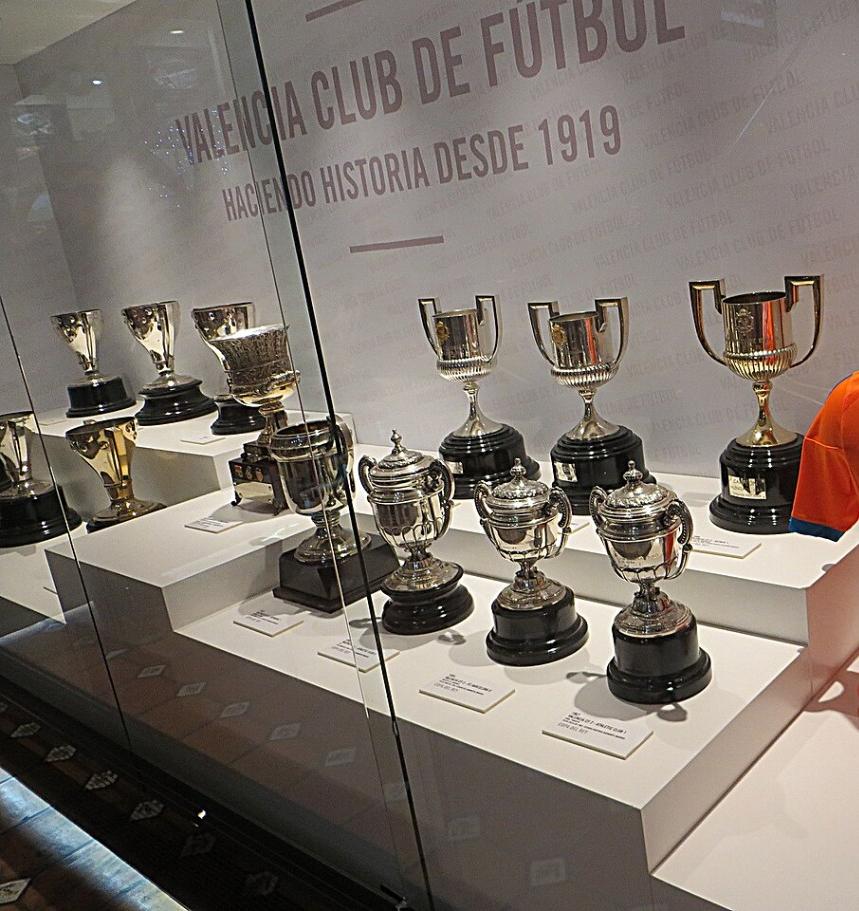
Source: Wikimedia Commons (Mister No, photographed December 2014, CC BY 3.0) — trophies and jerseys on display at the club museum
The club’s official store, the Mestalla Store, holds a solid 4.4 Google rating across 775 reviews, which left me with the impression that even an aging stadium can run a fairly tight operation when it comes to merchandise sales and fan experience.
Broadcast Rights and Regional Economic Impact
Across La Liga as a whole, domestic broadcast revenue for 2025-26 is tallied at around $1.12 billion, but Valencia’s own club revenue actually fell year over year.
Per its 2024-25 fiscal year results, revenue came to €103.67 million, down from €106.9 million the year before, which the club attributes to lower league-standing payouts following a weaker recent season, along with a smaller distribution under its deal with private equity firm CVC (which invested in La Liga in 2021 in exchange for a cut of broadcast revenue over the following decades).
Even so, operating profit actually rose to €23.8 million from €16 million the year before, and after restructuring its debt, working capital flipped from negative €94.3 million to positive €160.2 million.
It looks like a club tightening its finances even as it trims spending.
The financing behind the Nou Mestalla construction is the bigger story here.
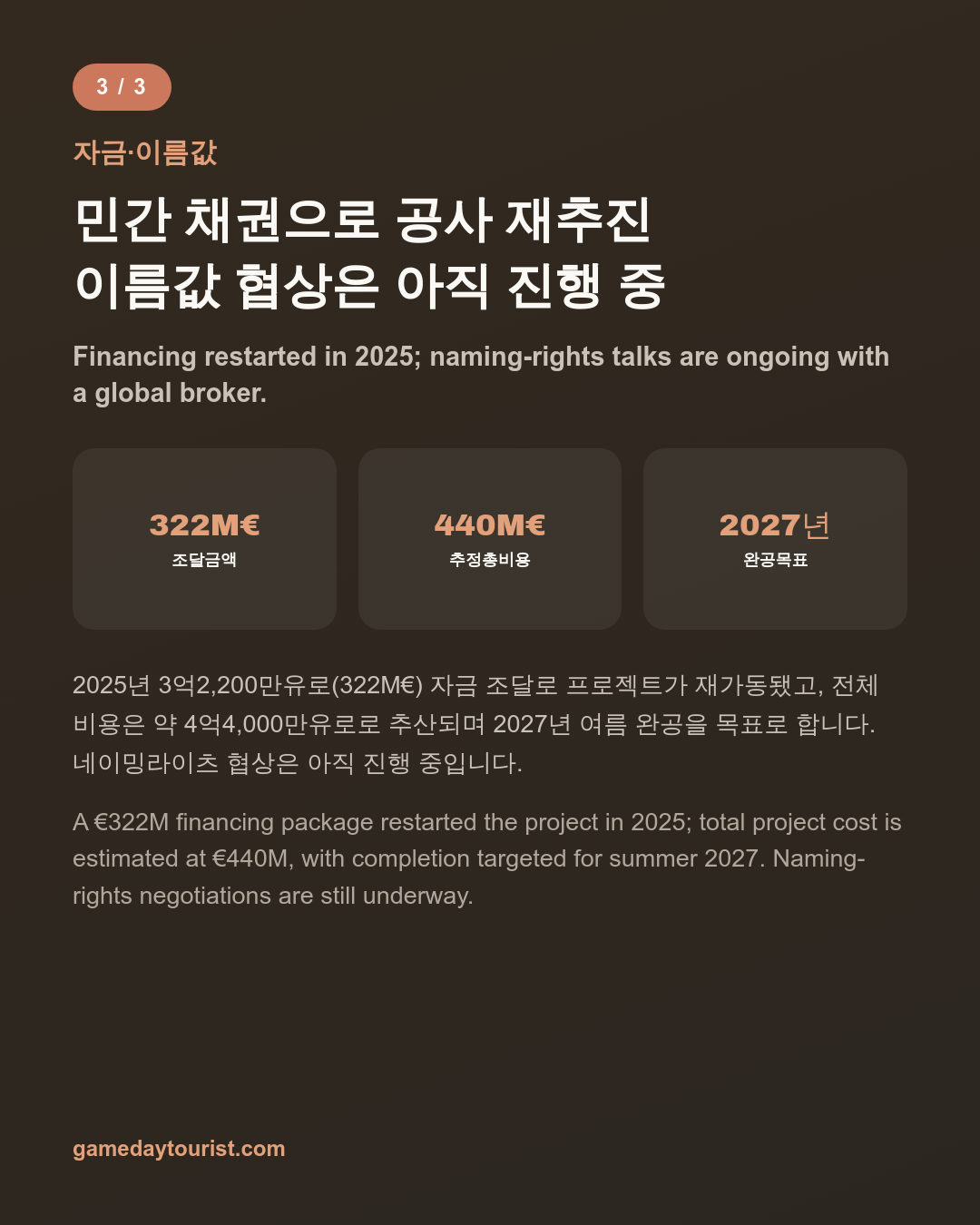
Construction began in 2007, stalled with the 2009 financial crisis, and sat as little more than exposed steel framing for well over a decade before the project got moving again in 2025 with a €322 million financing package (€237 million in 28-year bonds plus an €85 million five-year loan).
That loan is reportedly structured to be repaid from the proceeds of selling the current Mestalla site once the new stadium is complete.
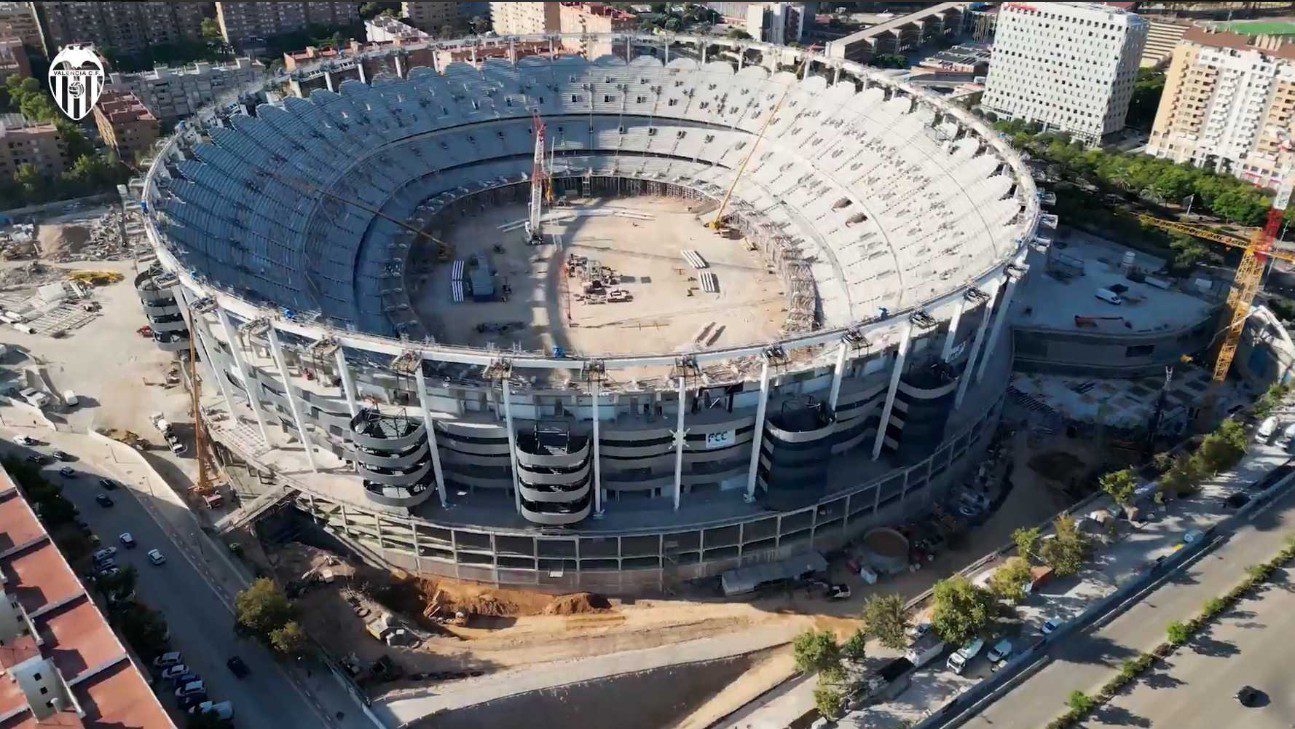
Per stadium-specialist outlet StadiumDB (updated September 2026), the total project cost is estimated at around €440 million, with completion targeted for summer 2027.
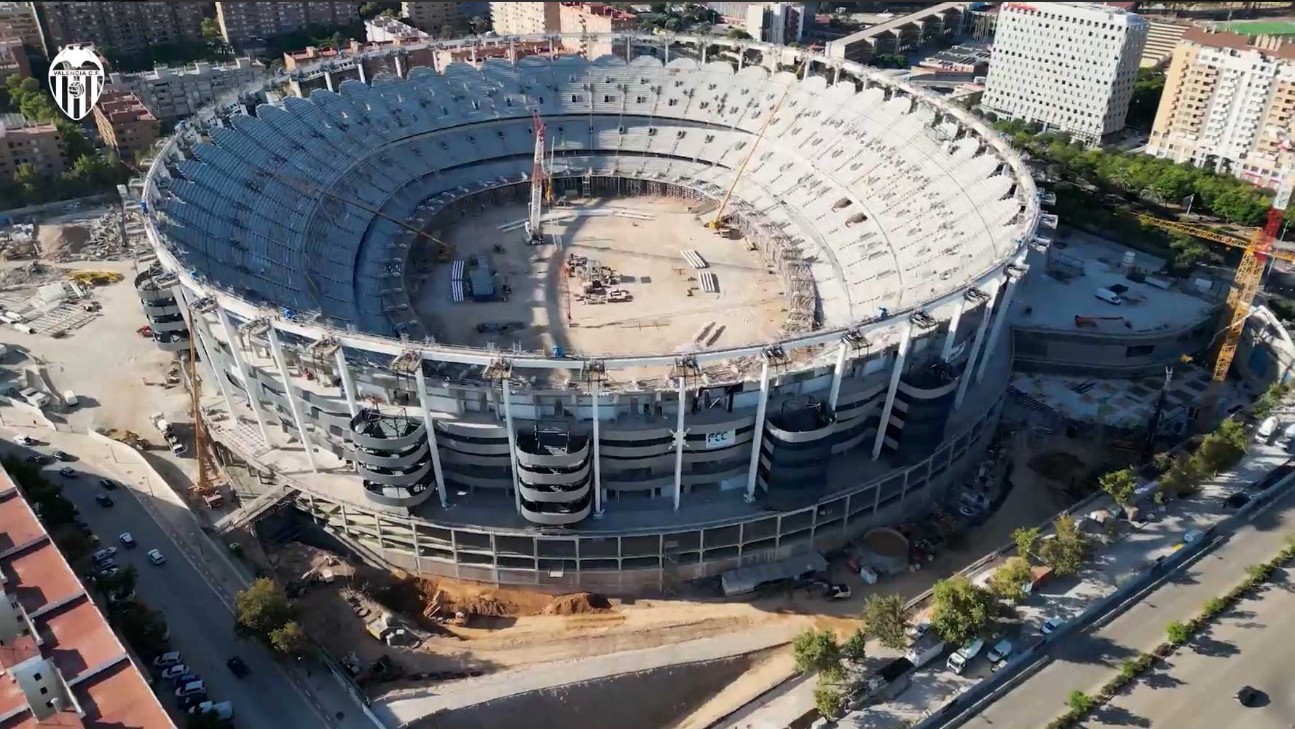
Source: Valencia CF official materials (photographed September 4, 2026, © Valencia CF, via StadiumDB.com) — aerial view of the Nou Mestalla under construction
On top of that, Valencia announced last August that it had selected US sports marketing agency Elevate as its partner for selling the new stadium’s naming rights (the right to attach a company’s name to the venue), the same firm behind Everton’s Hill Dickinson Stadium naming deal.
The club has said it wants this to become one of the largest such deals in Europe, though the fact that it’s been over a year without a named partner suggests it’s proving to be a tough negotiation.
Owner Peter Lim’s son, Kiat Lim, took over as the club’s new president in March last year, and the Lim family’s Meriton Holdings is reported to have put more than €200 million into the club over the years.
A Comparison With the KBO and K League
Looking at how Valencia is financing its new stadium got me thinking about a comparison with cases back home.
Valencia is building its new stadium on a purely private financing structure, issuing bonds itself with no support from local government, and after completion it plans to repay the debt by selling off the site of the current stadium.
Korean pro sports stadiums, by contrast, are mostly owned — land and building both — by local governments, with clubs essentially operating as tenants inside them.
Even relatively recent builds like Gwangju-Kia Champions Field or Changwon NC Park are public facilities funded with local government budgets in the same way.
Neither model is clearly better, of course.
When a local government foots the bill, the club can focus purely on competing without carrying the initial investment burden, but when a club finances it directly, the way Valencia is doing, it seems to gain the freedom to push a design tailored entirely toward maximizing revenue — more hospitality seating, always-on event space, and so on — on its own terms.
Watching this last season at Mestalla play out, I find myself genuinely curious how much of that century-plus “cauldron” atmosphere can carry over into the new stadium.
That, along with how the naming rights negotiation turns out, makes me want to keep following what Valencia does next.
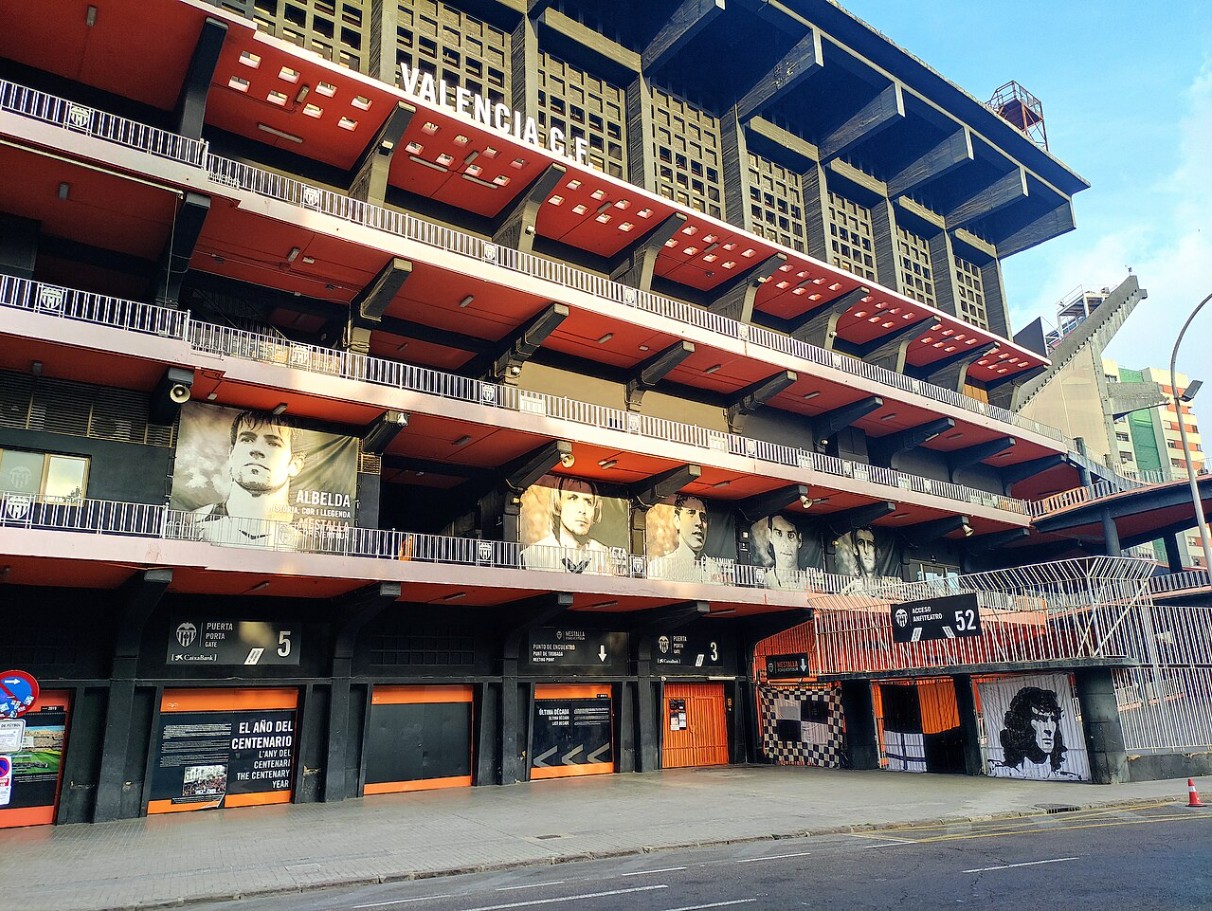
Source: Wikimedia Commons (Francesc Fort, photographed May 2023, CC BY-SA 4.0) — Mestalla’s main entrance facade
Leave a Reply