Contents · About 5 min read
📱 View as card news


On September 19, Barcelona’s general assembly will vote on one item that has been drawing a lot of attention.
It’s a brand licensing deal lasting more than 25 years with Dubai property developer Ohana, under which the club lends its logo and brand to a luxury residential complex in Dubai in exchange for a shirt-back sponsorship.
As a working marketer, seeing this news made me want to check in on Spotify Camp Nou itself, which reopened last November after more than two seasons away.
62,652 Seats: The First Full Comeback Season
Barcelona left their home ground in the summer of 2023 for the renovation, splitting home matches between Estadi Johan Cruyff and Estadi Olímpic Lluís Companys in the meantime.
The return to Camp Nou came on November 22, 2025, against Athletic Club, with an approved capacity of just 45,401.
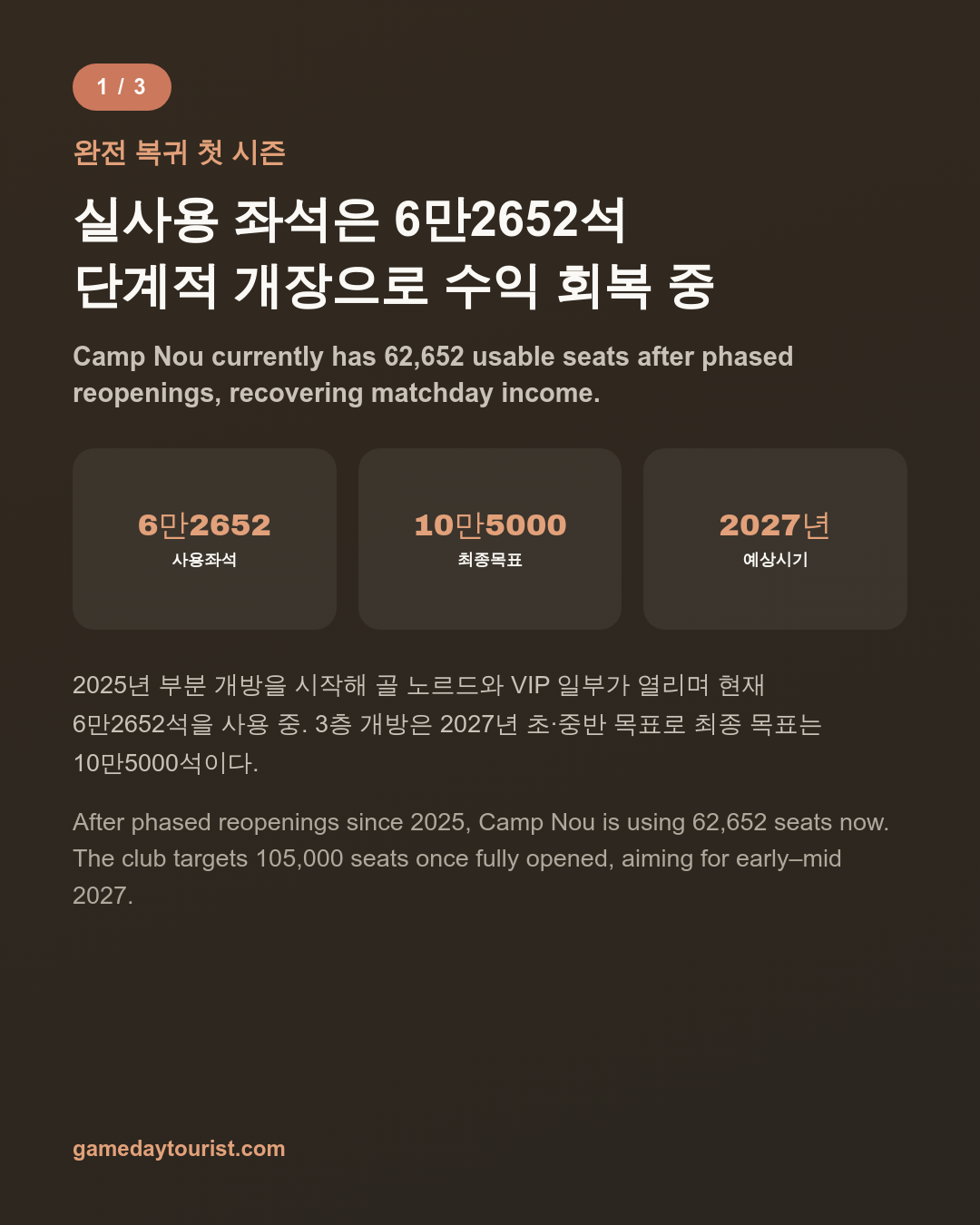
Since then, a Phase 1C occupancy licence granted this past March opened the Gol Nord stand and part of the VIP lounges, bringing usable capacity to 62,652.
The final target is 105,000 seats. The third tier was originally supposed to open within this year, but that has slipped again, and the club is now looking at early-to-mid 2027.
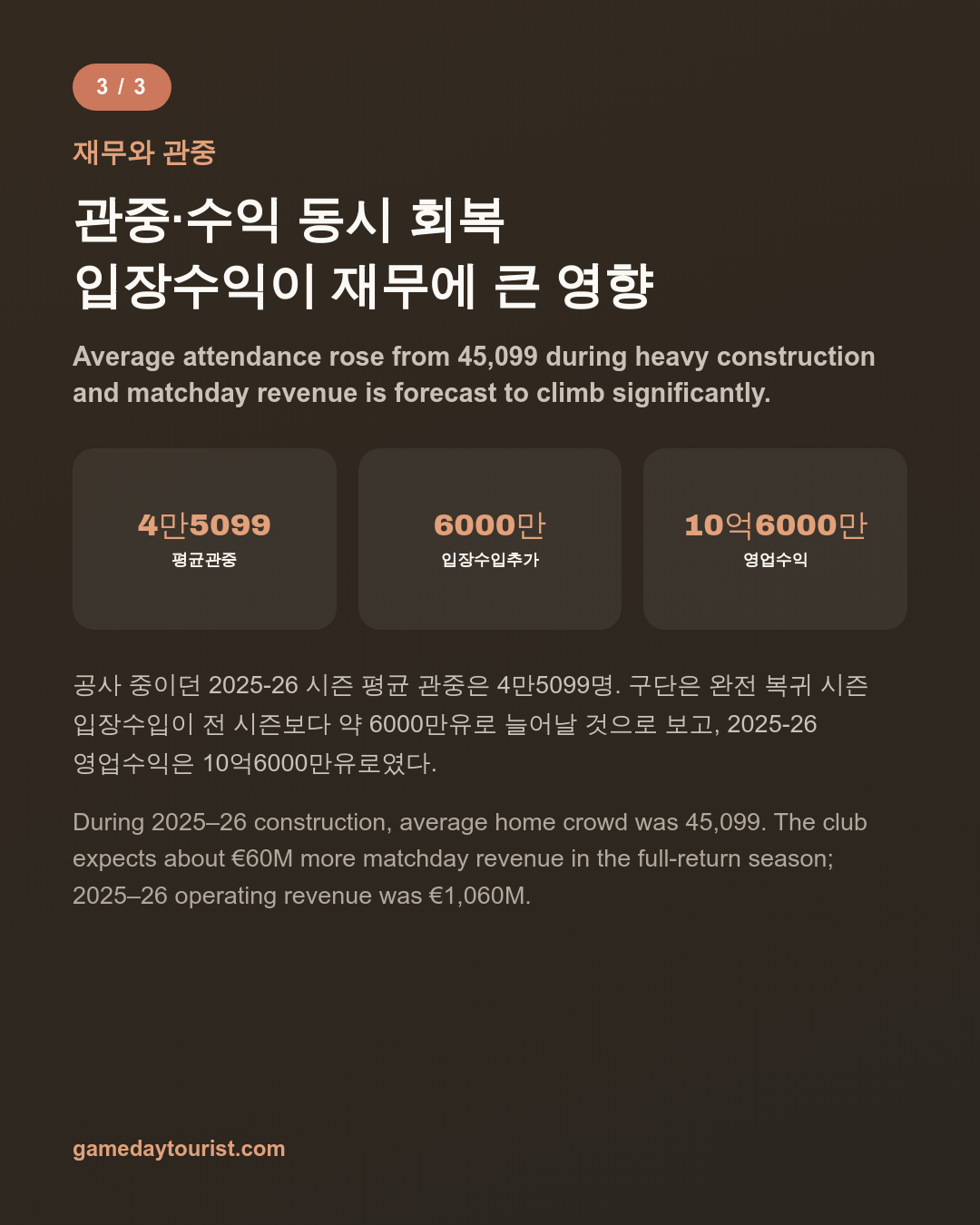
This 2026-27 season is the first in which every match, from opening day to the finale, will be played at Camp Nou, and the club expects gameday revenue to come in around €60 million higher than last season.
Average home attendance during the 2025-26 season, while construction was still in full swing, was just 45,099 — worth keeping in mind as a figure from a partially reopened stadium rather than a fully normalized one.
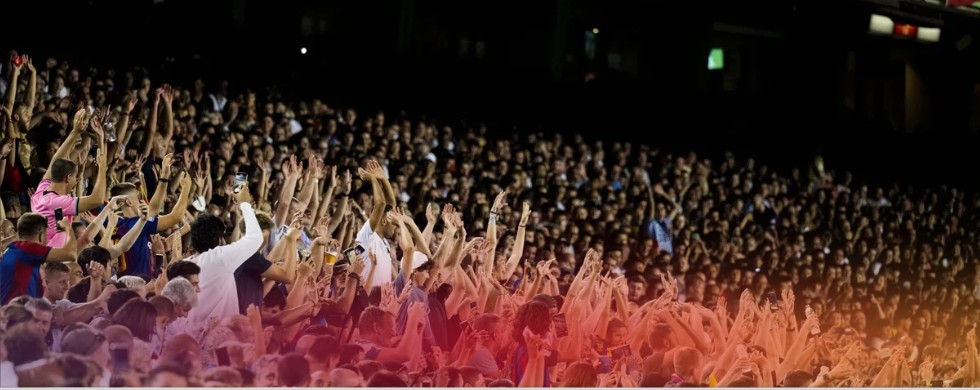
Source: fcbarcelona.com · official club news image · FC Barcelona crowd at Spotify Camp Nou
The overall project, known as Espai Barça, bundles the Camp Nou renovation with a new Palau Blaugrana (the club’s indoor basketball and handball venue) and campus facilities, for a combined budget of €1.45 billion — €1.07 billion of which covers Camp Nou and the campus.
Given the plan’s original 2014 budget was around €600 million, construction costs have more than doubled in a little over a decade.
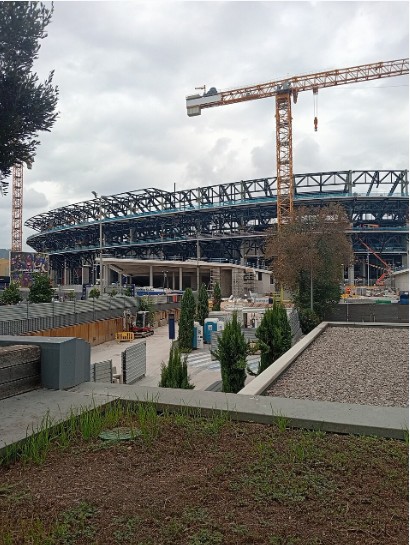
Source: Wikimedia Commons (SimpleObjects-9ei) · CC BY-SA 4.0 · Spotify Camp Nou under construction, September 2025
Naming Rights and a New Sponsor: Ohana
The stadium has carried the Spotify Camp Nou name since 2022.
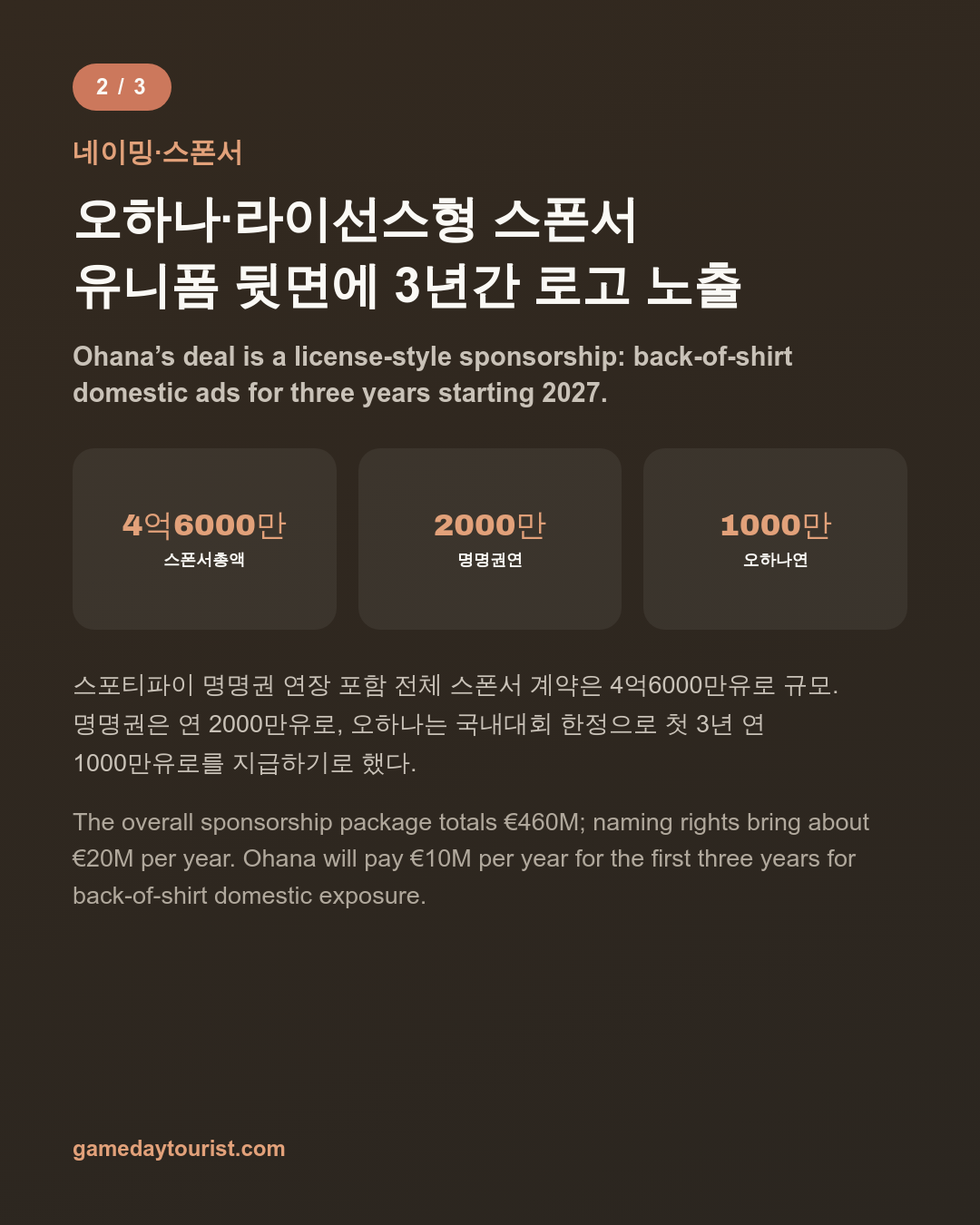
Last October, that deal was extended through 2034, with the front-of-shirt logo running to 2030 and the naming rights through 2034, for a total deal value reported at €460 million.
The naming rights portion alone works out to around €20 million a year.
On top of that, if the Ohana deal now heading to a members’ vote is approved, Ohana’s logo will appear on the back of the shirt in domestic competitions for three years starting in 2027, with the club receiving €10 million a year over that initial period.
Source: fcbarcelona.com · official club image · Spotify and FC Barcelona sponsorship extension announcement image
What makes this deal interesting is that it’s not a simple shirt-advertising arrangement — it’s a brand license running more than 25 years for a luxury residential complex Ohana is building in Dubai.
The same Ohana Development signed a similarly structured project with Manchester City in Abu Dhabi back in January, so lending a big European club’s brand to Gulf real estate isn’t an experiment unique to Barcelona.
Matchdays Continue Alongside the Construction Site
What caught my eye as a marketer was how hard the club is working to preserve the visitor experience even while construction is still underway.
The old Camp Nou Experience tour is gone, replaced by a new museum and immersive tour with digital exhibit rooms, but pitch and locker-room access is closed off because of the active construction zones, and time on the pitch for photos is reportedly limited to around 15 minutes.
Digging into visitor reviews, the museum ticket alone runs €36 and doesn’t include a proper look at the stadium bowl — enough visitors, especially families who end up spending more than €200 once meals are added in, felt shortchanged by what that access actually gets you.
Matchday itself gets a different verdict, though.
According to the matchday guide, a routine league game can feel quieter than expected with construction noise mixed in, but European nights and big matches still bring a noticeably different roar even from an unfinished stadium.
To me that reads as a case study in managing the intensity of the fan experience by occasion, even when the facility itself isn’t complete.
Broadcast Rights and Finances
La Liga recently announced a new five-year domestic broadcast deal with Telefónica and DAZN covering 2027-28 through 2031-32, worth a combined €6.135 billion — a 9% increase over the previous cycle.
Domestic broadcast rights for the first division alone account for €5.25 billion of that.
The Camp Nou return shows up clearly in the club’s financials too.
Barcelona’s operating revenue for 2025-26 hit a record €1.06 billion, up €66 million from the prior year.
Net debt also rose over the same period, to €607 million, which the club attributes mainly to the financing costs of the Espai Barça construction eating into cash reserves.
The 2026-27 budget projects €1.195 billion in revenue against €1.133 billion in expenses, keeping the club on a surplus footing.
A Look at KBO and K League
Korea has its own examples of clubs playing away from home during stadium construction.
KBO club Samsung Lions used the old Daegu Citizens Stadium as a temporary home for more than three years, from the December 2012 groundbreaking of Daegu Samsung Lions Park through its completion in February 2016.
The scale and budget aren’t remotely comparable to Barcelona shuttling between an athletics stadium and an Olympic stadium for over two years, but the underlying difficulty — grinding through a season at an unfamiliar temporary venue until the new stadium is ready — isn’t so different at home or abroad.
What stands out, though, is that Barcelona kept generating gate revenue throughout construction by expanding capacity in phases — a staged-reopening approach worth watching for Korean clubs planning a future rebuild or renovation.
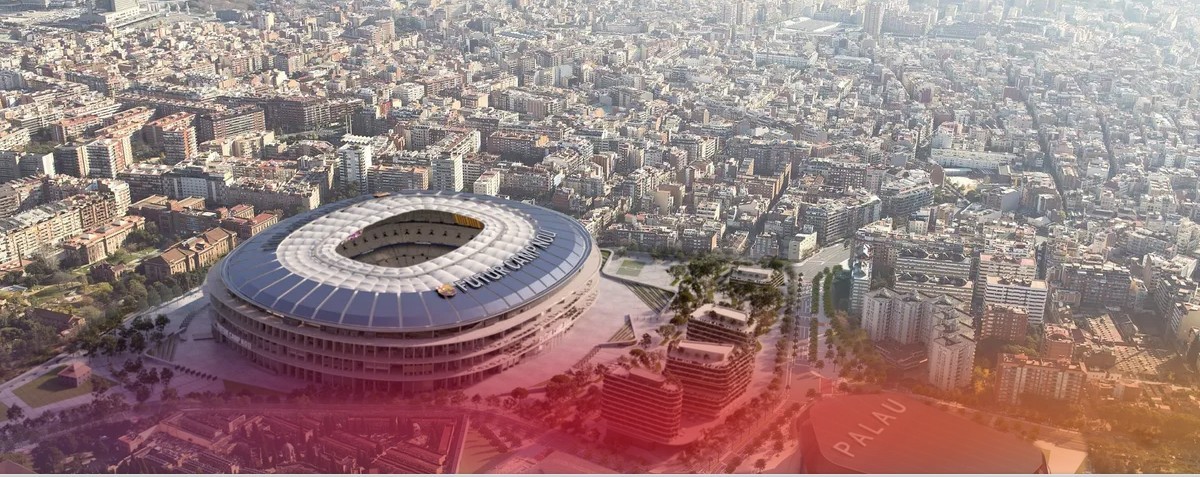
Source: fcbarcelona.com · official club image · rendering of the completed Espai Barça project (not an actual photo)
For what it’s worth, before construction began, the FC Barcelona Museum inside Camp Nou was reportedly the second-most-visited attraction in Catalonia after the Sagrada Família.
It’s a stadium that has doubled as a major tourist attraction, and it’ll be worth watching whether it reclaims that title once the renovation is finally done.
Leave a Reply