Contents · About 6 min read
📱 View as card news
I was scanning through La Liga sponsorship news when one detail caught my eye.
Real Sociedad’s home ground had quietly gone back to being called “Estadio Anoeta.” Until a few years ago it was known as “Reale Arena,” but it turns out that when the sponsorship deal expired in the summer of 2025, the stadium reverted to its original name, and the club still hasn’t found a new sponsor to take that spot.
With several La Liga clubs — Atlético Madrid, Celta Vigo, Villarreal, and others — having already sold stadium naming rights, I found it genuinely interesting, as a marketer, that a recognizable big club’s ground has gone unnamed for this long.
This club also happens to be the first Spanish pro team South Korea’s Lee Chun-soo ever played for.
So this time I decided to take a closer look at Real Sociedad.
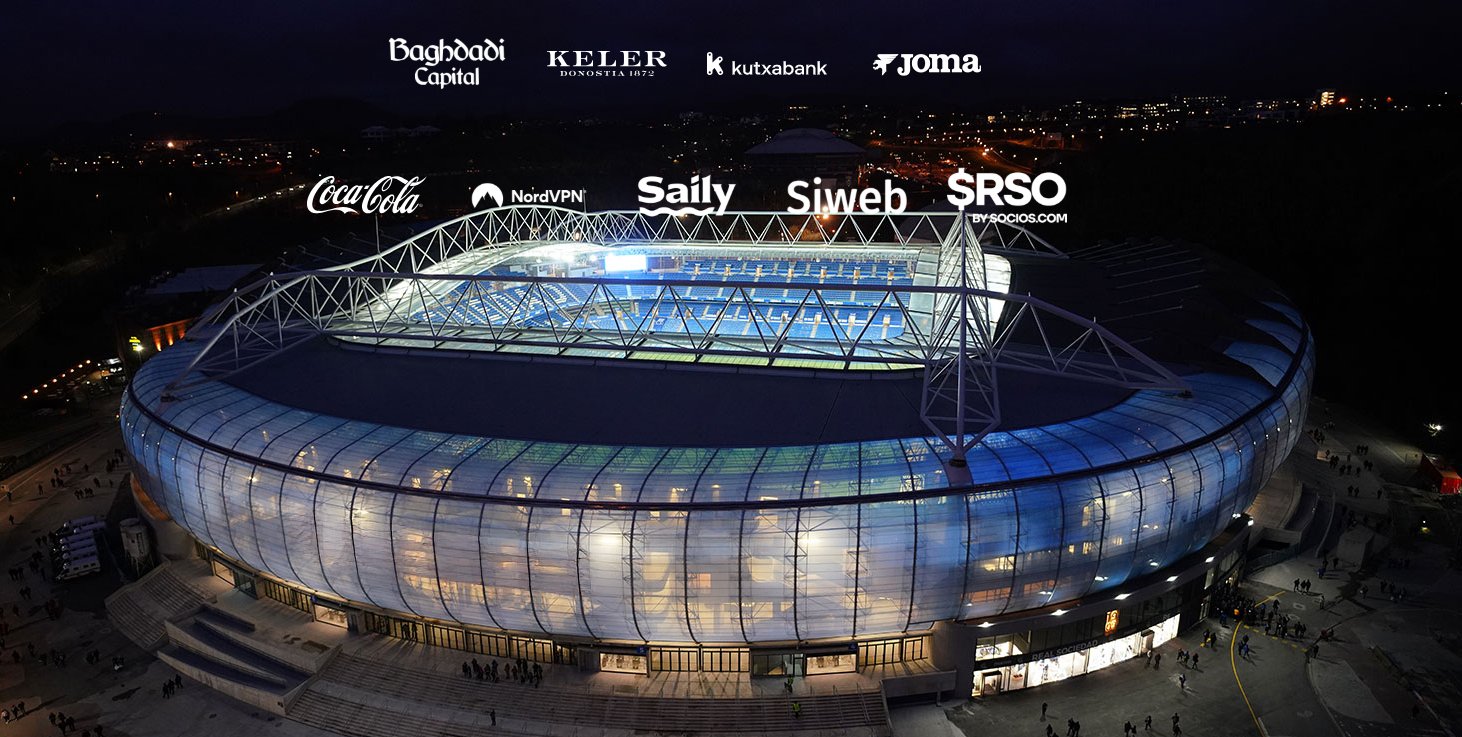
Source: screenshot of realsociedad.eus (the club’s official website) introduction page
Fans and Attendance
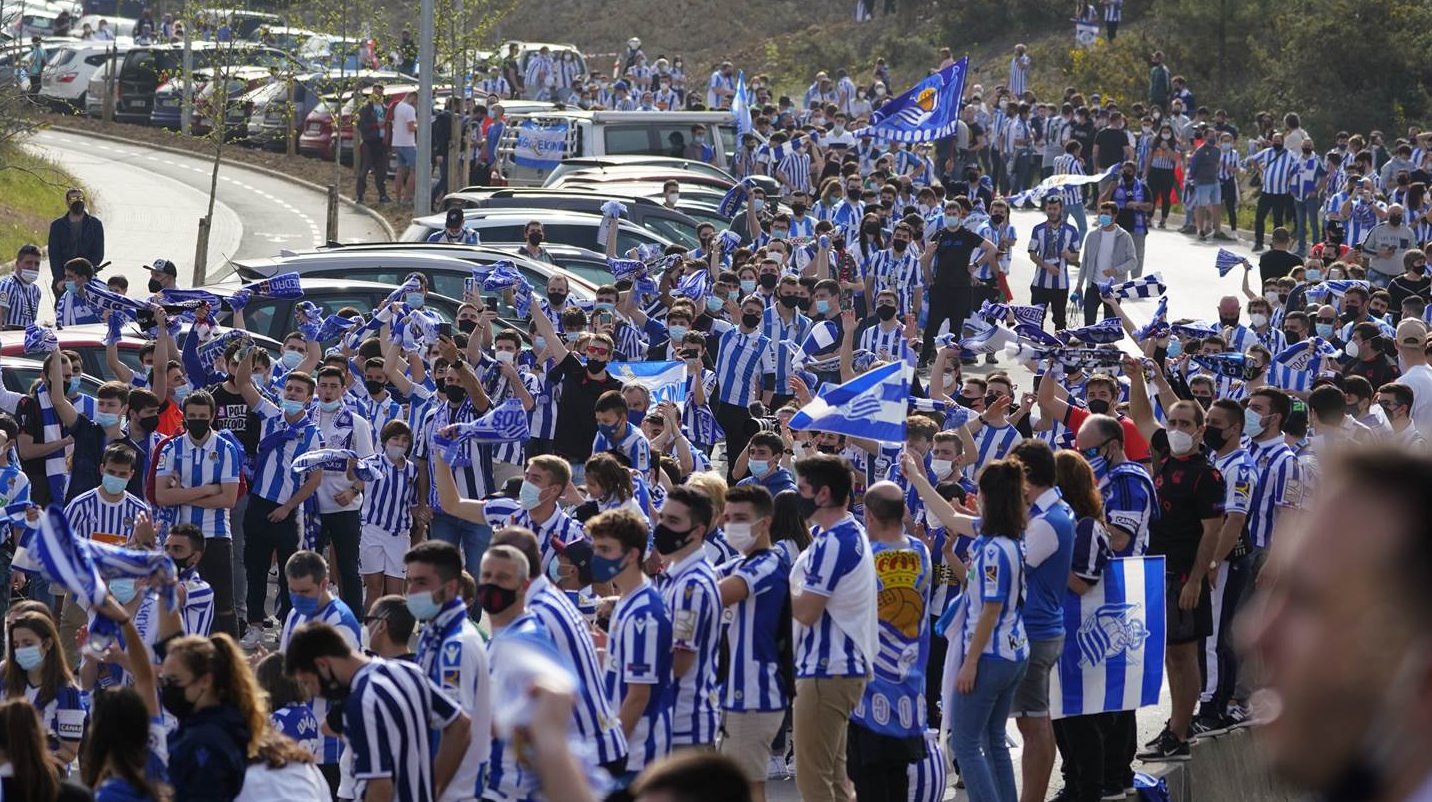
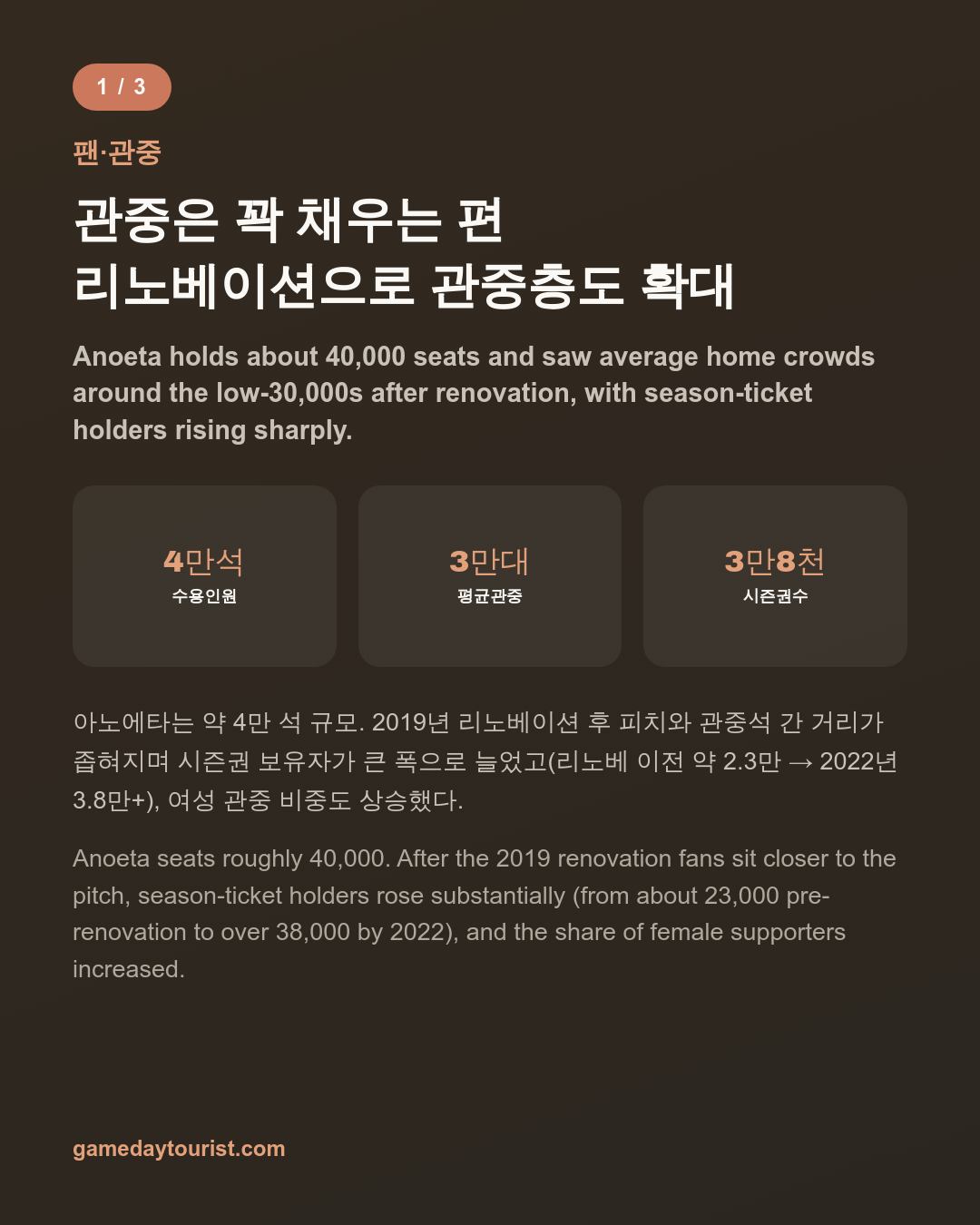
Real Sociedad represents San Sebastián (Donostia in Basque) in Spain’s Basque Country, and their home ground, Anoeta, seats around 40,000.
According to 2025–26 season statistics, average home attendance stayed in the low 30,000s (roughly 30,000–30,500), in line with the La Liga-wide average.
The season’s highest attendance was 36,958 against Atlético Madrid, while the lowest was 22,442 against Mallorca.
After the 2019 stadium renovation removed the athletics track and brought seating closer to the pitch, the club’s commercial and marketing director said in an interview that season-ticket holders grew from about 23,000 before the renovation to more than 38,000 by 2022.
The same interview noted that the share of female attendees rose from 18% to 26%, suggesting the renovation didn’t just add seats — it broadened the fan base itself.
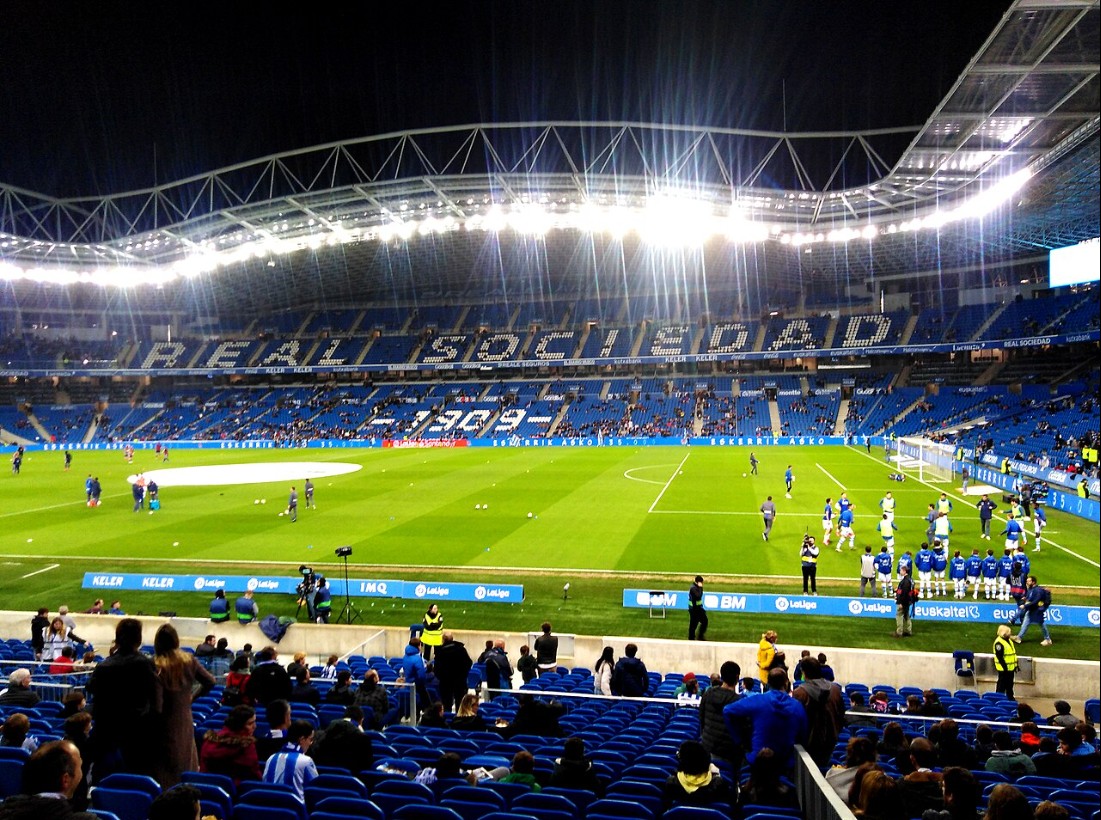
Source: Wikimedia Commons (photo by Bhgh543bgf, CC BY-SA 4.0) · Anoeta Stadium during a night match
Advertising Inventory and Naming Rights
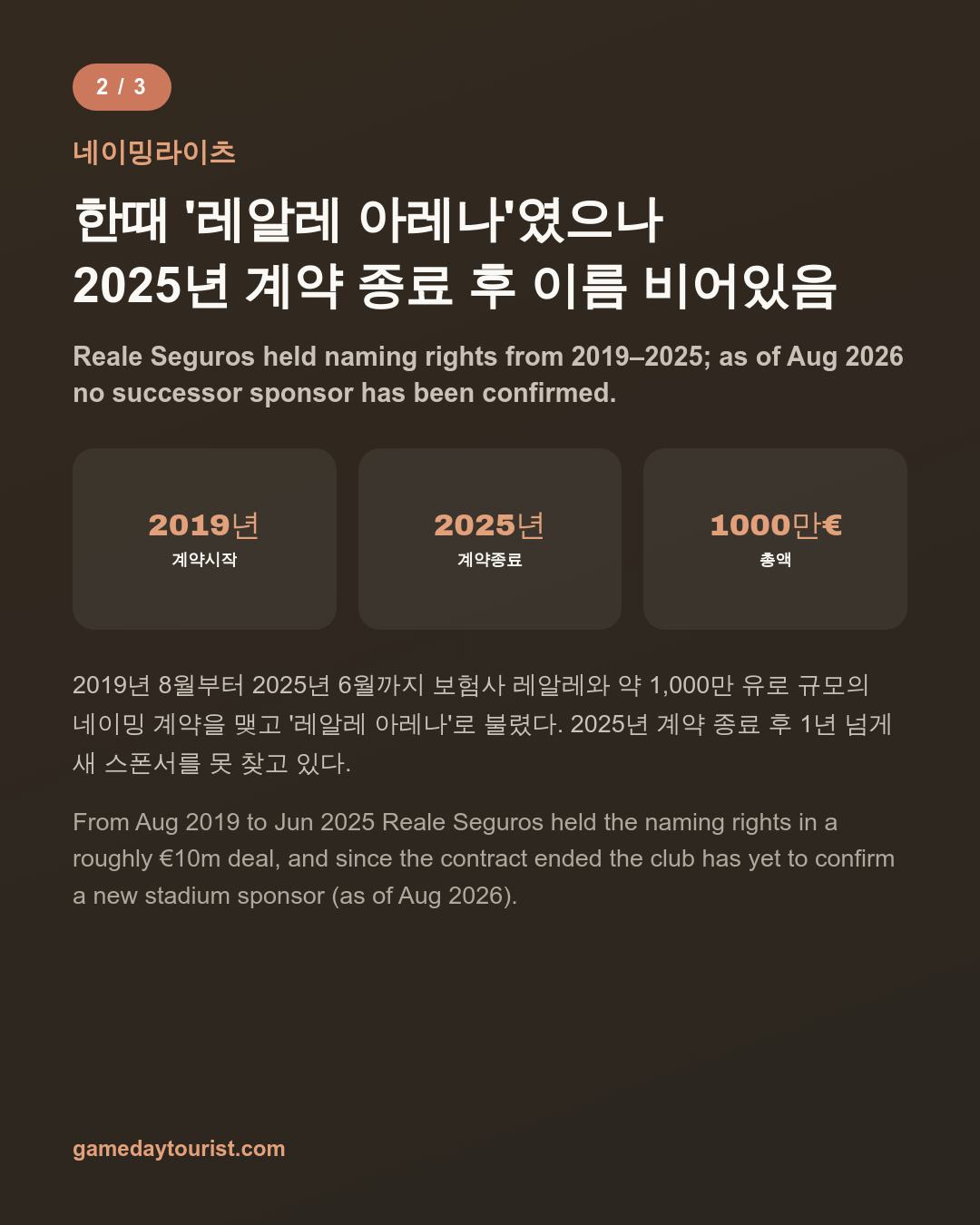
As mentioned, from August 2019 to June 2025 Anoeta carried the name “Reale Arena” under a six-season, €10 million naming-rights deal with insurer Reale Seguros.
After the contract ended, the club began searching for a new sponsor in March 2025, but as of August 2026, when this is being written, no deal has been confirmed.
The jersey sponsor followed a different path.
The club’s explanation at the time was that it didn’t want to normalize gambling — showing that even a lucrative offer can be turned down to protect brand values, decided by a vote of the members themselves.
Later, starting the 2025–26 season, Madrid-based asset manager Baghdadi Capital stepped in as the new main sponsor on a reported three-season, roughly €8 million deal, while local bank Kutxabank holds the sleeve sponsorship.
Use of Space and F&B
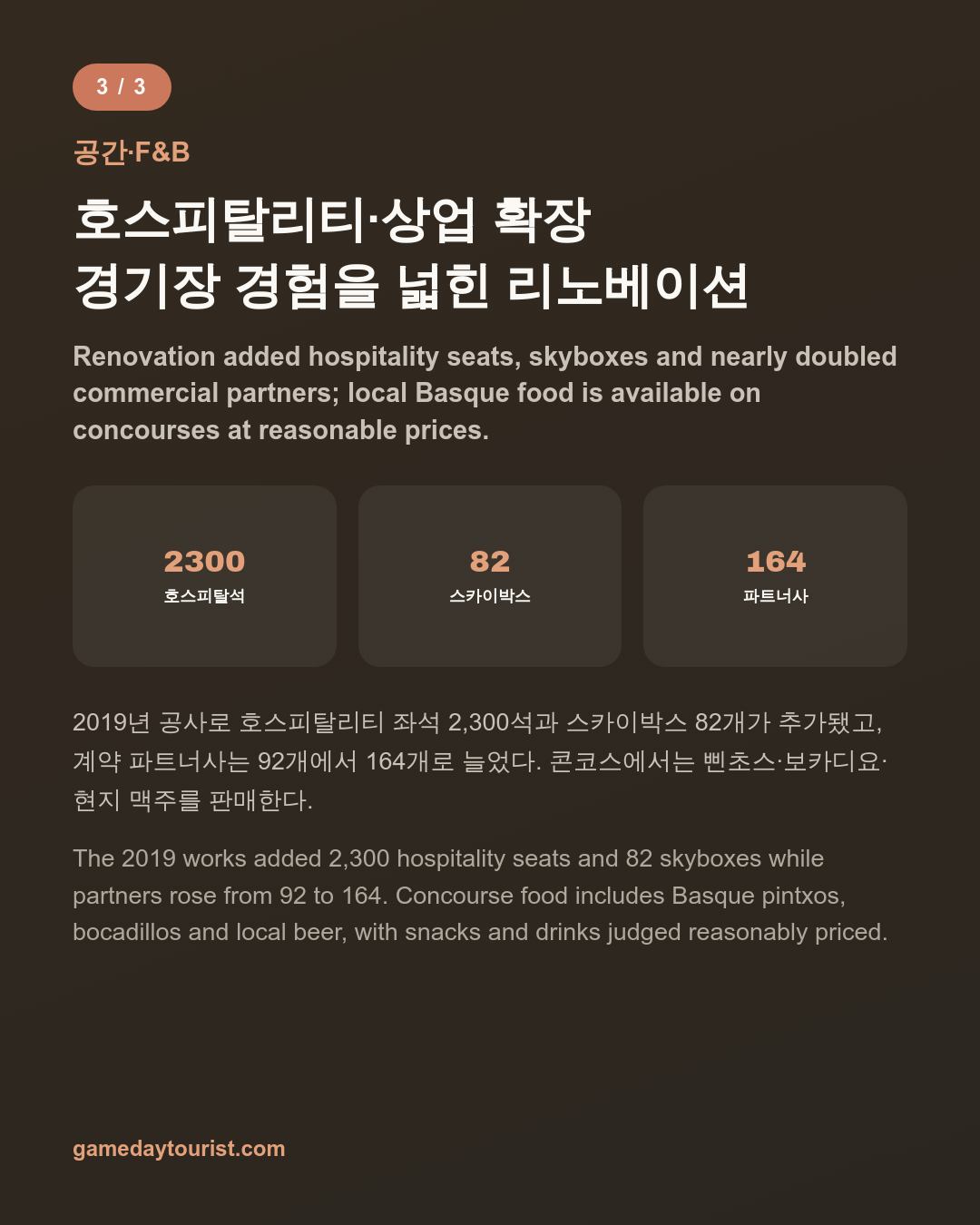
Before the 2019 renovation, there was no hospitality space at all; now the stadium has 2,300 hospitality seats and 82 skyboxes, and the number of partner companies signed to fill that space nearly doubled, from 92 before the renovation to 164 after (per the same interview above).
On the concourse, vendors sell Basque staples like pintxos (small skewered bites) and bocadillos (Spanish sandwiches) alongside local beer — and by most matchday accounts, snacks run €4–8 and drinks €4–6, reasonable by stadium standards.
Merchandise (MD)
The club runs two official stores — one in downtown San Sebastián and one near the stadium — selling home and away jerseys and training kits made by Macron, along with scarves, hats, stationery, and everyday goods.
The Macron deal is set to be replaced by Joma starting the 2026–27 season, so the store’s product lineup is likely to be refreshed from next season.
Tickets
Season-ticket prices range from as low as €55 to as high as €702 depending on seat location.
In the interview quoted earlier, the commercial and marketing director said, “We’re one of the cheapest clubs in Spain in terms of ticket prices, but with results improving lately, we think there’s room to raise them” — which reads as a shift from a strategy of filling seats with low prices to one of using on-field results to justify price increases.
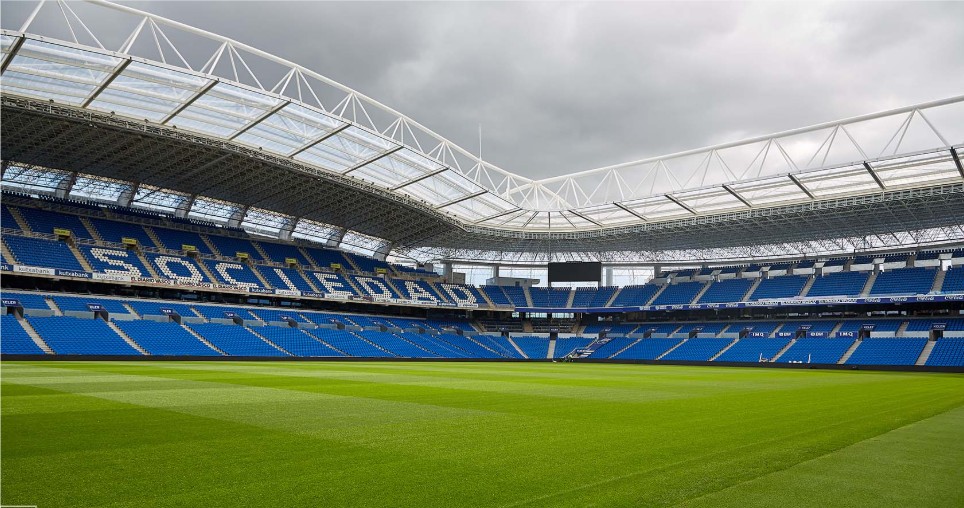
Source: screenshot of realsociedad.eus (the club’s official website) facilities page
Zubieta, Real Sociedad’s Own Trademark
No conversation about Real Sociedad is complete without Zubieta, the youth academy that opened in 1980.
It now has six training pitches, and players like Xabi Alonso, Antoine Griezmann, and Mikel Oyarzabal all came through it.
More recently, midfielder Martín Zubimendi — who grew up in the academy from age 12 — left for Arsenal last season for a transfer fee north of £50 million, once again proving Zubieta’s worth.
A local football outlet’s piece on the club’s old ground, Atotxa, noted that the pitch and stands were so close together that on rainy days fans could poke the referee with their umbrellas.
After the move to Anoeta in 1993, the running track kept that closeness at a distance for a while — a fan quoted in the same article recalled missing the old ground’s intimate atmosphere.
It wasn’t until the 2019 renovation removed the track that the distance closed again, which made me realize fans don’t just want modern facilities — they also want back that sense of “closeness” they’d known before.
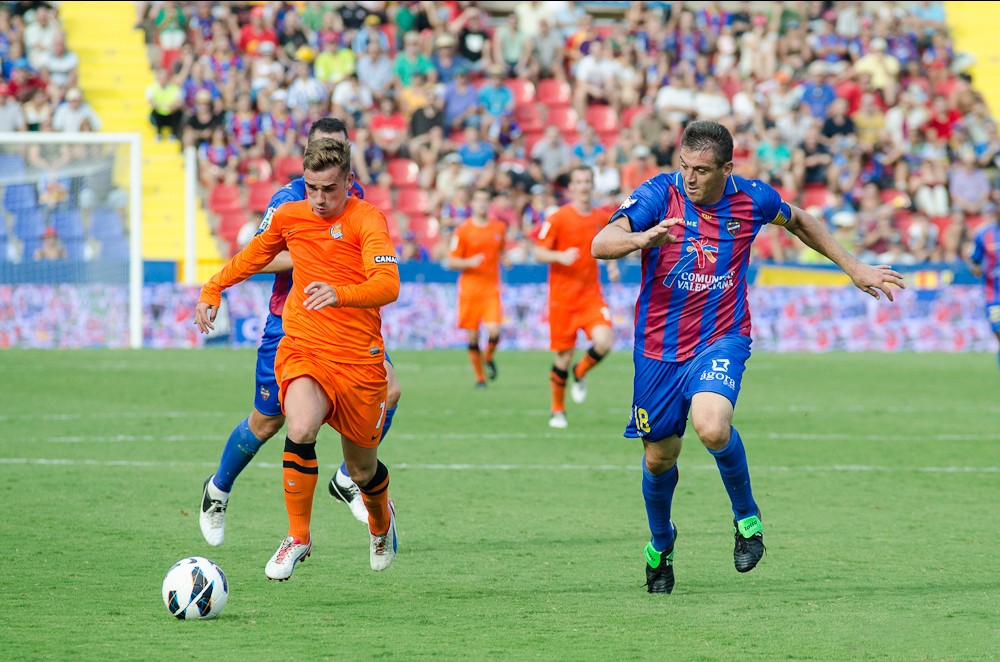
Source: Wikimedia Commons (original author Carlos RM, via Flickr, CC BY 2.0) · Antoine Griezmann, a Zubieta academy product, in a 2012 match
Compared to the KBO and K League
In Korea, quite a few stadiums have taken on new names through naming-rights deals in recent years.
Real Sociedad’s case shows that even for a recognizable big club, naming-rights negotiations don’t always go smoothly.
One thing I do want to say here: sponsorship sales staff at these clubs work incredibly hard.
A sales director I once worked alongside collapsed from stress once, as sponsorship talks stalled and the team’s results slipped at the same time.
Looked at generously, going more than a year without a sponsor since the June 2025 contract ended could be a deliberate strategy — holding out for fair value rather than rushing.
Looked at the other way, it also means the opportunity cost keeps growing the longer that unsold advertising inventory sits empty.
And the episode where members voted down a betting-company sponsorship is a reminder that domestic clubs, too, need to weigh brand fit and fan sentiment just as much as the money on the table when choosing sponsors.
Looking at a stadium like Anoeta with an empty name slot, it struck me again that naming rights aren’t a one-and-done sale — they’re an asset that has to keep being managed even after the contract ends.
I’m genuinely curious who fills that spot next season, and on what terms.
Leave a Reply