Contents · About 7 min read
📱 View as card news

Last May, while checking the final La Liga table, one passage caught my eye.
The news was that Sevilla FC had spent the season flirting with the relegation zone but ultimately finished 13th, securing their 25th consecutive season in the top flight. Around the same time, I also noticed an article reporting that the club had received city approval to build a new stadium costing €221 million (about KRW 365 billion at current exchange rates).
The results were dire, yet the club seemed to be accelerating a major infrastructure investment. As a marketer, that didn’t immediately make sense to me, so I dug into the materials a bit more.
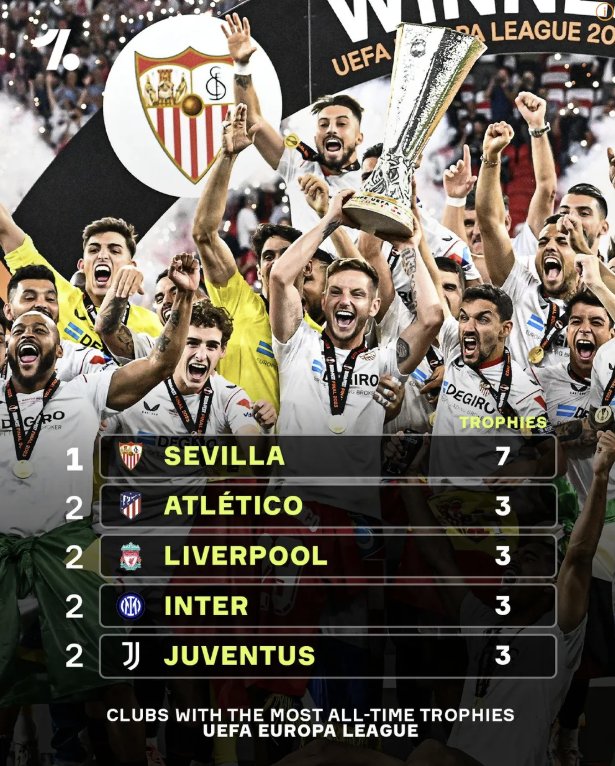
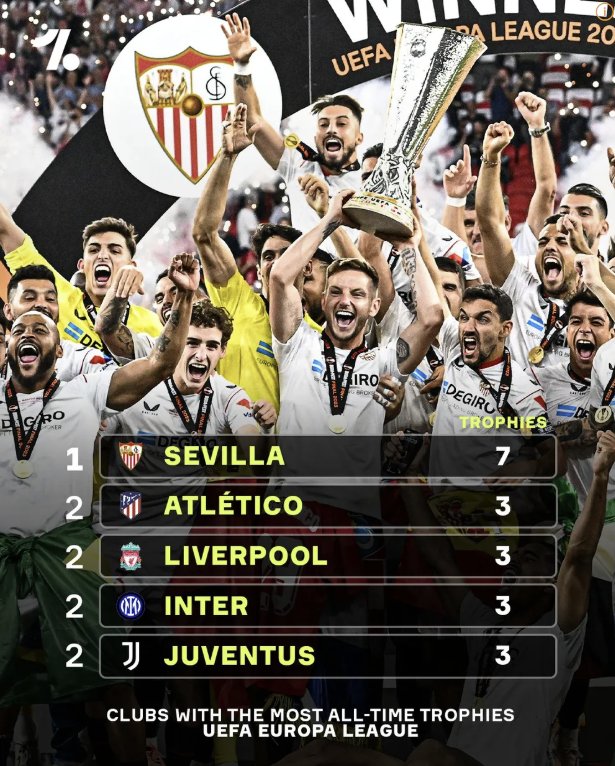
Did you know that while Real Madrid dominates the UEFA Champions League, Sevilla FC is the undisputed king of the UEFA Europa League?
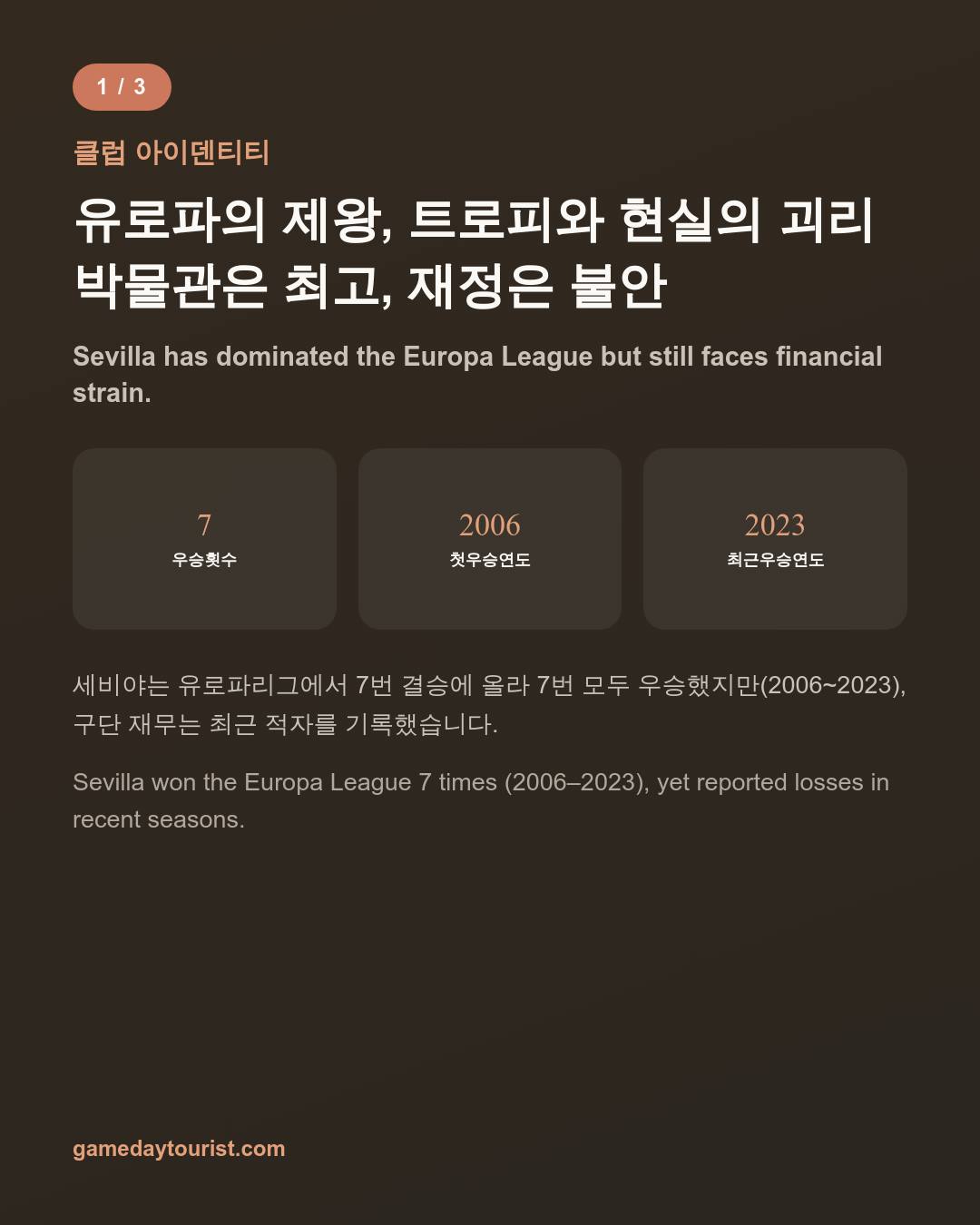
Sevilla has reached the Europa League final seven times and won all seven—making them the most successful club in the competition’s history (2006–2023). Judging by their trophy cabinet they’re European elite, but their finances tell a very different story.
Source: Namuwiki; screenshot of sevillafc.es club introduction page
They posted losses exceeding €50 million in the 2024–25 fiscal year, and deficits were expected to continue into the 2025–26 season.
The club presented a recovery plan aiming to reduce this season’s losses to roughly €3 million and reach break-even in 2026–27. Coincidentally, they are pressing forward with the new stadium project at precisely this point.
I examined the reasons they won’t postpone facility investment despite poor results and financial pressure, breaking it down by marketing elements.
Source: Screenshot of sevillafc.es club website ‘Ramón Sánchez-Pizjuán’ introduction page
Fans and Attendance
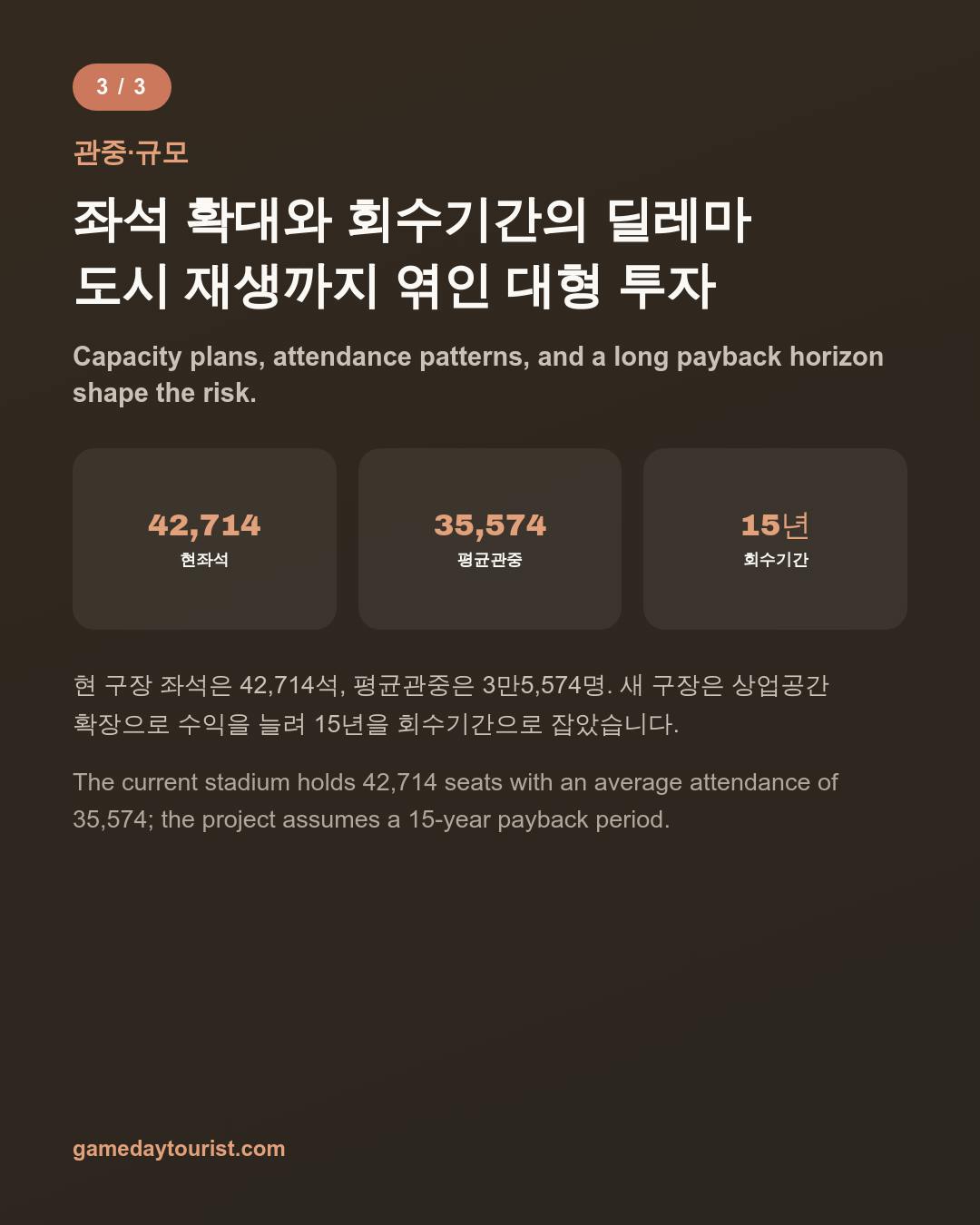
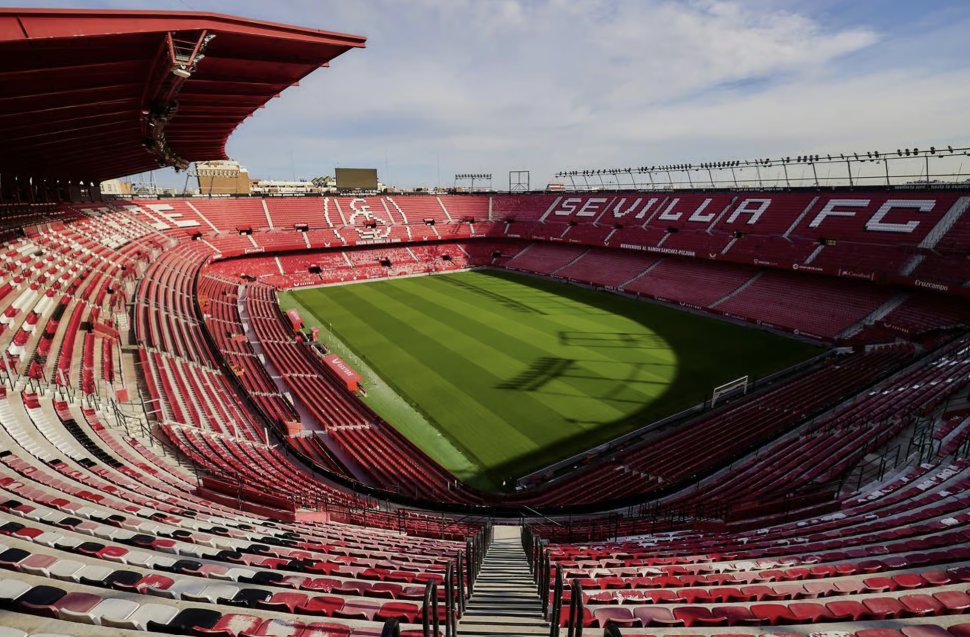
The current home ground, Ramón Sánchez-Pizjuán, has a capacity of 42,714 seats.
For the 2024–25 La Liga season, cumulative home attendance across 19 matches was 675,898, an average of 35,574 per game—about 83% of capacity.
It’s the typical attendance pattern for a mid-to-upper Spanish club: European nights sell out, but ordinary midweek league matches have some spare capacity.
Season ticket prices have been frozen for three years. For renewing members in the cheapest Gol Norte/Gol Sur sections the price is €335 (about KRW 550,000), while new memberships are around €460 (about KRW 760,000).
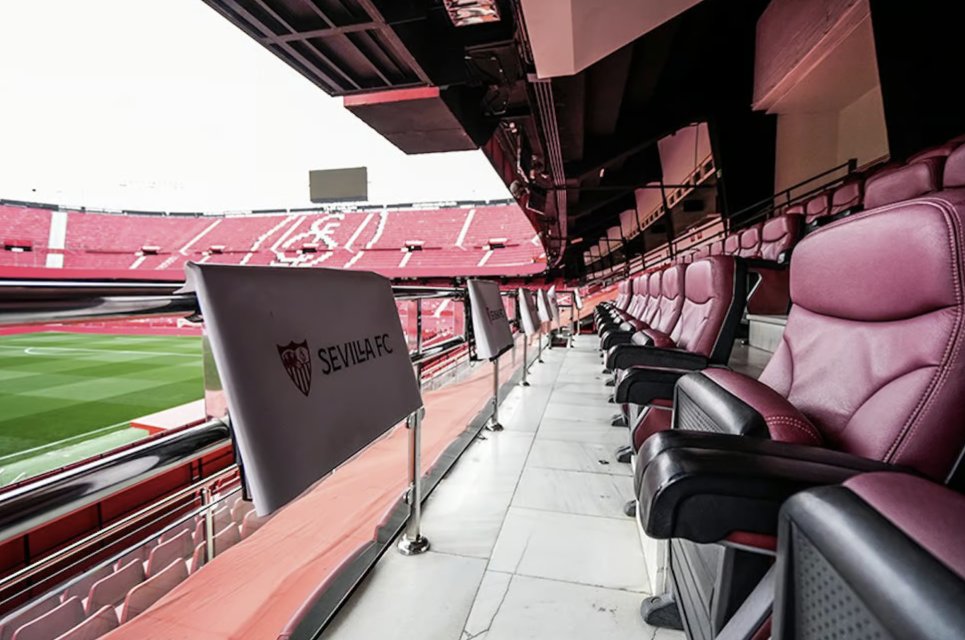
I read several fan match reports and a common theme emerged. One local stadium review blogger described the concourse (the circulation and concession area behind the stands) as “on the level of a regular bus terminal,” meaning the facilities are basic, and pointed out that seats lack backrests, so fans might topple forward when a goal is scored.
Concession offerings were also judged not very varied given the stadium’s size. Yet the same reviews praised the atmosphere on European nights, saying the crowd jumps as one and the vibe is among the best in Europe.
From a marketer’s perspective, this is a dilemma.
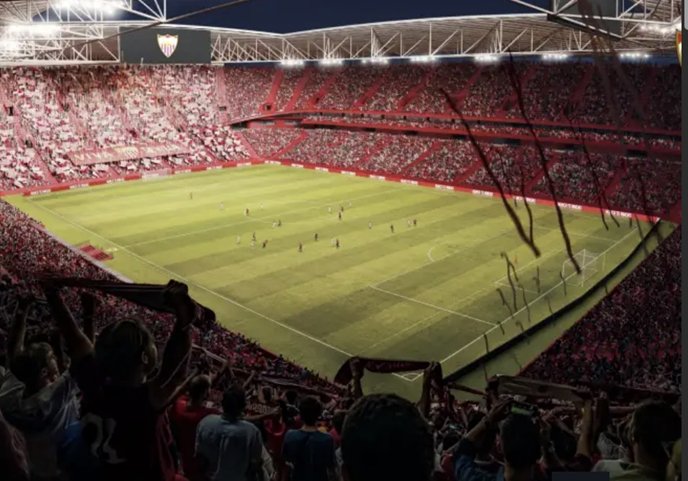
The moment you modernize the concourse and seating, you risk diluting the raw, unfiltered supporter culture that exists now. Sevilla’s new stadium design opts to fully cover the stands with a roof and rebuild the seating.
They’ve chosen a compromise that improves convenience while trapping the roar under the roof so it doesn’t escape—whether that balance will work in practice remains to be seen after completion.
Source: Screenshot of sevillafc.es new stadium (Nuevo Ramón Sánchez-Pizjuán) project article
Uniform Sponsorship
The uniform sponsorship lineup has also changed significantly recently.
The main chest sponsor is appliance and air-conditioning company Midea through the 2025–26 season, and the kit supplier will switch from Castore to Adidas under a new 10-year deal running from 2025–26 to 2034–35.
The kit deal is worth €3.5 million per year, €35 million over 10 years, with performance clauses: €1 million for major titles and an additional €1.5 million each season they qualify for the Champions League.
It’s the fifth-largest kit deal among La Liga clubs, so their Europa League-winning record appears to have translated into real bargaining power with sponsors.

Source: Screenshot of en.shop.sevillafc.es official online store 26/27 home kit introduction page
New Stadium’s Revenue Structure
The revenue projections in the new stadium business plan show that advertising inventory (brand exposure spaces inside the stadium) is especially interesting.
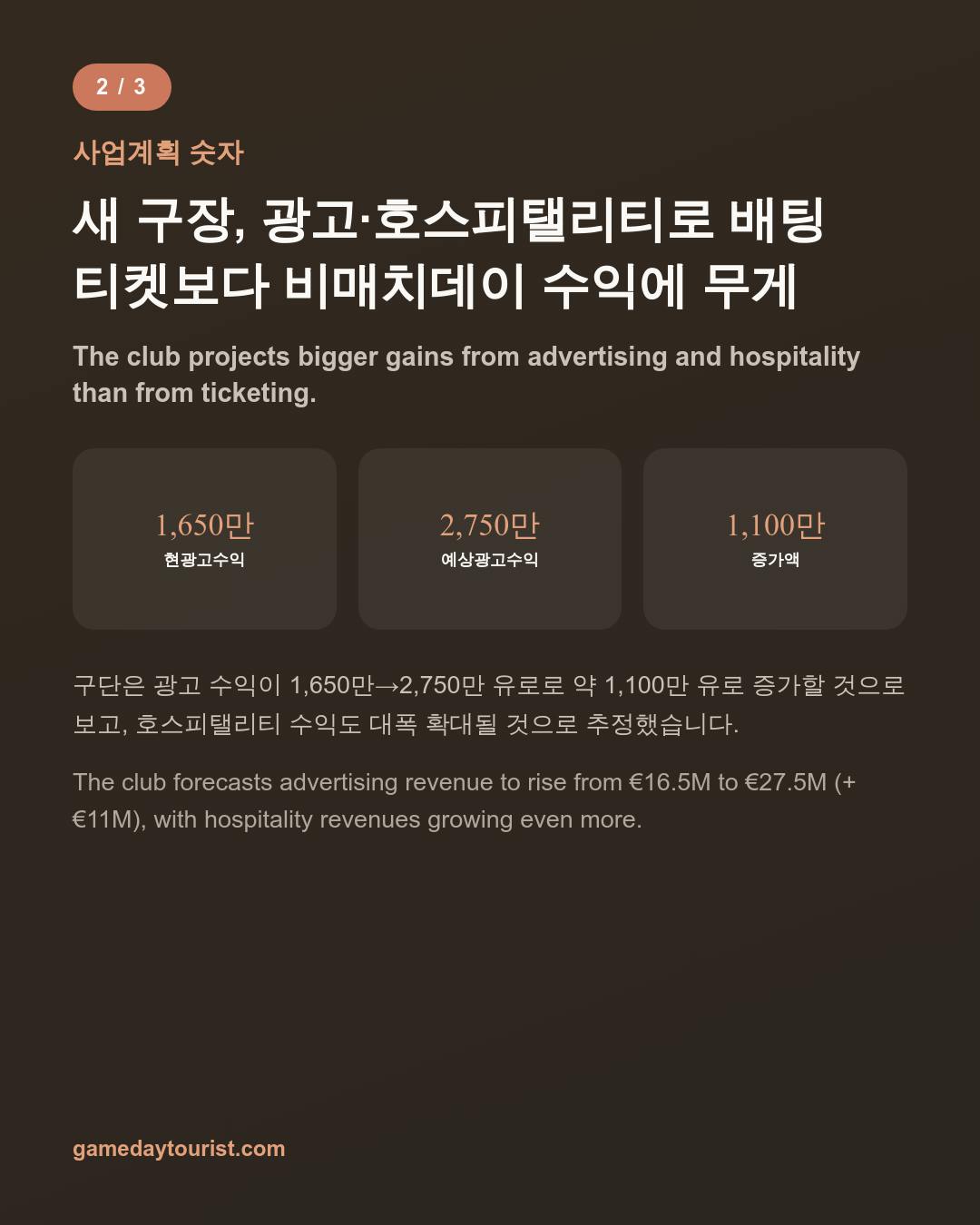
Based on 2023 figures the club used, advertising revenue is estimated to rise from €16.5 million currently to €27.5 million after the new stadium is completed—an increase of about 67% (€11 million).
With new VIP lounges and event spaces, matchday hospitality revenue alone is projected to jump from €1.44 million to €6 million—more than four times.
By contrast, ticket and season-ticket revenue is only expected to increase from €15.1 million to €19.32 million. Looking at this gap, it seems the club designed the project knowing the true battleground isn’t simply increasing seats from 42,714 to about 55,000, but how densely they can subdivide the added seating and new commercial space into advertising and hospitality products to sell.
Across the whole business plan, annual revenue is estimated to rise by €18 million (60%), and the payback period is set at 15 years from the start of construction, or 13 years from the start of operations.
Broadcasting Rights
Understanding broadcasting rights is easier if you know La Liga’s central distribution system.
La Liga distributes half of TV broadcast revenue equally among the 20 clubs each season, and the remaining half is distributed based 25% on recent five-year results and 25% on commercial popularity metrics like ticket sales and viewership.
As of 2025–26, the equal-share distribution alone is €35 million per club, and even the bottom clubs receive around €41 million, so Sevilla—despite fighting relegation all season—still secured substantial baseline revenue from broadcasting rights.
According to data compiled by financial analysis outlet The Swiss Ramble, Sevilla’s broadcast-related revenue (league distribution and competition prize money included) grew 14% to €163.9 million in the 2022–23 fiscal year, driving the club’s revenue growth. That kind of baseline income makes room for large infrastructure investments even when sporting results wobble.
Source: Screenshot of sevillafc.es club website ‘Ramón Sánchez-Pizjuán’ introduction page
Urban Development and City Strategy
The new stadium is designed not just as a renovation but as an urban development project that will transform the entire Nervión district.
The City of Seville plans to create a large public plaza near the stadium and put the current ground-level parking—now occupied by club vehicles—underground and partially open it to residents.
The club also agreed to give more than 13,000 m² of training-ground land to the city as green space. Construction is scheduled to start after the 2026–27 season, and during the build the club will use La Cartuja (70,000 seats, expanded and completed in 2025, host of the 2003 UEFA Cup final), which the city has already lent temporarily to Real Betis, as a temporary home.
There are concerns that coordinating schedules could be difficult if both clubs have overlapping European fixtures, and the target completion date has already been pushed back once to mid-2029.
Given that tourism accounts for about 18% of Seville’s city GDP, the plan to repurpose the stadium into a commercial and public space that attracts visitors even on non-match days aligns with the city’s tourism and commercial strategies.
Connection with Korea
Interestingly, Sevilla already has connections with Korean football.
Gangwon FC signed a cooperation agreement with Sevilla to share youth player information, and through Sevilla’s Innovation Center’s ‘World Club Alliance Program’ will receive coaching staff workshops and consultancy to strengthen competitiveness.
When Sevilla first visited Korea for a preseason tour in 2022, club president José Castro said in an interview, “It would be a great honor if a Korean player wore the Sevilla shirt for us,” but to date no Korean has played for Sevilla’s first team.
Lessons for Domestic Clubs
Sevilla’s choice to bet on infrastructure regardless of results has implications for domestic clubs as well.
In recent years, several new or renovated stadiums have appeared domestically, but Sevilla’s case shows not a vague hope that fans would simply show up, but a concrete bet on non-matchday revenue (hospitality, commercial facilities, events) growing far more than matchday revenue (tickets & F&B), with those assumptions locked into the business plan with specific figures.
Still, the fact that they set a 15-year payback period and that construction start has already been delayed once amid financial crisis and a relegation battle are risks domestic clubs should consider when examining similar projects.
Apparently distrust over this issue even erupted at a Sevilla shareholder meeting, showing that large capital investments during periods of poor results become harder to justify to the board and shareholders the longer the payback period stretches.
The paradox of a club whose museum is filled with Europa League trophies yet must worry every season about league survival—and the stubborn resolve to redesign commercial space with a 20-year horizon despite that paradox.
Those two coexisting realities within one club were the most striking takeaway from this research.
Leave a Reply