📱 View as card news
Going through a J.League club’s roster this past summer, I noticed a familiar name was missing.
Jung Sung-ryong, who guarded Kawasaki Frontale’s goal for ten seasons from 2016 through 2025, had left the club at the end of last year when his contract expired.
Korean football fans know him well as the national team’s goalkeeper at the 2010 and 2014 World Cups, but it struck me that back home, hardly anyone knows much about the club he spent nearly a decade at, from a marketing standpoint — so I decided to look into it.
The deeper I dug into the club, the more I noticed an unusual structure: a single founding company that has stuck around for nearly 70 years even after removing its own name from the team.
Attendance and Tickets
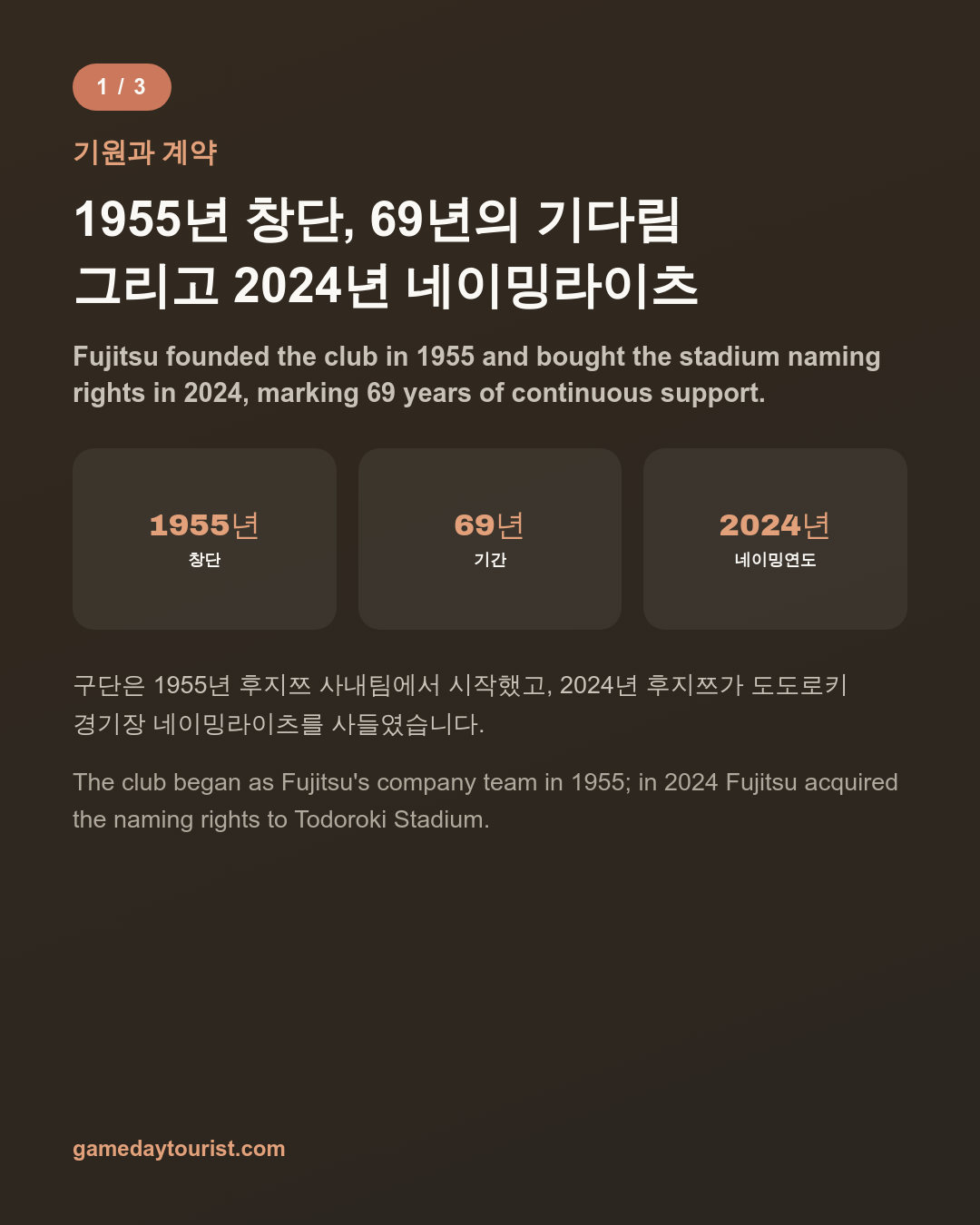
Kawasaki Frontale started life in 1955 as “Fujitsu Soccer Club,” an in-house team at electronics maker Fujitsu, before a separate operating entity was established in 1996 and the club adopted its current name in 1997 while preparing to join the J.League.
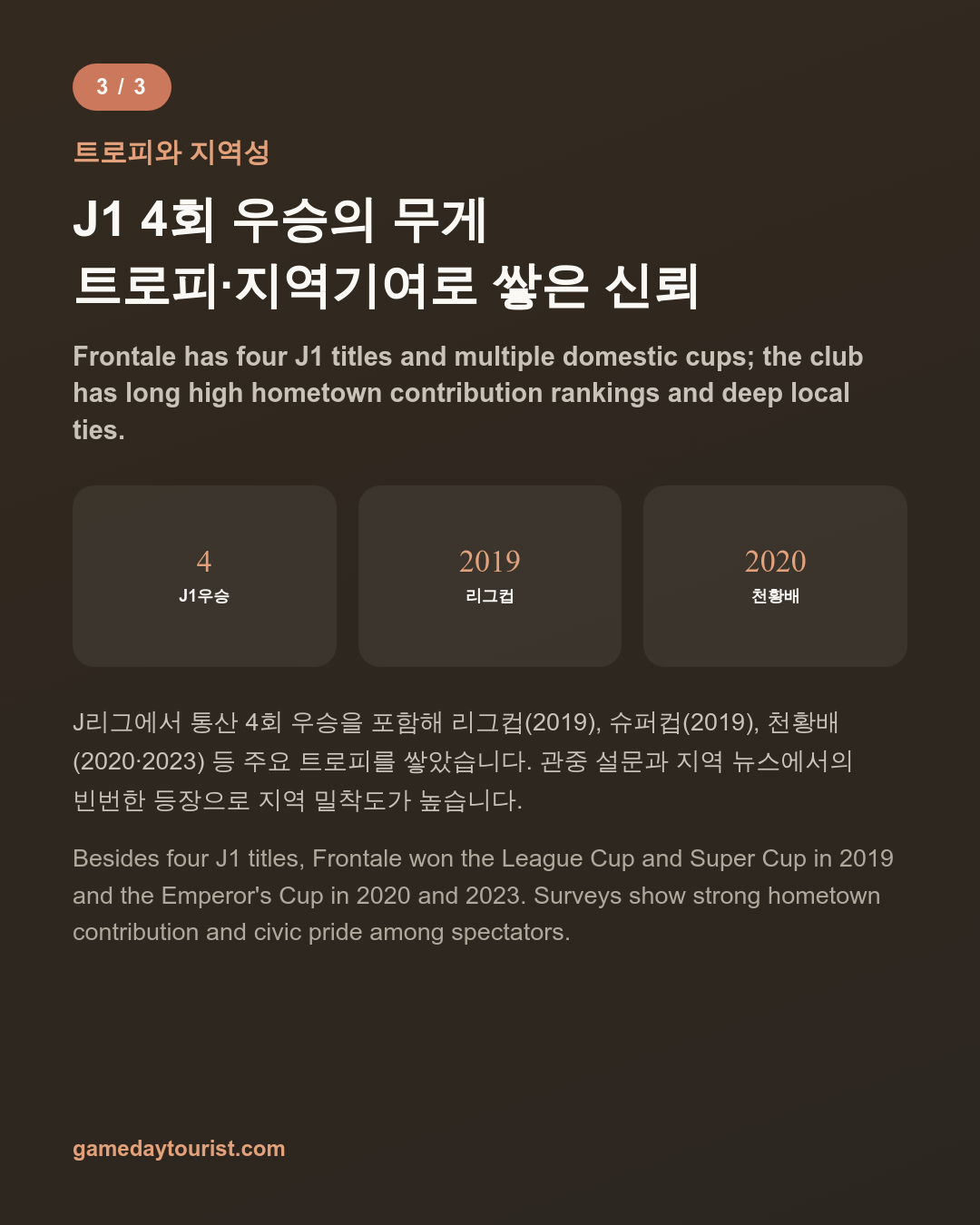
The club won the inaugural J2 championship the moment it joined in 1999 and was promoted straight to J1, going on to win the J1 title four times total — back-to-back in 2017-18, then again in 2020-21.
Add the League Cup (2019), the Super Cup (2019), and the Emperor’s Cup (2020, 2023), and the trophy cabinet is fairly full for a club with such a short J.League history (see Jung Sung-ryong’s Wikipedia page and the club’s official profile).
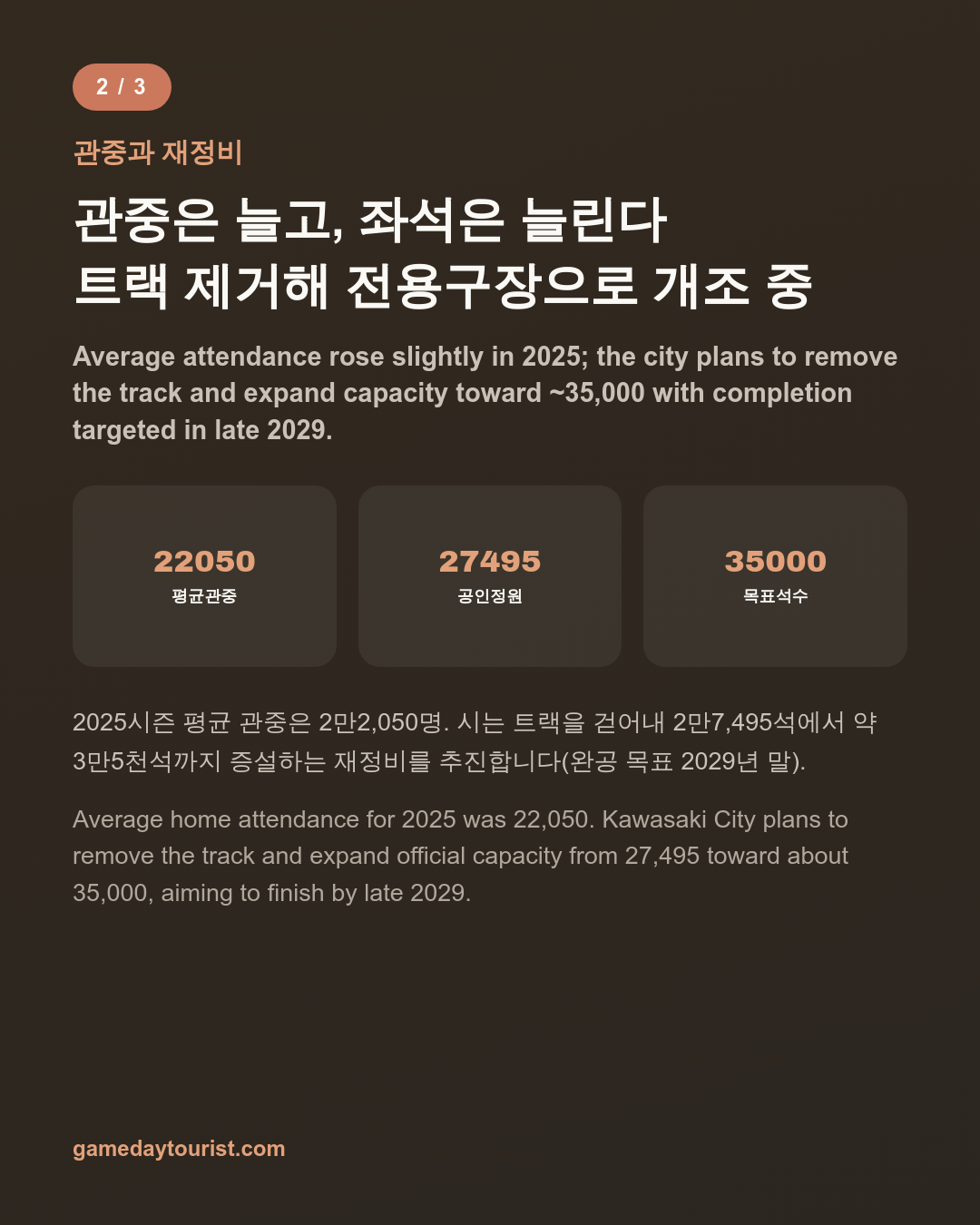
Average home attendance in the 2025 season was 22,050, up slightly from the year before.
That ranks around the middle of J1’s 18 clubs, but outlets tracking J.League attendance figures still count Kawasaki as a club that reliably sits near the top of the pack.
Tickets are sold through dynamic pricing (prices shift in real time based on demand) depending on the matchup, timing, and seat, and according to the 2026-27 season announcement, the base price has been adjusted again to reflect rising costs and operating expenses.
Season tickets, by contrast, are sold at a fixed price regardless of this dynamic pricing — but only official supporters’ club members are eligible to apply, a notable barrier to entry.
Space and F&B
The home ground, Todoroki Athletics Stadium, was originally built as a multi-purpose venue with a running track, which means there’s a gap between the stands and the pitch roughly the width of that track.
One football fan blogger who wrote up a matchday visit noted that the upper-level seats offer a great view of the big screen but leave the pitch itself feeling somewhat distant — and as a marketer, I found it interesting that this sense of “distance” is exactly the starting point for the renovation project the city of Kawasaki is now pursuing.
According to the city of Kawasaki’s renovation plan, the running track will be removed and the venue converted into a football-only stadium, expanding its certified capacity from 27,495 to around 35,000, with completion targeted for the end of 2029.
The construction plan also includes a new front-row seating section right up against the pitch, called the “Zero Touch Seats.”
As the name suggests, the idea is to minimize the physical distance to the pitch now that the track is gone — meaning that “feels distant” comment mentioned earlier ended up becoming the actual design rationale for this renovation, a case where fans’ felt experience translated directly into real facility investment.
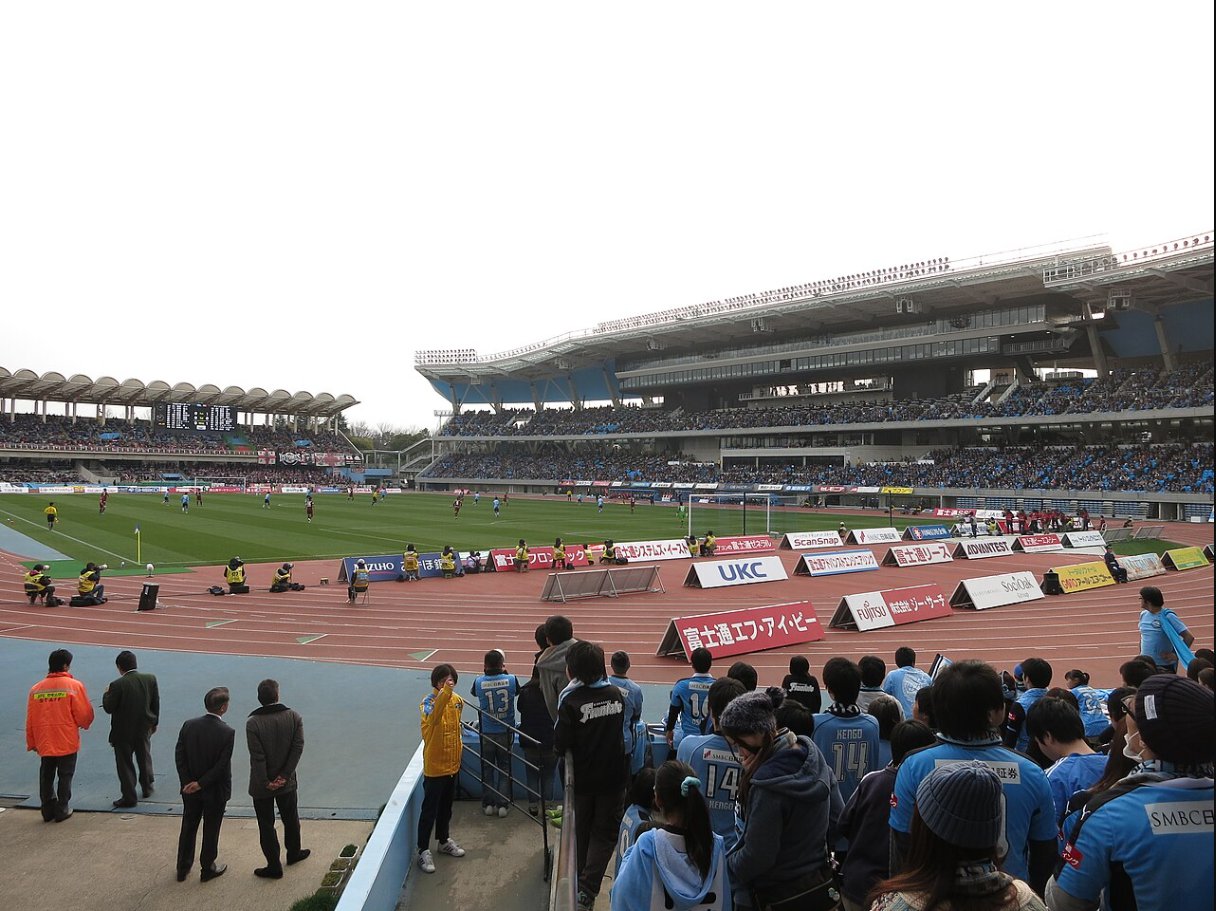
Photo: Waka77 (March 14, 2015, view from the back stand toward the main stand at Todoroki Athletics Stadium) · Wikimedia Commons, public domain
Merchandise and Ad Inventory
The club’s official goods shop is called “AZZURRO NERO,” and per its 2020 renewal announcement, the whole store concept was rebranded around “Ofuro” (お風呂, “bath”).
It’s a pun built on the fact that the front part of the club’s nickname, “Furontare,” sounds similar to “furo,” the Japanese word for bath — the shop now displays goods shaped like bathtubs and bath stools, and even opened an adjoining “FRO CAFE.”
The club didn’t stop there, either — it also runs a collaboration with public bathhouses (sento) around Kawasaki, and I found it impressive how consistently they’ve pushed a single pun all the way from merchandise to a café to local business collaborations.
On the ad inventory side, eight companies hold official top-partner status: Fujitsu leads the list, alongside electronics brand Anker Japan, SMBC Nikko Securities, PwC Consulting, GA Technologies (which runs the used-condo platform “RENOSY”), kit supplier Puma, food company Ebara Foods, and IT services firm FSAS Technologies.
And per the February 2024 naming rights announcement, top partner Fujitsu went on to buy the naming rights to the home stadium as well (the right to attach a company’s name to a facility), changing the official name to “Uvance Todoroki Stadium by Fujitsu” (shortened to “U-Todoroki”).
The deal runs through March 2029 (though it would end automatically the day before demolition begins if the renovation project starts earlier), and the contract value hasn’t been disclosed.
What’s worth noting is that the company that bought these naming rights isn’t some unrelated third party — it’s Fujitsu, the very company that founded this team in 1955 and has remained its biggest sponsor ever since.
From the club’s founding in 1955 to the moment it bought the naming rights in 2024 is exactly 69 years.
Having stuck around all this time even after its name came off the team, Fujitsu has now reached out to buy naming rights to a stadium that belongs to the city, not the club.
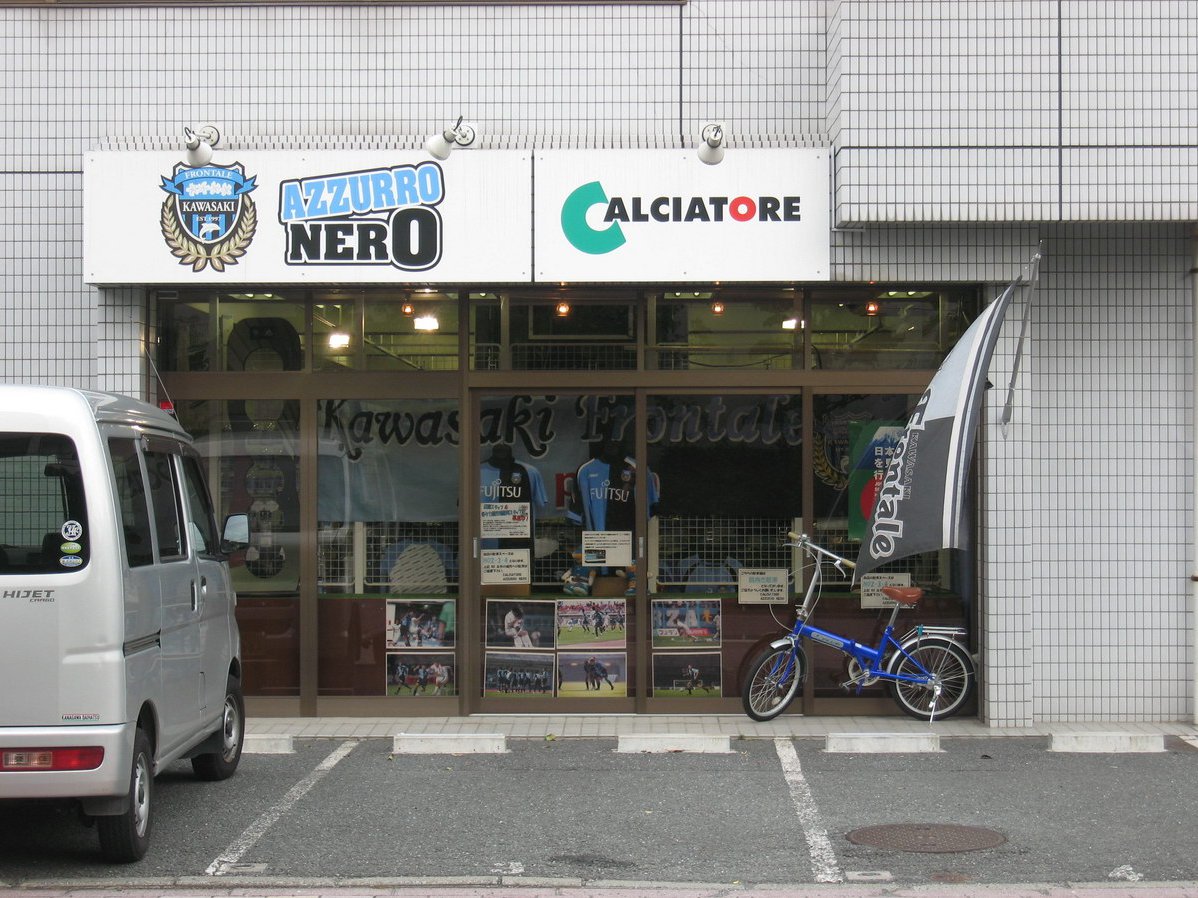
Photo: Dddeco (July 7, 2007, storefront before the renewal) · Wikimedia Commons, CC BY-SA 3.0
Broadcast Rights and Regional Economic Impact
DAZN holds the J.League’s overall broadcast rights for 11 years from 2023 through 2033, worth up to ¥239.5 billion, and Kawasaki Frontale’s matches are broadcast under this same deal.
The club’s own revenue for fiscal 2024 (February 2024 to January 2025) came to ¥8.403 billion, the second-highest in all of J1, but it posted a net loss of ¥650 million after spending ¥1.3 billion on player acquisitions.
It’s a good illustration of a common dilemma in pro sports club finance: strong revenue and results don’t necessarily translate into a profit.
The club’s community ties actually come through more clearly in rankings than in dollar figures.
In the J.League’s annual fan survey, Kawasaki Frontale ranked first in “hometown contribution” for nine straight years from 2010 to 2018, and the club has regularly featured near the top of the city of Kawasaki’s annual “Top 10 News” list since 2014 (the 2018 J1 title took the No. 1 spot that year).
An academic study commissioned by Japan’s Ministry of Education, Culture, Sports, Science and Technology even found that Todoroki Stadium attendees show stronger attachment to and pride in Kawasaki than non-attendee residents — and the fact that this kind of hard-to-quantify social value got a formal government-level study at all reads as evidence of just how long and consistently the club has built up its community-focused marketing.
The Stadium’s Signature Feature — the Bath Pun and the New Year Shrine Visit
Beyond the bath pun, Kawasaki Frontale has another tradition worth mentioning.
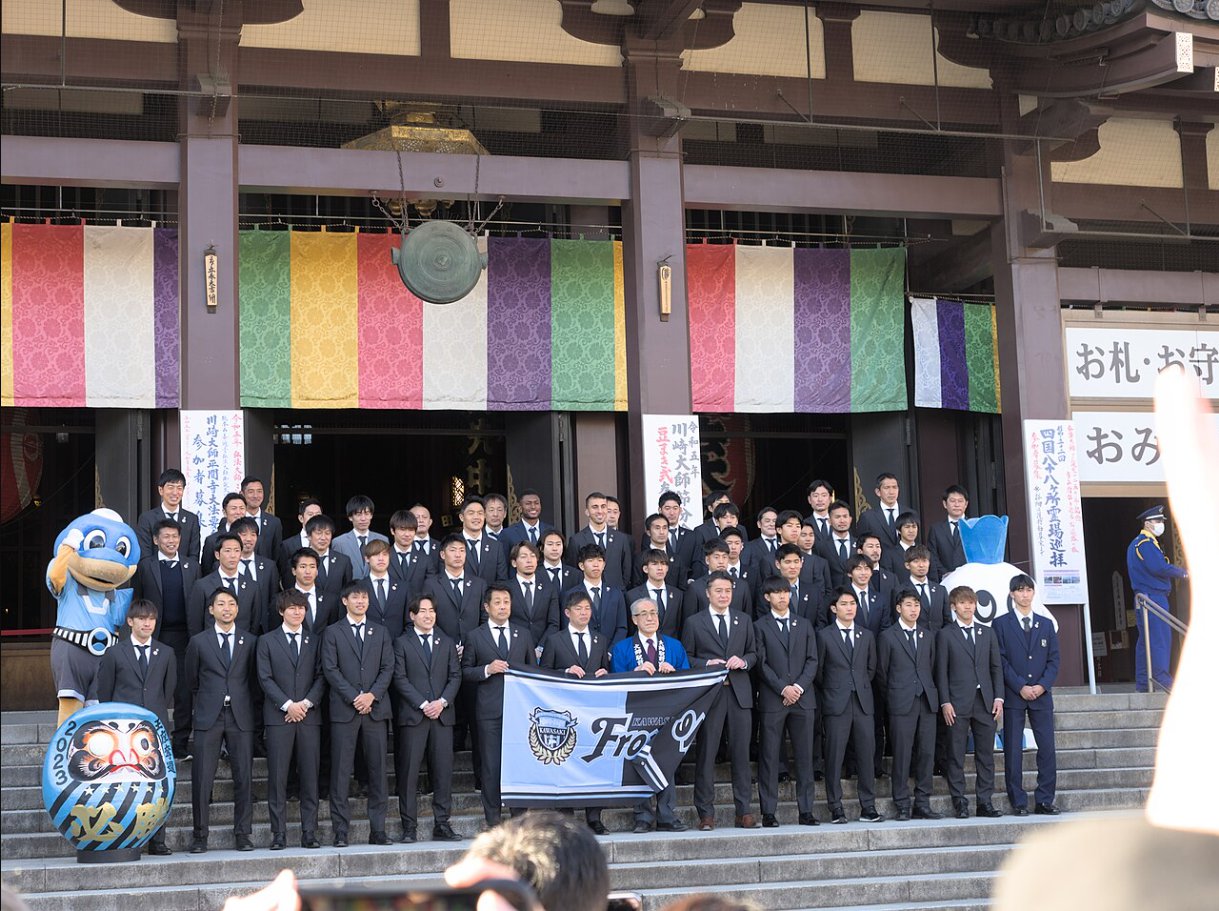
Every January, the entire squad dons suits and visits Kawasaki Daishi (Heiken-ji Temple) for a New Year prayer for a safe and victorious season — and since Kawasaki Daishi ranks among Japan’s most popular New Year’s prayer destinations, the event itself regularly makes local news.
Separately, on every home match day, a small shrine branch called the “Frontale Shrine” is set up inside Todoroki Stadium — according to local media reports, this tradition started in January 2016, when the head priest of the nearby Wakamiya Hachimangu Shrine began personally offering blessings there.
A football club setting up its own shrine to pray for victory at every home match struck me as somewhat unfamiliar coming from a Korean club culture, but also genuinely fun.
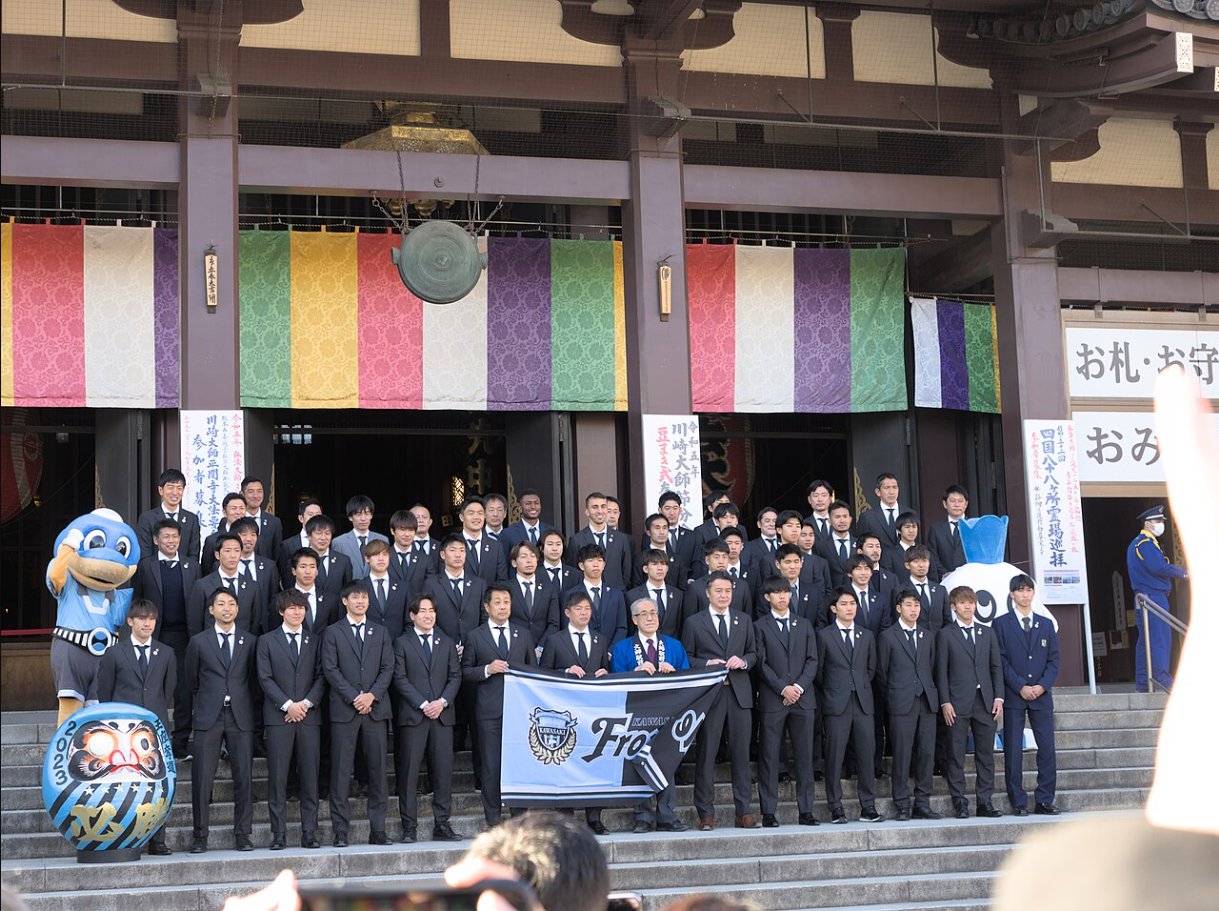
Photo: Kestrel (January 11, 2023, Kawasaki Daishi Heiken-ji Temple) · Wikimedia Commons, CC BY-SA 4.0
A Comparison With the KBO and K League
Korea also has pro clubs that started out as company in-house football teams.
Ulsan HD (formerly the Hyundai Mipo Dockyard football team) is the classic example, but Korean cases like this generally still carry their parent company’s name in the club name today.
Think Jeonbuk Hyundai Motors, or Pohang Steelers.
Kawasaki Frontale, by contrast, dropped the “Fujitsu” name entirely when it rebranded in 1997, adopting an independent-sounding corporate name instead — yet Fujitsu never actually cut its ownership ties and walked away; it stayed on as top partner all this time, and has now gone on to buy the stadium’s naming rights too.
The name came off, but the relationship never did — and that kind of “independent name, ongoing relationship” structure is hard to find anywhere in Korean club sports.
The stadium renovation approach is also worth comparing.
Where most multi-purpose public sports facilities in Korea keep their running-track layout intact, the city of Kawasaki chose to remove the track entirely and convert the venue into a football-only stadium.
Korea has seen a run of dedicated new baseball stadiums, like Daejeon Hanwha Life Ballpark or Gwangju-Kia Champions Field, but converting an existing multi-purpose venue that used to have a running track into a football-only stadium is still rare among Korean football facilities — which makes how Todoroki Stadium’s renovation turns out something facility managers at Korean football clubs may want to watch.
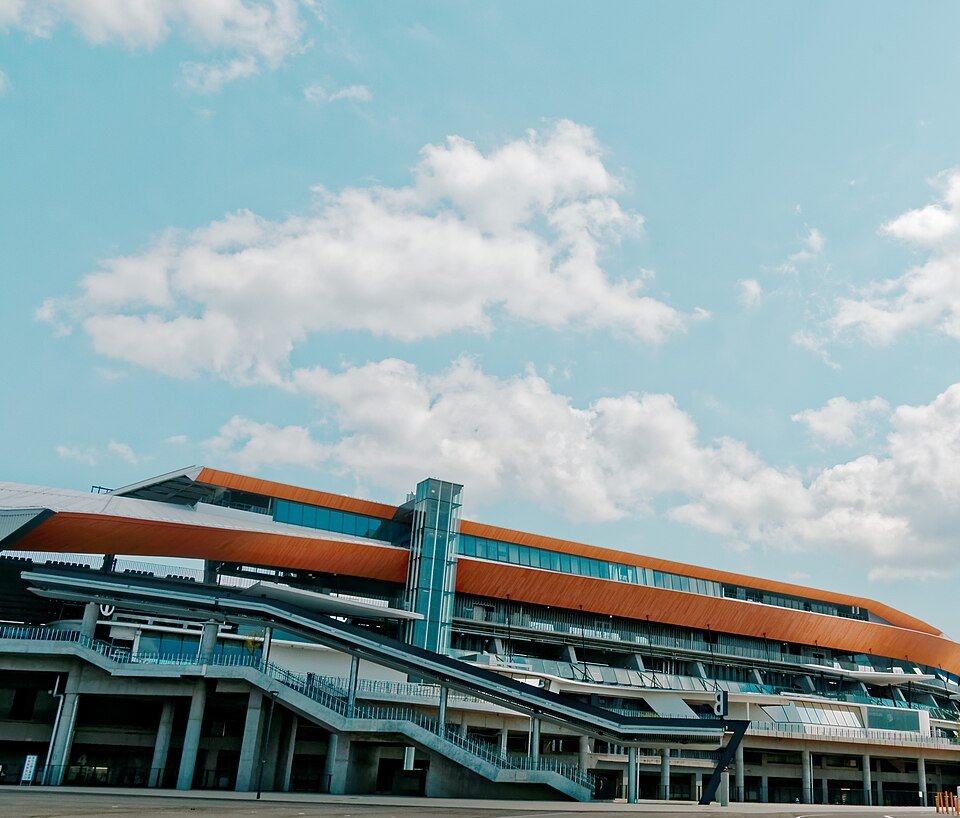
Photo: yoppy (April 13, 2017) · Wikimedia Commons, CC BY 2.0
This research started with a search for Jung Sung-ryong’s name, but what actually caught my attention was a structure where one founding company stuck around for nearly 70 years even after its name came off, and the way that relationship eventually extended all the way to the stadium’s naming rights.
I came away thinking that this kind of long-running relationship, and the marketing asset it creates, deserves just as much attention as flashy championship trophies or major transfer news.
Leave a Reply