Contents · About 8 min read
📱 View as card news
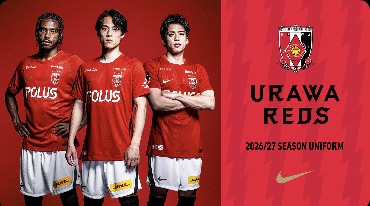
Source: urawa-reds.co.jp (Urawa Red Diamonds’ official website), 2026/27 season uniform promo banner · official team promotional image, used for editorial/reference purposes
While digging through J.League statistics, one number caught my eye.
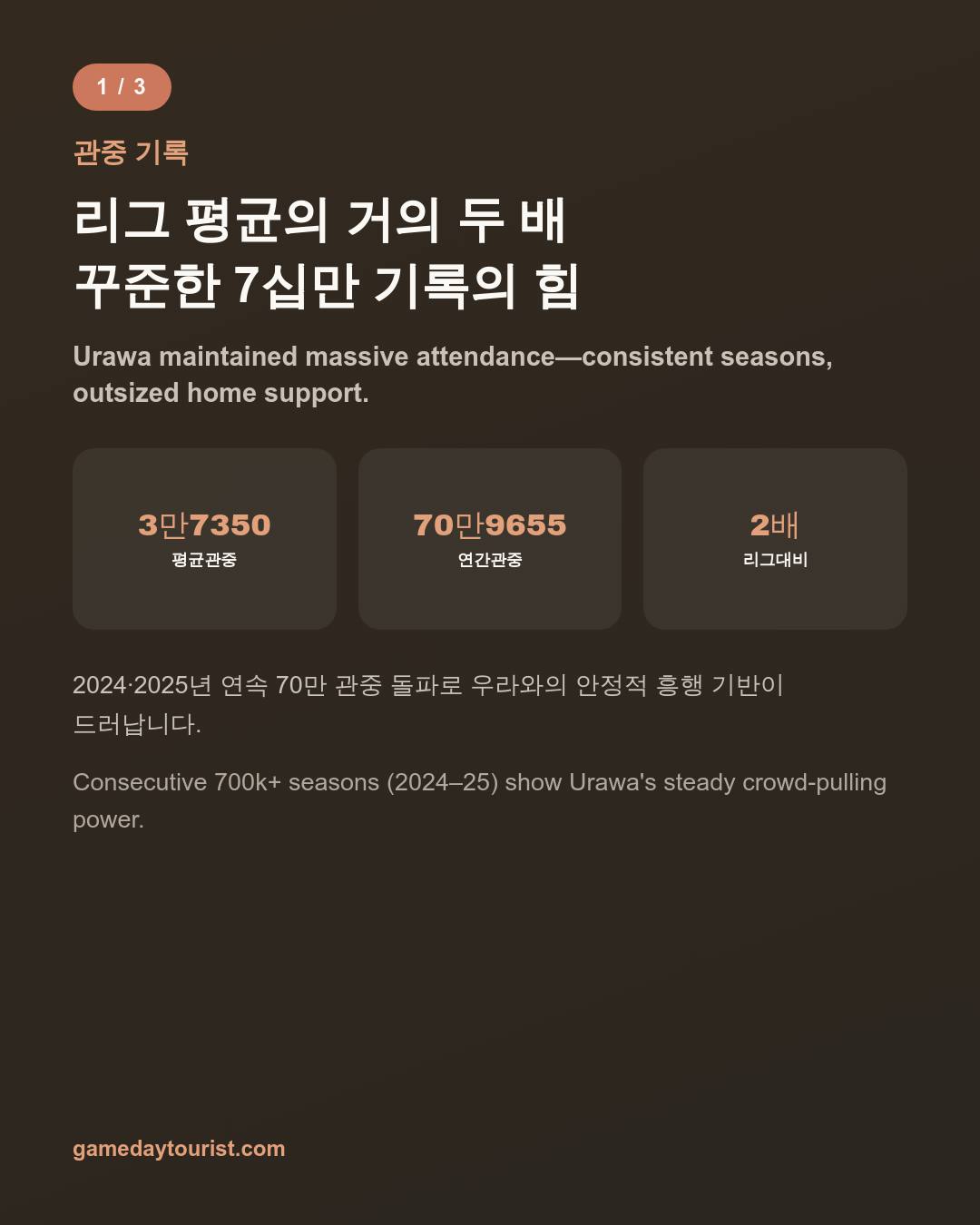
Saitama-based Urawa Red Diamonds averaged 37,350 fans per game in the 2025 J1 League season — nearly double the league-wide average of 20,355 for the same period (based on 2024 figures).
And it wasn’t a one-season spike.
Urawa had already averaged 37,519 in 2024, topping 700,000 annual attendance for the first time in 15 years, and kept that mark for a second straight year in 2025 with 709,655.
From a marketer’s perspective, this kind of consistency is far more worth studying than any single flashy number.
Attendance and Fandom
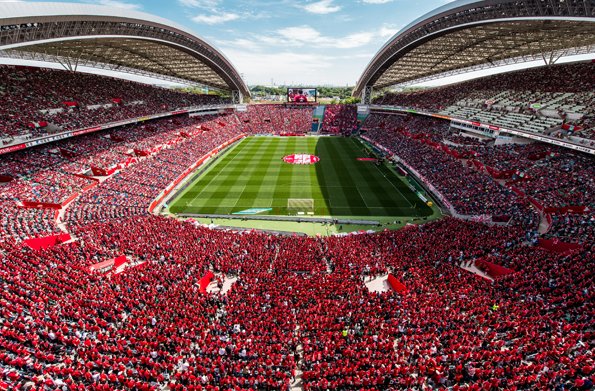
Urawa’s home ground is Saitama Stadium 2002, located in Midori Ward, Saitama City.
With a capacity of 63,700, it’s the largest soccer-specific stadium in Japan and one of the largest in Asia, built to host a 2002 Korea-Japan World Cup semifinal and used as Urawa’s home ever since.
The stadium, however, is a public facility owned by Saitama Prefecture and managed by a designated administrator (the operating body a local government appoints when outsourcing management of a public facility to a private entity), so unlike other J.League stadiums, it has never sold naming rights (the right for a company to attach its name to a facility for a fee).
That’s a striking contrast to corporate-named stadiums like Kashima Antlers’ Mercari Stadium, which we covered recently.
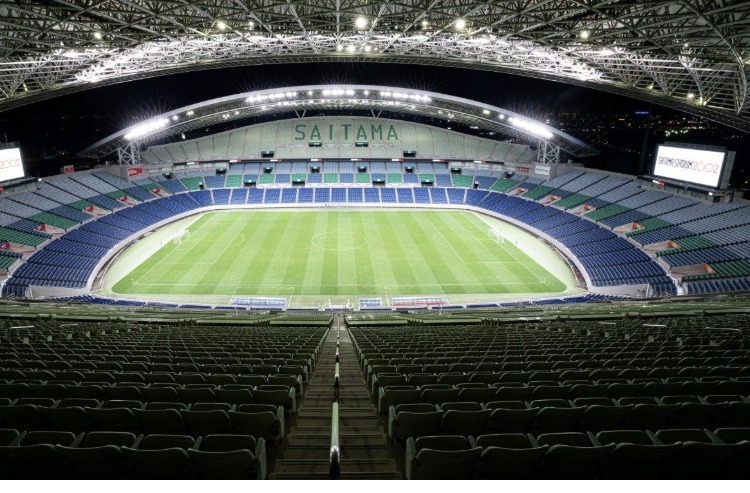
Source: stadium2002.com (Saitama Stadium 2002’s official website), stadium introduction page screenshot · official facility promotional image, used for editorial/reference purposes
More impressive than the attendance figures themselves is the supporter culture that fills those seats.
Urawa’s supporters are widely regarded as the most organized and passionate in Japanese football, and on big-match days the stands turn a solid wall of red, often dubbed the “Red Sea.”
Looking through reviews from foreign visitors who’ve actually been to the stadium, the chanting reportedly never stops from kickoff to final whistle, overwhelming enough that some say they bring earplugs.
Being a soccer-specific stadium also means the stands sit close to the pitch, and local reviewers often mention being able to make out players’ expressions and even the sound of the ball being struck.
Multiple reviews also agree that you need to arrive two to three hours before kickoff to get a good spot.
This reminded me of an assessment I’d come across before: that Urawa supporters don’t cheer because the team is winning — they cheer because the club exists.
From a marketing standpoint, that kind of brand loyalty isn’t an asset you can simply buy with money.
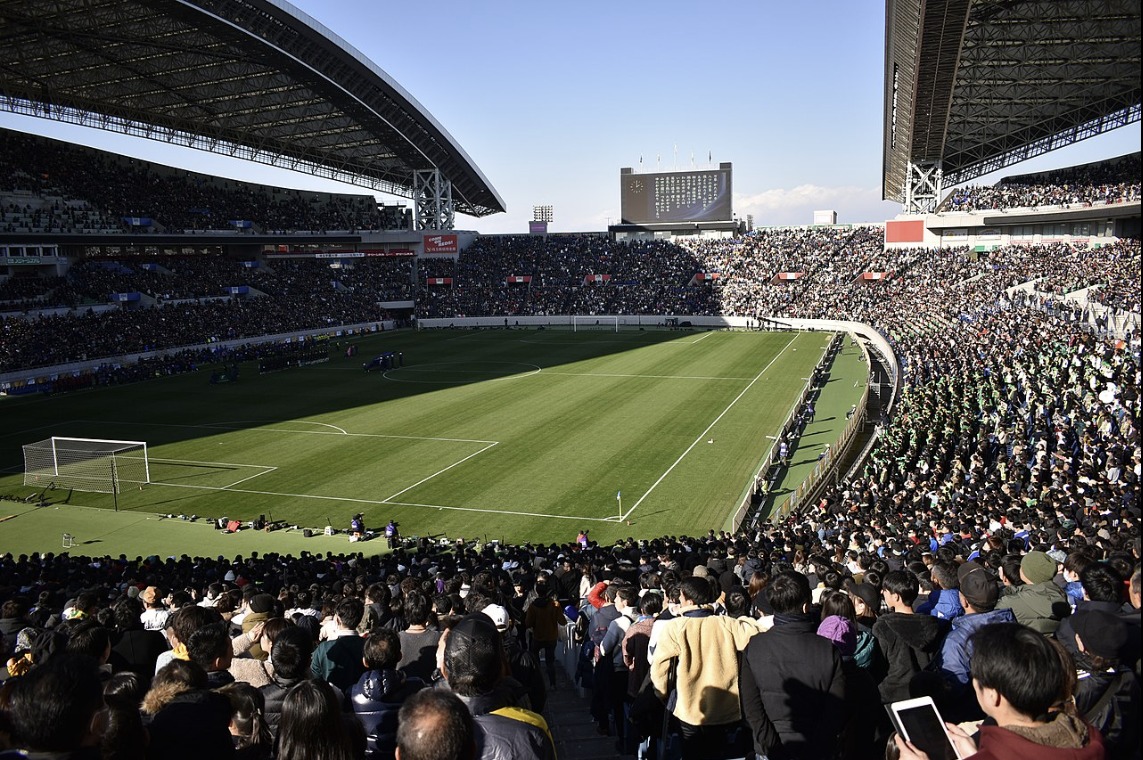
Source: Wikimedia Commons, photographed by Edomura no Tokuzo, licensed under CC BY-SA 4.0 · photo of the stands at Saitama Stadium 2002, via Saitama Stadium 2002’s Wikipedia page
There was also a first-hand match report showing that even this drawing power can waver in the face of poor results.
Football journalist Tetsuichi Utsunomiya, covering an Urawa-Tokyo Verdy match in April 2026, wrote that despite good weather on a weekend fixture, the trains were unusually quiet and the upper back-stand seats were noticeably empty.
Urawa had already lost four straight at the time, and dropped this match too on penalties, extending the skid to five.
It was a case study in how even the league’s top draw sees attendance track team performance directly.
Revenue and Finances
This fandom, visible in the numbers, translates directly into revenue.
Urawa posted operating revenue of ¥10.384 billion in fiscal 2023 (the February 2023–January 2024 fiscal year), becoming the first J.League club ever to top ¥10 billion, then set the league record again with ¥10.211 billion in fiscal 2024, holding above ¥10 billion for a second straight year.
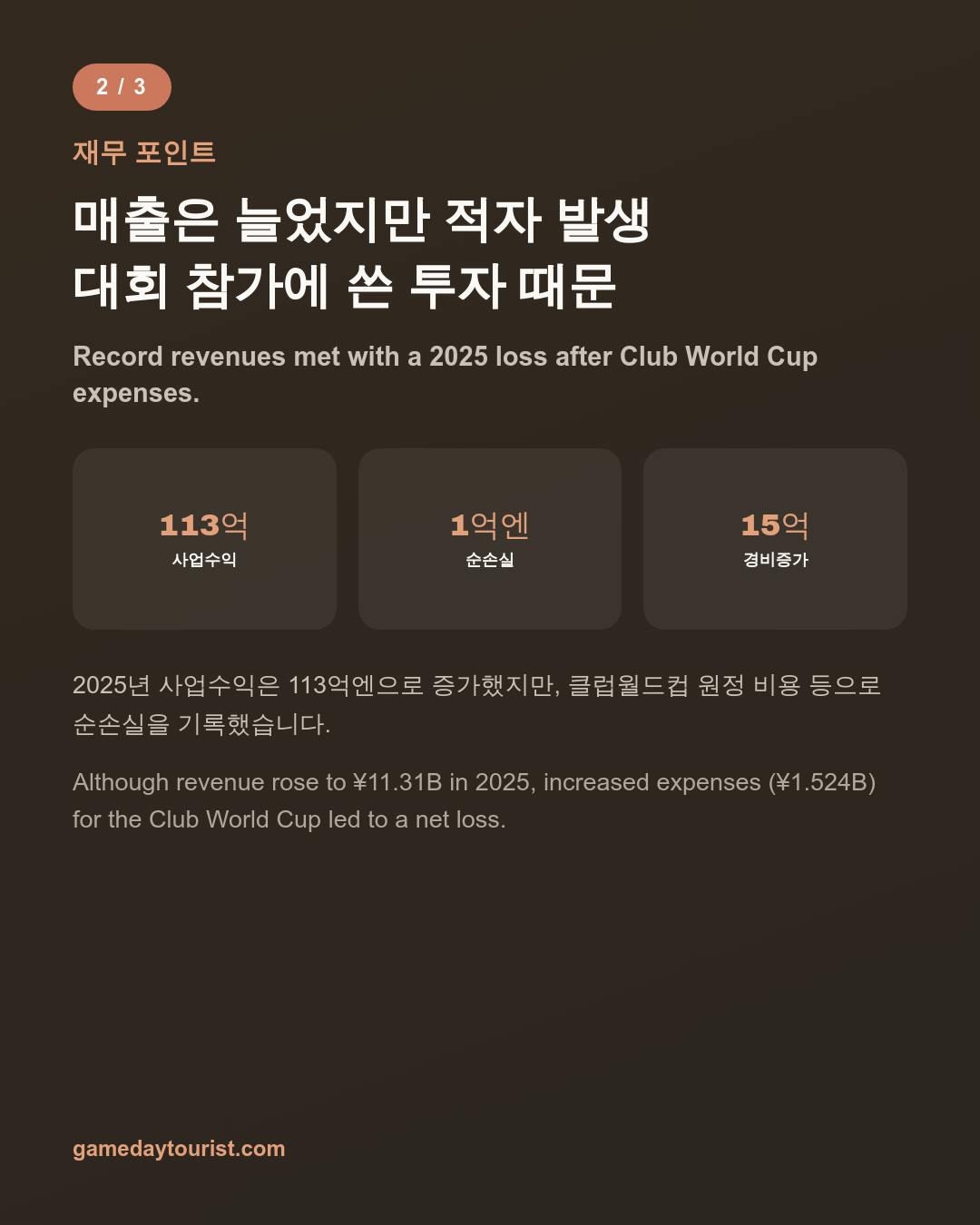
In fiscal 2025 that grew further to ¥11.31 billion (roughly ₩105–106 billion depending on the exchange rate), extending the streak to three straight years above ¥10 billion.
Revenue breaks down into three pillars — ticketing, sponsorship, and merchandise — and in fiscal 2025 that meant ¥2.214 billion in ticket revenue, ¥4.195 billion in sponsorship revenue (combining partner sponsorship fees and membership dues from the RBC, or Reds Business Club, corporate membership program), and ¥1.682 billion in merchandise revenue.
Merchandise revenue set a new all-time high for the third straight year.
Fiscal 2025, however, posted a net loss of ¥100 million, the club’s first loss since the pandemic year of 2020.
The cause was participation in the FIFA Club World Cup, held in the United States in the summer of 2025.
Riding its 2022 AFC Champions League title, Urawa became the first Japanese club to enter this newly expanded 32-team tournament, where it was drawn into a group with Inter Milan and River Plate and was eliminated in the group stage.
Heavy spending on travel costs and squad reinforcement pushed operating expenses up ¥1.524 billion year-over-year, and that increase is what produced the net loss.
Even so, the club framed the participation as a long-term investment in competitiveness, and with roughly 5,000 Saitama supporters reportedly following the team to the U.S., the brand-exposure payoff was likely considerable.
Merchandise and Retail
On the merchandise side, the most notable move has been a dedicated mascot store.
In November 2025, Urawa opened “REDIA FACTORY” at Aeon Mall Urawa Misono, said to be the J.League’s first permanent mascot-character specialty store.
The store sells plush toys, T-shirts, stickers, and more themed around the mascot “Redia” family, with roughly 80% of its merchandise reportedly exclusive to the store.
In a merchandise business still led by jersey sales, this is an effort to broaden the sales channel through mascot goods.
The idea of a football club opening a permanent retail store in a shopping mall, beyond the stadium concourse, seems like something K League clubs could take a look at too.
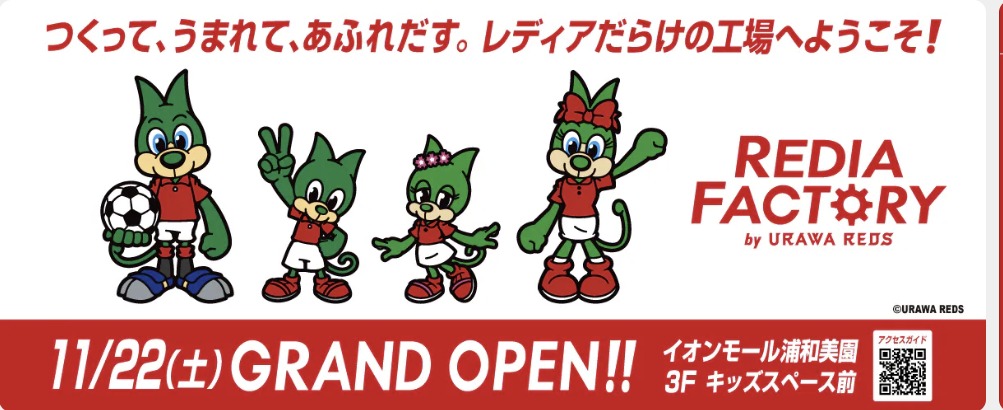
Source: redia-factory.jp (the mascot store’s official website), opening announcement banner screenshot · official team promotional image, used for editorial/reference purposes
Ad Inventory and Overseas Partnerships
Looking at ad inventory (a marketing term for a club’s total sponsorship space and rights), nine companies — including POLUS (homebuilding), Nike, Mitsubishi Heavy Industries, Mitsubishi Motors, and DHL — sit at the top “Top Partner” tier, with dozens more companies at the Official, Premium, and Family tiers below.
One that stands out is the partnership with Vietnam Airlines, which the club describes not as a simple ad deal but as a “hub” linking ASEAN (the Association of Southeast Asian Nations) and Japan.
Urawa has in fact run an academy football clinic in Hanoi, Vietnam since September 2024, now in its second year, and also has a partnership with Thailand’s Muangthong United.
The Vietnam Airlines partnership is a separate Premium Partner deal signed in February 2026, after the academy was already up and running.
Rather than treating sponsorship purely as domestic advertising, the strategy uses it as a springboard into overseas markets — a point worth noting for any Korean club weighing an overseas expansion or global marketing push.
Tickets
Ticketing is broken into a fairly fine-grained set of seat tiers.
Premium seats at the center of the main stand top out at ¥9,200, while supporter seats (general admission) behind the goal are among the cheapest, from ¥2,100 for members up to a ¥3,200 day-of walk-up price.
The fourth-floor private room known as the “View Box” even has a package priced up to ¥605,000 for a party of 20, covering everything from general seating to a private corporate-hospitality space.
Starting in the 2026-27 season, the club will also introduce “flex pricing” (demand-based pricing) with three price tiers that shift depending on each match’s expected demand, meaning ticket-sales strategy keeps getting more refined.
Broadcast Rights
Broadcast rights aren’t negotiated by individual clubs but collectively by the J.League as a whole.
In 2023, the J.League signed an 11-year broadcast deal with DAZN worth up to ¥239.5 billion (including a revenue-share component tied to sales performance), running through 2033.
Urawa and every other club receive a share of that broadcast fee as a league distribution payment; in fiscal 2025, Urawa’s share came to ¥539 million.
Community Ties and Social Contribution
On the community side, a football character-education program called the “Heartful Club” stands out.
In 2025 alone, it reportedly made 544 visits to elementary schools and kindergartens across Saitama City and Saitama Prefecture, kicking a ball around with 39,718 children.
The club-operated multi-purpose sports facility “Reds Land” also marked its 20th anniversary in July 2025, and at a dedicated event on December 27 of that year, a human formation of 1,198 people arranged into the shape of a soccer ball was certified as a Guinness World Record.
Twenty years of hands-on engagement with local children culminating in a symbolic event like this looks less like a one-off act of goodwill and more like a case where sheer consistency itself became the brand.
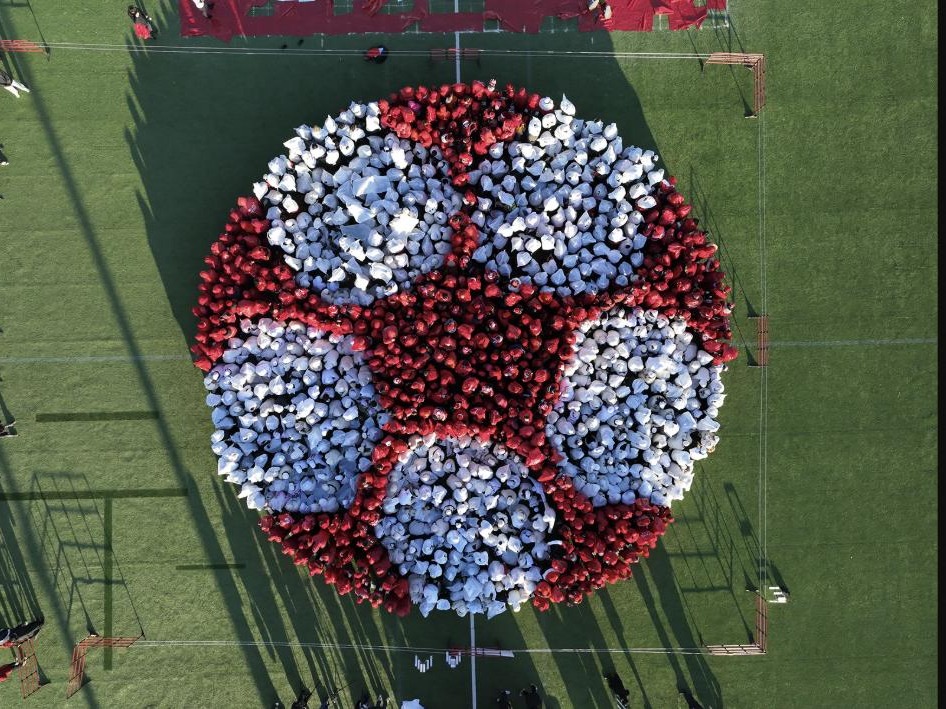
Source: redsland.jp (Reds Land’s official photo-download page), footage from the Guinness World Record attempt on December 27, 2025 (photo courtesy of Dronebless Inc.) · official team-distributed image, used for editorial/reference purposes
Compared to the K League
There’s a lot to take away from this comparison.
In the 2025 season, K League 1’s best-drawing club was FC Seoul, averaging 24,417 fans — still well short of Urawa’s 37,350.
Combined paid attendance across K League 1 and 2 in the 2025 season topped 3 million for a third straight year, with gate revenue hitting an all-time high of ₩46.1 billion, so the league is clearly trending upward — but looking at revenue structure, a good number of clubs still lean heavily on parent-company support.
Urawa, by contrast, has spent years independently building up three separate revenue streams — ticketing, sponsorship, and merchandise — and the result is the J.League’s first-ever three straight years above ¥10 billion in revenue.
Between the mascot store widening its merchandise channels and the airline partnership reaching into the ASEAN market, what stands out isn’t just the size of the fandom, but the sophistication with which that fandom gets converted into business.
I think there’s no shortage of lessons here for K League clubs looking to reduce their reliance on parent companies and diversify their own revenue streams.
Leave a Reply