Contents · About 7 min read
📱 View as card news


Of the Premier League’s 20 clubs, Chelsea is the only one that’s changed its front-of-shirt logo for four straight seasons.
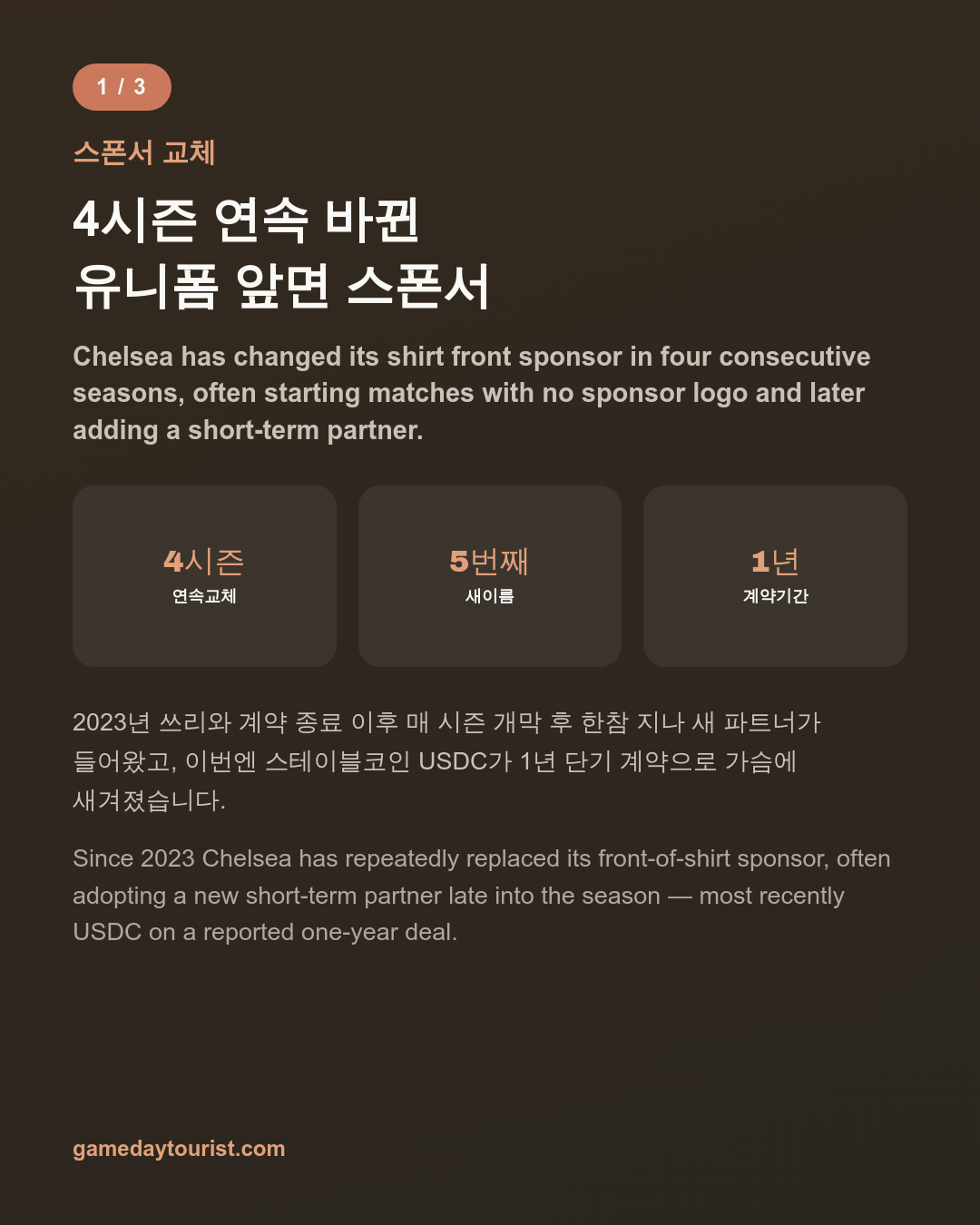
And every one of those seasons has followed the same pattern: open the campaign in a sponsor-less kit, then bring in a new partner only after the season’s already underway.
On August 28, a fifth name took that spot.
It’s the USDC logo of Circle, the US stablecoin issuer.
It’s also the first time a cryptocurrency or stablecoin company has become a Premier League club’s main sponsor.
Chelsea is such a massive, globally supported brand that it hardly needs an introduction, but its commercial strategy has grown noticeably more aggressive since Roman Abramovich sold the club under sanctions in 2022 and control passed to the Todd Boehly-Clearlake consortium.
Today I want to walk through Stamford Bridge’s numbers, centered on the shirt-sponsor saga where that shift shows up most clearly, from a marketer’s perspective.
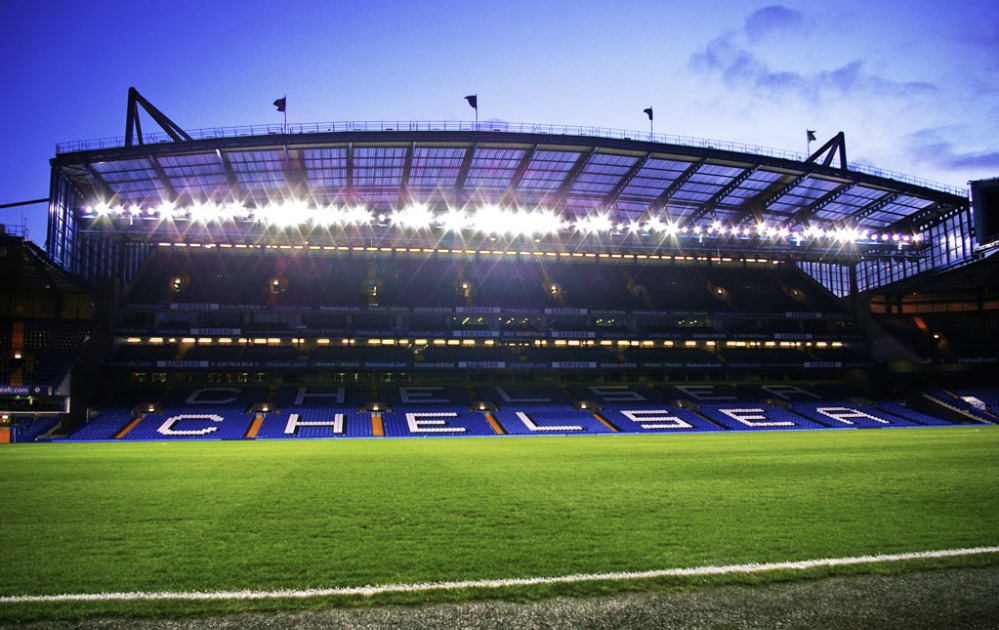
The word CHELSEA spelled out in the West Stand’s lower-tier seats, photographed under the floodlights. Source: Wikimedia Commons (Vespa125125CFC, CC BY-SA 3.0)
Ad Inventory: A Sponsor Saga Now in Its Fourth Season
Chelsea’s shirt-sponsor saga started in 2023, when its deal with Irish telecom Three came to an end.
With Abramovich’s Russia-linked background weighing on the brand, the deal wasn’t renewed, and the slot was filled in turn by sports-data company Infinite Athlete in 2023-24 (arriving that October), Dubai real-estate developer DAMAC in 2024-25 (April 2025), and industrial AI firm IFS in 2025-26 (February 2026).
What stands out is that in all four of those seasons, the new sponsor wasn’t finalized until well after kickoff, meaning the club played in a logo-less kit up until then every single time.
Chelsea’s official announcement of the Circle deal says it applies across the men’s, women’s, and academy kits starting with the Brighton match on August 30, but industry sources believe it’s a one-year deal with an extension option.
The club described it as “stability after years of short-term and vacant sponsorships,” but that framing doesn’t change the fact that the actual term is still just one year.
The timing is what I found interesting.
The UK’s Financial Conduct Authority is set to bring in sweeping regulation of stablecoin issuers in October 2027, and this deal is structured to expire five months before that.
The Sponsor, a valuation specialist, priced the deal at £16.7 million below its £33.6 million estimate, while the club has reportedly been targeting £50 million a season — a substantial gap in how the two sides see its actual value.
No official figure has been confirmed, but multiple outlets abroad have reported the deal’s value at roughly $88 million a year.
Even for a single, limited piece of ad inventory like the front of a jersey, it struck me as a clear example of just how sensitively sponsor companies weigh brand risk, regardless of results or star-studded lineups.
Even Chelsea’s own fan community reportedly reacted with “so how long will this one last,” which tells you the sponsor churn itself has become something of a seasonal event.
Attendance and Tickets
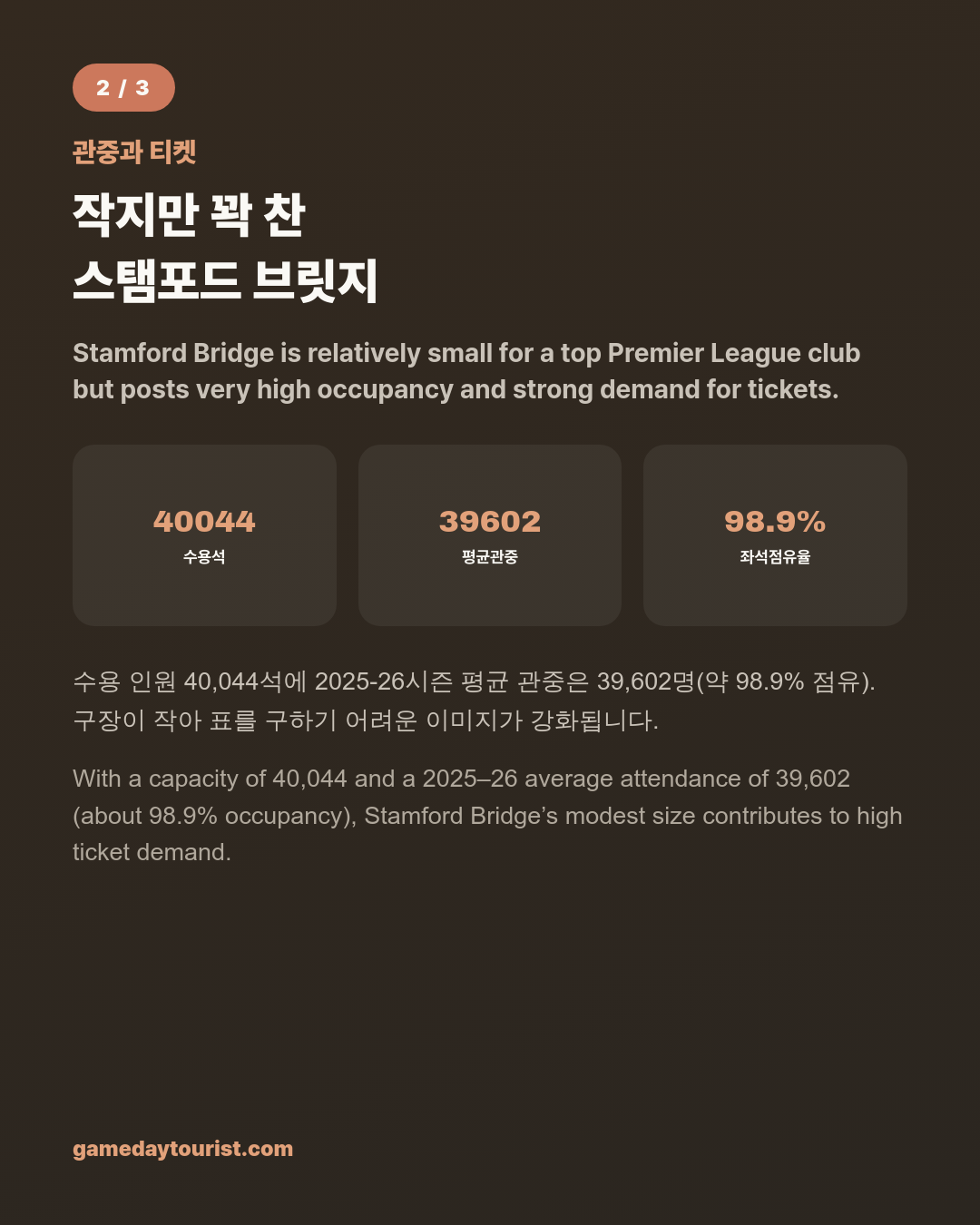
Stamford Bridge’s current capacity of 40,044 is actually on the smaller side among the Premier League’s top clubs.
Average attendance for 2025-26 was 39,602, a roughly 98.9% occupancy rate, with the season high of 39,820 coming against Arsenal on November 30 last year.
If anything, the smaller ground feeds into the club’s reputation as a hard ticket to get.
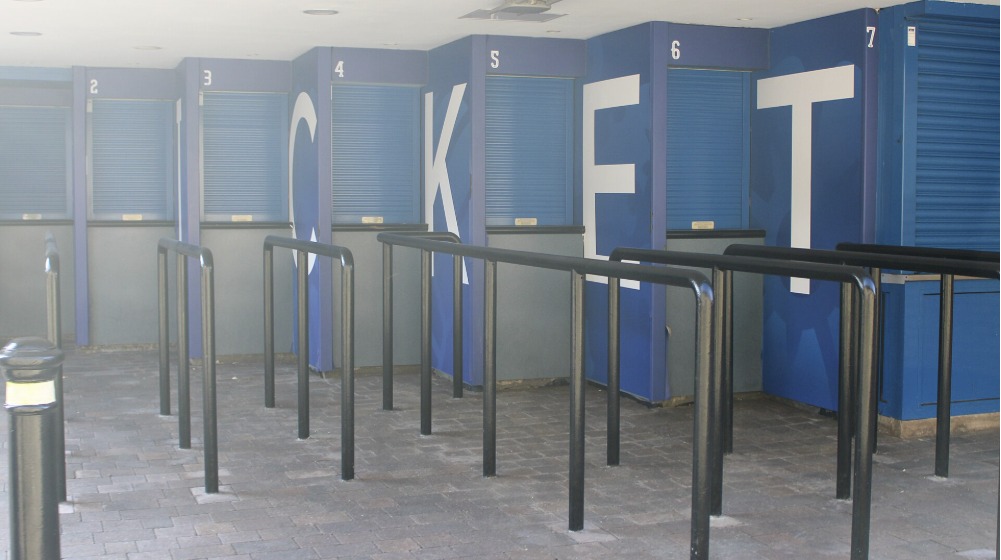
The ticket office outside the stadium. Source: Wikimedia Commons (Boaventuravinicius, CC BY 4.0)
Ticket pricing here needs to be looked at season by season rather than as a single trend.
The 2025-26 pricing overhaul raised single-match general admission by 4% and trimmed the discount season-ticket holders used to get, which felt like as much as a 9% increase overall.
2026-27 pricing, by contrast, kept that increase in place but froze it there.
Adult season tickets run £700-1,095, a single ticket in the priciest member tier (Category AA) runs £27-28, and restricted-view-free seats start at £52.
Coming after a disappointing 2025 season, the freeze was generally well received by fan groups.
Making the Most of Space: The Museum, and a Women’s Team Settling In
Tucked behind the Matthew Harding Stand, the Chelsea FC Museum is big enough that the club itself calls it “London’s largest football museum.”
It splits into a 60-minute stadium tour and a once-a-day, 90-minute Classic Tour that also covers the dressing rooms, players’ tunnel, and manager’s press-conference room.
Going by reviews from people who’ve taken it, guides bring each trophy’s backstory to life vividly enough that even non-football-fan companions end up fully absorbed.

A trophy cabinet inside the museum. Source: Wikimedia Commons (Daniel from Glasgow, CC BY 2.0)
Since we’re on the topic of space, there’s one more change worth flagging.
Chelsea’s women’s team will play every WSL home match at Stamford Bridge starting in 2026-27.
That means leaving the 4,850-seat Kingsmeadow, their home since 2017, to share a permanent home ground with the men’s first team for the first time.
It’s hard not to read the Circle sponsorship applying to men’s, women’s, and academy kits alike as tied to this same shift — it reads like a deliberate move to sell the women’s team as part of one brand family rather than a separate asset.
Finances and Rankings: The Numbers Behind the Brand
In Deloitte’s annual Football Money League 2026, Chelsea ranked 10th globally based on 2024-25 revenue of €584.1 million.
Six Premier League clubs alone made the top 10, and Chelsea sits last among them.
Add in last year’s $114.6 million prize for winning the FIFA Club World Cup in the US — the highest payout of any club in the tournament — and it’s clear that, results aside, the club is genuinely scaling up on the commercial and competition-revenue side.
Since the Todd Boehly-Clearlake consortium took over in 2022, the way the club handles its finances has also grown noticeably more aggressive.
A prime example is the 2023 sale of two club-owned hotels to a sister company for £76.5 million.
That sale sharply narrowed the club’s accounting loss that year, and the Premier League accepted it as a fair-market-value transaction, letting Chelsea stay clear of a Profitability and Sustainability Rules (PSR) breach.
UEFA, though, doesn’t recognize this kind of related-party asset sale, which is worth noting as a genuine gray area where different leagues rule differently.
The unusually frequent shirt-sponsor churn struck me as part of that same broader pattern of restructuring commercial assets across the board.
What Makes the Ballpark: The Shed End, and a Club Founded Backwards
Most clubs form first, and a stadium gets built for them later.
Chelsea is the exact opposite.
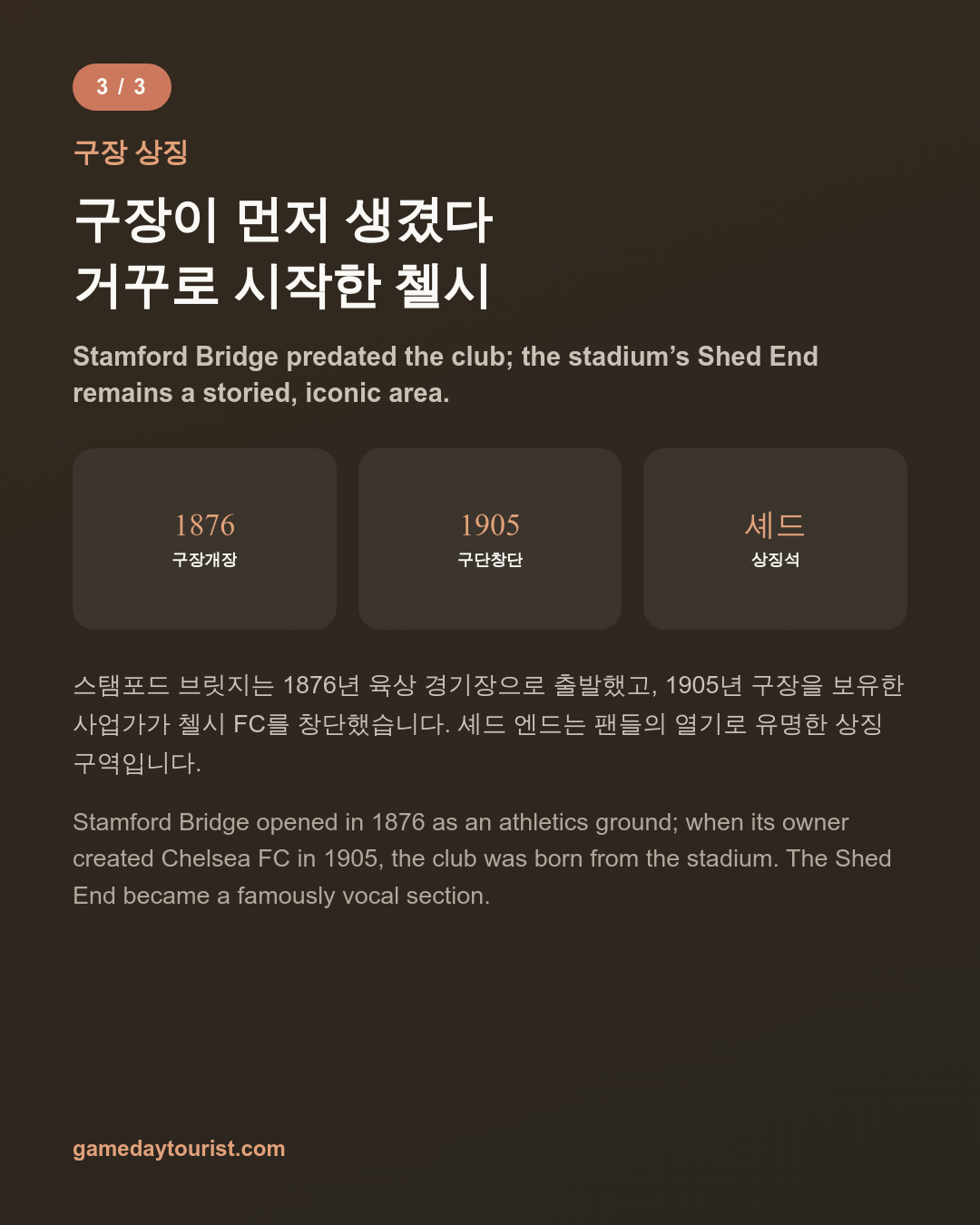
Businessman Gus Mears bought Stamford Bridge, which had opened as an athletics ground in 1876, and after offering to lease it to nearby Fulham FC and getting turned down, he decided, “Fine, I’ll just build a team to fill it myself” — founding Chelsea FC on March 10, 1905, at a pub across from the ground (now the Butcher’s Hook).
It’s the rare case of a club being born for its stadium, rather than the other way around.
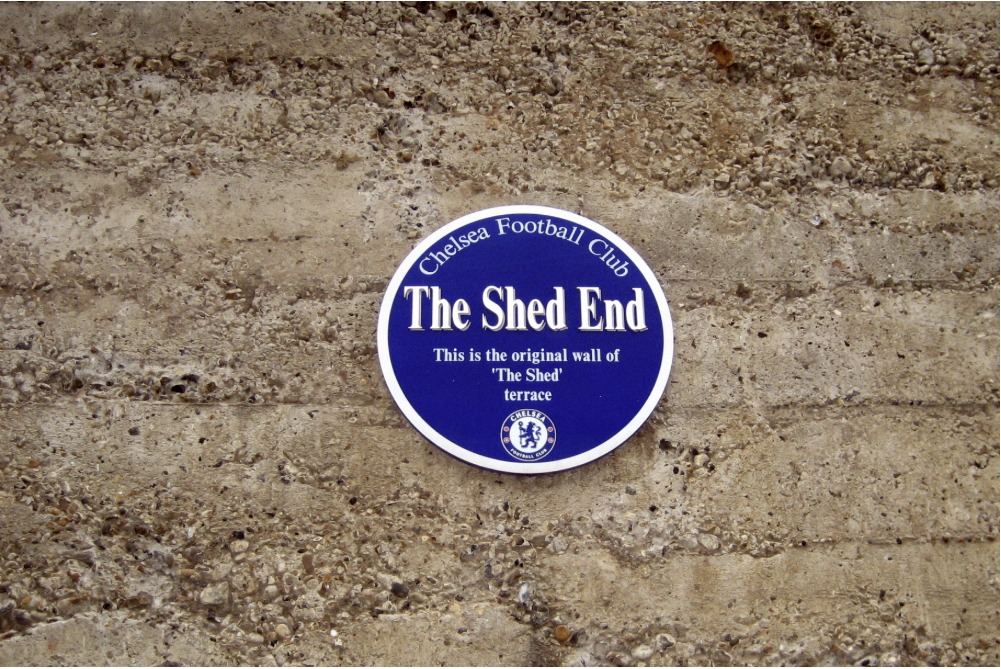
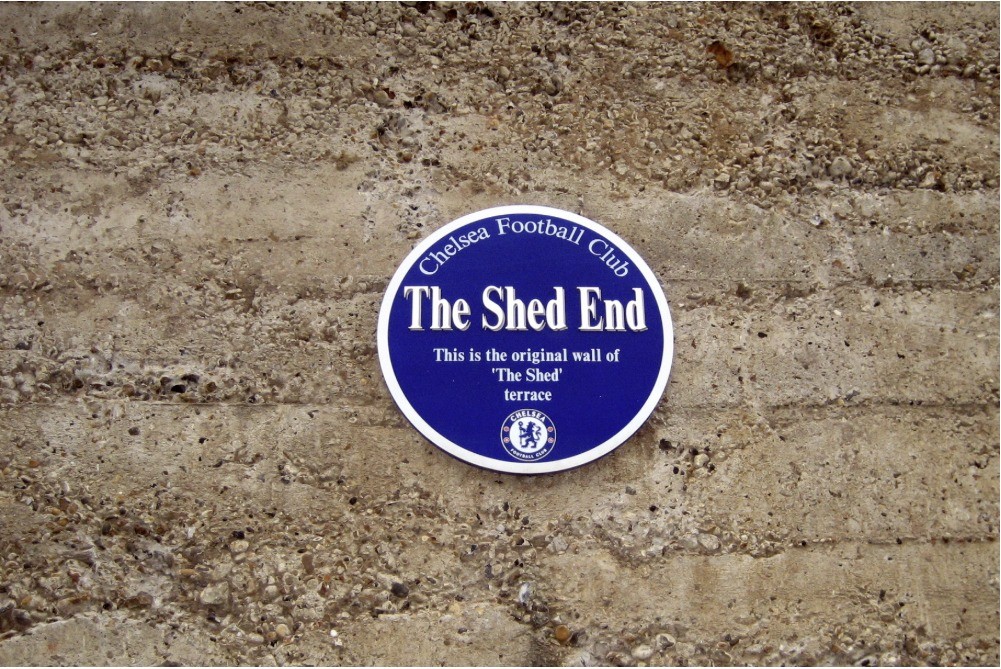
A plaque marking the site of the old Shed End. Source: Wikimedia Commons (Wally Gobetz, CC BY 2.0)
If there’s one section of this ground that counts as iconic, it’s “The Shed End.”
Named because its roof resembled a shed, it was once home to the standing fans whose roar was, for a time, considered the loudest in the club’s history.
It’s all seating now, but a plaque still marks the spot where the original wall once stood.
Multiple visitor reviews mention stadium-tour guides lingering especially long in front of that wall — a reminder that details like this, which don’t show up in any spreadsheet, are exactly what make an old ground’s history an asset in itself.
A Comparison With the KBO and K League
The most obvious difference is the shirt-sponsor structure itself.
At most KBO clubs, the parent company’s brand doubles as both the team name and the shirt sponsor, so a cascading sponsor-churn risk like Chelsea’s simply isn’t much of a structural concern.
Aside from a handful of citizen-owned clubs, the K League looks much the same.
Not having to worry about the front of the jersey changing every season is stable, sure — but flip that around, and it also means there’s rarely a chance to re-test your market value with a third-party sponsor.
It’s worth noting that Chelsea’s frequent-turnover approach is, in a sense, closer to a structure where every single deal keeps getting re-tested against the actual market.
In terms of sheer size, Chelsea’s ground is actually the smaller one.
Stamford Bridge’s capacity of 40,044 is smaller than the Seoul World Cup Stadium (roughly 66,000), and while it’s bigger than Jamsil Baseball Stadium (23,750), Korea’s largest ballpark, it’s modest by the standards of a top-tier Premier League ground.
The fact that a globally supported brand’s home ground is surprisingly compact strikes me as a good reminder that Korean clubs shouldn’t judge brand weight by seating capacity alone.
Leave a Reply