Contents · About 3 min read
📱 View as card news
I’ll share my experience visiting Yokohama Stadium.
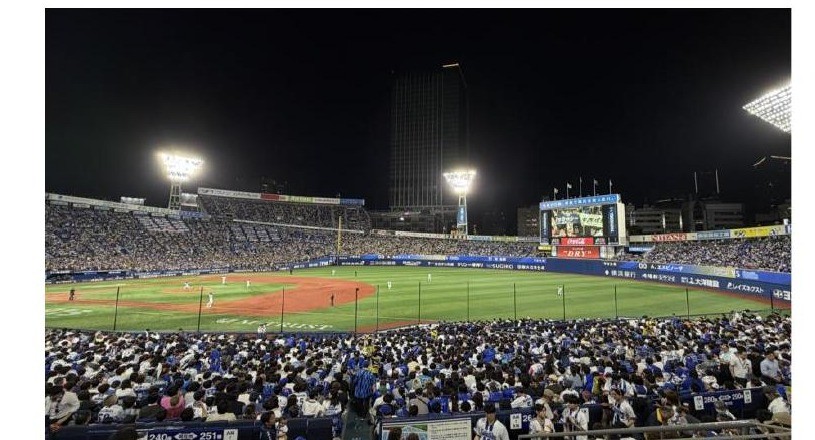
It’s the home of the Yokohama DeNA BayStars, but locally it’s more commonly nicknamed “Hamasta.” Compared to other stadiums, what I paid most attention to this time wasn’t flashy facilities but how the place was operated. As a marketer, I kept noticing how they designed the payment system, the app, and their relationship with the local community.
Yokohama Stadium — A Direction Toward a Community Ballpark
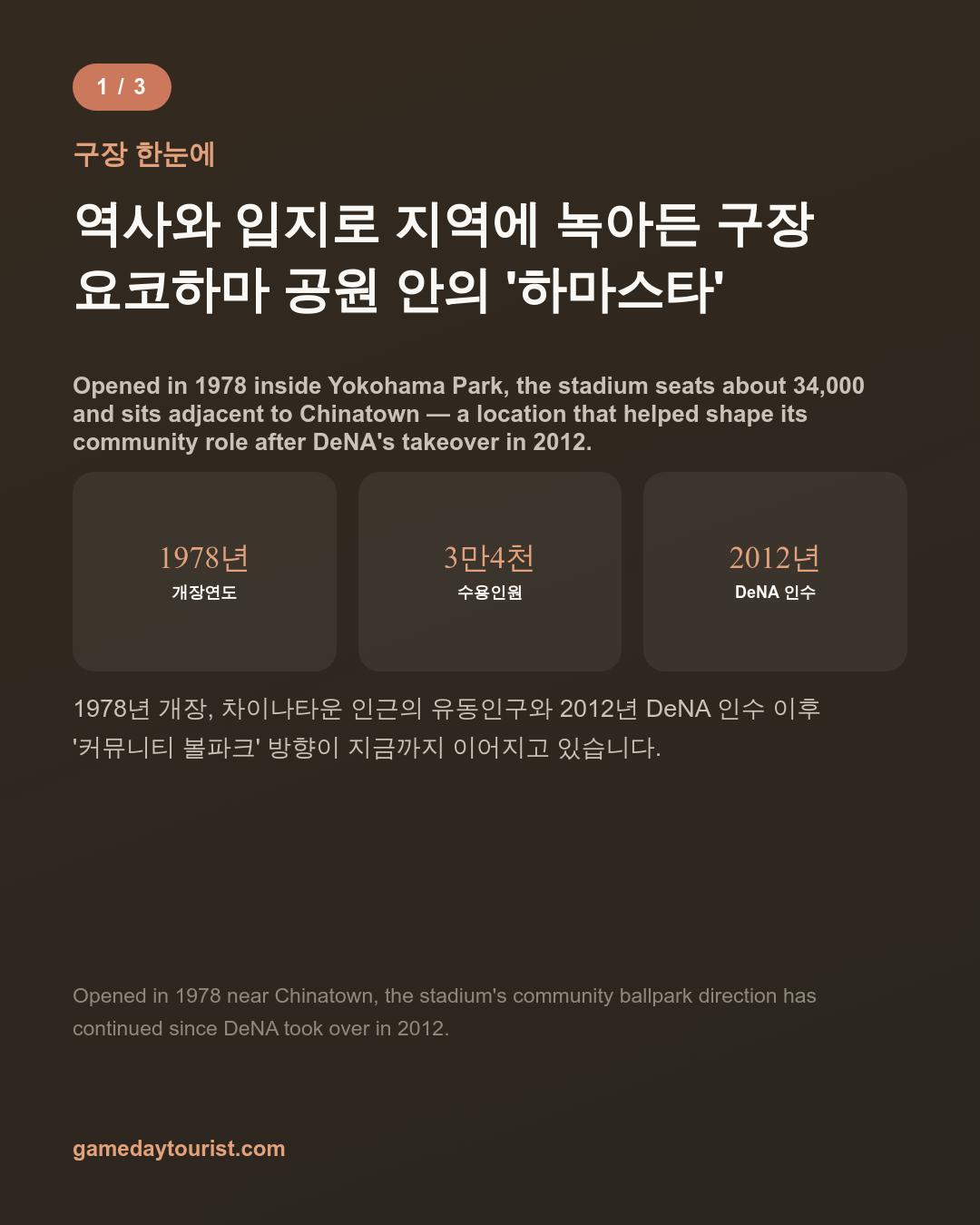
Yokohama Stadium opened in 1978 and is located within Yokohama Park. The capacity is about 34,000, and it has always benefited from high foot traffic due to its proximity to Chinatown. When DeNA acquired the team in 2012, they set a direction to make the stadium a community ballpark, and I felt that commitment continuing steadily to this day.
Going Fully Cashless, Without Leaving Anyone Behind
The first thing I noticed was the payment method.
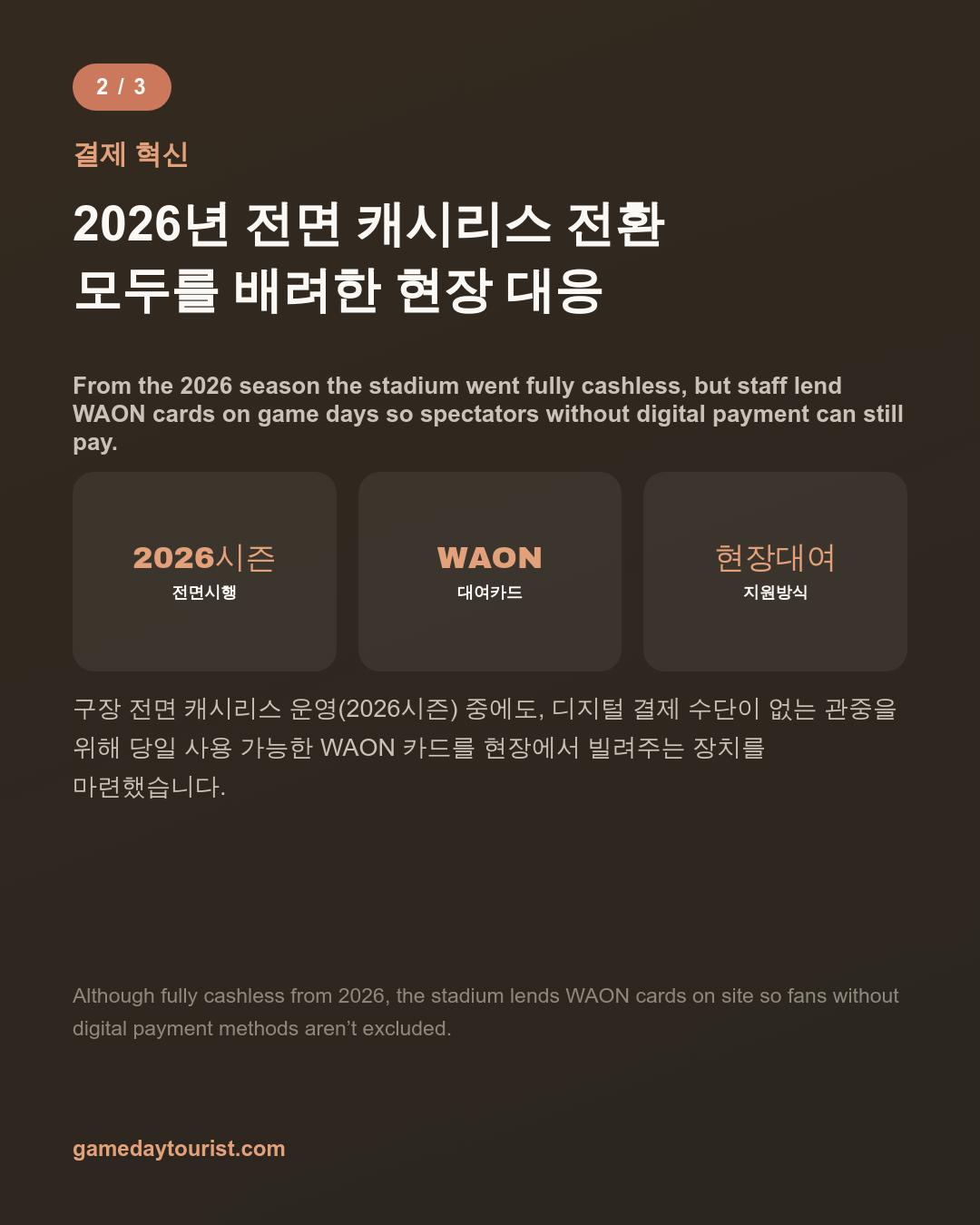
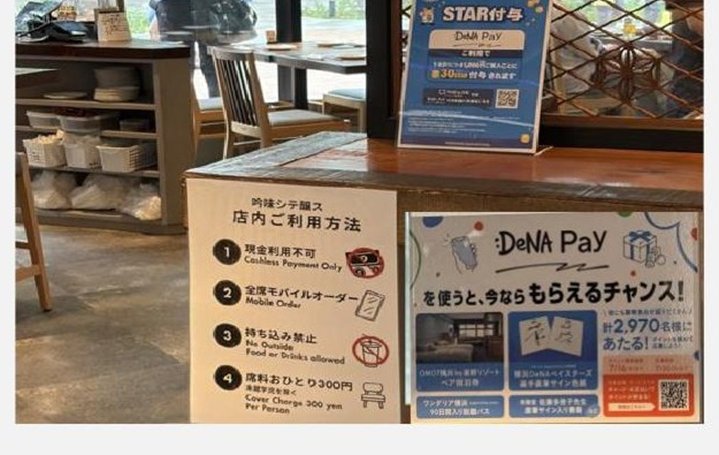
From the 2026 season the entire stadium switched to fully cashless, and signs throughout the concessions prominently stated that cash was not accepted and only cashless payments were available. They didn’t force it unilaterally, though. For spectators without digital payment methods, they provided WAON cards on-site that could be borrowed and used that day. I was impressed by their effort to introduce a new system without excluding any fans.
DeNA Pay — The Power of Owning Payment Data
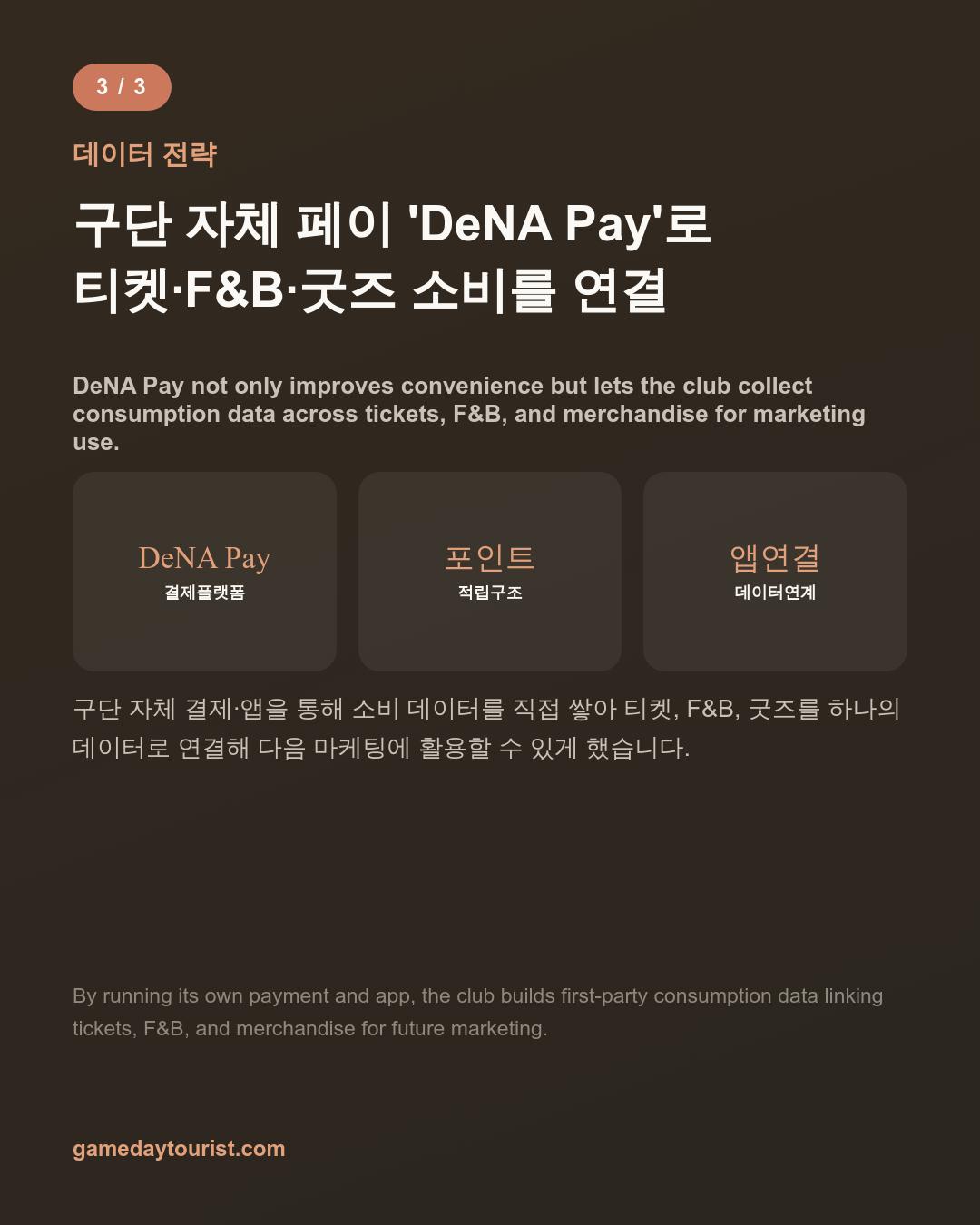
At the center of this cashless transition was DeNA’s own payment service, DeNA Pay. The system accumulated points with each payment, but it was more than just a convenience: it was a channel for the club to directly collect data on what, when, and how much fans consumed inside the stadium.
Having an in-house pay system and app rather than relying on external payment providers means the club can connect ticketing, F&B, and merchandise purchases into a single dataset to inform future marketing. Many domestic clubs have apps, but fewer have reached the point of completing payments entirely within their own app, so this stood out to me.
A Community Hub That Erased the Stadium’s Boundary
The stadium’s role as a community hub was also clear.
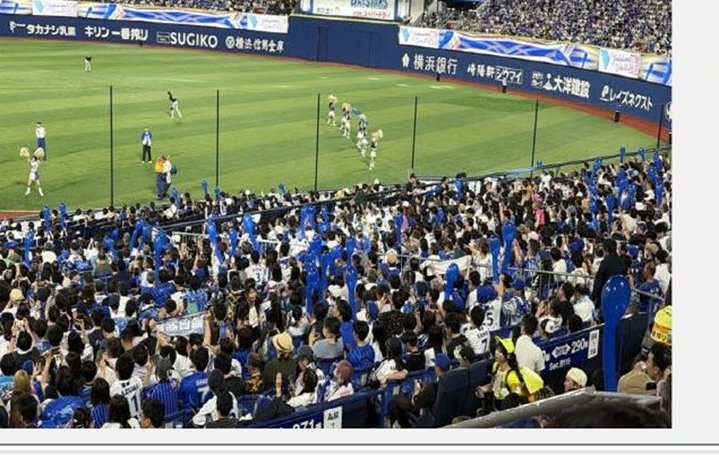
They keep the space outside the stadium fence open at all times, whether there’s a game or not, effectively erasing the boundary between Yokohama Park and the ballpark. THE LIVE, a live-viewing space run by the club, offers broadcasts of other sports and events in addition to baseball, and during the bottom of the seventh inning there’s an inning event where fans together launch jet balloons into the sky. Watching the stands turn blue with balloons, I was reminded how a single ritual-like event can bind a club and its community much more tightly.
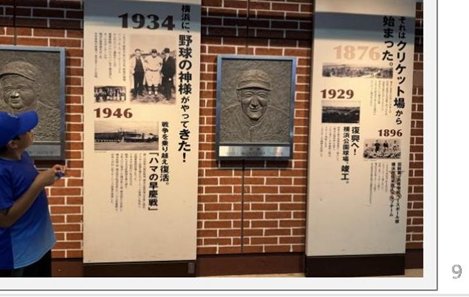
The History Zone — Built Up With the Local Community
Inside the stadium walls there was also a history zone summarizing Yokohama baseball’s past. From its start as a cricket ground in 1876 to the moment in 1934 when a baseball legend visited, the exhibit highlighted that this venue is not just an arena but a space built up together with the local history. I got the impression that facilities, payments, events, and history were all aligned to convey a single message: this stadium belongs to the community.
Closing Thoughts
Reflecting on it back home, there were two main lessons from Yokohama Stadium.
One is that clubs need to own invisible data infrastructure—like cashless and in-house payment systems—directly. The other is that, separate from that data, the stadium should be opened as a living space that local residents come and go from every day.
Domestic stadiums may face initial resistance, but I think clubs should gradually move toward designing apps and payment systems more proactively, with complementary measures, and make reasons for local residents to visit even on non-game days.
Leave a Reply