Contents · About 9 min read
📱 View as card news
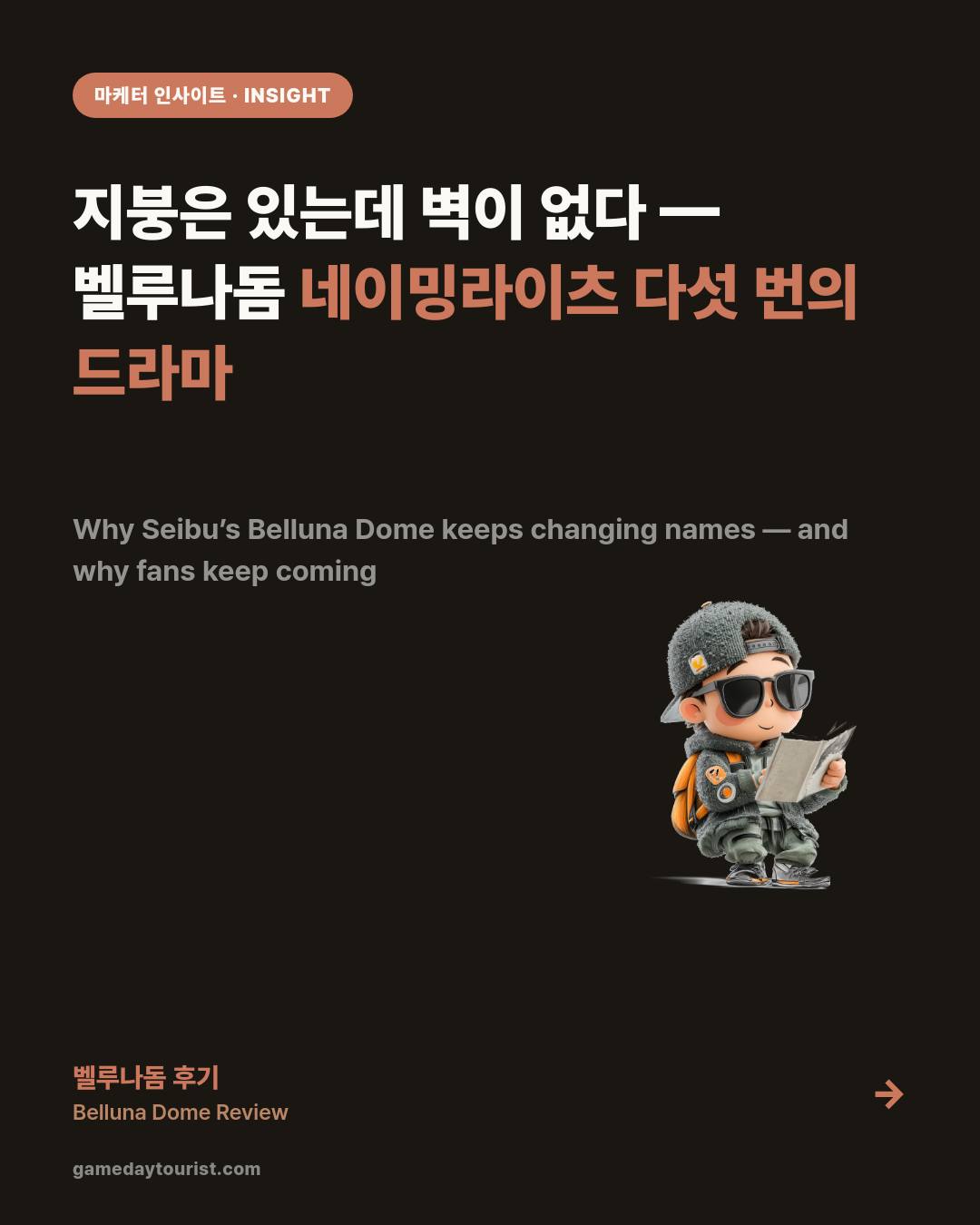
If a ballpark’s name changed five times in about twenty years, you can’t help but wonder what’s behind that.
This time I looked into the home ballpark of the Saitama Seibu Lions of Nippon Professional Baseball, currently known as Belluna Dome.
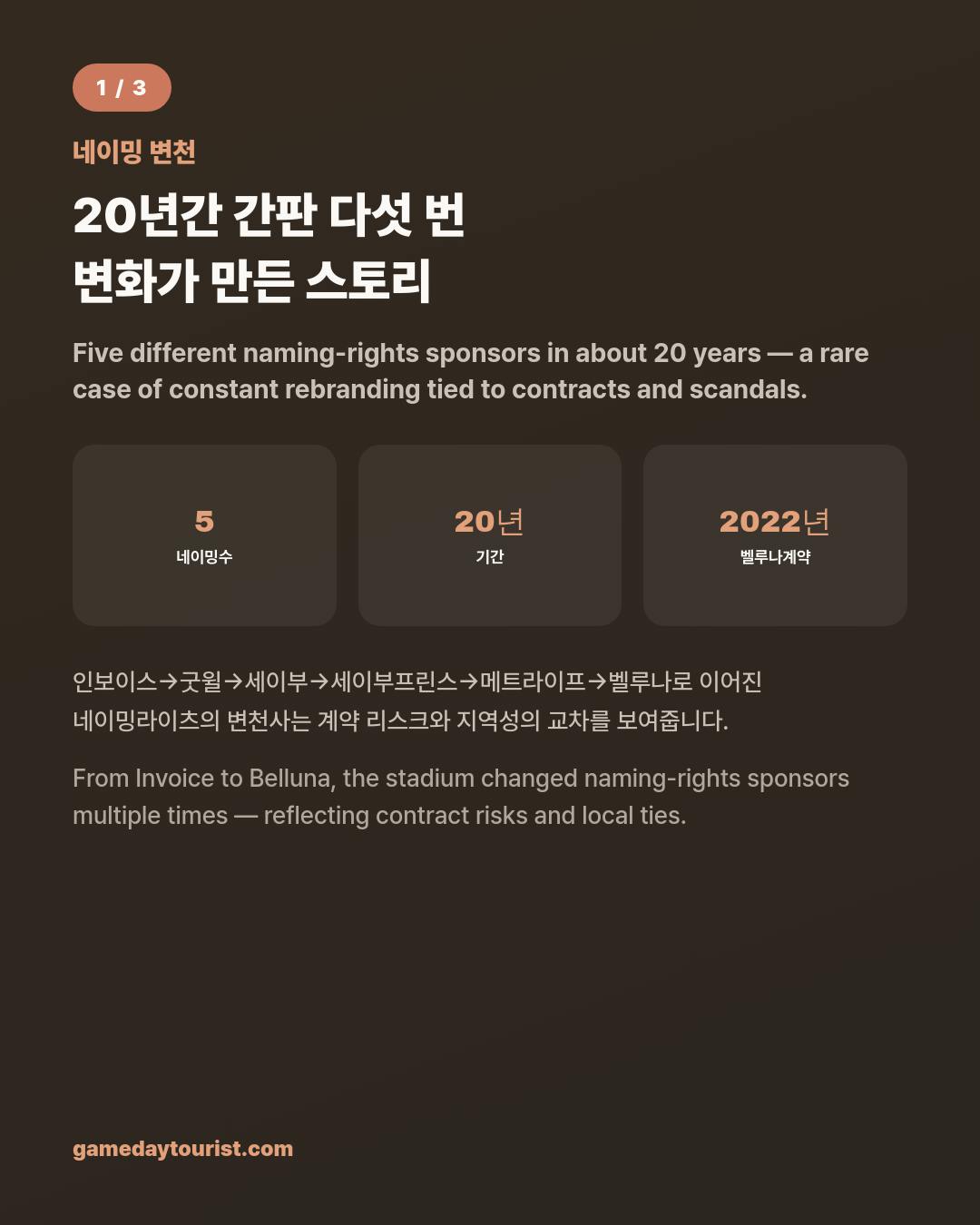
From Invoice to GoodWill to Seibu Prince to MetLife and now Belluna, this is a rare case where a new sign went up every time the naming-rights sponsor changed.
As of when I’m writing this (August 29), Seibu is sitting second in the Pacific League, just five games behind SoftBank, which felt like a good time to take a closer look.
I haven’t visited this ballpark in person — this is a marketer’s-eye benchmarking piece pulled together from official club materials, media coverage, and local fan write-ups.
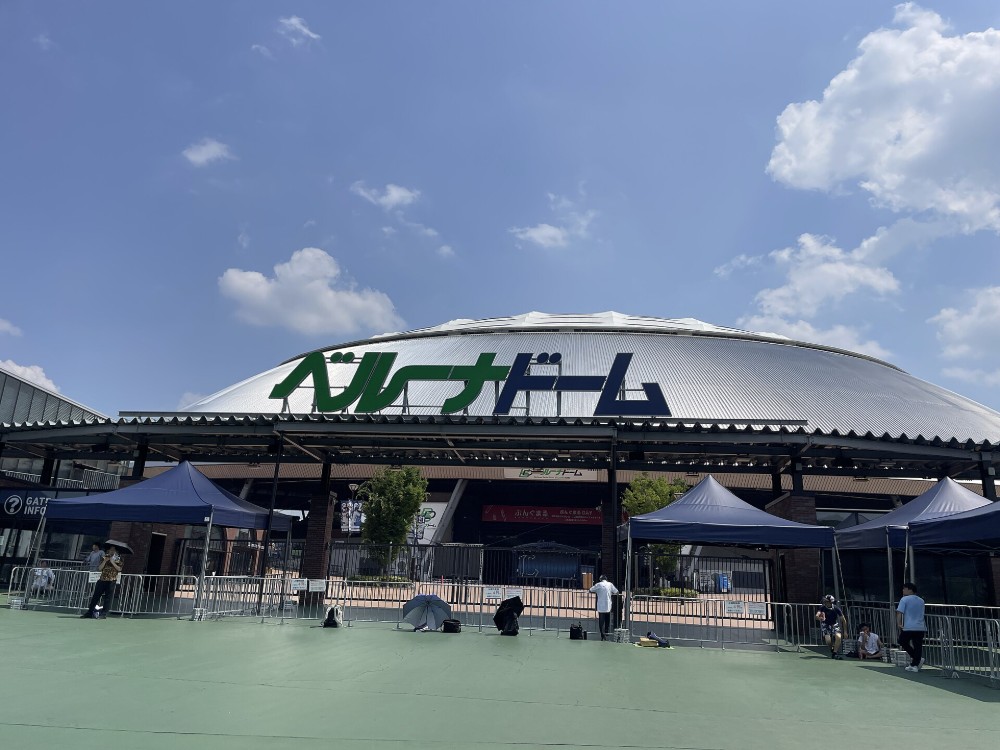
Source: Wikimedia Commons (photo by ウィ貴公子, July 22, 2026) · CC BY-SA 4.0 — Belluna Dome’s main gate exterior
Naming Rights and Ad Inventory
Few ballparks have seen as much drama as this one when it comes to ad inventory (the ad space a club can sell), seating, and naming rights (the marketing term for the right to put a company’s name on a facility).
After the roof construction wrapped up in 1999, it took on the name “Seibu Dome,” and starting in 2005 the club began signing paid naming-rights deals in earnest.
The first sponsor, Invoice, wanted a long-term deal of ten-plus years, but when the Seibu club declined to renew, the relationship ended after just two years — its successor, GoodWill, signed a five-year, roughly ¥2.5 billion deal, only to have to take down the “GoodWill Dome” sign after just one year when a subsidiary’s illegal staffing practices led to a business-suspension order from the Ministry of Health, Labour and Welfare.
After that, the club’s ownership held off on signing a new deal for a while, citing the risk of a sponsor’s image rubbing off on the club, so from 2008 to 2015 the ballpark reverted to the name “Seibu Dome” (per a Wikipedia summary).
From there it went to Seibu Prince (2015-2017), then MetLife (2017-2022, affectionately shortened to “Metrado” by fans), before mail-order company Belluna, headquartered in Ageo, Saitama, bought the naming rights in January 2022 on a five-year deal through February 2027, making it today’s Belluna Dome.
Narrower ad inventory, like jersey-sleeve ads, is also selling briskly.
Starting with the February 2026 spring camp, business-software company Cybozu’s “kintone” logo began appearing on the right sleeve of Seibu’s uniforms — what stood out was that the deal was framed around a shared theme of “growing together with the region.”
Attendance and Tickets
Belluna Dome’s total capacity is 31,552, or 28,104 in its baseball-game seating configuration (as of 2026).
That’s actually on the smaller side among NPB ballparks, several of which seat 40,000-plus.
But turning that “smallness” into a weapon rather than a weakness has been central to Seibu’s recent playbook for drawing fans.
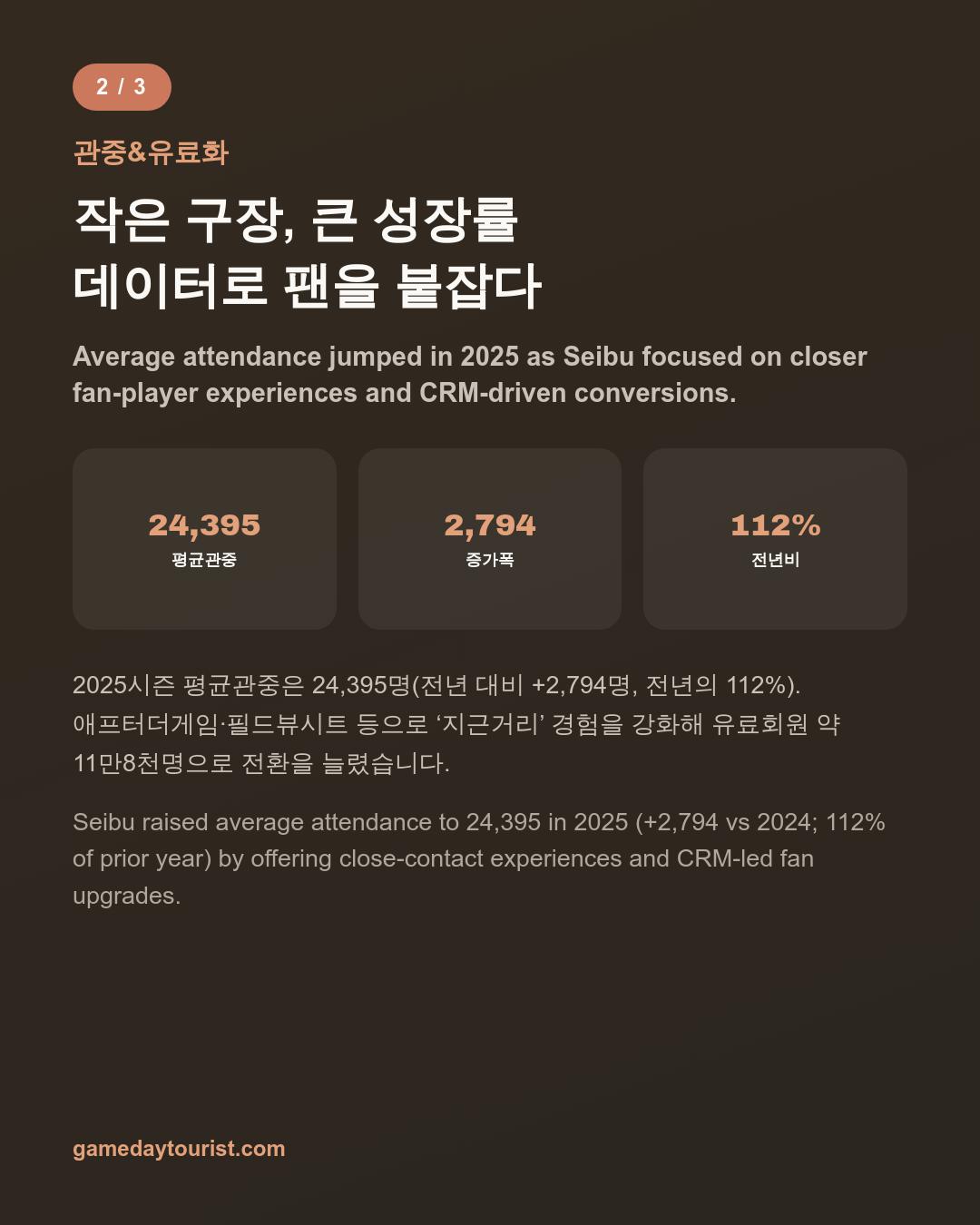
Average 2025-season attendance was 24,395, up 2,794 from 2024’s 21,601 — a 13%-or-so year-over-year jump, the biggest increase of any of the 12 NPB clubs.
According to the club’s PR staff in one interview, it started from a concern that fan-club members skewed away from people in their 20s and 30s, so the club adopted the slogan “overwhelming closeness” and focused on shrinking the physical and emotional distance between players and fans.
That strategy shows up in features like “After the Game” (fans can head onto the field right after the final out and take photos where the players were just standing), “Splash Seats” (a water jet shoots up after a home run or score), and “Field View Seats” (watching the game from player-eye level).
One angle that stood out in particular was the club’s approach to “oshikatsu” culture — the act of actively supporting your favorite idol or player.
Merchandise sales tied to Aiya Nishikawa, a player especially popular with female fans, are said to be up 1,000% year over year.
The club also runs a CRM (customer relationship management) system that segments visit history and demographic data to convert free ticket-holders into paying fan-club members, and as of the end of the 2025 season paid fan-club membership stood at roughly 118,000.
Treating fans as segmented data rather than a mere “attendance count” struck me as something Korean club marketing departments could learn from.
Ticket prices vary widely by seat.
Reserved infield seats run ¥2,300-6,300, reserved outfield seats ¥1,700-5,000, and reserved seats behind the backstop net ¥3,600-7,500 (based on 2026-season adult fan-club member pricing), while the premium Dugout Top Seats climb to ¥12,200-18,900 depending on membership tier.
The July 22, 2026 game against Nippon-Ham actually sold out.
Making the Most of Space, and F&B
Inside the concourse is a dining area called “L’s Gourmet Street,” with roughly 70 stalls and over 1,000 menu items — a scale that ranks among the best of any of the 12 NPB clubs.
Many of the stalls are kitchen-car style, which lets the club flex the menu lineup even mid-season.
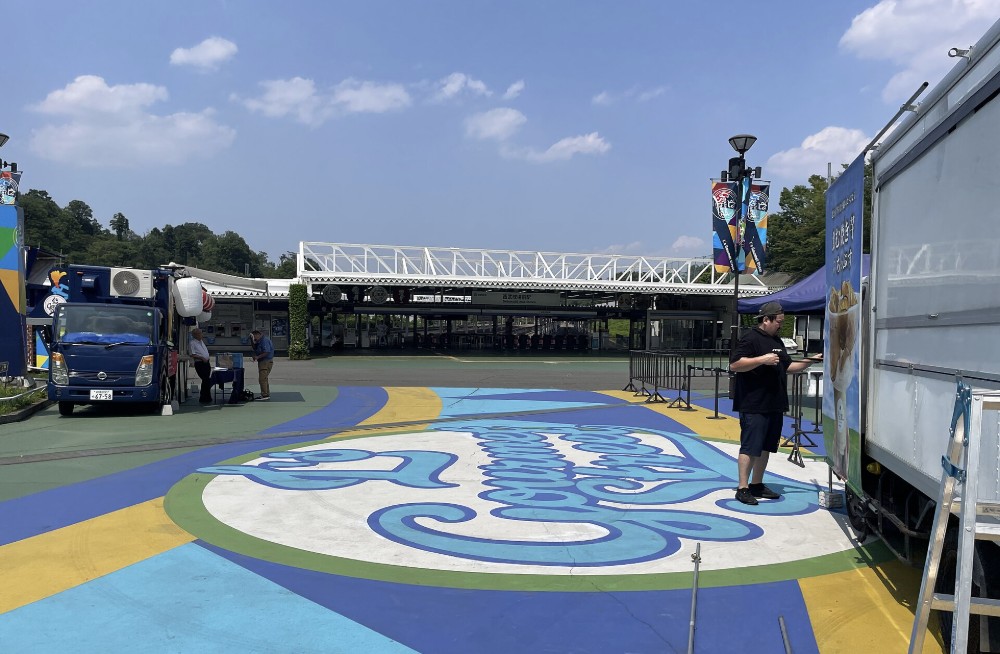
Source: Wikimedia Commons (photo by ウィ貴公子, July 22, 2026) · CC BY-SA 4.0 — L’s Gourmet Street
One local fan-review blogger noted that summer night games can get quite hot when there’s no breeze, and the club seems to have taken that to heart — free ice packs and large misting units are among the heat countermeasures it’s expanded a little more each year.
Adding more F&B stalls is one thing, but paying just as much attention to how comfortably fans actually spend their time there is the kind of detail a marketer notices.
Merchandise and Retail
The team store, “Flags,” is a two-story shop of roughly 600 square meters, built in 2019 on the site of the old main gate as part of the club’s 40th-anniversary project.
Beyond that, sales channels branch out further, from a multi-purpose store in the Omiya area to the in-station convenience store “Tomoni” to an online shop.
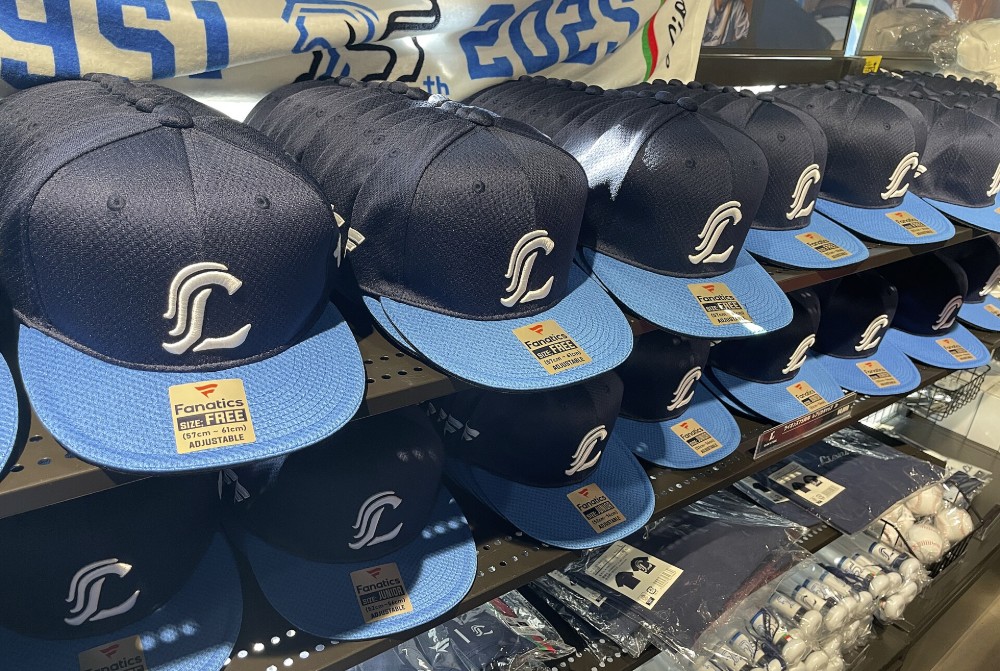
Source: Wikimedia Commons (photo by ウィ貴公子, June 28, 2025) · CC BY-SA 4.0 — A 75th-anniversary replica cap at team store Flags
The cap in the photo is a replica from the club’s 75th-anniversary series.
As with Aiya Nishikawa mentioned earlier, cases where an individual player’s popularity translates directly into merchandise sales are becoming more common, and I could see that showing up in more deliberate decisions about “which player to lead with” at the merch-planning stage.
What Makes the Ballpark: A Roof with No Walls
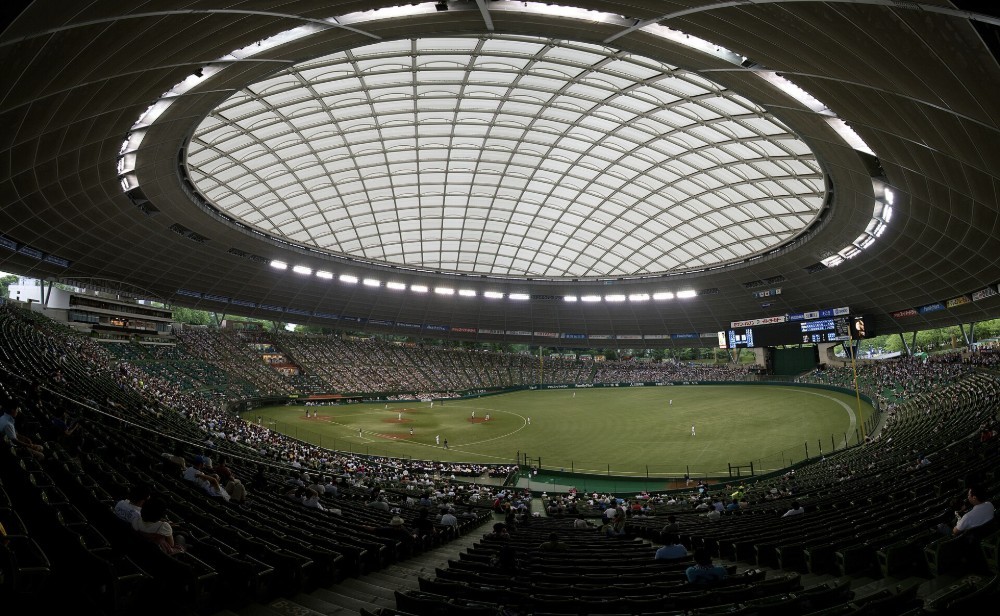
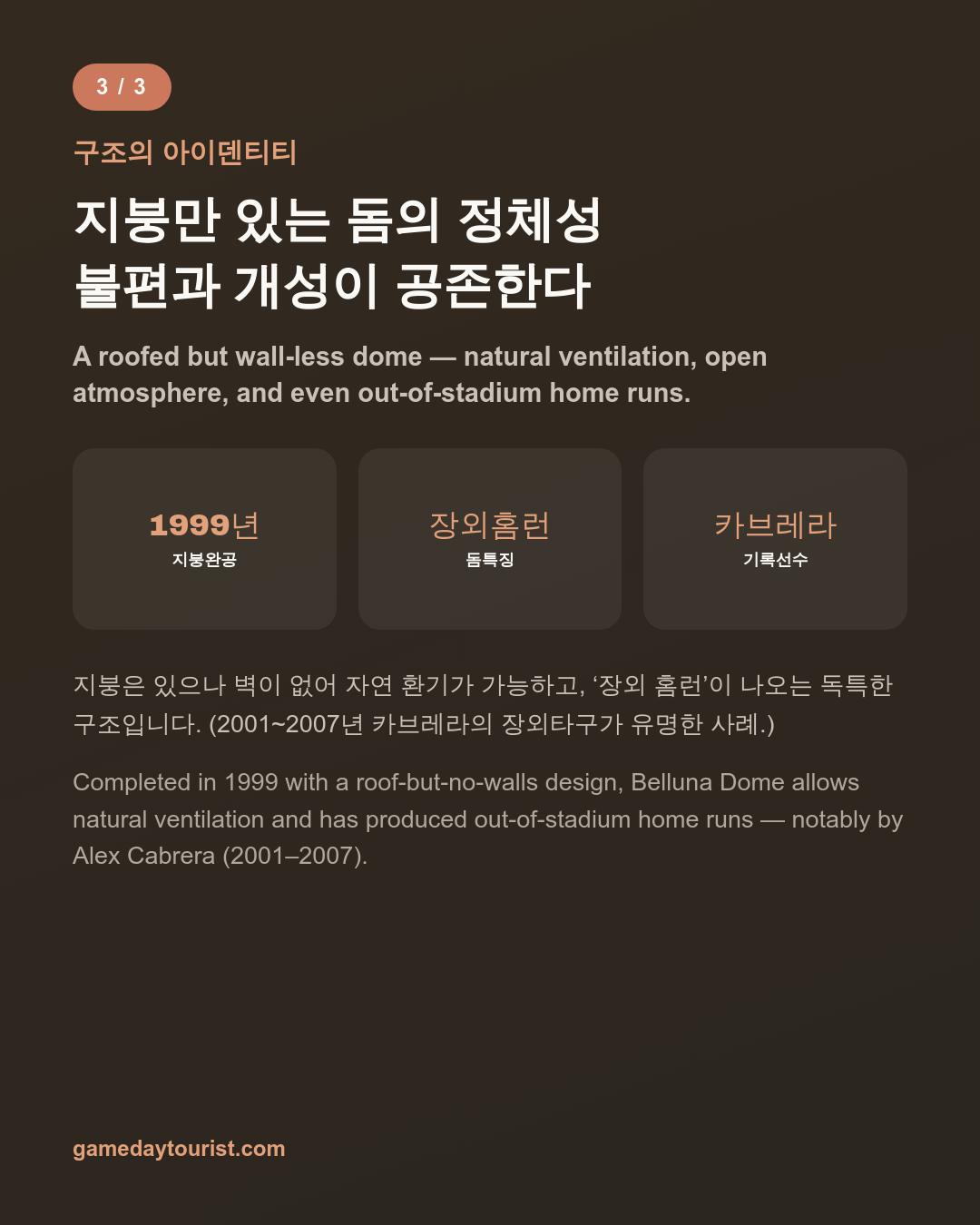
Belluna Dome’s biggest quirk is that it has a roof but no walls.
During the roof construction from 1997 to 1999, the design used columns rising from the top of the stands to support the roof, with no wall built between the roof and the stands — so outside air flows straight through the gap.
That means the ballpark gets natural ventilation without any HVAC system, but it also earned the nickname of the only domed stadium in Japan where a ball can actually leave the park on a home run.
Alex Cabrera, who played for Seibu from 2001 to 2007, famously took advantage of that structure to send balls clear out of the park on more than a few occasions.
As for why it was built without walls, one real-estate trade publication argued that a fully enclosed dome would have triggered far stricter building-code requirements (Japan’s rules on evacuation routes, fire-safety systems, and the like) and a heavier fixed-asset tax bill (an annual Japanese local property tax on a building’s assessed value).
In other words, finishing the project by simply adding a roof to the existing open-air ballpark seems to have come down to a pretty practical calculation.
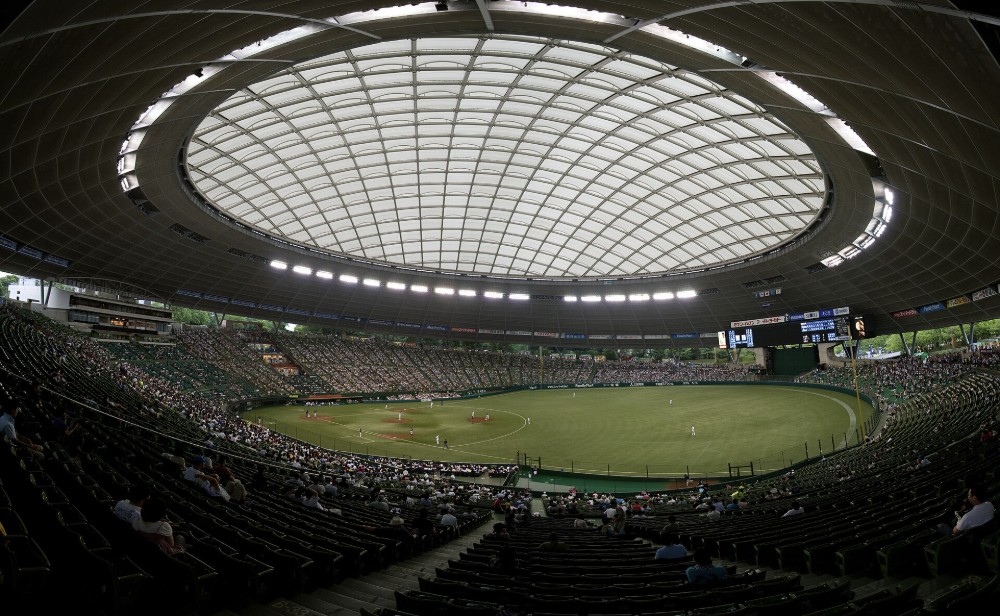
Source: Wikimedia Commons (photo by Spitfireap, 2009) · CC BY 3.0 — the open gap between the roof and stands has stayed unchanged since the dome was completed in 1999
Given its location on the hilly Sayama terrain, fan write-ups often mention chilly spring and fall games and muggy summer nights, and with no walls, rain can blow in as far as the upper stands and thunder sounds just as loud as it would outdoors.
On the flip side, that open structure lets the club permanently run an indoor organ — Belluna Dome is the only one of NPB’s 12 home ballparks with a permanent electric organ providing live music during games.
I found it interesting how discomfort and character come out of the same structure.
The ballpark also has a small, fun tradition of its own.
Back in the open-air days before the roof went up, a Seibu win meant real fireworks fired from a nearby third ballpark, and once the dome was built the celebration moved in front of the backscreen with paper streamers and firecrackers.
Since 2010, though, cost-cutting has replaced the actual fireworks with a fireworks video played on the big screen — a small change, but one that hints at how the club has kept tugging at the rope between fan experience and cost.
Broadcast Rights and Local Economic Impact
On the broadcast side, DAZN distributes every NPB game except those hosted by Hiroshima, at roughly ¥27,600 a year or ¥2,300 a month.
The ballpark’s land and buildings are owned by Seibu Railway, while operations fall to Saitama Seibu Lions Co., Ltd. — the parent company, Seibu Holdings, restructured into a holding-company setup after a 2004 securities-report falsification scandal known as the “Kokudo affair.”
On community ties, the club started with a partnership agreement with Tokorozawa City in 2015, and today all 63 municipalities across Saitama Prefecture have signed on as “Lions Friendly Cities,” working with the club on sports promotion, youth development, and regional revitalization.
At the summer 2026 Aoi Fes, some 2,000 Tokorozawa city employees took part wearing limited-edition uniforms.
The ballpark itself also keeps up off-season utilization by hosting major concerts beyond baseball — SUPER JUNIOR, EXO, and Stray Kids among them — and the club’s 2017 acquisition of Yokohama Arena, known for its concert-booking strength, looks like an extension of that same multi-purpose-venue strategy.
A Comparison With the KBO and K League
Most Korean ballpark names come from the parent company that owns the club slapping its own brand on the venue.
Think Hanwha Eagles Park or Samsung Lions Park.
The closest domestic parallel to a third party paying market rate purely for naming rights, with no ownership stake in the club, is actually found in a team name rather than a venue — the Kiwoom Heroes, previously named for Nexen Tire and now Kiwoom Securities.
Belluna Dome’s history — five sponsor changes, one of which didn’t even make it through its full contract term — is a reminder of just how much this market actually runs on supply and demand.
Structurally, too, there’s nothing quite like this hybrid dome in Korea.
Gocheok Sky Dome, Korea’s only domed ballpark, is fully enclosed and runs HVAC, while Belluna Dome went with the unusual compromise of a “roof-only dome,” a practical call made to sidestep taxes and building regulations.
For Korean clubs planning a new ballpark, this case is worth a look for whether comfortable viewing is achievable without going fully enclosed.
Seibu’s playbook — oshikatsu-style marketing and CRM-driven conversion to paid membership — echoes an approach the KT Wiz built from the club’s founding and other Korean clubs have since studied as a benchmark.
Managing an individual player’s fandom down to specific merchandise sales figures is unusual, and I was struck by the idea of designing the touchpoint between free and paid members entirely around data.
Whatever the name on the marquee, and however much the lack of walls makes for a rough summer, this research reconfirmed that growing attendance ultimately comes down to closing the distance between players and fans.
Seibu happens to be trending upward in the standings right now, too, so it’ll be worth watching whether that momentum carries through the rest of the season.
Leave a Reply