Contents · About 3 min read
📱 View as card news
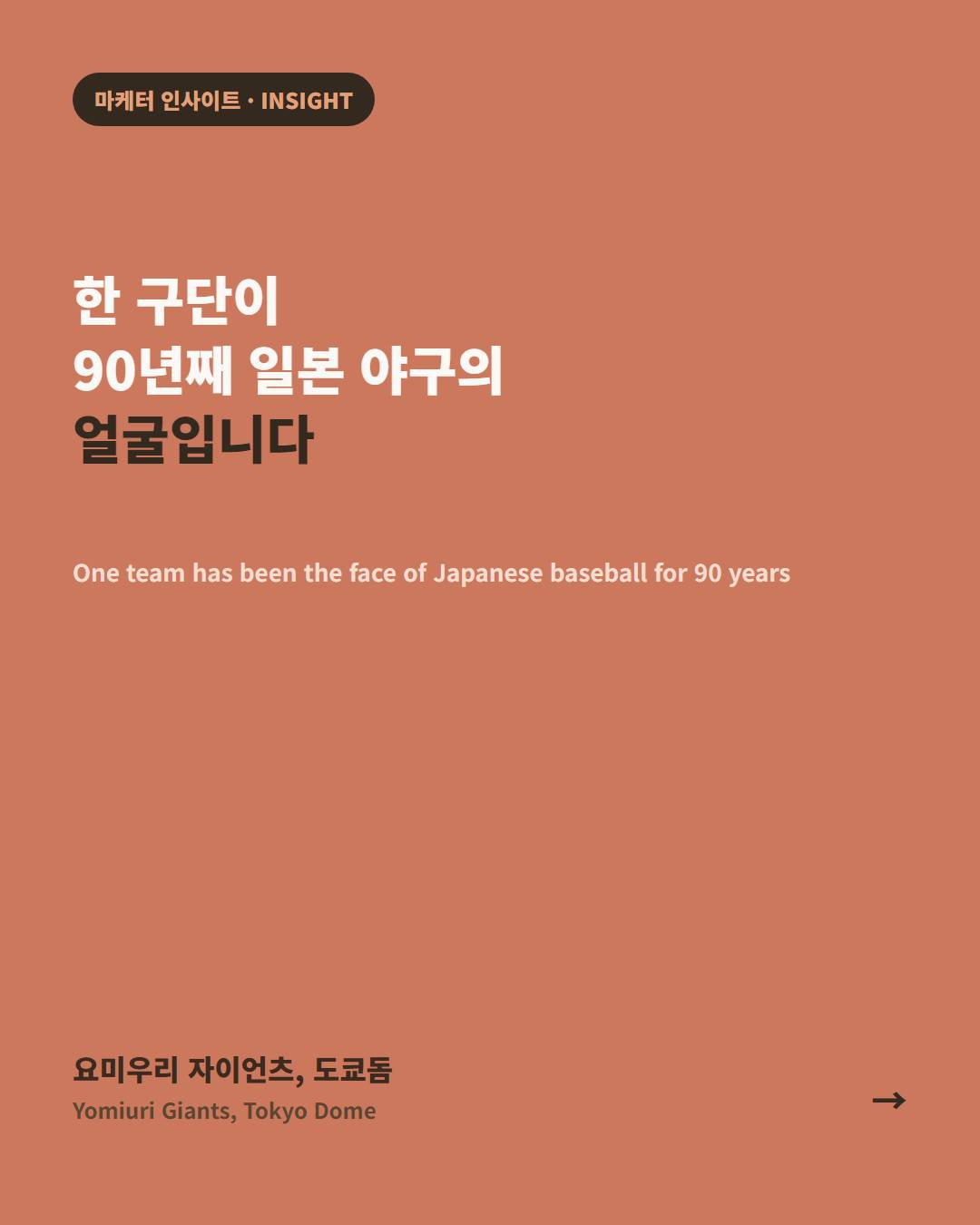
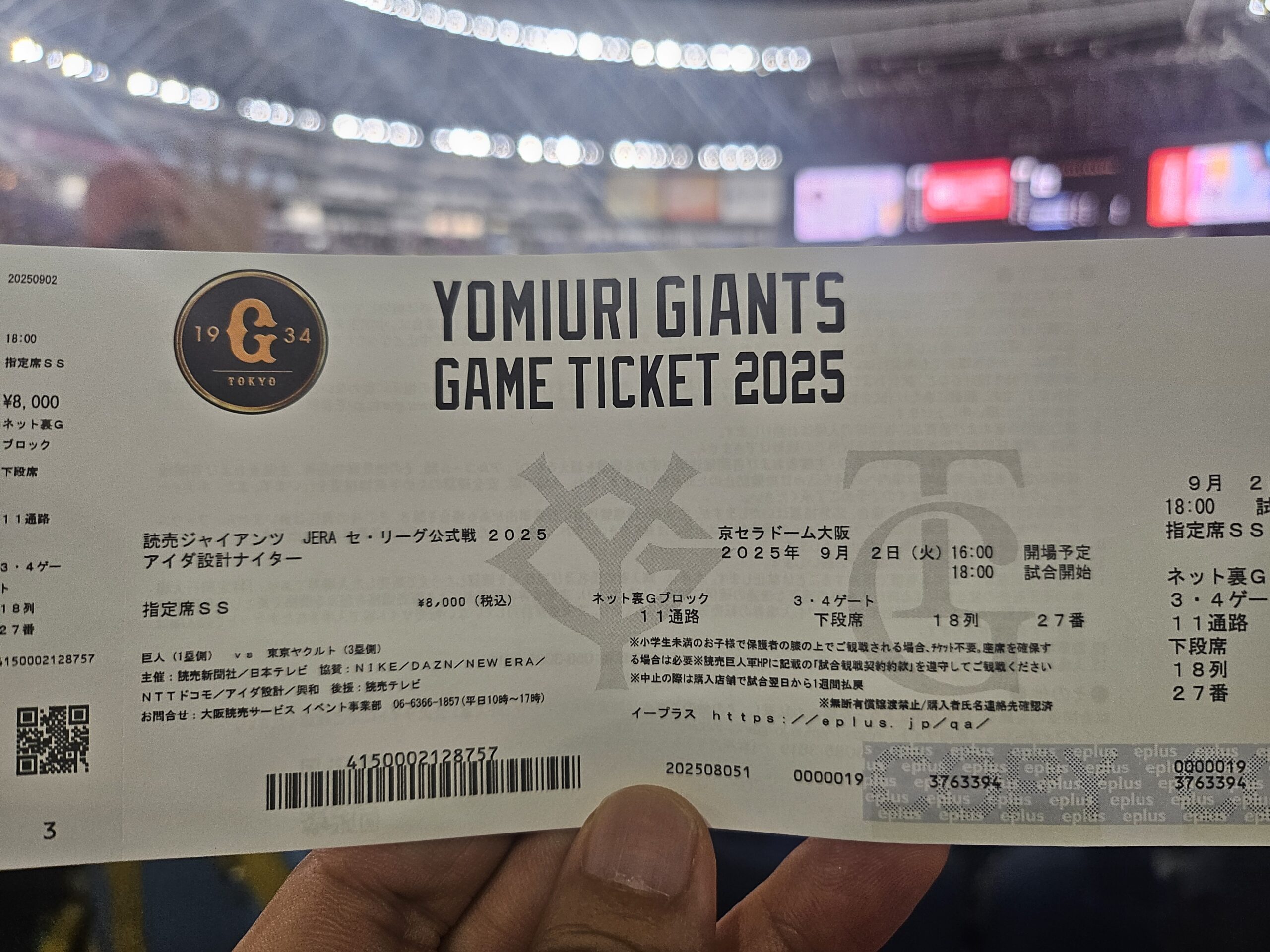
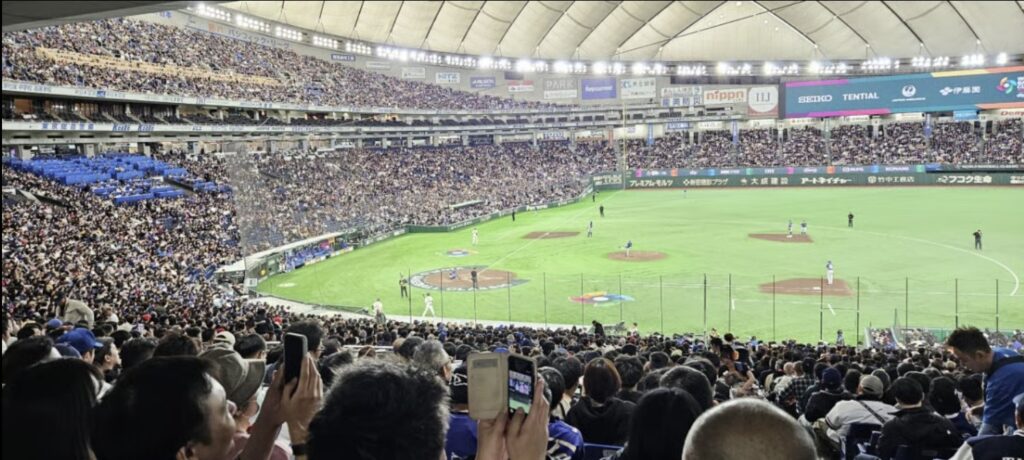
On a business trip to Japan I went to see a Yomiuri Giants game at the Tokyo Dome. Walking around the ballpark I had only heard of by name, I began to understand why this place is called the symbol of Japanese baseball.
The Yomiuri Giants — The Weight of 90 Years
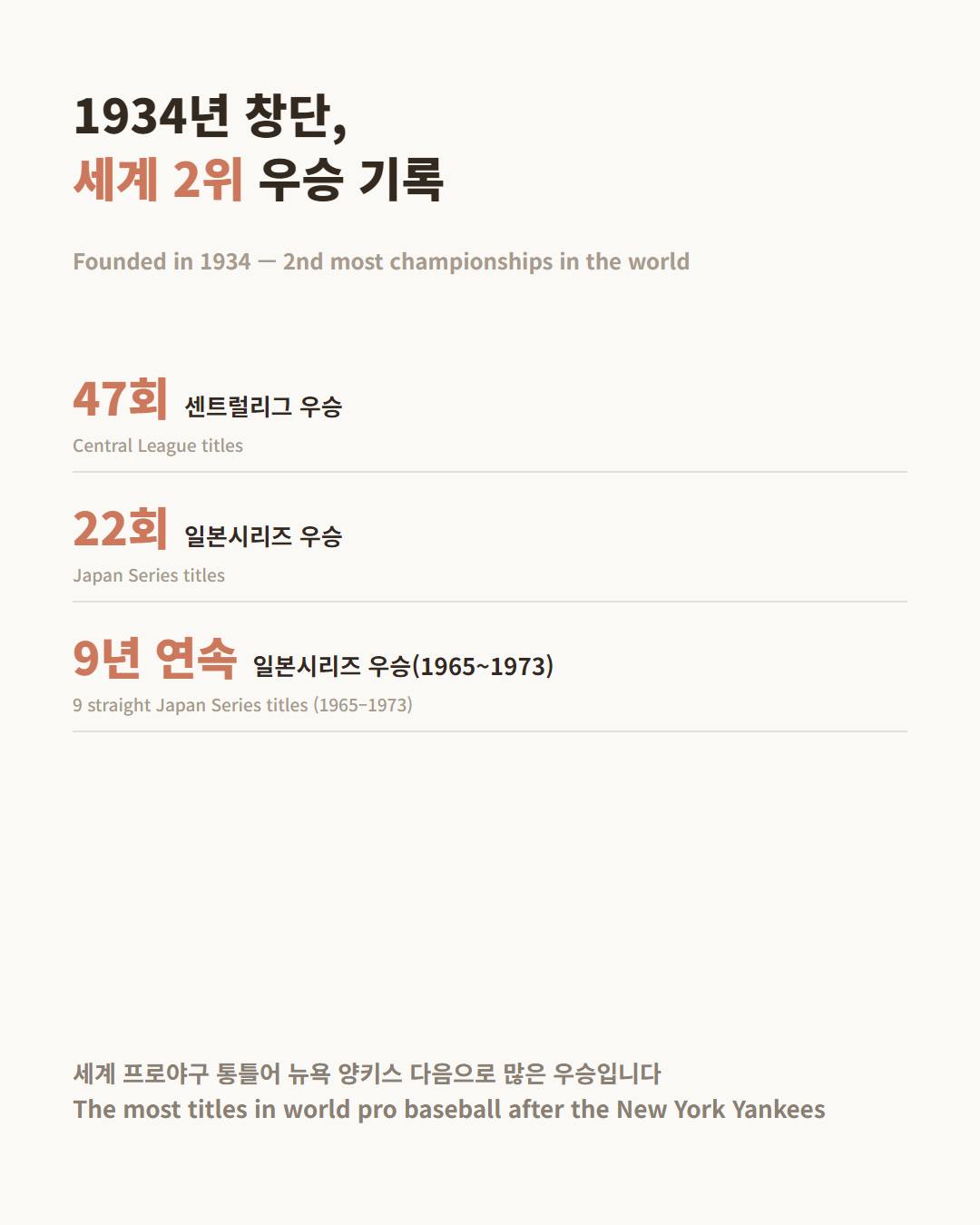
The Yomiuri Giants were founded in 1934 and are the oldest of the 12 teams in Nippon Professional Baseball. With 47 Central League titles and 22 Japan Series championships, they have the second-most championships in professional baseball worldwide after the New York Yankees. From 1965 to 1973 they also recorded nine consecutive Japan Series championships — a streak rarely seen in any country’s professional sports. The fact that a single club has served as the face of a country’s baseball for over 90 years felt quite weighty to someone in the same industry.
Tokyo Dome — A WBC Stage and Asia’s Baseball Shrine
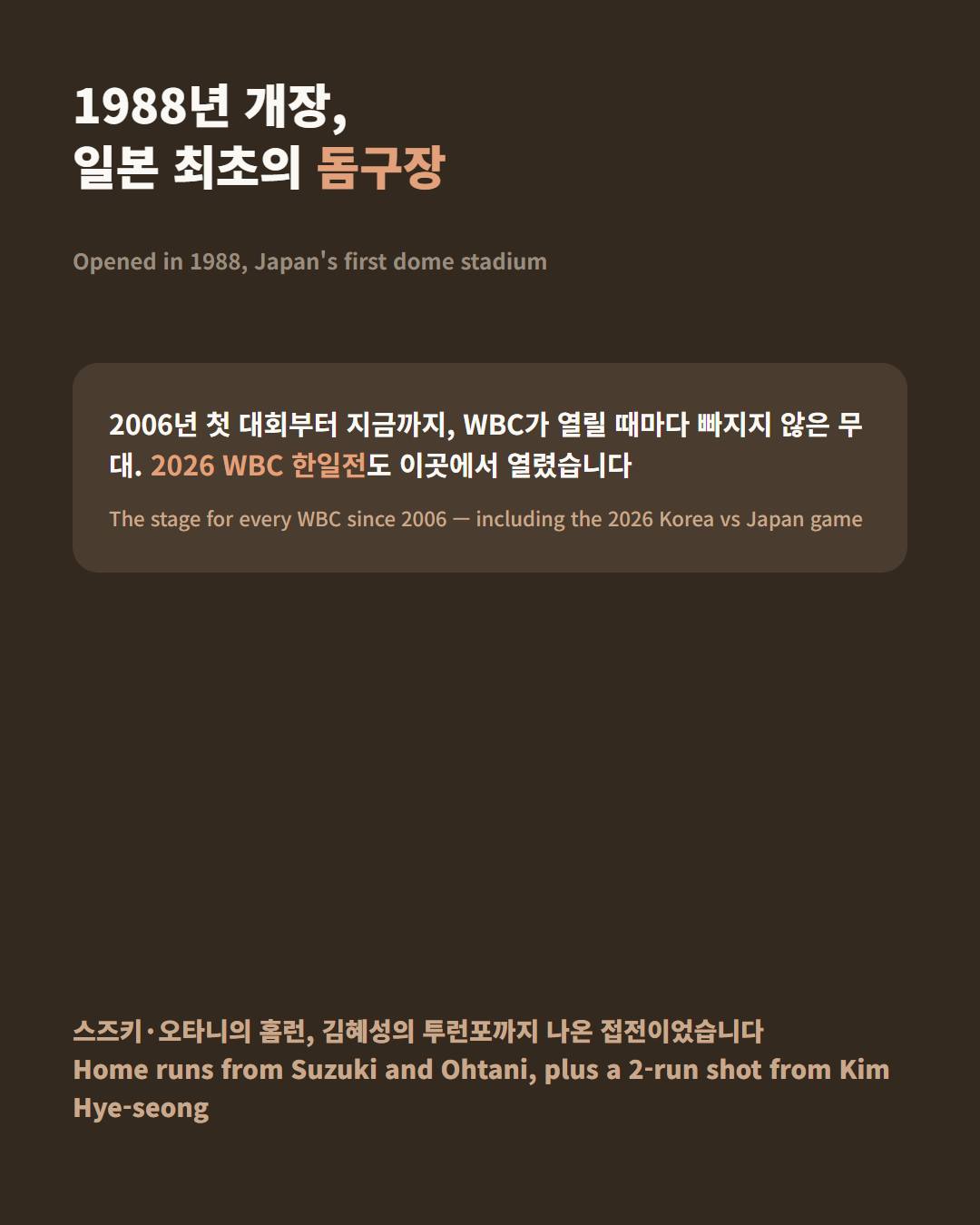
The Tokyo Dome, which opened in 1988 as Japan’s first domed stadium, is still called the heart of Japanese baseball. What stands out particularly is its connection to international tournaments. Since the first World Baseball Classic (WBC) in 2006, the Tokyo Dome has regularly hosted games whenever the tournament is held, and at this year’s 2026 WBC a matchup between Korea and Japan was played here. It was a close game featuring home runs by Suzuki and Ohtani, and a two-run shot by Kim Hye-seong. As moments like these accumulate each tournament, the Tokyo Dome has become a stadium engraved with special significance not only for Japanese fans but for baseball fans across Asia.
Tokyo Dome City — A Content Hub That Draws Crowds Even Without a Game
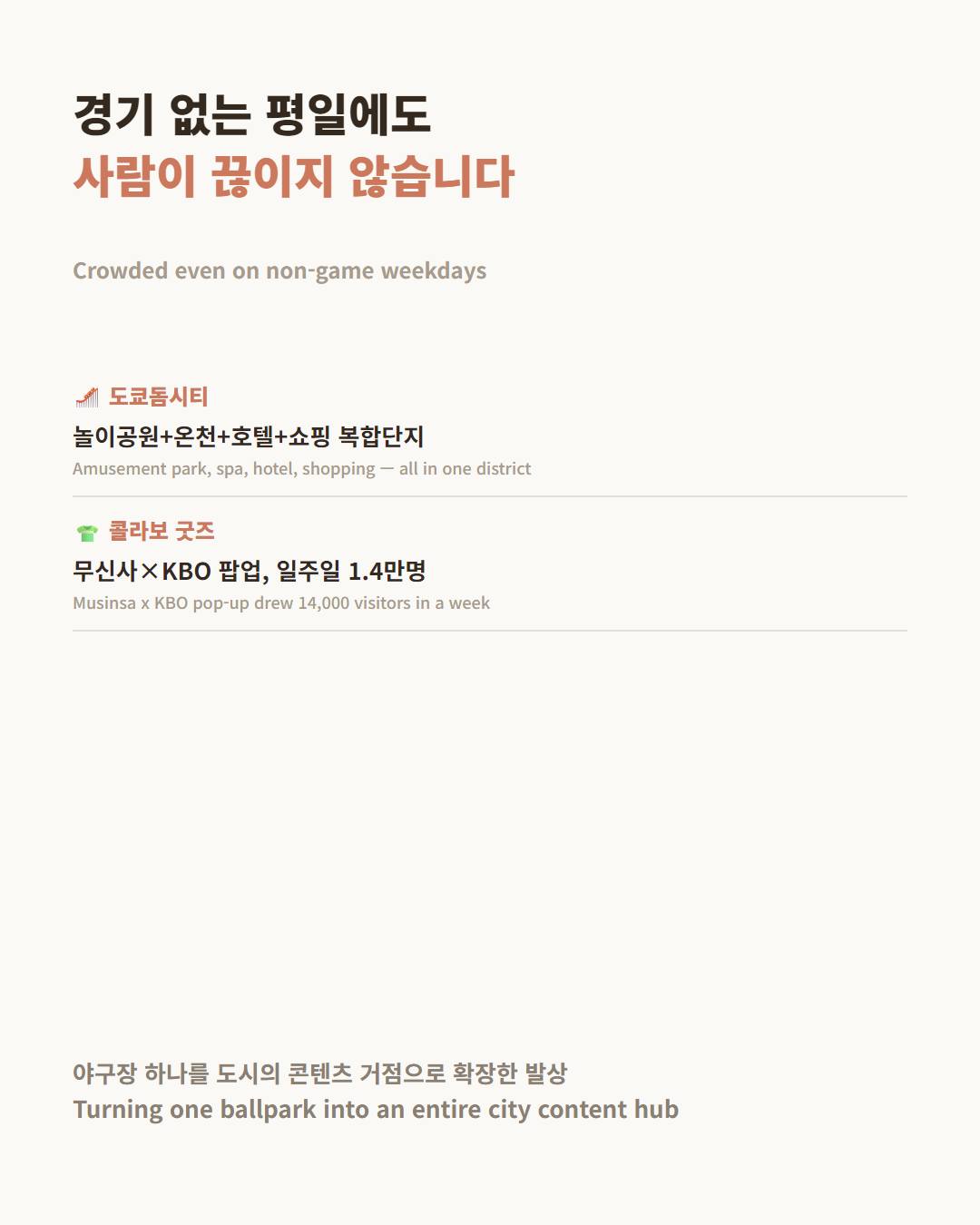
The area around the Tokyo Dome is developed as a mixed entertainment district called Tokyo Dome City. With an amusement park, the LaQua spa hot springs facility, hotels, and shopping all gathered in one zone, people visit the area even on weekdays when there are no games. Compared with domestic ballparks, which typically have no reason to draw visitors on non-game days, I was impressed by the idea of expanding a stadium into a city’s content hub.
Collaboration Merchandise — Revenue Proven by Data
The merchandise shop was also impressive. The official Yomiuri store is usually crowded, and reactions are especially strong whenever collaboration products with other brands or characters are released. A similar trend is already appearing domestically. Last year, the pop-up store Musinsa held with the KBO in Seongsu-dong attracted some 14,000 visitors in a week, and ballpark edition T-shirts made for each stadium sold out for several clubs. As collaboration products have been shown by the data to materially help club revenues, domestic teams now have plenty of reason to pursue collaborations more actively.
In the end, what I saw at the Tokyo Dome was not just an old stadium but a brand created by 90 years of history together with the whole city.
Leave a Reply