Contents · About 7 min read
📱 View as card news
There’s a bit of news out of Munich this weekend.
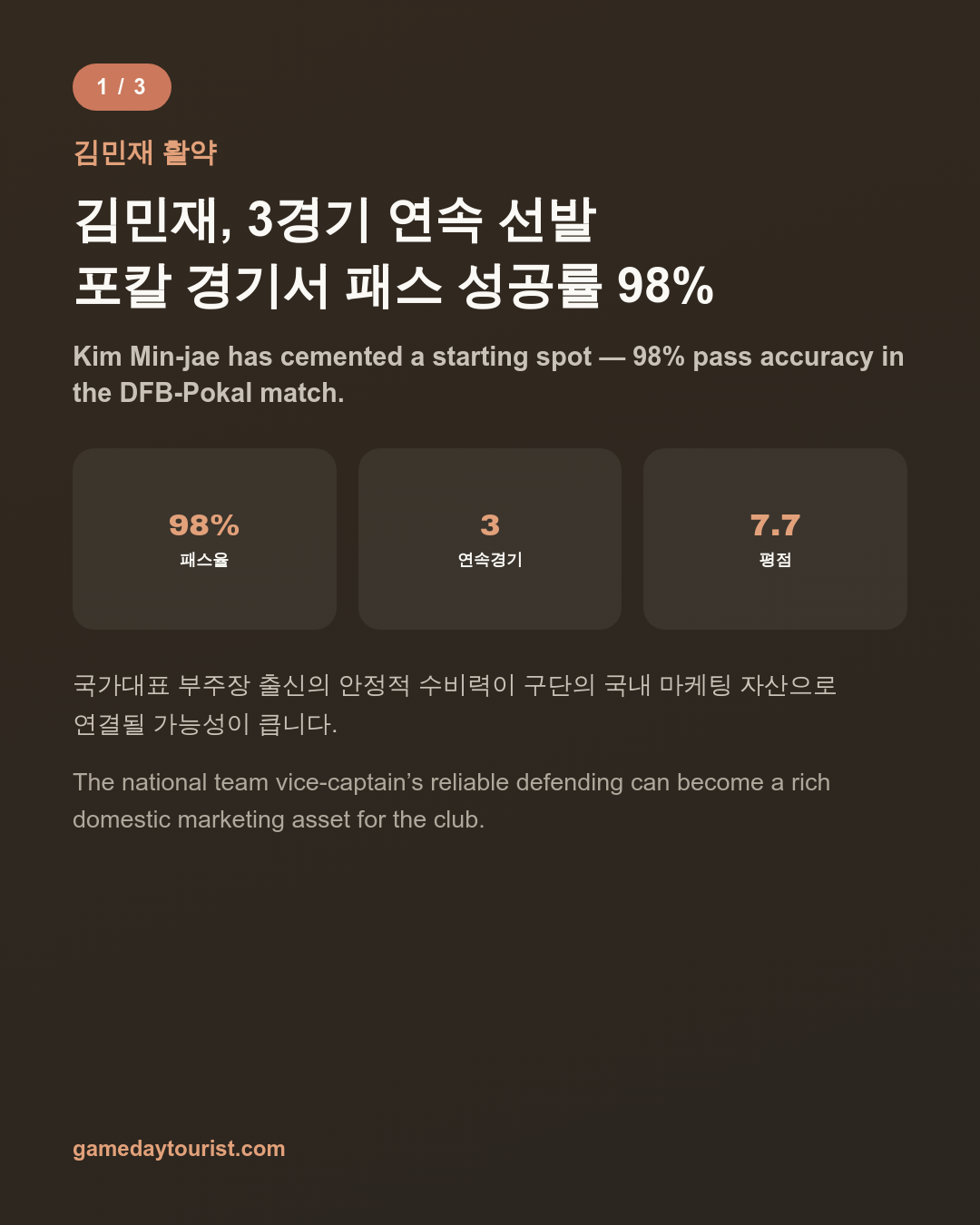
According to reports on September 3, Kim Min-jae posted a 98% pass completion rate in Bayern Munich’s DFB-Pokal match and made his third straight start.
A player who was pegged as the third-choice center back option early in the season has apparently locked down a starting spot.
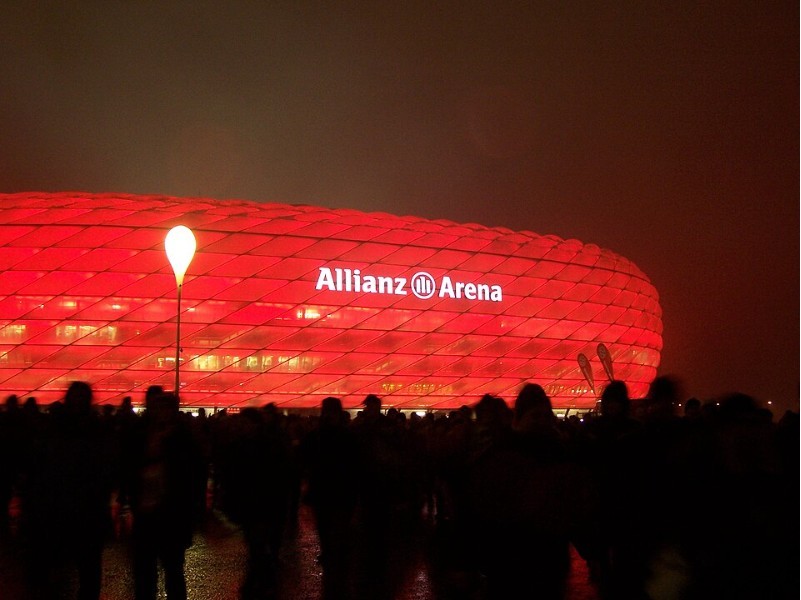
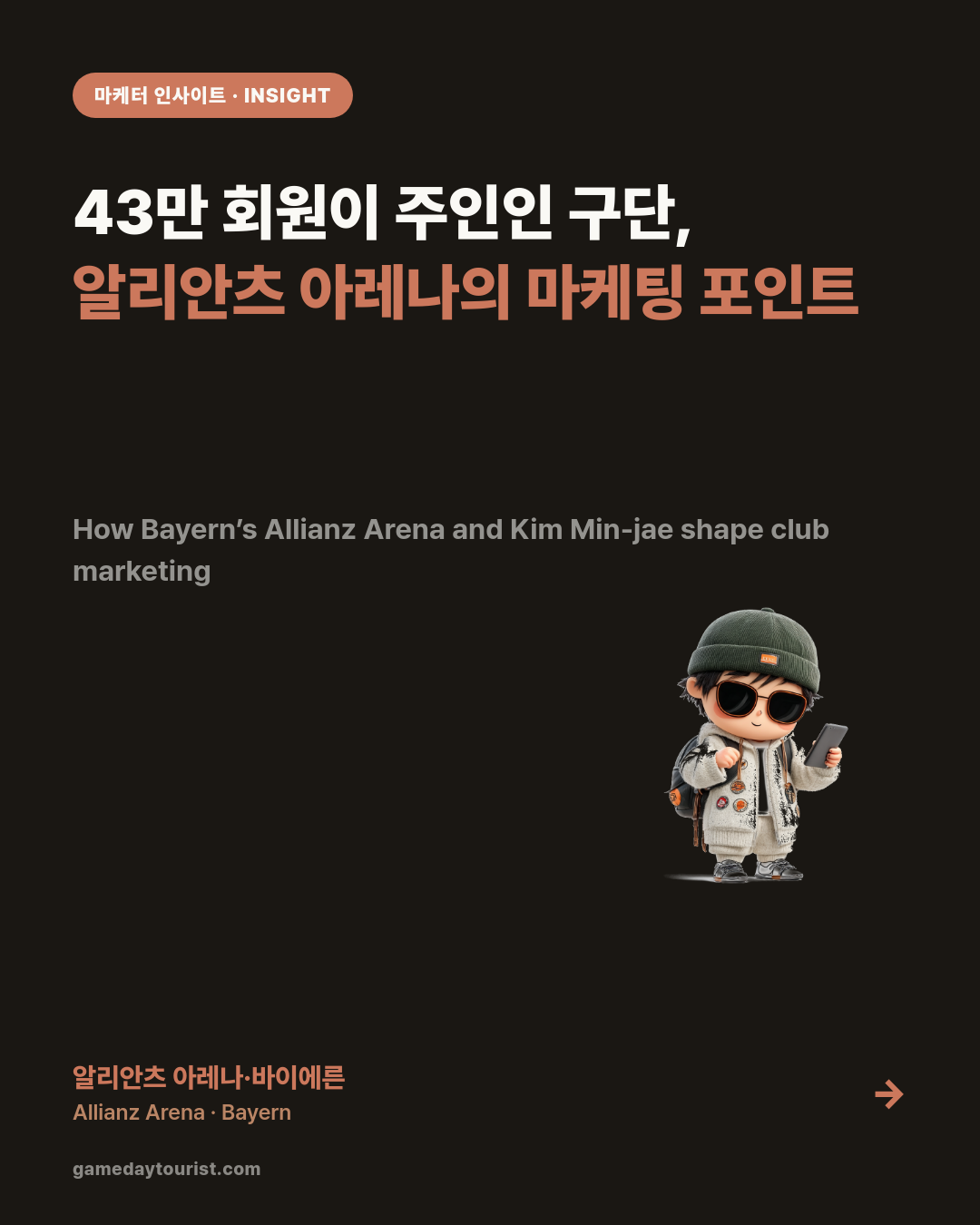
Since this is also the first time I’m covering the Bundesliga on this blog, I picked Bayern Munich and their home ground, Allianz Arena, as the opening subject, partly because of Kim.
I haven’t been to this stadium myself, so as always I’m working from official materials, local reporting, and visitor reviews, looked at through a marketing lens.
Munich-based outlet tz called Kim one of the standout signings of preseason, reportedly describing him as “indispensable” for the club, according to Etoday.
A player expected to be little more than a backup early on has started three straight matches under manager Vincent Kompany, and in the 4-1 Pokal rout reported on September 3, he posted a 98% pass completion rate with a 7.7 match rating, according to Money Today.
Seeing a player who serves as vice-captain of the Korean national team earn this level of trust at club level, it struck me as a marketer that there’s only going to be more marketing material built around him going forward.
Source: Wikimedia Commons (OdinFK, 2012) · License: CC BY-SA 3.0
Source: Wikimedia Commons (Ungry Young Man, 2017) · License: CC BY 2.0
Attendance and Tickets
Bayern Munich is a club best introduced by its membership numbers before anything else about the football side.
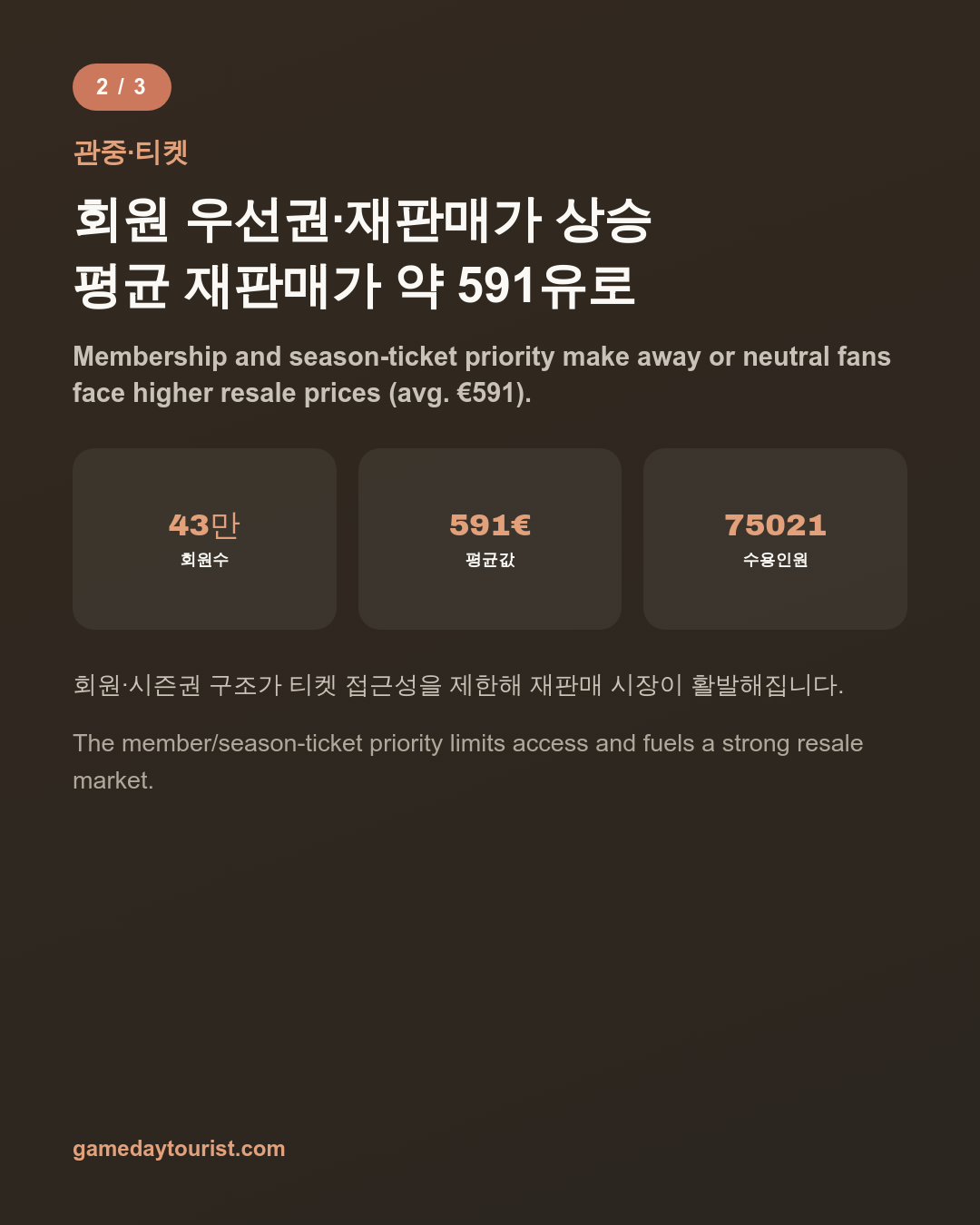
Per the club’s official page, membership stood at 432,500 as of 2026, making it the sports club with the most members in the world.
What I found interesting is how membership numbers are assigned: they go out in order of joining, so a lower number means a longer-tenured member.
According to material the club released to mark passing 300,000 members in 2023, member number 1 currently belongs to someone who joined back in 1939, making it a membership roll that stretches back nearly 90 years.
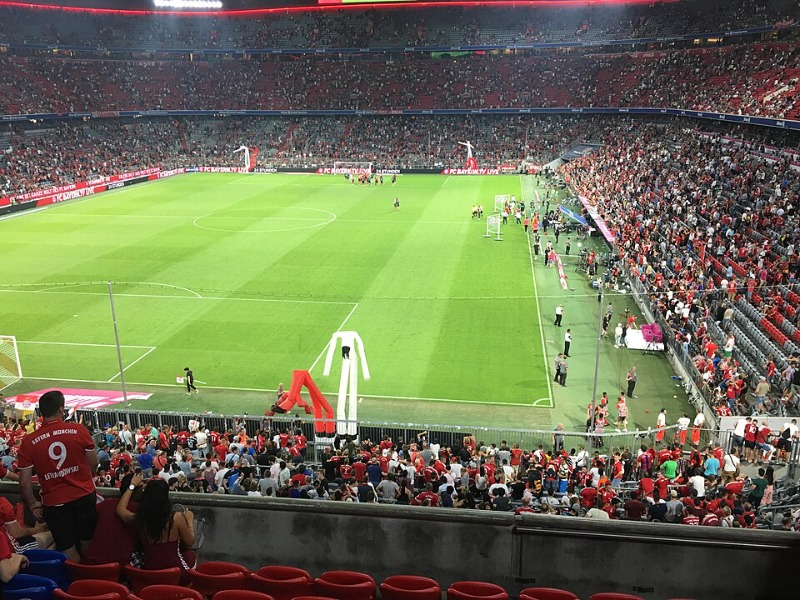
Allianz Arena’s Bundesliga match capacity is 75,021, made up of 57,343 seats plus 13,794 standing places (per Allianz’s own partnership materials).
For international matches, the standing sections convert entirely to seating, which lowers total capacity somewhat.
Tickets aren’t easy to come by either — among traveling fans doing European away-day football trips, it’s a common complaint that getting hold of tickets here as a neutral or away supporter has gotten harder every season (per one matchday guide).
That’s largely because priority goes to members and season-ticket holders, and on resale platforms where prices run above face value, one survey put the average ticket price at around €591, roughly ₩1.11 million (per SeatPick pricing data).
Source: Wikimedia Commons (Povysil.martin, 2018) · License: CC BY-SA 4.0
Stadium Tours and the Museum — Making Use of Space
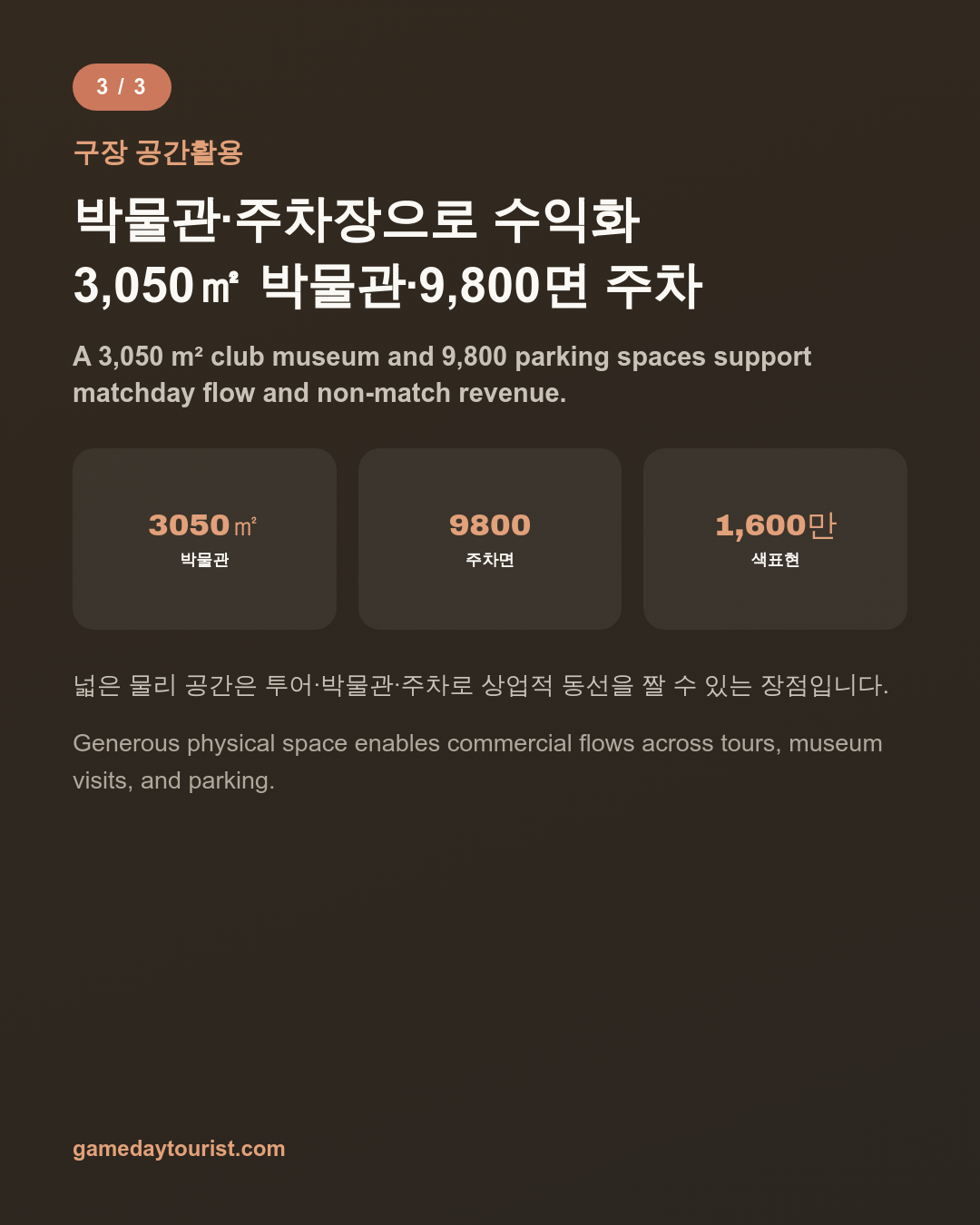
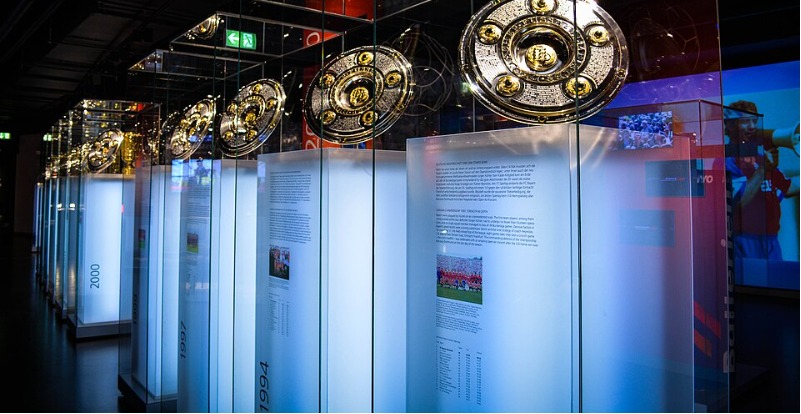
Allianz Arena houses a 3,050-square-meter club museum, reportedly the largest football club museum in Germany (per Allianz’s materials).
Visitor reviews generally say one to two hours is plenty to see it all, and several noted that security checks and crowd control feel light enough to make it a relaxed visit even on non-matchdays (per Tripadvisor reviews).
The parking lot is sizeable too, at 9,800 spaces reportedly the largest of any European stadium, and as a marketer, that kind of buffer space for designing matchday visitor flow is honestly a little enviable.
Source: Wikimedia Commons (Carla Wosniak, 2013) · License: CC BY 2.0
Merchandise and Ad Inventory
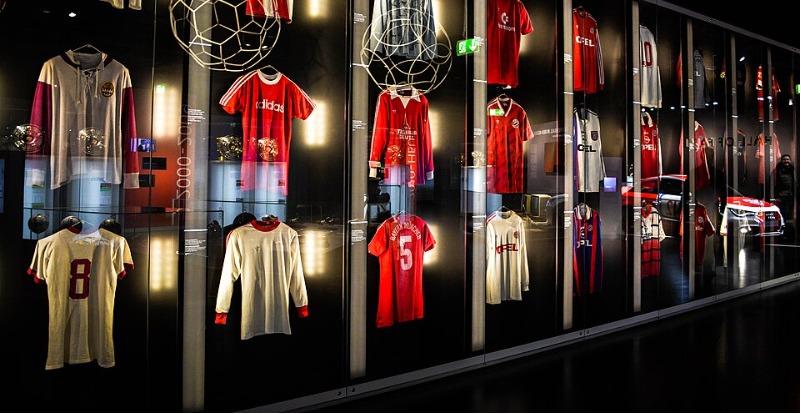
By merchandise revenue, Bayern Munich ranks third in Europe for jersey and merchandise sales, behind only Real Madrid and FC Barcelona (per SalaryLeaks research).
Commercial revenue for the 2024-25 season came to €461 million, and total revenue hit €978.3 million, both club records (per Statista figures).
The main jersey sponsor is Deutsche Telekom, and a relationship dating back to 2002 was recently extended through 2032, with the annual sponsorship fee jumping from €50 million to €65 million (per SportsPro reporting).
The club hasn’t stopped there — it has since brought Google’s Gemini and Pixel into its ad inventory as an AI chatbot and smartphone-brand partner, and signed a new deal with Chinese solar company LONGi during an Asia tour, continuing to widen its sponsor portfolio.
Source: Wikimedia Commons (Carla Wosniak, 2013) · License: CC BY 2.0
Naming Rights and Ownership Structure
What really sets this club apart is how its naming rights and ownership structure are tied together.
Allianz bought the naming rights (the right to put a company’s name on a facility) back when the stadium opened in 2005, alongside financing roughly €340 million of the construction cost, and in 2014 it joined Adidas and Audi in each taking an 8.33% stake, together holding 25% of the club.
Allianz is reported to have paid €110 million for its share at the time (per Allianz’s materials).
The remaining 75% still belongs to the membership organization, FC Bayern München e.V., which is also how the club satisfies Germany’s distinctive 50+1 rule (a regulation requiring the membership body to hold a majority of club equity and voting rights).
In 2023, the naming rights deal was extended again through 2033, reportedly worth €13 million a year over ten years, or €130 million total (per SportsPro reporting).
Broadcast Rights and Regional Economic Impact
Behind all these commercial numbers is a 2025-26 season that also delivered on the pitch.
Under manager Vincent Kompany, the team scored a league-high 122 goals and claimed its 35th Bundesliga title with 89 points, losing just once all league season — away at Augsburg in January — and completing a double alongside the DFB-Pokal (per the Bundesliga’s official season recap).
The Bundesliga’s overall broadcast rights were freshly negotiated at €4.484 billion over four years from 2025-26 through 2028-29, or €1.121 billion per season.
Sky carries individual Friday and Saturday matches, DAZN handles Sunday matches and Saturday highlights, and Sat.1 airs free-to-air coverage such as the opening match, under this arrangement (per the DFL’s official announcement).
Separately from that broadcast revenue, a study has also looked at the club’s impact on the regional economy, finding that it generates about €4.5 billion a year in economic impact for the city of Munich and the state of Bavaria.
That breaks down to roughly €256 million from business transacted with local companies, €223 million in employment impact, and around €198 million in matchday spending at hotels and restaurants (per related reporting).
The Stadium’s Signature Feature
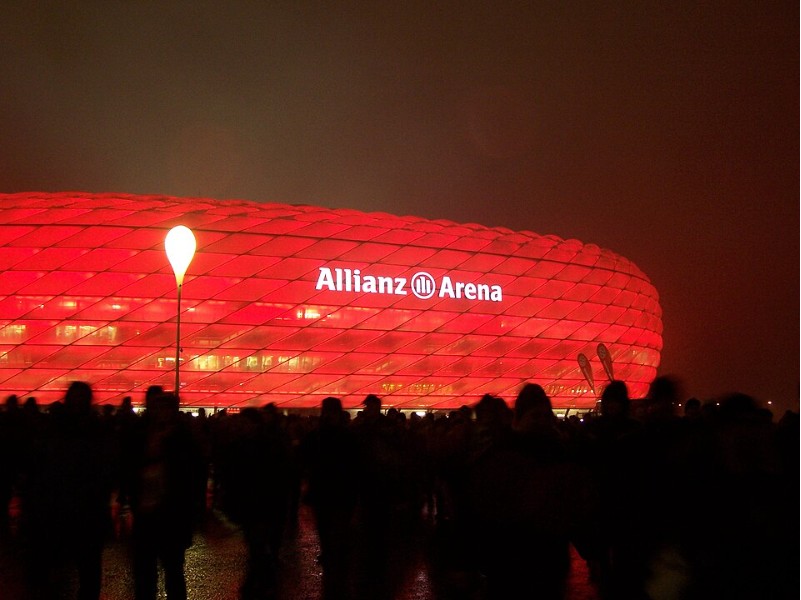
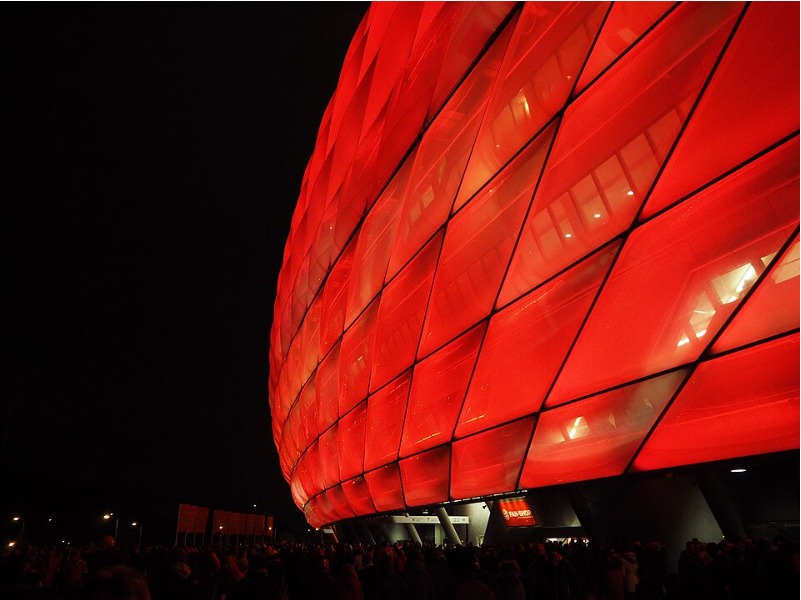
The first thing that comes to mind with Allianz Arena is its exterior, which changes color at night.
Some 2,784 diamond-shaped inflatable ETFE panels wrap the exterior, and a full LED lighting retrofit in 2015 gave it the ability to display 16 million different colors.
Energy use also dropped by around 60% in the process, making it a fairly practical upgrade for something so flashy-looking (per a tfcstadiums.com analysis).
The exterior lights up in different colors even on non-matchdays: purple for World Disability Day, blue during UNICEF campaigns, and rainbow colors during Pride events (per Allianz’s materials).
It stood out to me that a commercial asset is also being used to carry social messages.
The standing-room south stand is also known by the nickname “Südkurve” or “Stern des Südens” (Star of the South), a name that has become established enough among fans to refer to the whole club, not just the stand (per a matchday guide blog).
A Comparison With the KBO and K League
Most Korean pro clubs are named after whichever parent company owns them, and that branding gets carried straight into the stadium name too (think Daegu Samsung Lions Park, Incheon SSG Landers Field, or Daejeon Hanwha Life Eagles Park).
Allianz is different in that sense — even though it’s financially tied to the Munich club, it’s still a separate company that bought the naming rights at market price.
What’s more interesting to me is the ownership structure itself.
Most Korean clubs are essentially wholly owned by a single parent company, while Bayern Munich runs on a structure where the membership organization holds 75% and only the remaining 25% is split among three companies.
More than 430,000 members are, at least on paper, the club’s owners, and yet sharp commercial moves — like the Deutsche Telekom renewal or the Google partnership — keep happening on top of that structure, which I found genuinely impressive as a marketer.
It’s another case, via Kim Min-jae, of how one player’s form on the pitch can turn directly into a club’s commercial asset.
This was my first time covering the Bundesliga, and I plan to work through other clubs in the league one at a time going forward.
Leave a Reply