Contents · About 5 min read
📱 View as card news
When I heard last November that the SSG Landers had signed pitcher Shota Takeda after he’d been released, I got curious about which club he’d been playing for.
Takeda joined the Fukuoka SoftBank Hawks as the No. 1 draft pick in 2011 and went on to win 66 games over his NPB career, but after elbow surgery in 2024 he returned this year, posted a modest minor-league record (1-2, 4.43 ERA), and was released at season’s end — landing with SSG through the “Asia Quota” system that the KBO introduced this year.
Because of one player moving to the Korean league, I had a reason to benchmark, from a Korean marketer’s perspective, the place he was leaving behind — Fukuoka’s dome.
I’ve never been there myself, but reading through official materials and visitor reviews turned up quite a few points worth comparing to Korean domes.
Attendance and Tickets — How a 40,000-Seat Dome Hits 2 Million Fans
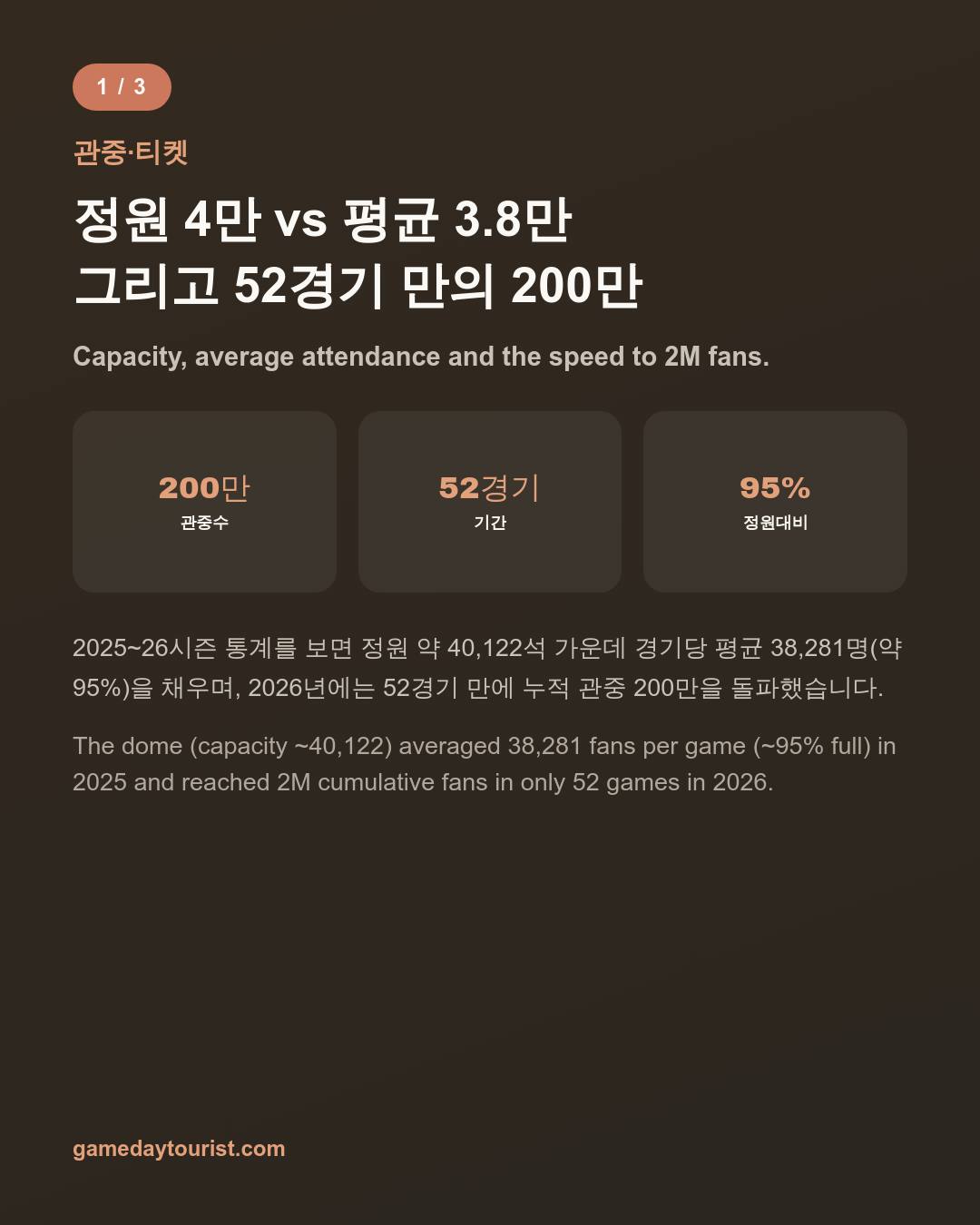
The club officially announced in January 2026 that Mizuho PayPay Dome Fukuoka’s 2026 baseball capacity is 40,122 (it was 40,142 in 2025).
In the 2025 season, 2,717,929 fans attended across 71 home games, an average of 38,281 per game — roughly 95% of capacity.
The 2026 season is moving even faster. According to the club’s announcement, official attendance passed 2 million after just 52 games as of August 11 — the fastest pace in the Pacific League this season and the fastest in the club’s history.
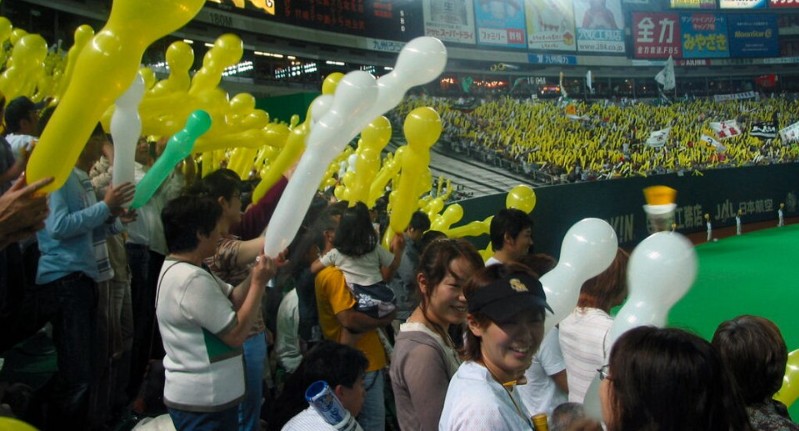
Source: Wikimedia Commons (photo by Ningyou) · Public domain
A Korean baseball-travel blogger once wrote about watching games at this ballpark four days in a row and winning all four — and filling a 40,000-seat dome this consistently all season suggests it’s not just the seats themselves that draw people, but a thick base of loyal fans who keep showing up even on weekdays.
The Stadium’s Signature — A Retractable Roof and BOSS E・ZO FUKUOKA
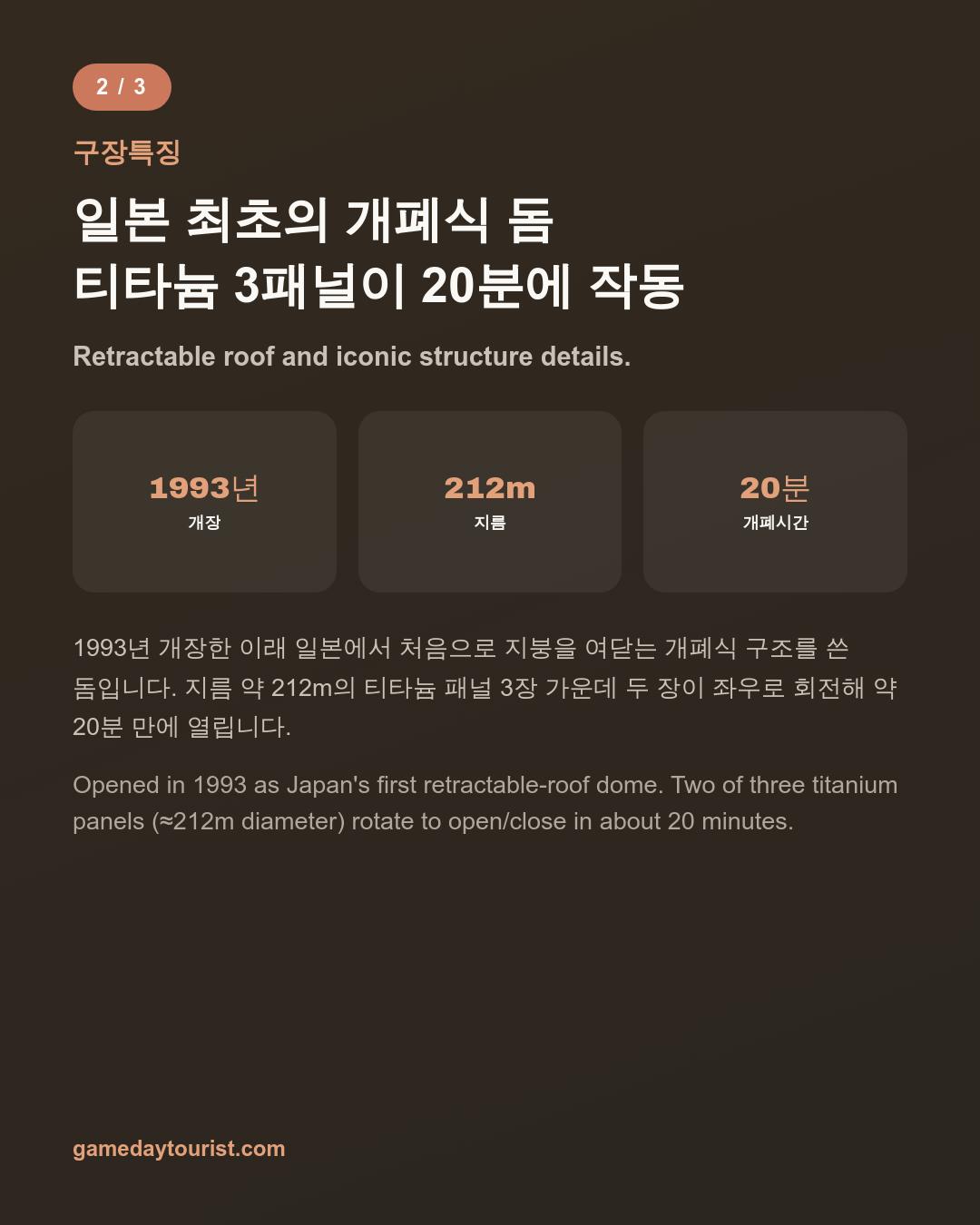
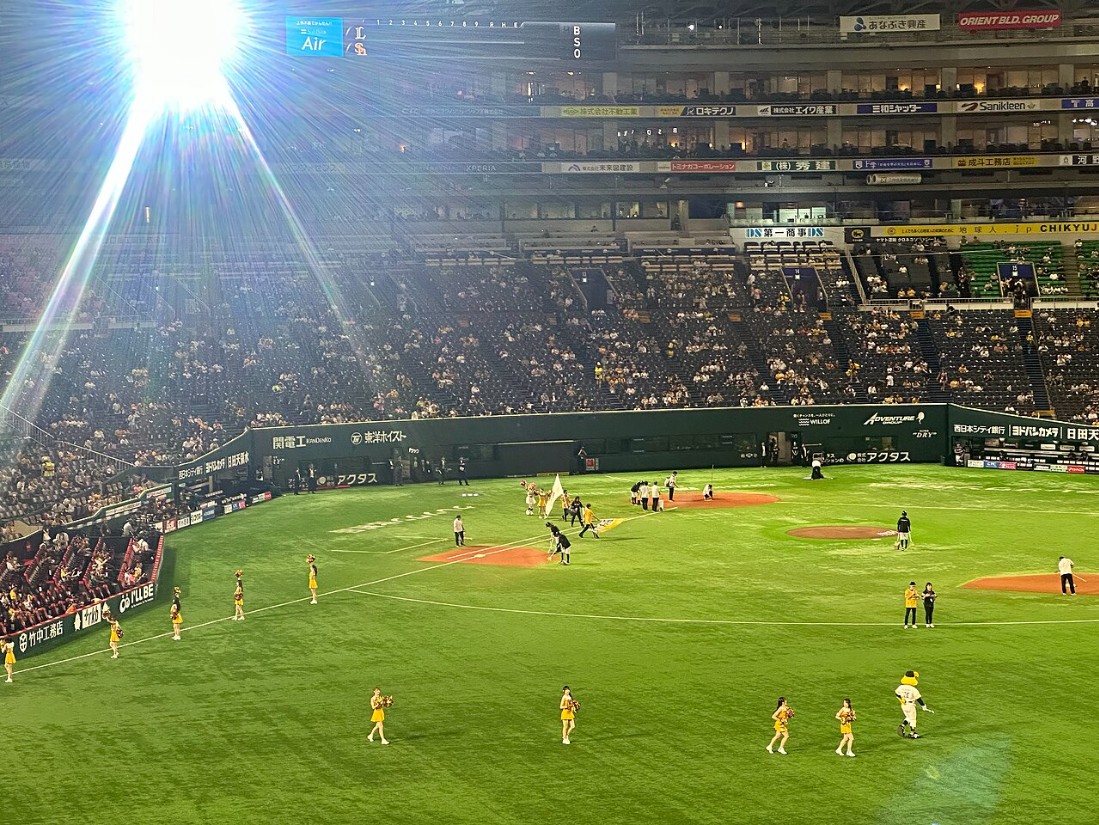
The stadium held its grand opening in April 1993, the second dome in Japan after the Tokyo Dome (opened 1988), but the first in Japan with a retractable roof.
The roof is split into three titanium panels spanning roughly 212 meters in diameter, two of which rotate open and closed in about 20 minutes.
Compared to Korea’s Gocheok Sky Dome, which has a fixed roof that can’t open, this retractable feature is the ballpark’s own point of differentiation.
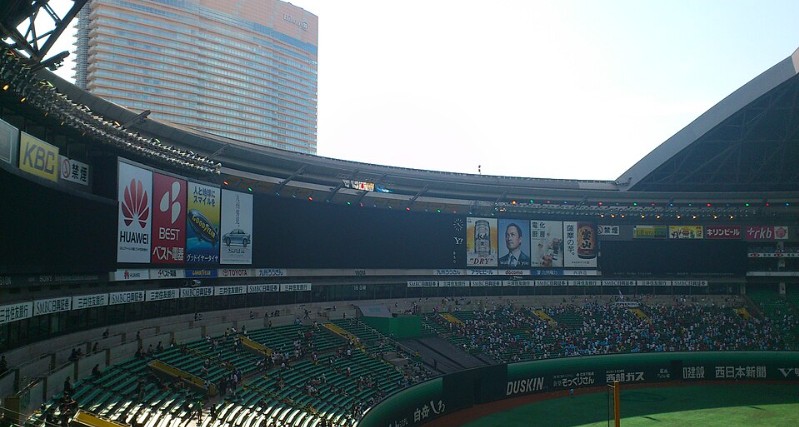
Source: Wikimedia Commons (photo by R34SkylineGT-R V-Spec II Nür), CC BY-SA 3.0
BOSS E・ZO FUKUOKA, right next to the stadium, is a seven-story entertainment complex that opened in 2020.
The fourth floor houses a baseball museum named after manager Sadaharu Oh, with 15 different hands-on attractions, along with “teamLab Forest,” an indoor garden-style exhibit by the art collective teamLab, and a tube slide that drops 100 meters down the building’s exterior from a height of 40 meters.
It’s a structure built to draw people even on days without a game, and I felt this is worth referencing when planning facilities around Korean ballparks, too.
Source: Wikimedia Commons (photo by Nesnad, 2024), CC BY 4.0
Ad Inventory and Naming Rights
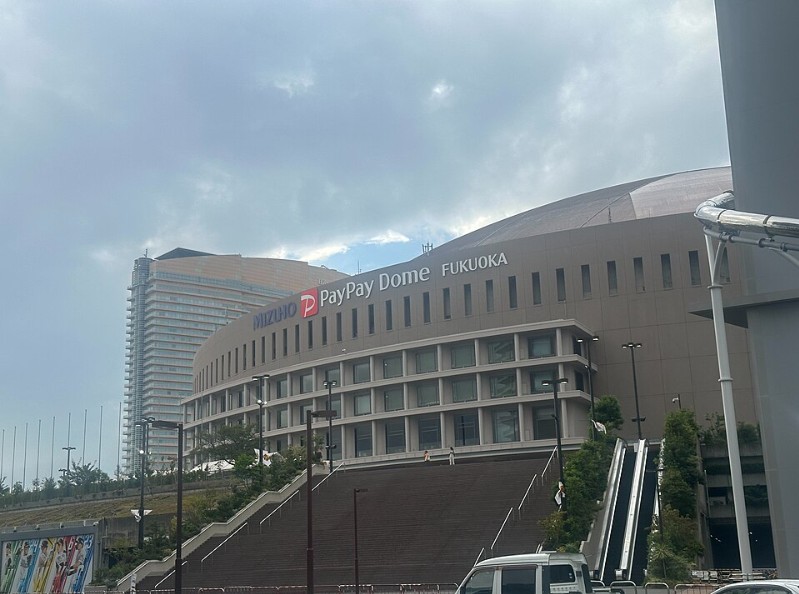
The stadium’s name changed to “Mizuho PayPay Dome Fukuoka” on April 25, 2024.
Two separate companies, Mizuho Financial Group and PayPay, jointly purchased the naming rights — and according to the club’s announcement, this was the first joint naming-rights deal for a top-flight NPB home stadium.
Neither company disclosed the contract value.
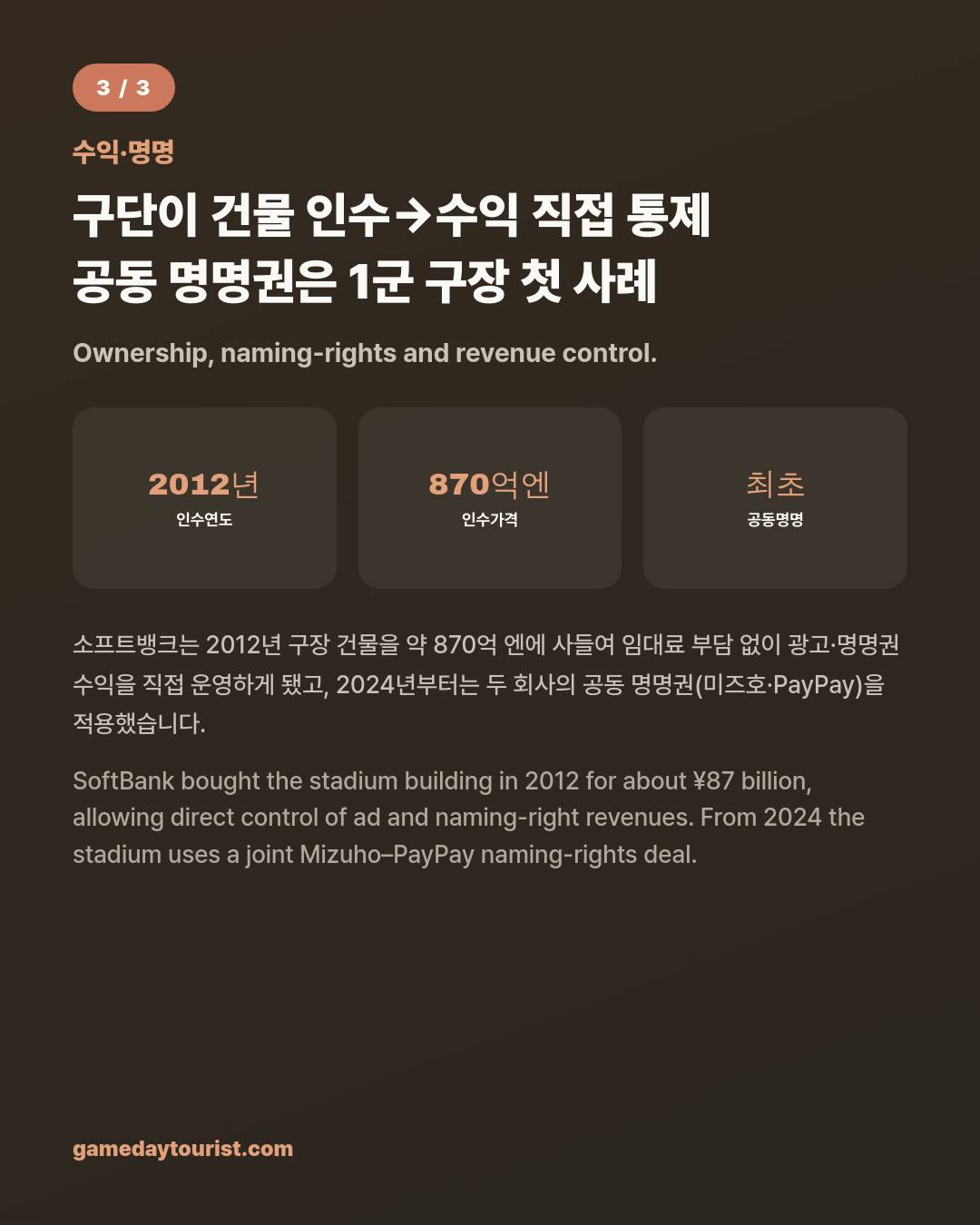
The naming rights themselves are a lease arrangement, but SoftBank bought the building outright for about ¥87 billion in March 2012.
Before that, the club and the stadium owner were separate entities, and the club paid roughly ¥5 billion a year in usage fees — this acquisition brought the club and facility operations under one roof.
That ownership consolidation is what put the club in direct control of advertising inventory and naming-rights revenue.
Source: Wikimedia Commons (photo by Nesnad, 2024), CC BY 4.0
Broadcast Rights and the Local Economic Impact
Broadcasting is handled by DAZN.
It distributes every Central and Pacific League game except those hosted by Hiroshima, and in the 2026 season, all 143 of SoftBank’s regular-season games, including those at this dome, will air on the platform.
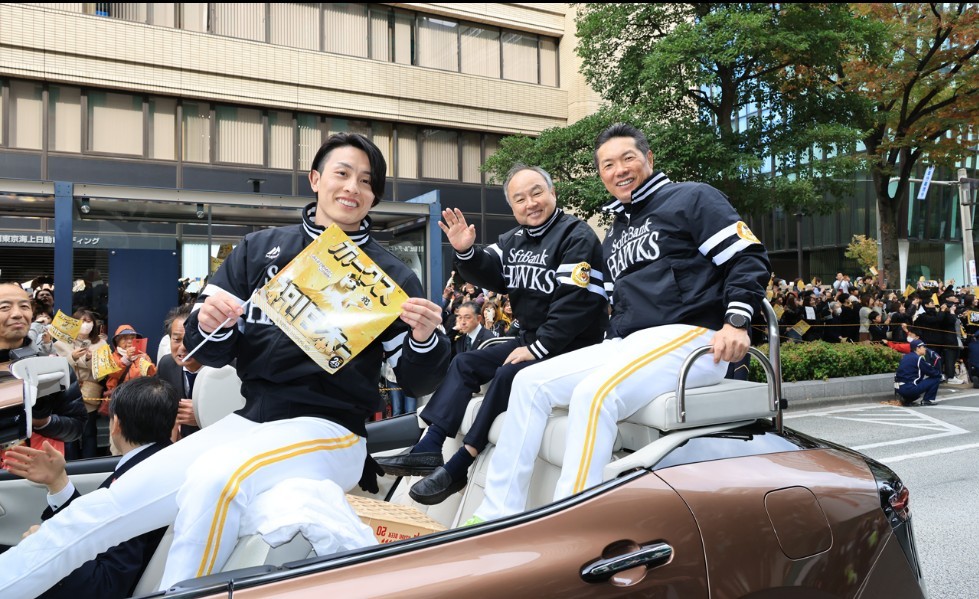
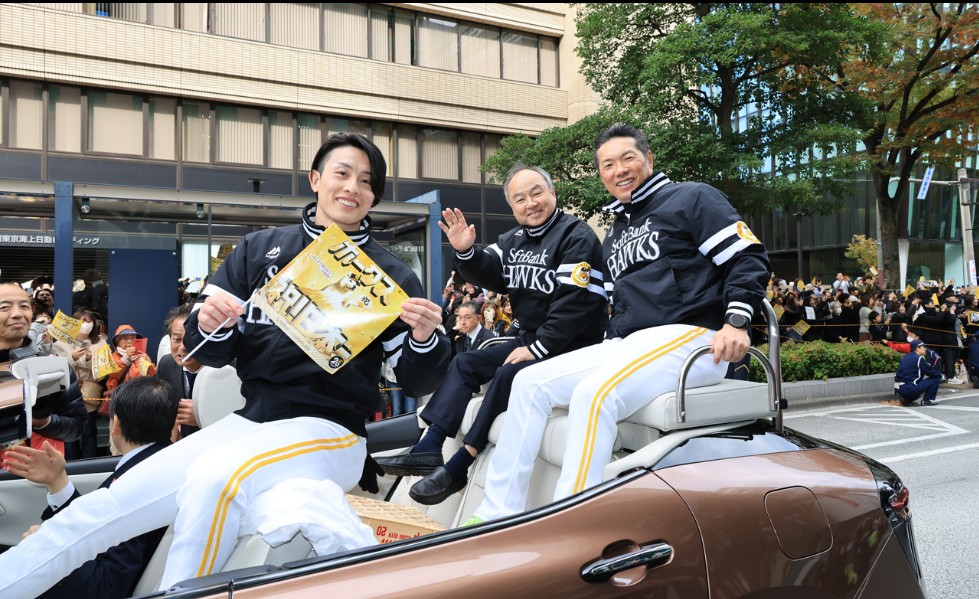
The Hawks won it all on October 30, 2025, beating the Hanshin Tigers in Game 5 of the Japan Series for their first title in five years — the 12th in club history and the 8th under SoftBank ownership.
According to a preliminary estimate released by Fukuoka Prefecture right after the club clinched a Climax Series spot, the projected economic ripple effect within the prefecture from a title win was ¥46.6 billion.
Broken down, the biggest chunk was an estimated ¥29.94 billion increase in championship-sale revenue, followed by about ¥12.07 billion in dome spectator spending and ¥4.58 billion in spending by parade attendees.
It’s worth noting these figures were a preliminary estimate released before the title was actually secured, not a final tally compiled after the season ended.
Source: Fukuoka SoftBank Hawks official website (article on the championship parade, November 24, 2025) · Official club material
How This Compares to the KBO and K League
In Korea, this ballpark is most often compared to Gocheok Sky Dome.
Gocheok’s seating capacity is around 17,000, less than half of Mizuho PayPay Dome’s current-season capacity of 40,122.
The two figures measure different things — seat count versus event capacity — but the gap itself is unmistakable.
Gocheok’s roof is also fixed and can’t open or close, so while both are called “dome stadiums,” their scale and operations are quite different.
A case like Takeda Shota’s — an NPB player moving to the KBO through the Asia Quota system — is close to the first real use of this new system, so whether more moves like this follow will likely depend on how this season’s actual results play out.
There’s also something worth referencing on the club-stadium ownership side.
SoftBank’s 2012 acquisition of the stadium building itself, which let it control advertising and naming-rights revenue directly without a rent burden, is a useful benchmark for thinking about how much operating control Korean clubs actually hold over their stadiums.
That said, most Korean pro clubs operate stadiums owned by local governments under commission agreements, so the underlying conditions are different from an outright ownership transfer.
Leave a Reply