Contents · About 7 min read
📱 View as card news
Spend enough time in pro sports marketing and you’ll eventually run into a club that makes you ask, “why don’t they ever buy star players?”
Athletic Club Bilbao, of Spain’s La Liga, has been that club for me for a long time.
Ahead of La Liga’s 2026-27 season opener on August 14, local reports that the club’s waiting list for socio (member) status had passed 11,000 gave me the push to finally dig into the question.
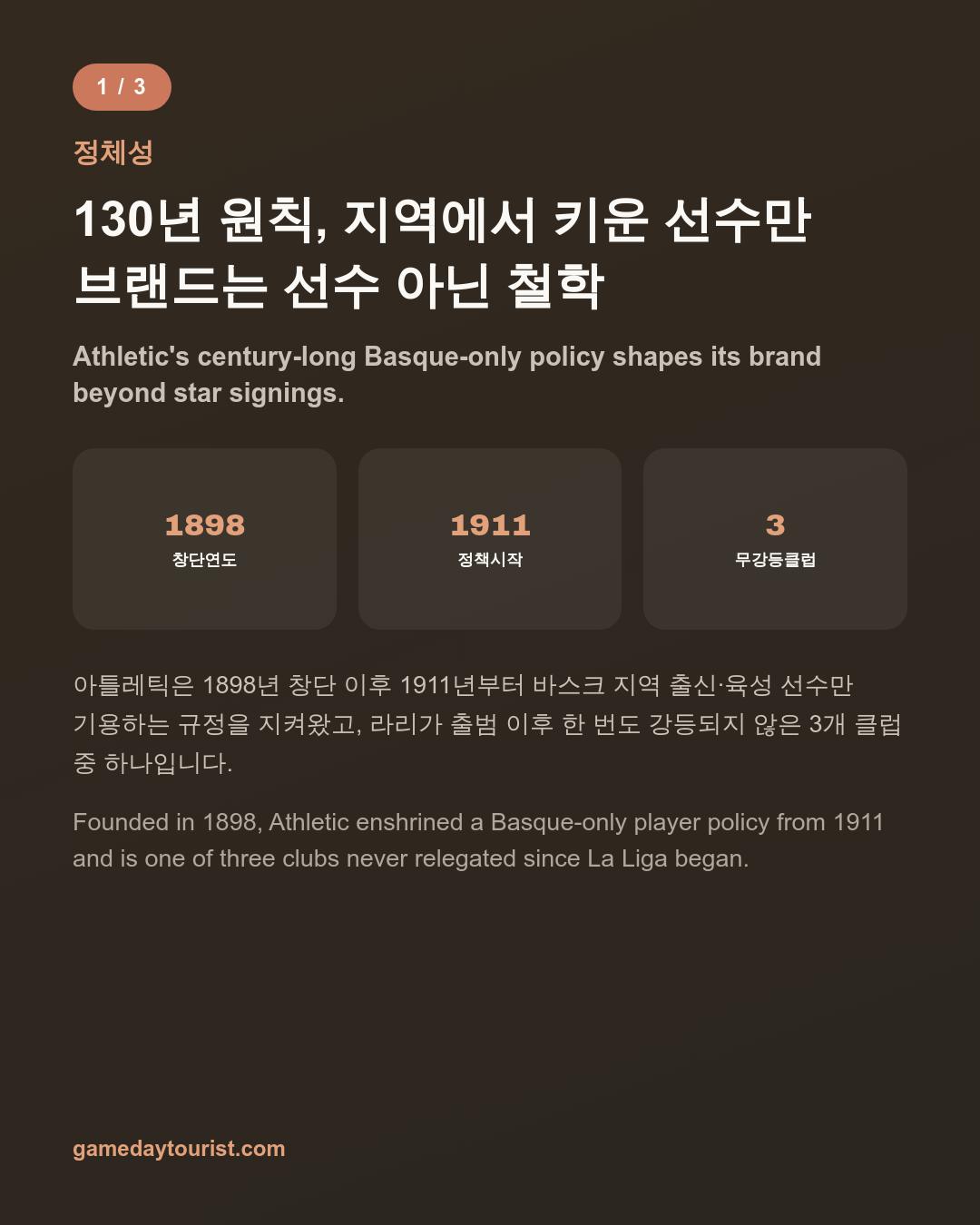
Since its founding in 1898, Athletic Club has enforced a formal policy since 1911 of fielding only players who are Basque by birth or who were trained in the wider Basque region — Biscay, Gipuzkoa, and Álava.
Instead of buying finished stars from outside, the squad is built entirely from cantera (the Spanish football term for players developed through the club’s own youth academy) and players from nearby Basque clubs — a policy that, as a side effect, means no Korean player has ever appeared on Athletic’s first-team roster.
And yet Athletic is one of only three clubs never relegated from La Liga since its founding in 1929 (the other two being Real Madrid and FC Barcelona).
That’s a club that has held onto top-flight status without ever buying a star — which, from where I sit as a marketer, makes it a rare case where the identity itself, not the roster, is the brand asset.
Fans and Members (Socios)
Athletic’s home, San Mamés, first opened in 1913 as Spain’s first purpose-built football stadium, and the current structure is the second San Mamés, rebuilt in 2013.
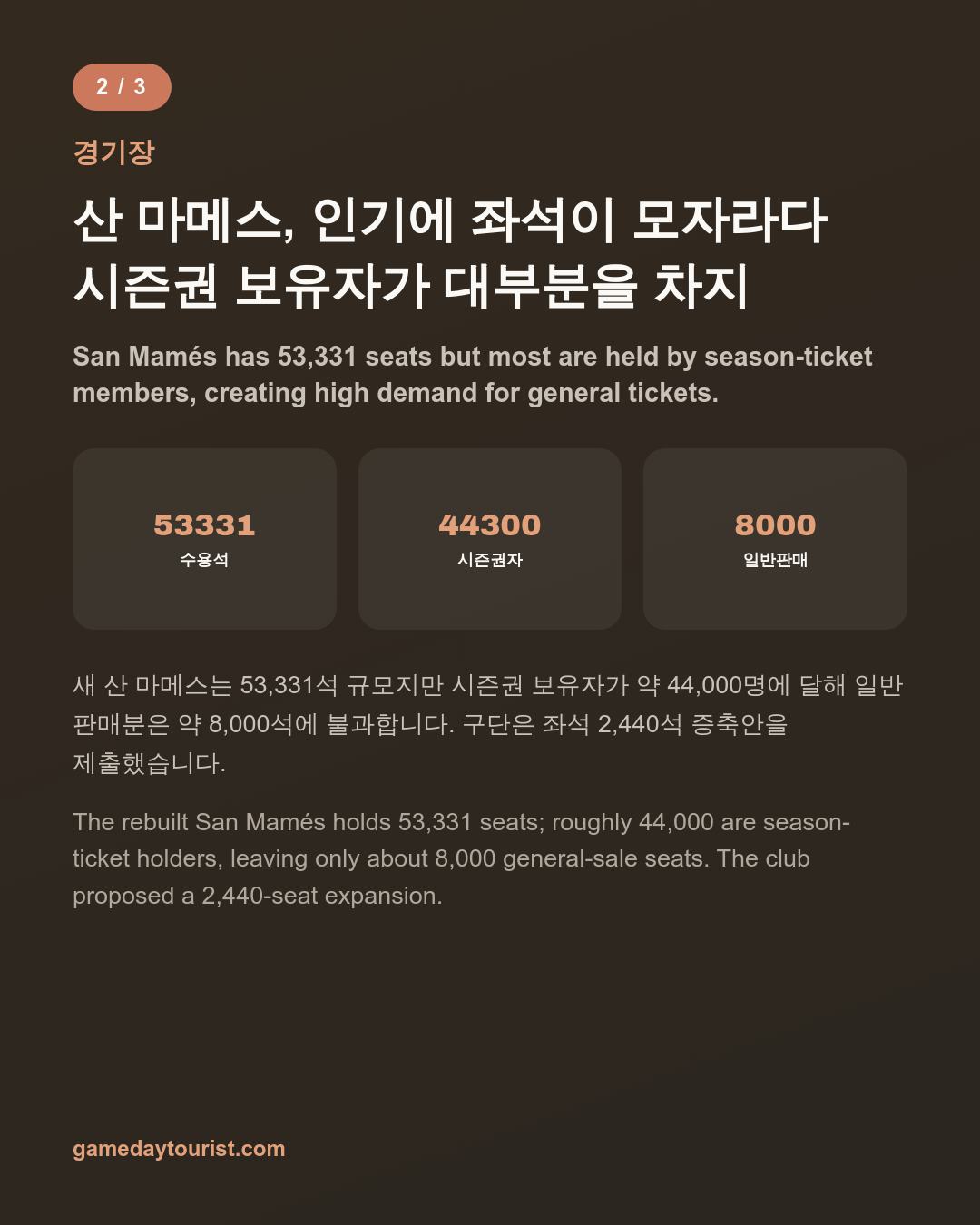
Capacity sits at 53,331, with roughly 44,000 of those seats held by season-ticket holders, leaving only about 8,000 for general sale.
Base single-match ticket prices start around €10, but resale prices reportedly average as high as €96 — a good sense of just how tight supply is against demand.
Athletic is one of only four clubs in La Liga owned and run by members (socios) rather than a corporation — the others being Real Madrid, FC Barcelona, and Osasuna.
Socio status doubles as a season ticket, and it also comes with the right to vote directly for the club president and board at general assemblies held every four years.
The waitlist to become a socio, though, had reportedly surpassed 11,000 people as of August 2026, according to local media.
That’s demand San Mamés simply can’t absorb, and to ease the pressure, the club recently submitted an expansion plan to the city council to add 2,440 seats, bringing capacity to 56,008.
The total project budget comes to €5.2 million (about 8 billion won at the exchange rate at the time), most of which goes toward reconfiguring the back rows of the third tier and relocating the press area.
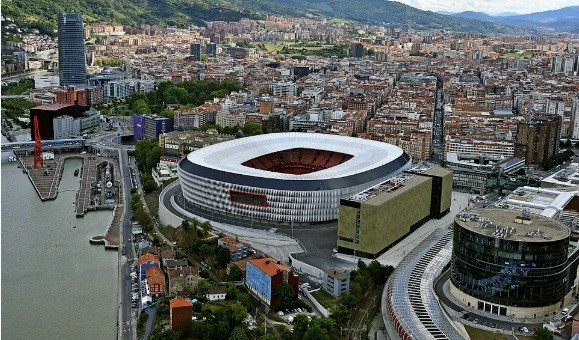
San Mamés viewed from the Nervión riverside · Source: Mikel Arrazola, Wikimedia Commons, CC BY 3.0
Advertising Inventory and Sponsorship
Athletic’s shirt-sponsor history says a lot about the club’s character.
The club kept its shirts free of any company logo until 2008, when oil company Petronor took the spot through 2015, at which point the current main sponsor, Kutxabank (a Basque regional bank headquartered in Bilbao), took over starting with the 2015-16 season.
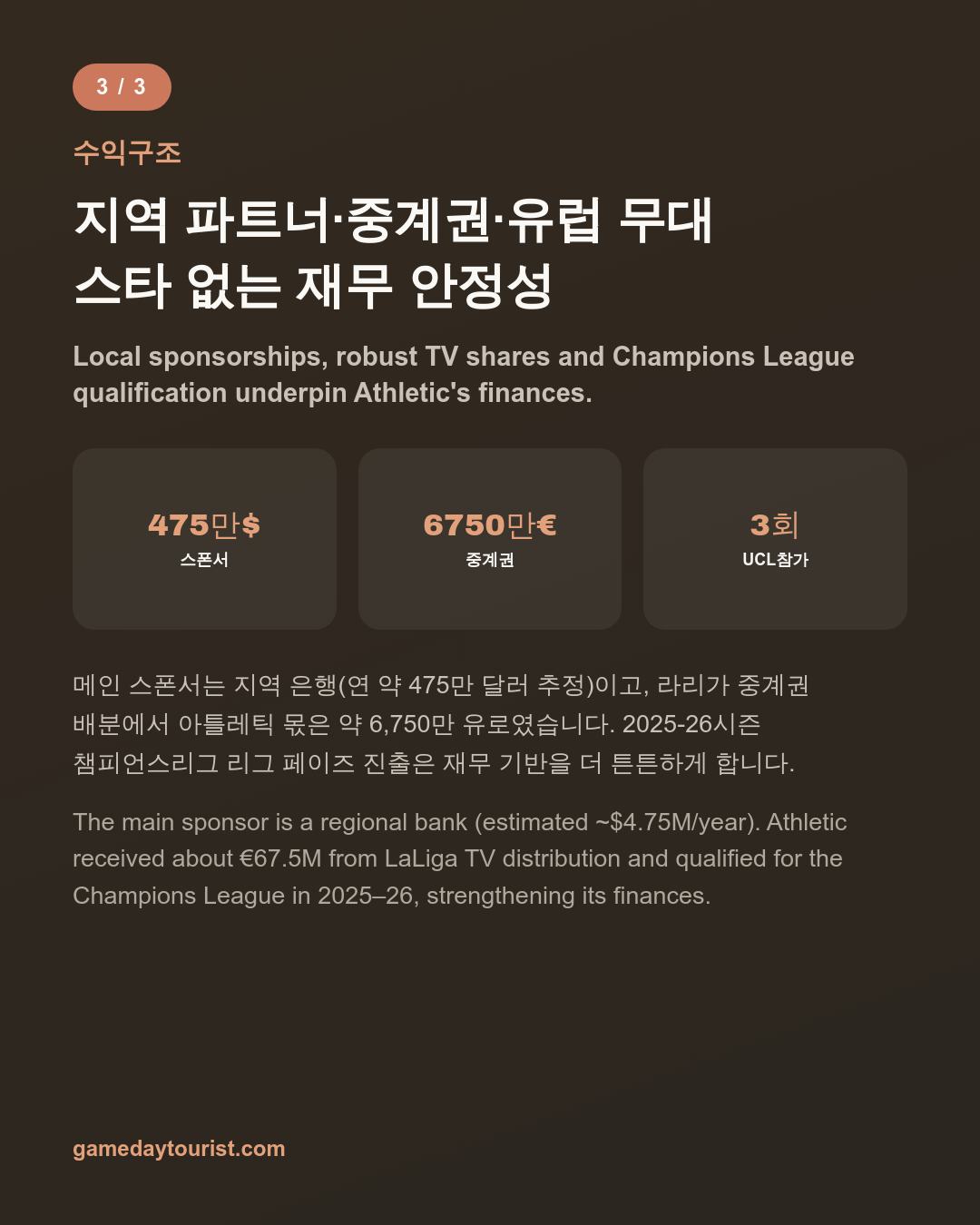
Sports business outlet SportCal estimates the deal at roughly $4.75 million a year — modest next to La Liga’s top-tier sponsorships like Real Madrid’s Adidas deal (€120 million a year) or Barcelona’s Nike deal (over €100 million a year).
But Kutxabank’s arrangement reads less like a bid for global exposure and more like a partnership built on shared local identity — a case study in how selling advertising inventory for the highest possible price isn’t always the right play.
San Mamés’ exterior also carries a large digital screen, used for ticket sales and local event promotion even on non-matchdays.
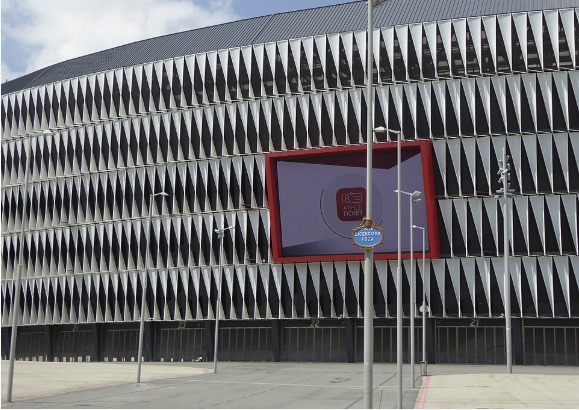
The exterior digital screen, an ad inventory asset used even on non-matchdays · Source: Ardfern, Wikimedia Commons, CC BY-SA 4.0
Broadcast Rights and European Competition
La Liga runs a five-year, €4.95 billion domestic broadcast deal from 2022 to 2027, and Athletic’s share for the 2025-26 season came to €67.5 million.
That’s short of Real Madrid (€157.5 million), Barcelona (€156.4 million), or Atlético Madrid (€108.1 million), but it still ranks near the top among the league’s 20 clubs.
On top of that, Athletic secured a spot in the 2025-26 Champions League league phase, marking its third appearance in Europe’s top club competition, following the 1998-99 and 2014-15 seasons.
Given how much extra revenue a single Champions League campaign generates through the broadcast-revenue distribution structure, this is a club with a surprisingly solid financial footing for one that rarely makes headlines over squad size or transfer fees.
Space Utilization and F&B
I haven’t been able to visit in person, but visitor reviews I found in my research consistently say the new San Mamés’ concourses (the walkways and amenity space outside the seating bowl) are far more spacious than the old stadium’s, with significantly more restrooms too.
That said, I also came across complaints about long restroom lines at every halftime, a reminder that having more physical space and actually feeling uncrowded are two different things.
The food centers on traditional Basque fare — pintxos (Basque-style skewered bar snacks), bocadillos (baguette sandwiches), and the local hard cider sidra — though one match-day account noted disappointment that only a single beer brand, Heineken, was on sale.
Interestingly, one local travel blogger found the “pintxos crawl” through the old town’s Casco Viejo and Plaza Nueva before kickoff even more memorable than the game itself — bar-hopping through txakoli (sparkling white wine) or kalimotxo (a Basque cocktail of red wine and cola) alongside the pintxos.
It’s a reminder that the surrounding neighborhood matters just as much as stadium infrastructure investment in completing the overall matchday experience — and as a marketer, it made me realize how much you can miss by only looking inside the stadium walls.
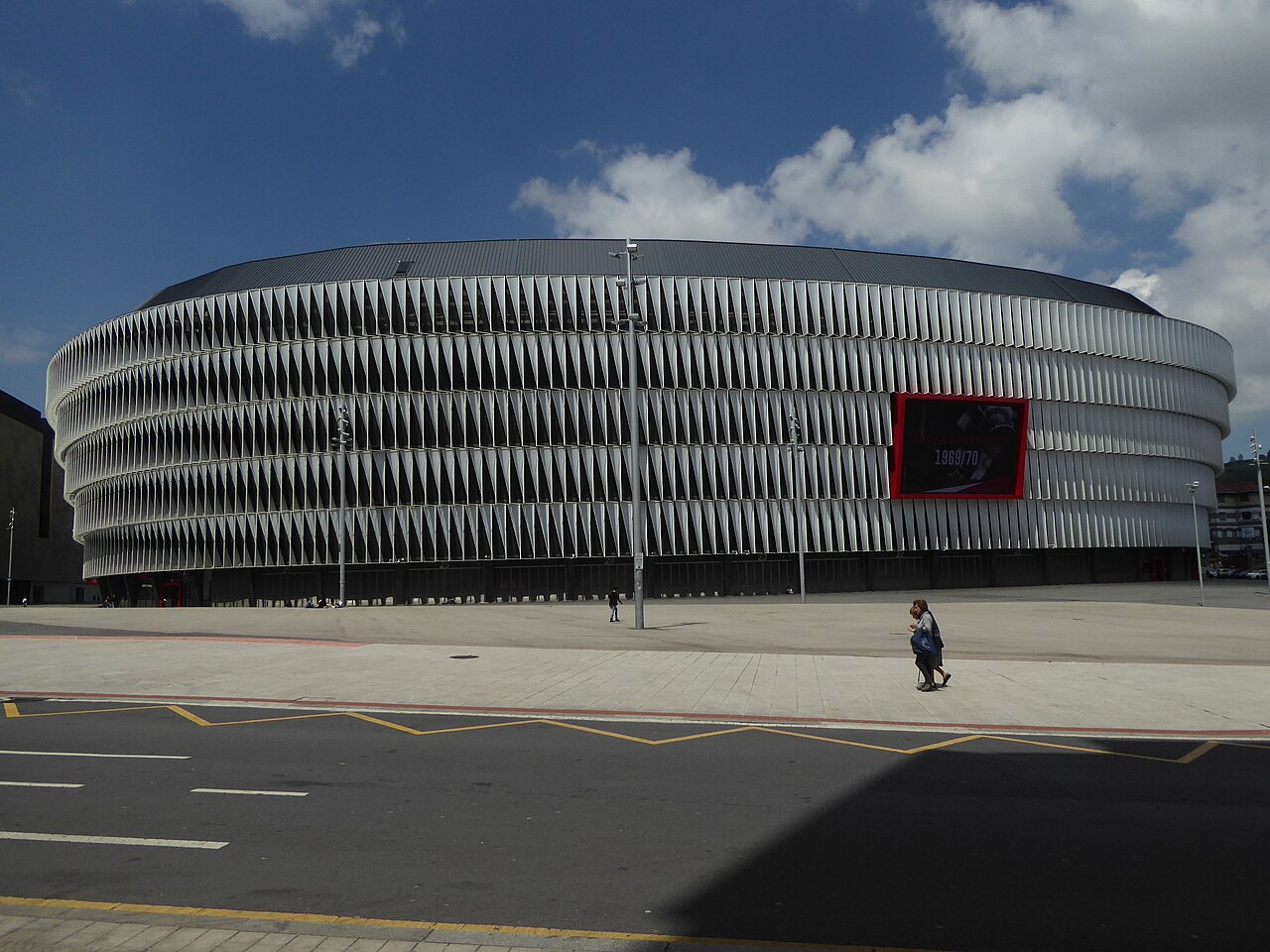
San Mamés seen from the street · Source: Ardfern, Wikimedia Commons, CC BY-SA 4.0
Merchandise and the Museum
Inside San Mamés, between Gates 0 and 26, sits the official club store, and separately, the “Athletic Club Museoa” museum tells the club’s history through some 500 artifacts.
The museum-plus-stadium tour, which includes an audio guide, runs 90 minutes and costs €14 for adults and €5 for children aged 6-14.
Given the club’s focus on academy-trained players and local identity, its merchandise lineup leans more toward selling the club’s history and roots than flashy star-driven marketing.
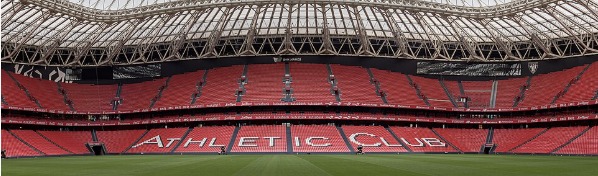
“ATHLETIC CLUB” spelled out in the seats, with the roof truss structure above · Source: EinfachFrankfurt1955, Wikimedia Commons, CC BY-SA 4.0
A Comparison With the KBO and K League
In Korea, “fan-owned club” usually brings to mind citizen clubs like Daegu FC or Incheon United.
But the actual structures differ quite a bit once you look closely.
Korean citizen clubs are nominally built on citizen capital, but the owner role is typically held by the relevant local government’s mayor or governor, and the main sponsor slot is often filled by the local government as well.
Athletic’s socio system, by contrast, runs on member dues, with members themselves voting for the president every four years — real, exercised governance authority.
Both look like “fan-owned” clubs on the surface, but who actually holds decision-making power turns out to be an entirely different story.
Another point worth flagging is the financial structure.
There’s a persistent criticism that most Korean citizen clubs, lacking sufficient finances, function closer to “selling clubs” — developing young talent and relying on transfer fees to cover operating costs, whereas Athletic, as shown above, maintains a top-tier share of broadcast revenue in La Liga and has built a financial base solid enough to be self-sufficient without that selling pressure.
Even among clubs that lean on the same “local identity” pitch, sustainability ends up diverging sharply without the revenue structure to back it up — which suggests what K League citizen clubs might really want to benchmark isn’t the member-voting system itself, but this financial self-sufficiency.
Even without headline-grabbing star signings or blockbuster sponsorship announcements, this research reaffirmed for me that a club can hold onto its brand identity through a single principle upheld for nearly 130 years.
Athletic Bilbao is proof that consistency itself, more than flashy marketing, can be the strongest brand asset a club has.
Leave a Reply