Contents · About 10 min read
📱 View as card news
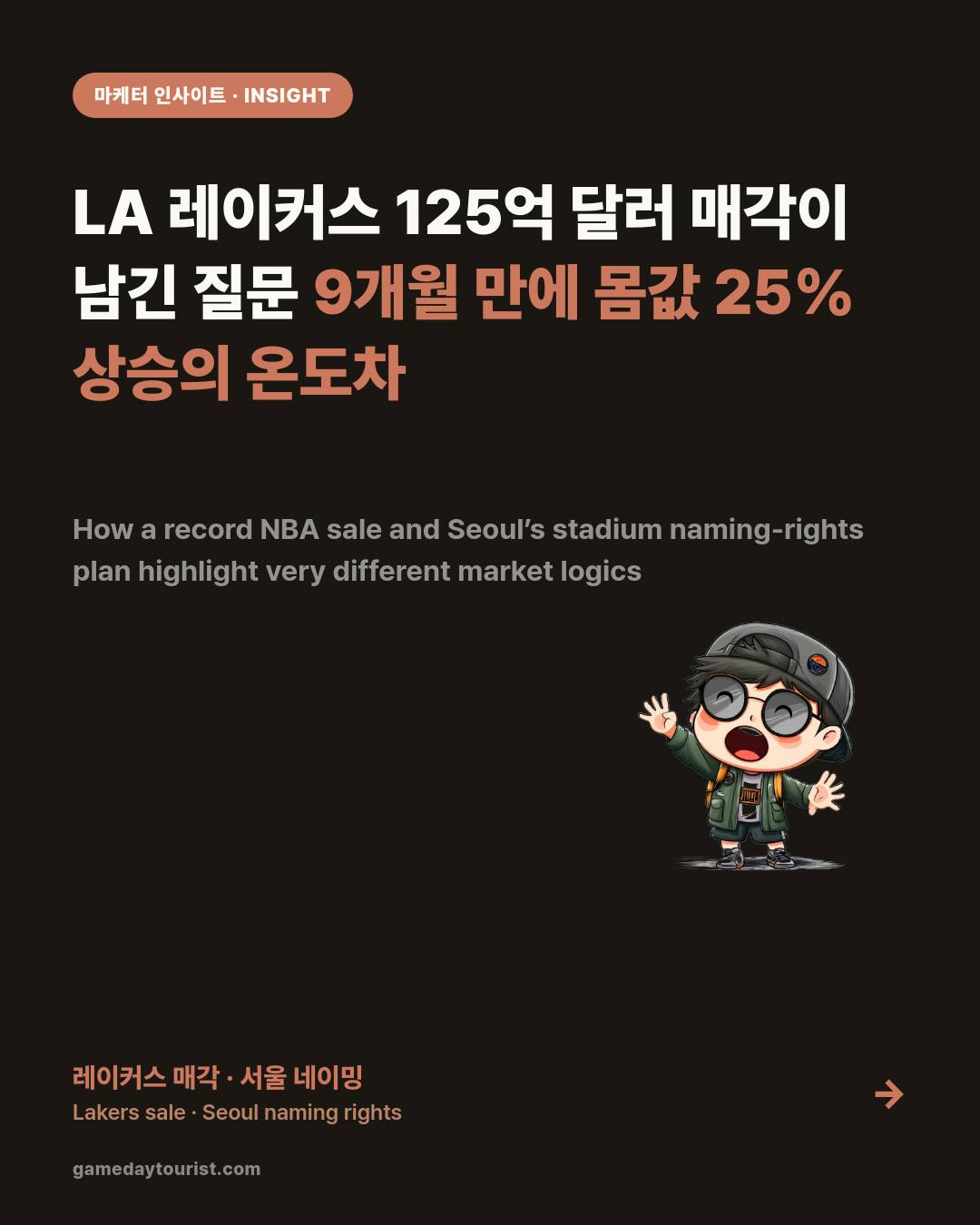
$12.5 billion.
When I first saw this number in a US sports business headline on August 12, I thought I’d misread the digits.
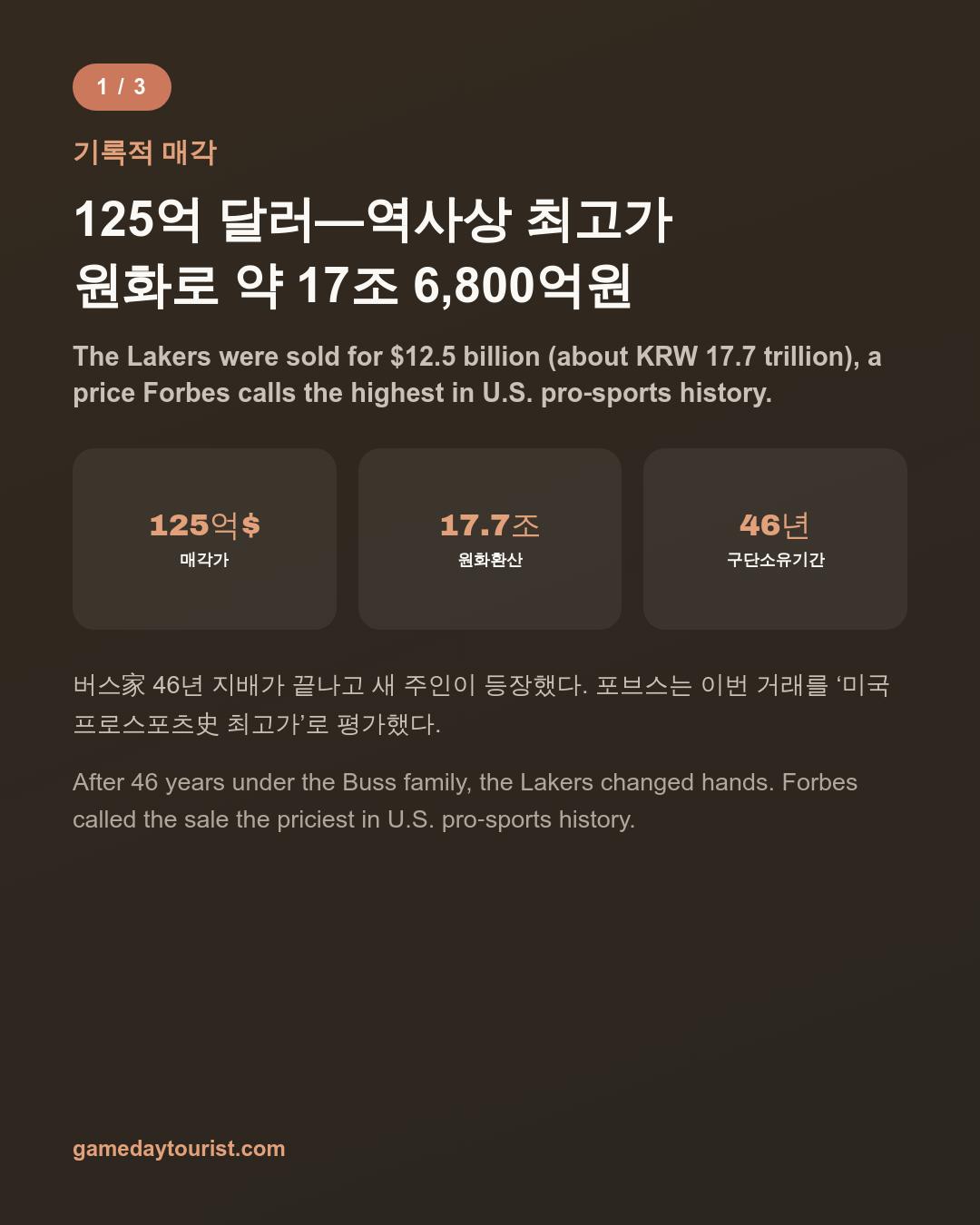
It’s the price tag on the Lakers changing hands from Mark Walter to Bob Iger and Josh Kushner — roughly ₩17.68 trillion at the August 2026 exchange rate of around ₩1,410 per dollar.
Forbes called it the “highest price ever paid for a professional sports team in US history,” and it wasn’t until I checked the Forbes report that it sank in that the number wasn’t a typo.
The timeline makes it even more striking.
The Lakers had been owned by the Buss family for 46 years, the longest-running single-family ownership in the NBA.
The Buss family announced a stake sale to Mark Walter — Dodgers co-owner and Guggenheim Partners chairman — in June 2025, and per the NBA’s official announcement, the Board of Governors unanimously approved the sale that October 30 at a $10 billion valuation, officially making him the new owner.
Now, less than a year after Walter took the owner’s chair, the team has been sold again for $12.5 billion.
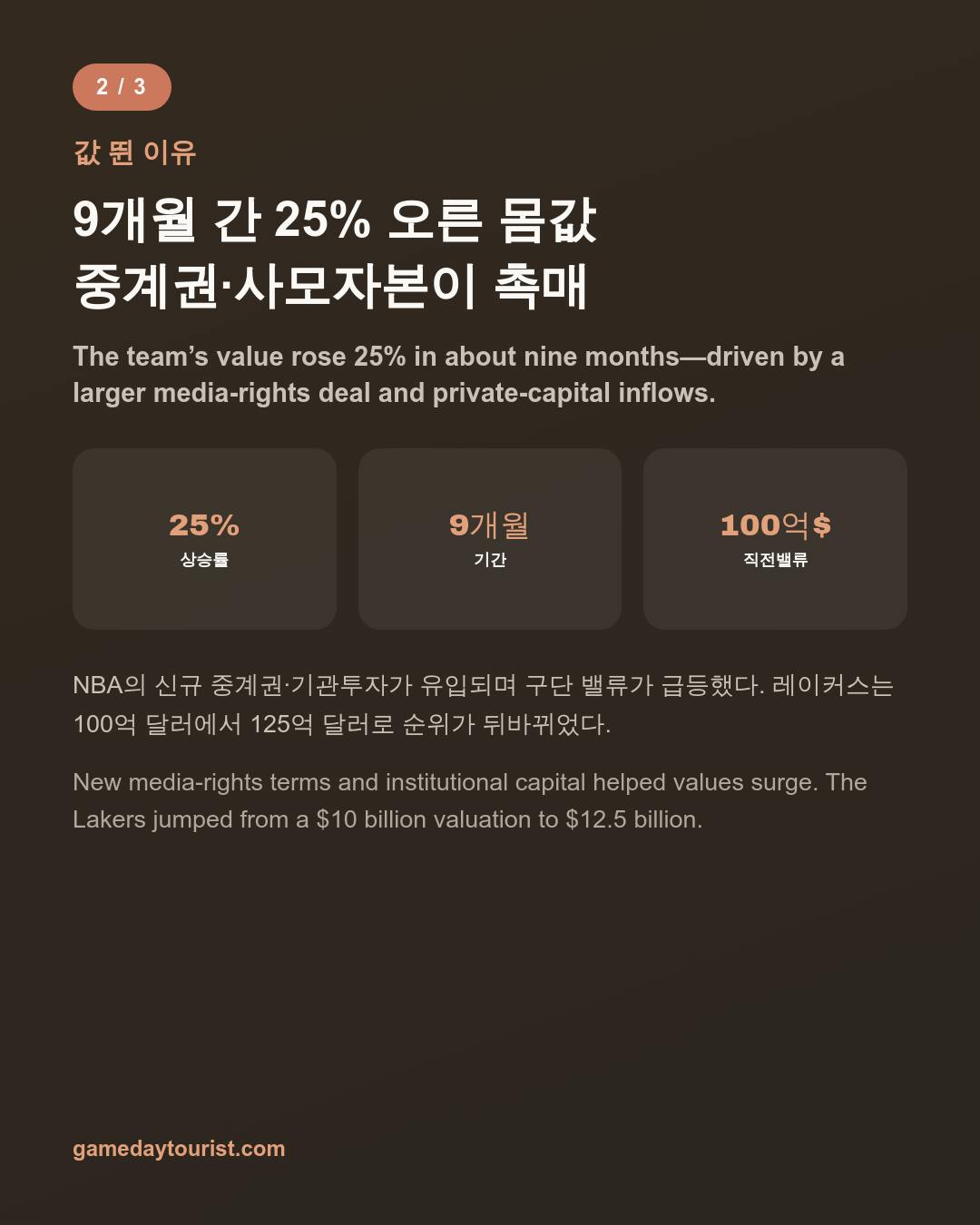
That’s a 25% jump in about nine months, and per local fan-media reports, the negotiations themselves came together in just three days.
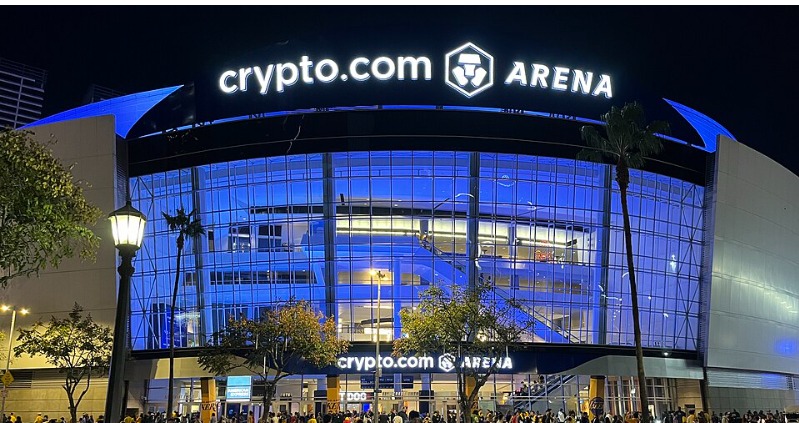
Source: Wikimedia Commons (photo by Troutfarm27, CC BY-SA 4.0 license) — exterior of Crypto.com Arena, home of the Lakers. I already covered this venue’s marketing structure in a July 18, 2026 post, so this piece focuses on the sale and valuation side.
The incoming owner Josh Kushner is the founder of venture capital firm Thrive Capital, an early investor in startups like Instagram, Spotify, Stripe, and OpenAI, and also the younger brother of Jared Kushner, President Donald Trump’s son-in-law.
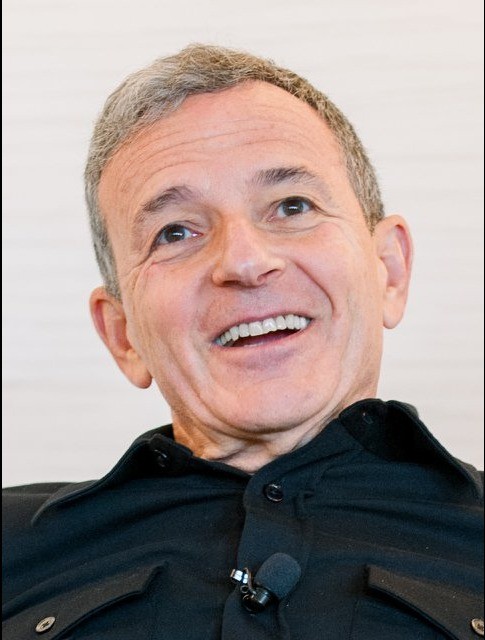
Joining him in the acquisition is Bob Iger, who served two separate stints as CEO of The Walt Disney Company and has been with Thrive Capital since 2022.
In a joint statement, the two said they were “deeply honored, as lifelong NBA fans, to have the opportunity to steward one of the most iconic sports franchises in the world, and on this foundation, to serve the team, the fans, and the city of Los Angeles.”
The deal still needs NBA Board of Governors approval, though, so it will take more time before it’s officially finalized.
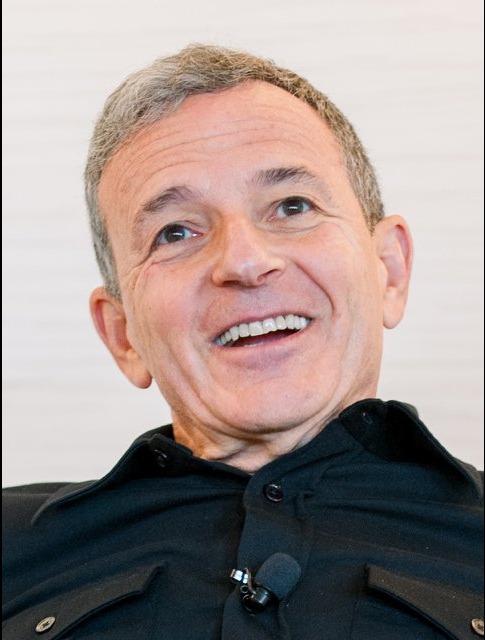
Source: Wikimedia Commons (photo by Village Global, CC BY 2.0 license) — Bob Iger, former Walt Disney CEO and now incoming co-owner.
Why did the valuation jump this much?
As a marketer, what caught my attention more than the sale price itself was the speed of the increase.
Looking into one sports-business outlet’s analysis, the background breaks down into two main factors.
One is league-wide media-rights renegotiation.
The NBA’s newly signed media-rights deal is reportedly worth about 2.8 times the previous one, which has pushed up the valuations of teams that share in that broadcast revenue.
The other is the inflow of private-equity capital.
Since the NBA changed its league rules in 2019 to allow institutional investors to hold stakes, sports franchises have increasingly been treated as “trophy assets” — generating steady cash flow regardless of economic downturns, with fan emotional attachment acting as a kind of barrier to entry.
The average value of NBA franchises has reportedly risen more than 650% over the past decade, so this isn’t just a Lakers-specific story.
Comparing it to other leagues makes the number’s place in context clearer.
Per a Sportico survey, as of 2026 the Dallas Cowboys remain the NFL’s top-valued team for the seventh straight year at $15.5 billion, while in soccer’s rankings, Real Madrid is valued around $9.5 billion by Forbes.
Within the NBA itself, right up until the sale, the Golden State Warriors ($10.8 billion) and New York Knicks ($10.1 billion) had both been valued higher than the Lakers — this sale instantly flipped that ranking.
By comparison, the previous record for a team sale was the $6.1 billion paid for the Boston Celtics in 2025 — the Lakers broke that record twice within a single year (Buss family → Walter at $10 billion, Walter → Iger/Kushner at $12.5 billion).
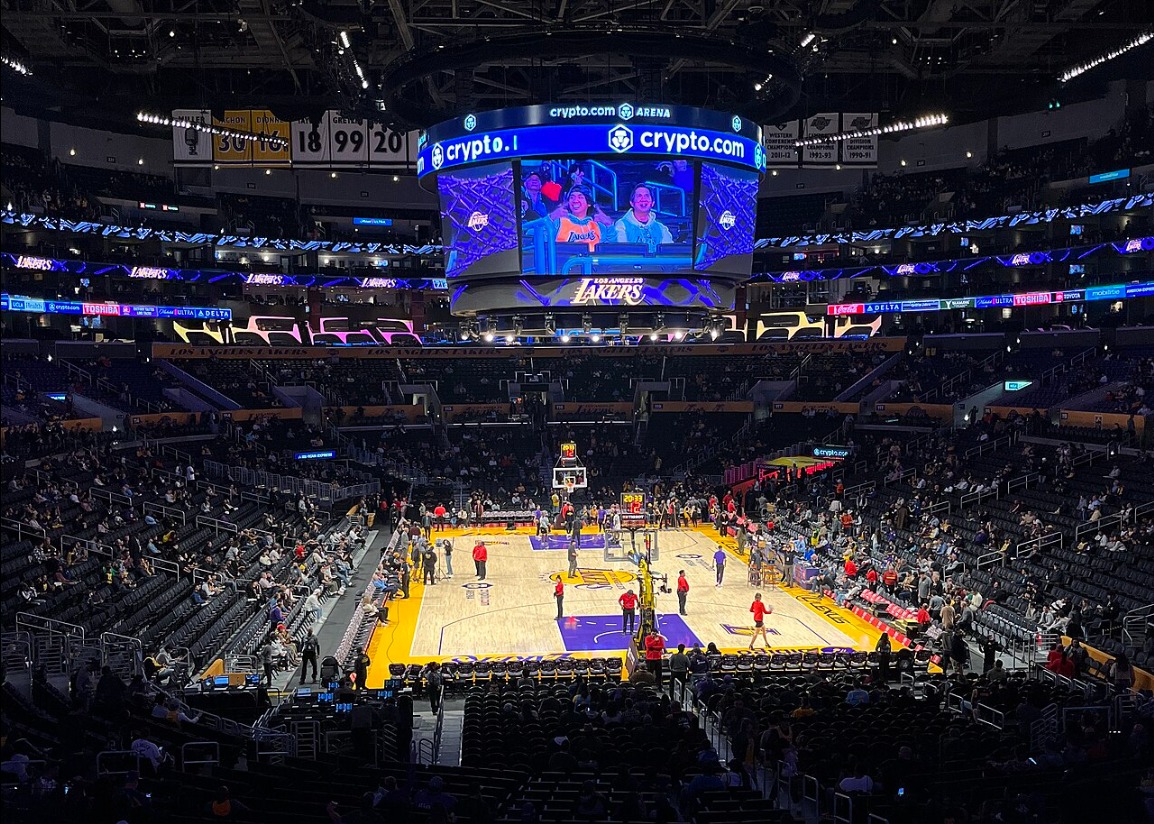
Source: Wikimedia Commons (photo by Troutfarm27, CC BY-SA 4.0 license) — the arena interior, photographed ahead of a Sacramento Kings game in November 2022. The championship banners and retired numbers hanging from the ceiling are among the franchise’s signature assets.
Sponsorship, tickets, and marketing inventory keep moving regardless
Even while ownership changed hands, marketing inventory kept getting refreshed.
What stood out was the jersey patch sponsor switch.
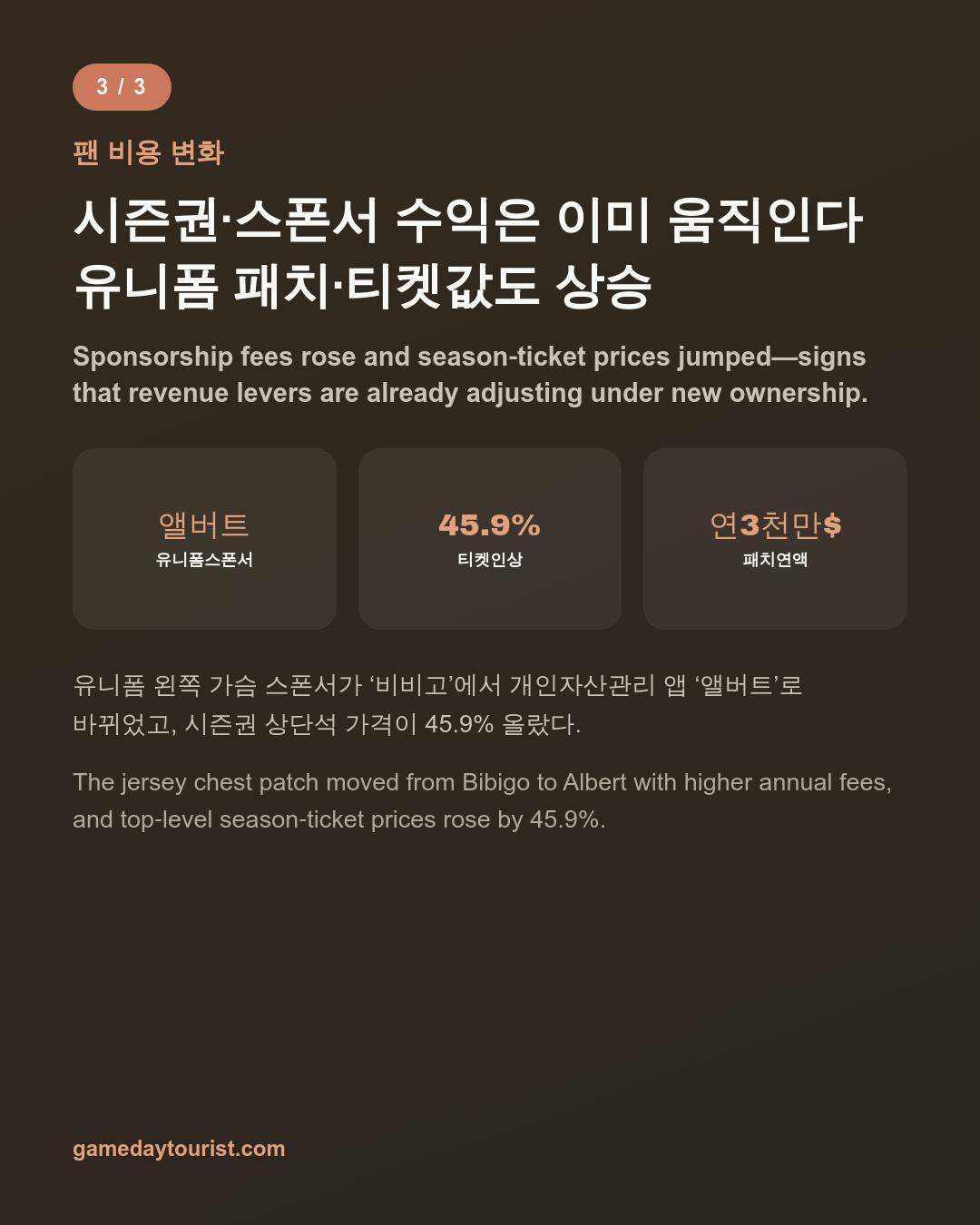
CJ CheilJedang’s ‘Bibigo’ had held the Lakers’ left jersey patch since September 2021 under a five-year, roughly $100 million deal (about $20 million a year), and when that contract expired after the 2025-26 season, personal finance app ‘Albert’ took over the spot starting in 2026-27.
The new deal is reportedly worth more than $30 million a year — a nearly 50% increase by simple math.
The team’s overall sponsorship revenue was also reportedly up 15% year-over-year in 2025-26, suggesting the franchise’s commercial value had already been climbing before the ownership change.
On the merchandise side, in the NBA’s official jersey sales rankings for this season, Luka Dončić ranked No. 2 and LeBron James No. 5, keeping the Lakers among the league’s top sellers.
Team merchandise revenue had the Lakers in first place through the first half of the season before New York overtook them in the second half — a sign the franchise keeps competing at the top of the league even off the court.
On the broadcast side, the local deal with regional sports channel Spectrum SportsNet is reportedly worth around $185 million a year according to one media analysis, though that’s an estimate rather than an official figure, so the exact terms aren’t public.
The interesting part is ticket prices.
To be precise, this predates the Iger-Kushner announcement — there were reports of steep season-ticket price increases starting in the 2025-26 season, right after the team moved under Mark Walter’s ownership.
One US season-ticket holder said their annual price for a 300-level (upper-tier) seat rose from $6,192 to $9,035, a 45.9% jump, and another fan who’d held season tickets for over a decade said the cost for five seats went from $15,000 to $22,000.
The team described it as “an adjustment reflecting market conditions and demand,” and given the valuation just jumped another 25%, this kind of pricing adjustment seems likely to continue under the new ownership too.
In the local fan community, the sale news itself sparked plenty of debate — alongside hopeful reactions about the franchise’s future direction, there was no shortage of cynicism that no matter who the new owner is, the cost burden ultimately lands on fans.
From a marketer’s perspective, this confirmed once again that season-ticket pricing is one of the main channels for recovering a rising valuation — and the more a team trades as a trophy asset, the greater that pressure is likely to be.
Compared with the KBO and K League
The gap feels even more real when you compare it to domestic Korean pro sports.
Per a 2019 survey by Forbes Korea, the combined value of all 10 KBO teams was just over ₩1 trillion, with the top team at the time, the Doosan Bears, valued at ₩190.7 billion and the lowest, kt wiz, at ₩81.2 billion.
Even the 2021 acquisition of the SK Wyverns (now SSG Landers) — one of the very few domestic team sales actually done at market price — was only about ₩135.28 billion, and even adding all these figures together, they fall far short of the Lakers’ single sale price of ₩17.68 trillion.
The market sizes are different enough that a simple comparison doesn’t quite work, and the more fundamental difference lies in ownership structure.
Most Korean teams are run by a parent company as its own marketing and PR asset, so even though hundreds of billions of won in support flow in every year, they’re rarely treated as something to be sold.
The four major US leagues, by contrast, feel increasingly like financial assets that billionaires and private equity buy and sell for capital gains.
Both markets use the same term, “professional sports team,” but this sale reconfirmed for me just how differently the two markets fundamentally view what a team is.
Seoul’s push for naming rights on public stadiums — what it means, and the concerns
While putting together this piece on the Lakers sale, a related piece of domestic news happened to break.
Per an exclusive report by Asia Economy, the city of Seoul has begun working toward selling naming rights for the Seoul World Cup Stadium and Gocheok Sky Dome.
If it goes through, this would be the first case of market-priced naming rights being introduced at municipally-owned Korean pro-sports venues.
The Seoul World Cup Stadium is home to K League’s FC Seoul and Gocheok Sky Dome to the KBO’s Kiwoom Heroes, and if this pilot program takes hold, there’s reportedly a chance it could expand to venues like Jamsil Baseball Stadium, Jamsil Students’ Gymnasium, Jamsil Indoor Gymnasium, Mokdong Stadium, and Jangchung Gymnasium.
A Seoul city official explained the intent is to secure new funding for things like maintenance costs, ultimately letting citizens use more convenient and safer facilities.
The significance of this move becomes clearer against the Lakers case and the four major US leagues discussed above.
In the US, teams typically also own their venues and have long used naming rights as a revenue stream of their own, and that kind of commercial asset structure is reflected as one pillar of the Lakers’ valuation in this very sale.
Korean public sports facilities, by contrast, are owned by local governments, which has made this kind of commercialization attempt rare to begin with.
It’s not that there’s zero precedent domestically.
In 2011, SK Group covered about ₩43 billion in remodeling costs in exchange for a 10-year right to call the venue “SK Handball Stadium” — effectively considered the only real naming-rights case in the country.
That case is different in nature, though, since SK had already been a longtime sponsor of the handball program itself, unlike this Seoul attempt to sell the name at market price to an unrelated third-party company.
Overseas, EPL, NBA, and MLB teams already earn the equivalent of billions of won a year just from selling naming rights, and in Japan, naming rights have been established since 1997 starting with the Fukuoka Dome — making Korea’s public venues a relative latecomer to this trend.
Still, as a marketer, a few concerns stand out.
One is legal constraints.
Under the Public Property and Commodity Management Act, “administrative property” — property directly owned and managed by a local government for public purposes — is in principle capped at three years for usage/profit permits, which is a very different shape from the 10-to-20-plus-year naming-rights deals seen at places like Crypto.com Arena (20 years) or Capital One Arena (20 years), covered earlier in this piece and a recent other post, which are designed for that length specifically to maximize a sponsor’s brand exposure.
Shorter contract terms mean lower amounts companies are willing to pay, so it remains to be seen whether Seoul can actually secure the level of funding it’s hoping for.
The other is the public-interest debate.
Seoul, aware of this, has said it will exclude names with political or religious bias or ones that could harm public order or morals, and will include clauses allowing it to terminate the contract and seek damages if a company goes bankrupt or is caught up in a scandal or legal violation — and the very need to build such careful safeguards shows just how sensitive selling the name of a public facility is to public sentiment.
The valuation model for setting a fair price and the criteria for analyzing advertising impact are still being developed, so the terms struck for the first pilot programs at Sangam World Cup Stadium and Gocheok Sky Dome will likely serve as the litmus test for whether this expands later to places like Jamsil Baseball Stadium.
As a marketer, this is welcome news in its own way.
It’s essentially a brand-new piece of advertising inventory opening up.
Still, how much incentive companies will have to invest in it as a long-term brand asset under a structure requiring renewal every three years, and how naturally citizens will accept a beloved stadium name changing to a corporate one, are things we’ll need to watch play out through the citizen-perception survey results Seoul has said it will conduct.
The Lakers will still call Crypto.com Arena home this season, and as mentioned, I already covered that venue’s own marketing structure in another post, so this piece focused on the sale and valuation side.
With NBA Board approval still pending, it’s worth keeping an eye on how this deal actually gets finalized, and what changes follow in how the franchise is run afterward.
Leave a Reply