Contents · About 5 min read
📱 View as card news



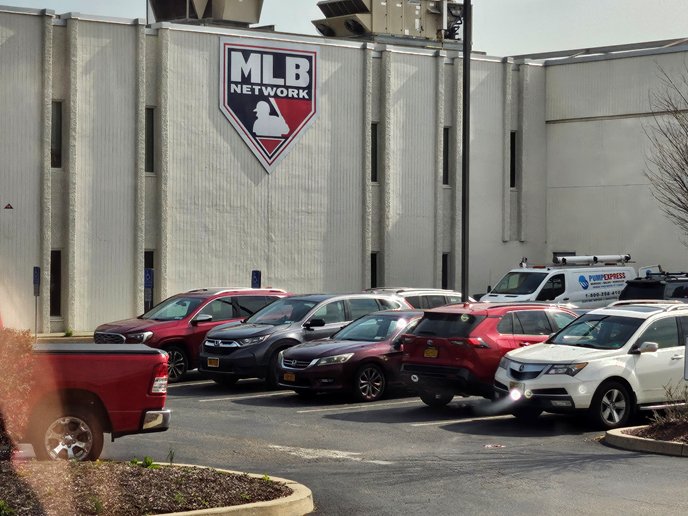
In Secaucus, New Jersey — just one bridge away from Manhattan — there’s a headquarters for a channel that broadcasts the entire Major League 24 hours a day, right in the middle of what looks like an ordinary industrial park.
Seeing the large “MLB NETWORK” logo on the building’s exterior made me realize this was that famous broadcaster.
The outside looks more like a logistics warehouse, but I already knew that once you step inside a completely different world unfolds, so my steps quickened.
MLB Network’s Ownership Structure
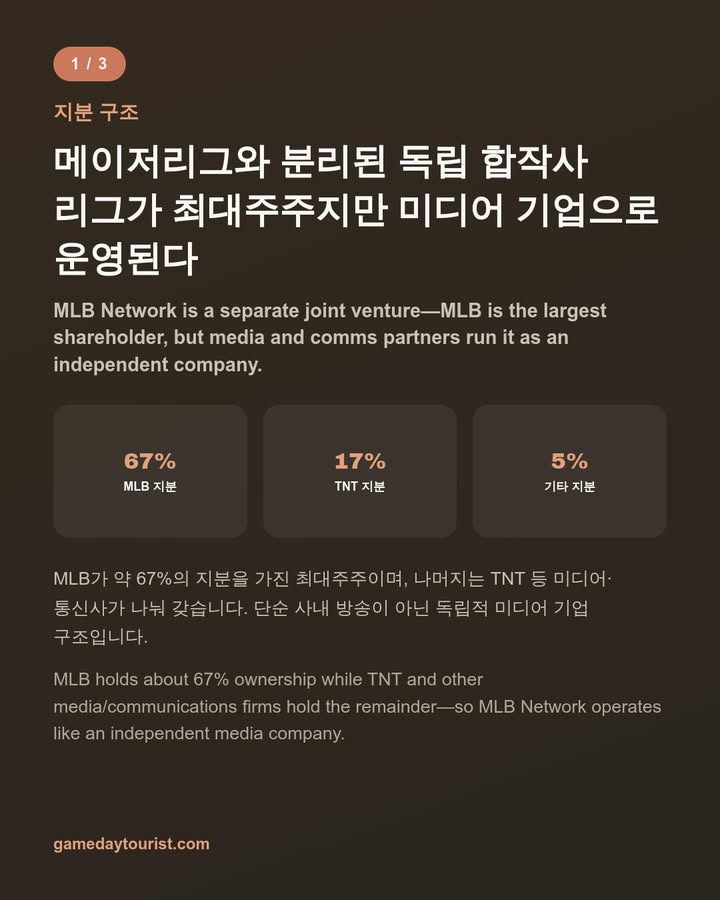
Because of its name, MLB Network can be easily mistaken for a department run directly by the league office, but in reality it is a separate joint venture with its own corporate structure, distinct from Major League Baseball.
Looking at the ownership, MLB is the largest shareholder with about 67%, while TNT Sports holds roughly 17%, and Charter Communications, Cox Communications, and NBC Sports Group each hold shares in the mid-single digits.
When it launched on January 1, 2009, Comcast, Cox, DirecTV, and Time Warner Cable were listed as initial investors, but the shareholder mix has changed through cable-industry restructuring and mergers to the current composition.
Although the league holds a majority stake, the rest is clearly a joint investment by media and telecommunications companies, so it functions less like an in-house broadcast room and more like an independent media company.
MLB Tonight Studio and Production Infrastructure
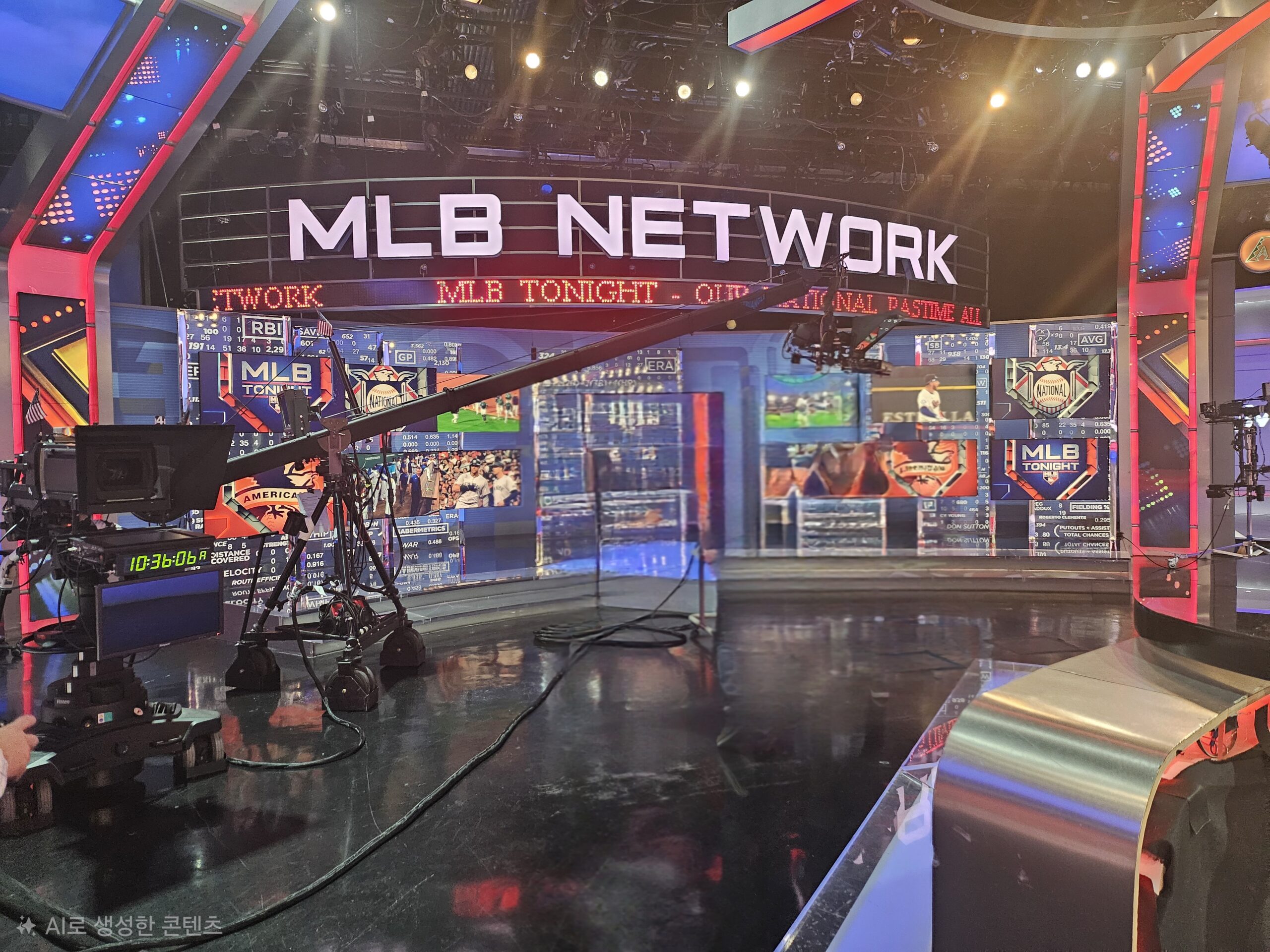
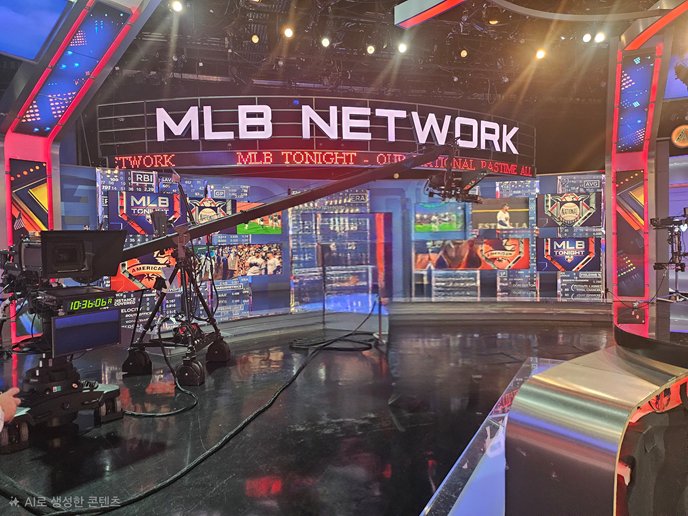
The first thing that grabs you inside the headquarters is the “MLB Tonight” studio. The ceiling is filled with lighting rigs and jib cameras, and giant LED walls cover the walls, streaming live game scores and sabermetric indicators in real time.
This program, which compiles highlights from every team each night, is said to be the channel’s heart, and seeing batting average, ERA, WAR and other metrics densely populated across the screens left the impression that broadcast production itself is very much a data industry.
Studio 42 — Jackie Robinson’s Number
The most impressive space was “Studio 42.”
Named after Jackie Robinson’s number 42, this studio brought in real turf and dirt to recreate a downsized ballpark infield; its size is 9,600 square feet. In our terms, that’s over 270 pyeong.
Logos of American League and National League teams are arranged by division on the walls, and actual photos of stands are used like murals around the set so that when the camera captures them it creates the illusion of being inside a real ballpark.
This studio operates as a separate set called “MLB Park” and is used for large events like live draft broadcasts and award ceremonies, so rather than a broadcaster it’s more like they built a small ballpark entirely indoors.
There are also studios of 5,600 square feet and Studio 21 at 8,000 square feet, and the fact that the league itself owns and operates this scale of in-house production infrastructure is enviable from the perspective of domestic professional-sports marketers.
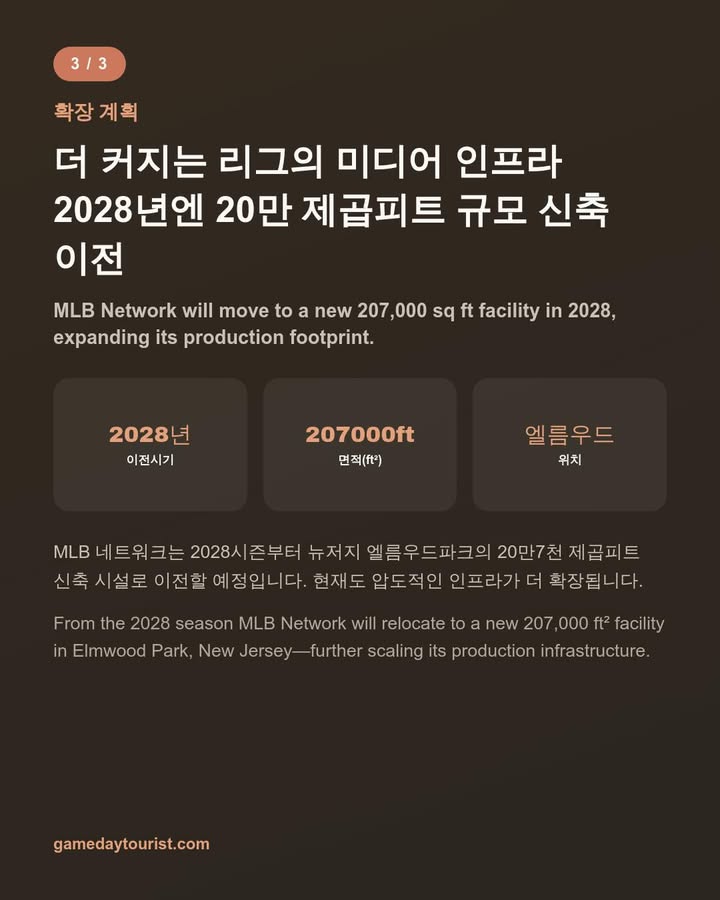
MLB Network also plans to move in the 2028 season to a new 207,000-square-foot facility in Elmwood Park, New Jersey, so this already impressive infrastructure will grow even larger.
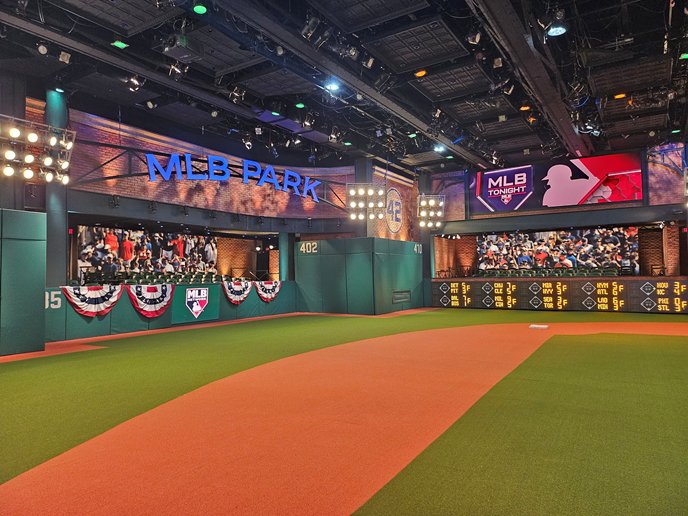
※ These are photos I took myself; I removed the people from the images using AI to protect their privacy.
Broadcast Coverage and Content Strategy
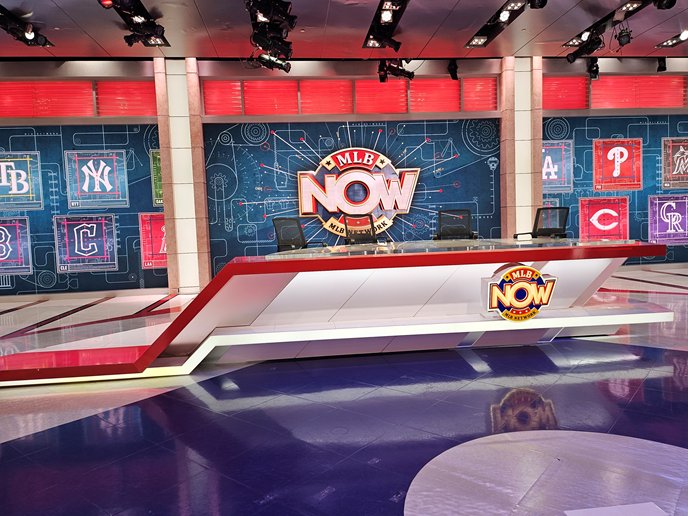
The broadcast coverage is extensive. Original programs like “MLB Now,” “Quick Pitch,” “High Heat,” and “Intentional Talk” air daily, and they operate a unique service called “MLB Network Presentation” that distributes regional broadcasters’ video and audio feeds nationwide for weekday afternoon games for which they do not hold rights.
Adding their weekly produced telecast, “MLB Network Showcase,” this single channel covers almost every media touchpoint of the league — news, highlights, live games, archives, the draft, and winter meetings.
Starting in the 2026 season, national broadcasts are split across NBC, Netflix, ESPN, FOX, TBS, and Apple TV Plus, making the landscape more fragmented than ever, but even within this fragmentation MLB Network serves as a hub that consistently voices the league’s official perspective.
Comparing with the KBO
After seeing all this, I naturally compared the situation to the KBO.
The domestic broadcasting structure is fundamentally different. KBO signed a three-year, 162 billion KRW broadcasting-rights deal with the three terrestrial broadcasters, under which the networks produce all five daily games themselves for three years, KBO can use those produced feeds, and the broadcasters can use them on their platforms (excluding new-media channels).
From the league or clubs’ perspective, the advantage is guaranteed coverage of every game without bearing production costs, but conversely it means KBO itself accumulates almost no know-how or infrastructure for producing broadcasts.
It’s a fundamentally different starting point compared to a structure like MLB Network, where the league itself equips cameras, studios, and data systems to create content.
Signs of Change at KBO
Recent moves suggest KBO is starting to narrow that gap, though. Since April 2025, they’ve piloted visualization broadcasts using TrackMan-based tracking data at Jamsil and Gwangju Champions Field games, and recent broadcast-rights contracts include clauses requiring cooperation in building an archive video database.
They are moving to accumulate data internally and build up the ability to produce broadcast content that uses that data. This matters because without in-house production capabilities, the league can’t separately package and sell specific games or scenes. If KBO secures its own production skills and data infrastructure, it could, as MLB Network does with archival footage, repurpose content and sell collections of classic games or player highlights separately.
From a marketer’s viewpoint, this isn’t just about building technical capacity in-house — it’s a chance to open new revenue models, so I view KBO’s moves quite positively.
Closing Thoughts
Ultimately, what MLB Network showed was an extreme example of how far a league can expand its content ecosystem when it owns and operates a broadcaster directly.
It’s realistically difficult for KBO to build a broadcaster of this scale right away, but I believe the current direction of gradually building up data and production capabilities in-house is correct. Walking out of that massive studio complex in Secaucus, I was once again reminded that the power of the content industry ultimately comes from ownership.
Leave a Reply