Contents · About 9 min read
📱 View as card news

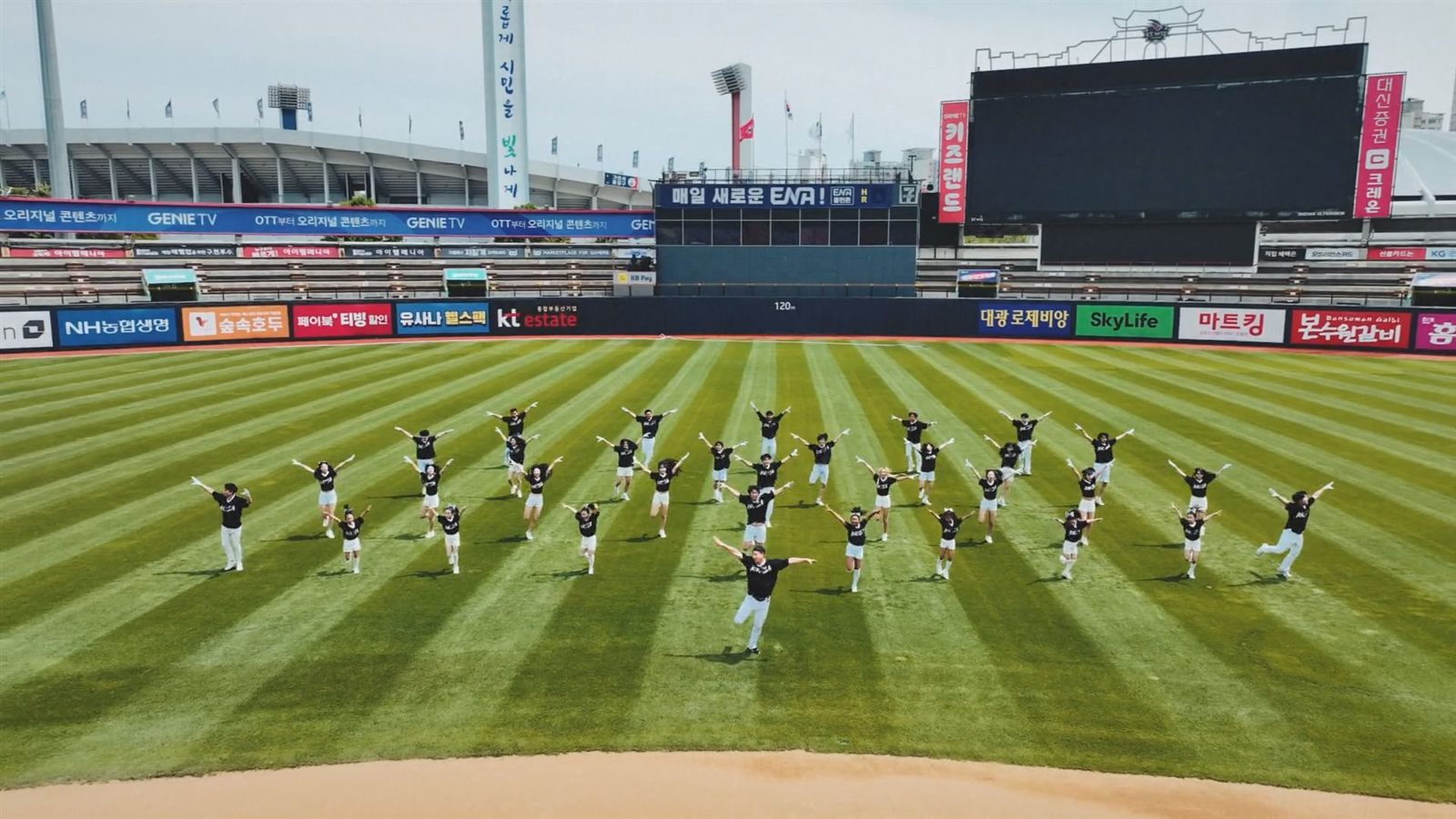
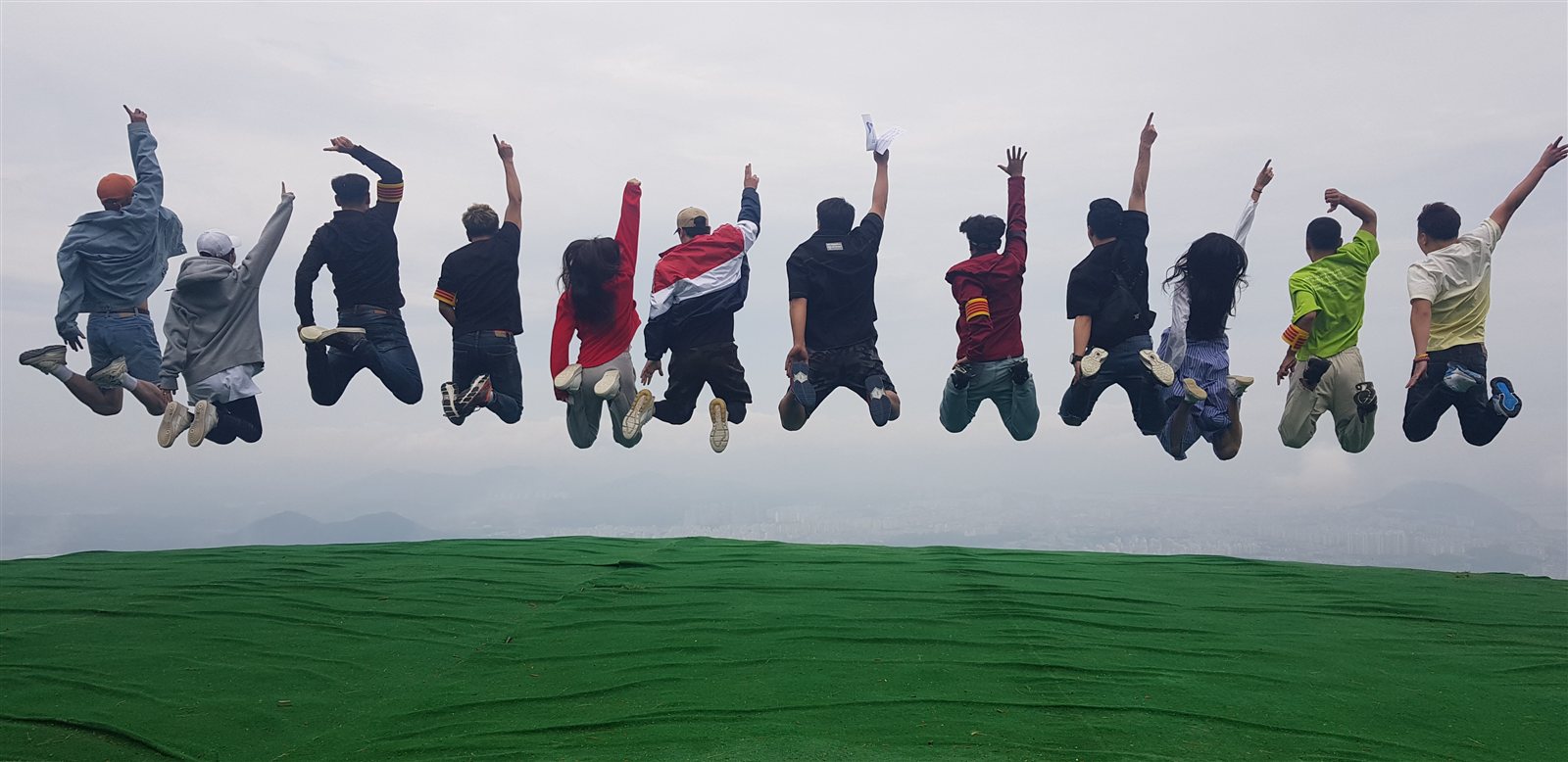
The cheer squad out on the field. For a moment, the ballpark itself becomes the stage for the cheering.
While tracking this season’s KBO attendance numbers, it struck me that the people who actually made those numbers happen rarely get talked about.
Korean pro baseball just came back from an unprecedented mid-season break forced by record heat.
The players and fans have had it rough in this heat, but there are people working just as hard through it.
Every year at the start of the season, there’s no shortage of stories about rookies, new managers, or renovated stadiums, but the cheer captains who stand with their backs to the field for over three hours, conducting the crowd until their voices give out, rarely get that spotlight.
As a working marketer, I wanted to properly introduce these ten cheer captains, at least this once.
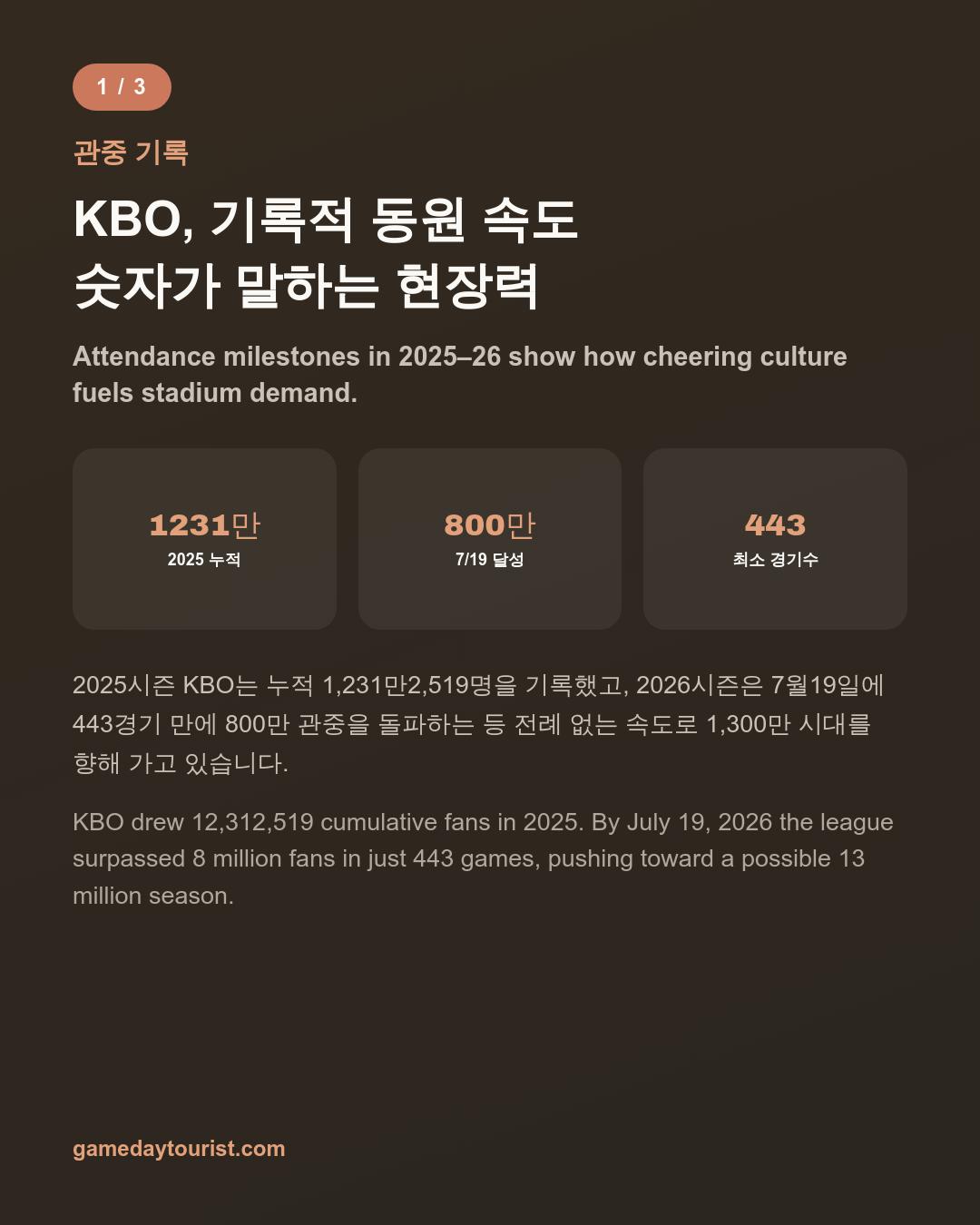
The KBO set a new all-time attendance record in the 2025 season with 12,312,519 fans.
That was the second straight year the record was broken.
And the 2026 season is moving even faster.
As of July 19, the league passed 8 million in attendance in the fewest games ever (443), and some in the media are projecting the league could cross 13 million fans for the first time ever by season’s end.
Nothing is confirmed yet, but there’s little disagreement that the pace itself is unusual.
A devotion older than the numbers
Underneath this boom are cheer captains who stand at the very front of the stands for three hours, every single game.
Some of them have genuinely devoted close to 20 years to a single team.
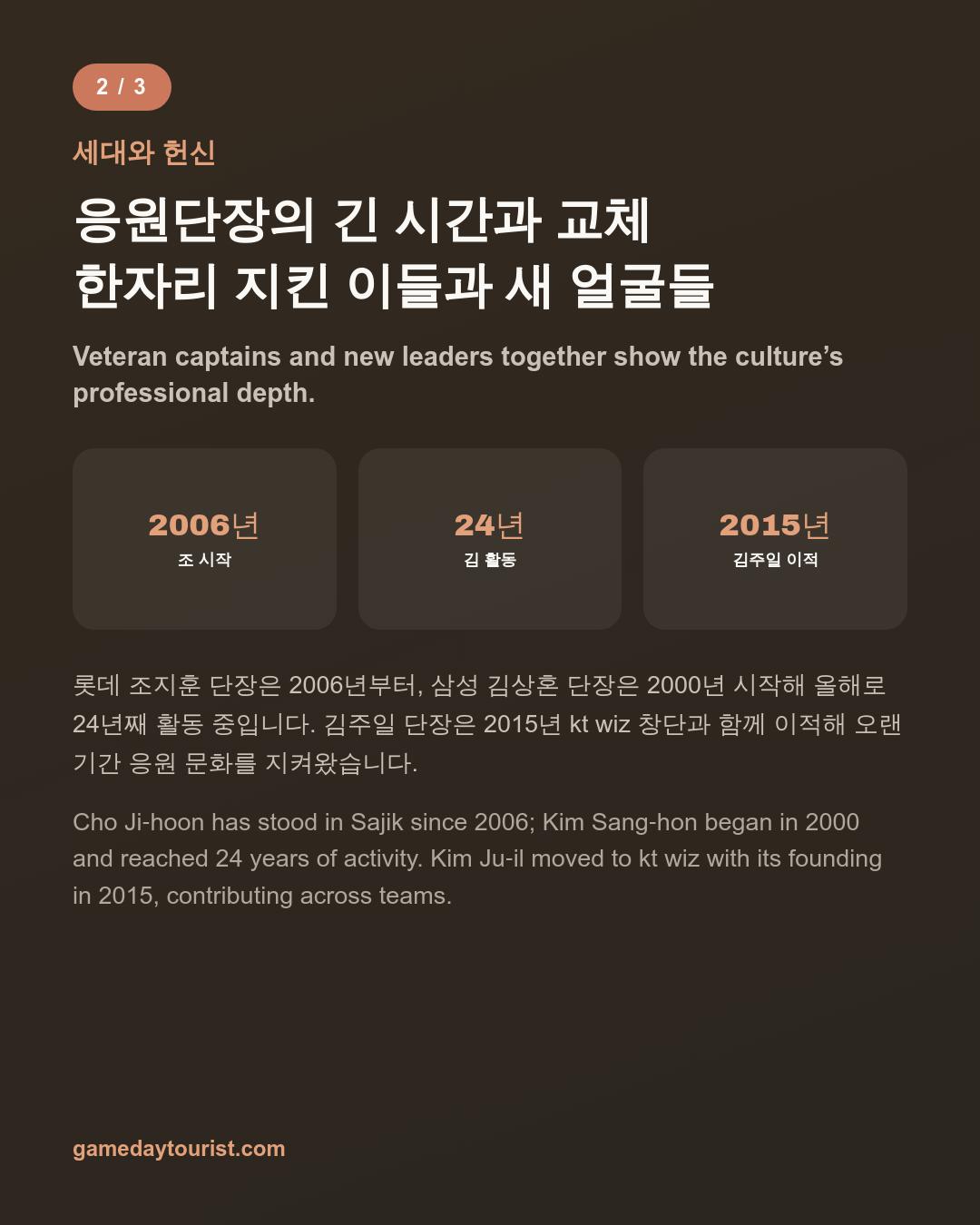
Lotte Giants captain Cho Ji-hoon has stood on the platform at Sajik Stadium since 2006.
This is his 20th year, and he was also the first in Korea to try giving each player his own individual cheer song.
Samsung Lions captain Kim Sang-heon started as the team mascot in 2000 and is now in his 24th year.
Since the 2013 season he’s led the cheering under his own name, out of the mascot costume.
Doosan Bears captain Han Jae-kwon has held his team’s platform since 2014, and Kia Tigers captain Seo Han-guk since June 2016, so both are well past the 10-year mark.
kt wiz captain Kim Ju-il is a slightly special case — he worked at Kia for 11 years before moving over when kt wiz was founded in 2015, and he’s been there ever since.
He switched teams, but in terms of sheer years as a cheer captain, he’s among the most senior across Korea’s four major pro sports.
I’d argue that without Kim Ju-il, who has been there since kt wiz was founded, the team wouldn’t have built the cheering culture — or the million-plus attendance — that Wiz Park has today.
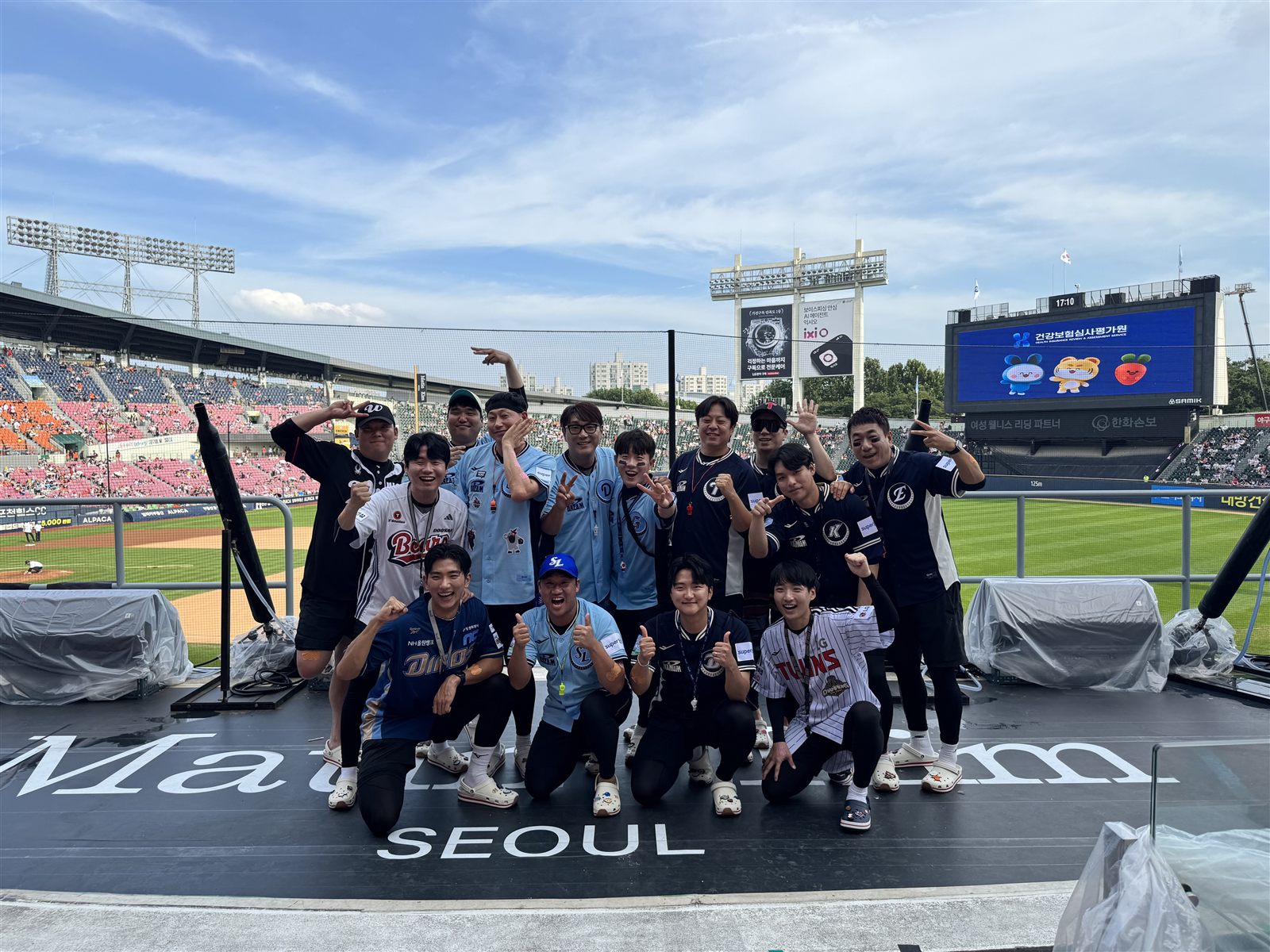
The annual KBO All-Star Game is one of the rare occasions when cheer squads from all 10 teams end up in the same place.
That said, this isn’t purely a club of 10-to-20-year veterans.
A generational shift is underway too.
The NC Dinos brought in their third-ever captain, Im Jong-deok, starting in 2025, and the Kiwoom Heroes replaced a captain of 12 years with Park Seung-geon that same April — he’s now the youngest cheer captain in the KBO.
SSG Landers captain Park Min-su and LG Twins captain Lee Yun-seung have also led their current teams since 2022 and 2021 respectively.
Seeing longtime veterans and people who just took over the role coexisting felt like proof that this has become an actual profession, not just one person’s individual talent.
Tokyo Dome, 2019 — why they paid their own way
Of all ten of their stories, there’s one that personally moved me the most.
It’s a piece of on-the-ground reporting from the WBSC Premier12 at Tokyo Dome in November 2019.
Samsung Lions captain Kim Sang-heon later said he made up his mind while watching the national team on TV and seeing the Korean side of the stands sitting nearly empty.
Lee Yun-seung, who was with a volleyball club at the time and now leads the LG Twins, packed his bags without a second thought too.
The KBO hadn’t invited them, and it wasn’t covering their expenses.
They each bought their own plane tickets, out of pocket.
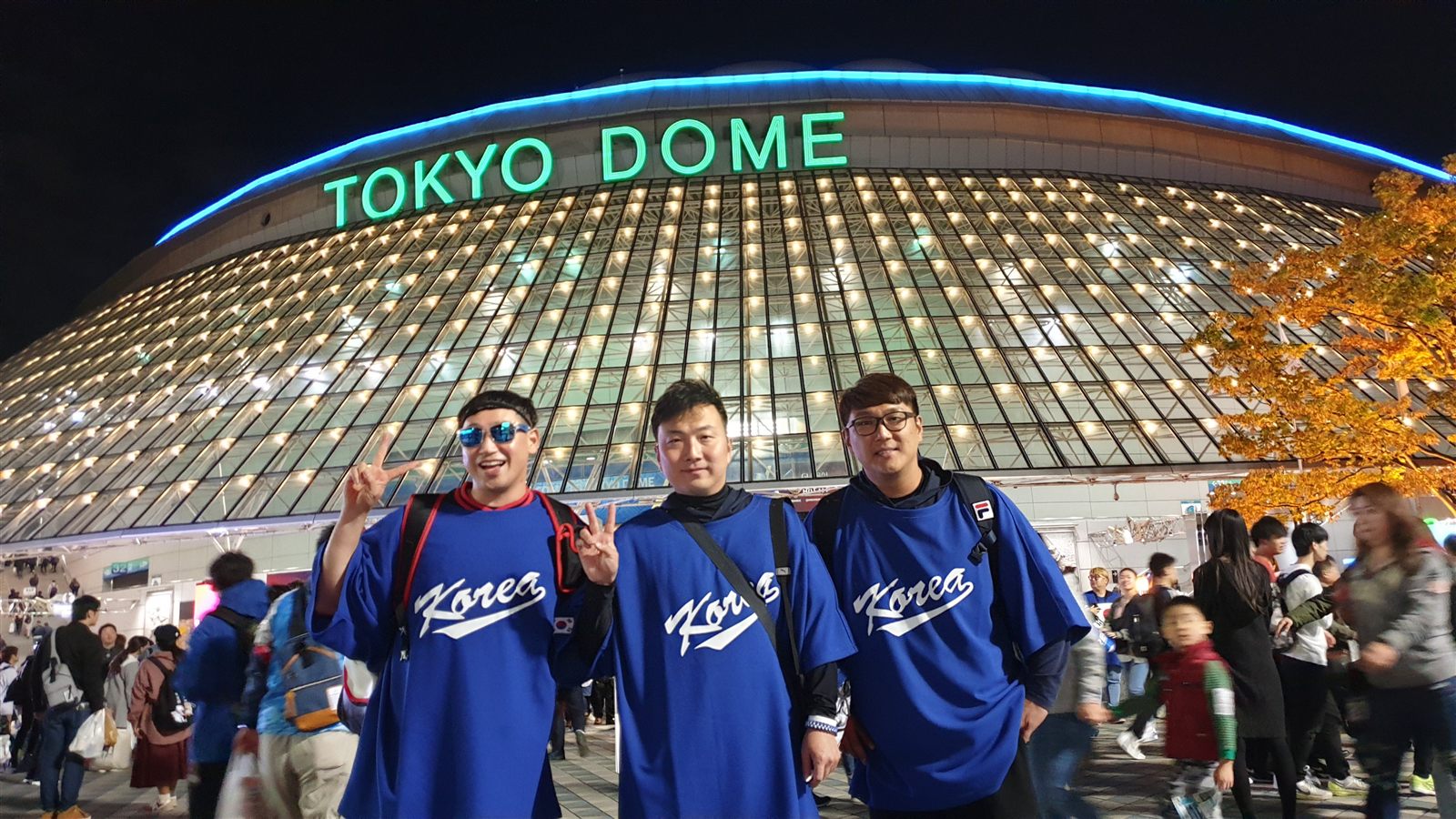
Tokyo Dome during the 2019 Premier12. The cheer squad wasn’t representing the KBO — they’d taken off their own club uniforms and put on the Taegeuk mark instead.
By the next day’s final, Doosan Bears captain Han Jae-kwon and kt wiz captain Kim Ju-il had joined them too.
Tickets for the Super Round were already sold out, so they had no choice but to wait it out, and even the final only became something they could cheer at in person because the KBO stepped in to help.
Being in a different country with a different culture meant a lot of things to be careful about.
There was no platform to stand on, cheering equipment like amps wasn’t allowed in, and about all that was permitted was whistles and a drum — and even those couldn’t be used past 10 p.m.
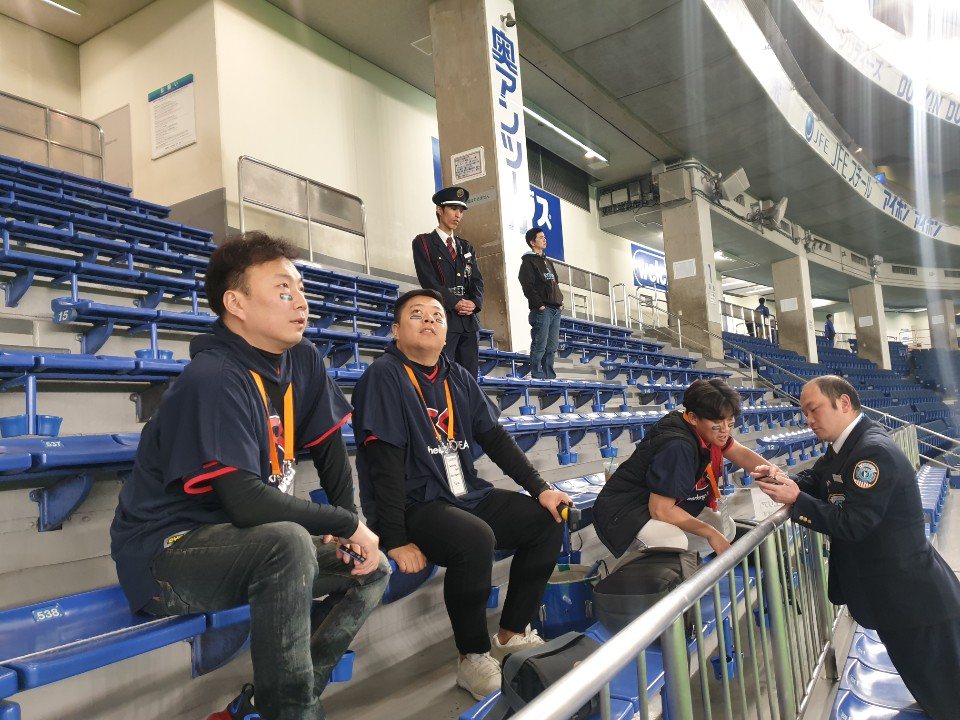
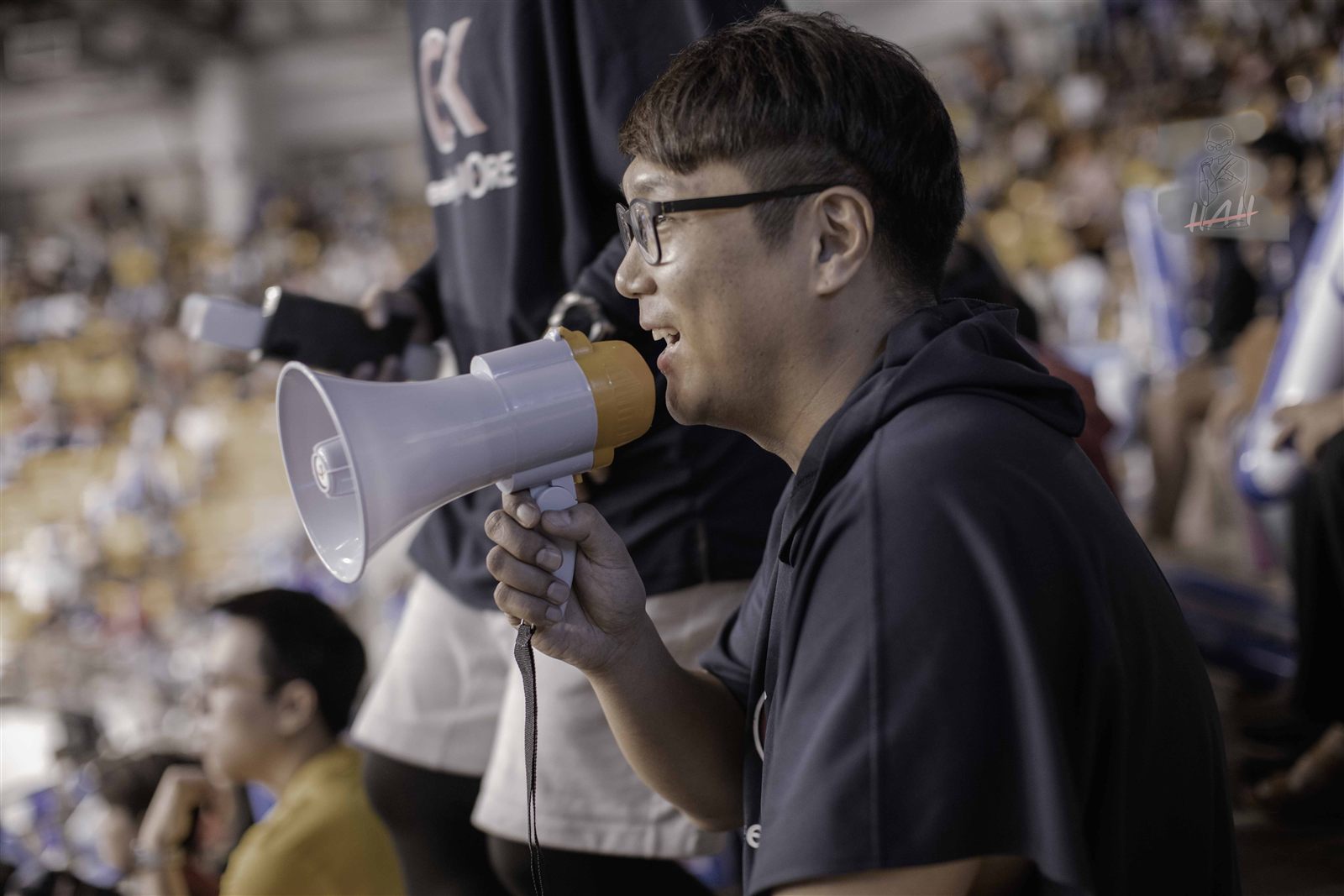
Getting permission to cheer in person at the final meant negotiating, one point at a time, with venue staff in an unfamiliar country.
Copyright issues meant they couldn’t even sing their cheer songs freely.
And yet their interviews carried more resolve than regret.
They said their dream was for an official, properly organized “Team Korea cheer squad” to exist someday.
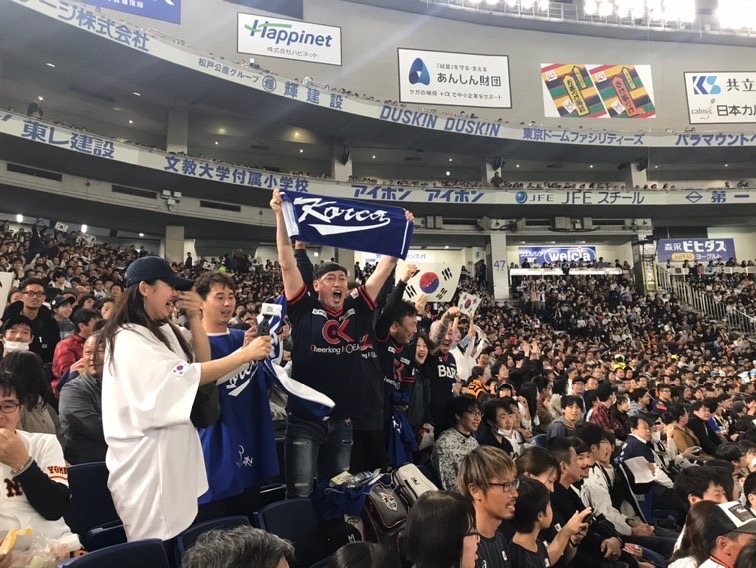
Tokyo Dome on the day of the final. Despite the story of scrambling because tickets were sold out, the energy of the on-site cheering was every bit as fierce.
A few years on from that, that wish is slowly becoming reality.
The KBO began dispatching and running an official traveling cheer squad for the exhibition games in Japan in November 2025 and for the 2026 WBC main-round games at Tokyo Dome.
It’s hard to say for certain that those voluntary steps taken in 2019 directly caused this later change, but it seemed clear, at the very least, that what those fans envisioned that day in the outfield seats of Tokyo Dome — paying their own way, raising their voices — isn’t so different from what’s happening now.
People who push through weather and exhaustion with sheer passion
A cheer captain’s day starts long before the first pitch.
It’s probably a similar story for cheer captains at every club.
Whether it rains or the heat is brutal, that routine barely changes.
Of course, there are moments when the weather itself becomes material for the cheering.
A signature example is firing giant water cannons into the stands on summer nights — it’s a device for re-energizing a crowd worn down by the heat, and a spectacle in its own right.
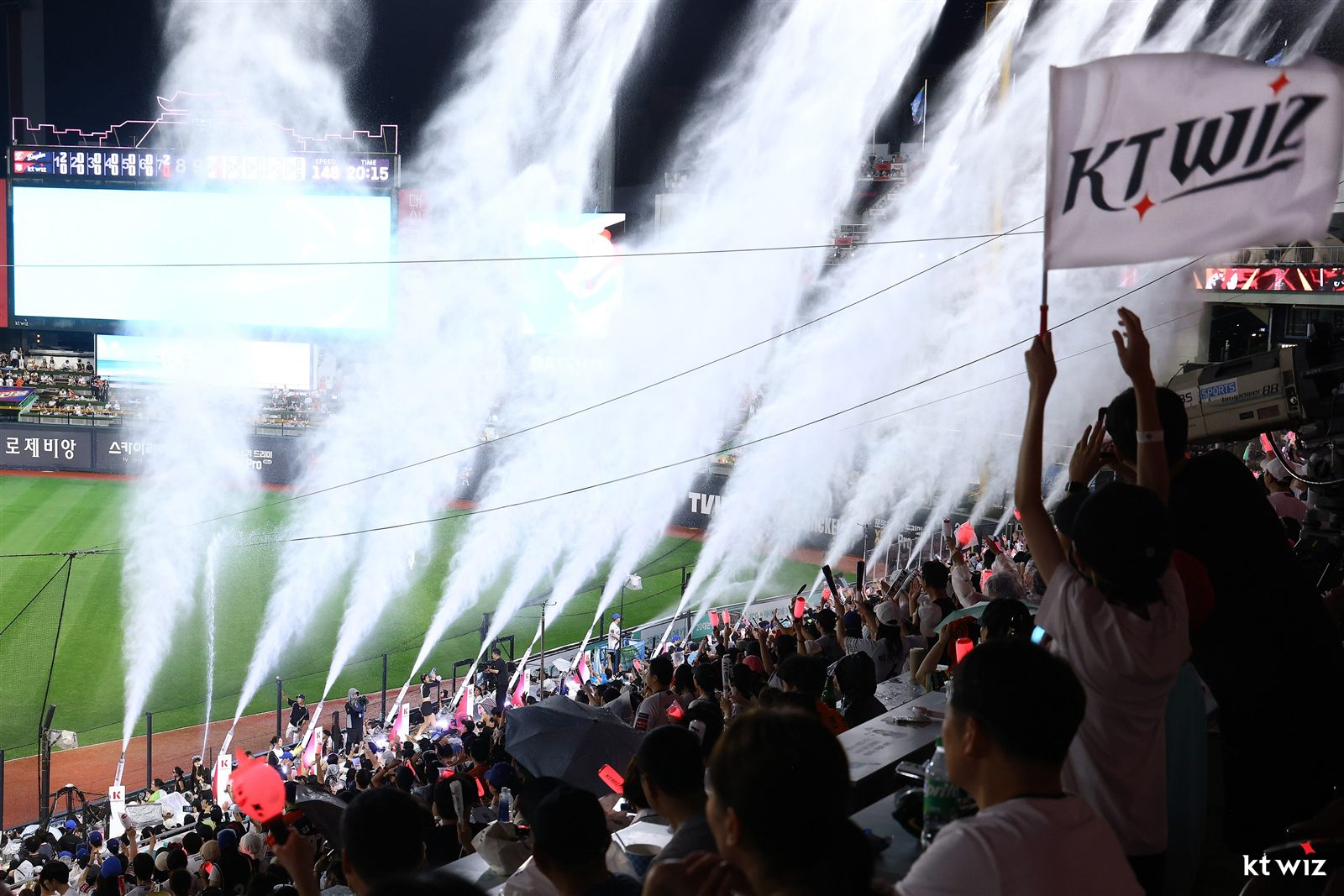
The kt wiz Water Festival cheering event, staged on a sweltering summer night. Just as the crowd starts to fade, the squad creates a new rhythm.
NC Dinos captain Im Jong-deok has admitted that when he made his pro baseball debut last year, the stress of preparing new cheer songs made him lose 5 kilograms.
Regardless of the team’s record or whether they win a title, every single game is both a stage and a test for these captains.
Hanwha Eagles captain Hong Chang-hwa became a fan after watching Hanwha’s 1999 Korean Series title as a kid, and he’s held his post since 2006 — the years he’s spent at the front of the stands, through good seasons and bad, have tracked the team’s own ups and downs.
Keeping a routine that doesn’t waver in the face of the team’s record — as a marketer, I’d be hard-pressed to find a more consistent example of on-the-ground fan engagement.
They make it themselves, and they do it themselves
Another thing these captains have in common: they don’t outsource their cheer songs and routines — they make them themselves.
Most of the cheer songs led by LG Twins captain Lee Yun-seung are known to be his own compositions, lyrics and all.
kt wiz captain Kim Ju-il says there’s real reward and a thrill in hearing the crowd belt out a cheer song he put real care into writing.
When music copyright issues made existing cheer songs unusable league-wide, Samsung Lions captain Kim Sang-heon took it upon himself to write new player-specific cheer songs — one of them, with its distinctive melody and moves, had fans from all ten teams singing along together at the 2019 KBO All-Star Game.
Lotte Giants captain Cho Ji-hoon starting the practice of individual player cheer songs, first in Korea, 20 years ago, was the starting point for a custom now taken for granted.
The industry K-cheer culture built
Working alongside these captains reconfirmed something for me as a marketer.
The KBO’s boom can’t be explained by good on-field performance alone.
A figure of 12.31 million fans, and a current pace headed toward 13 million, is closer to the result of turning the ballpark into an entertainment product rather than just a place to watch a game.
The directors and hosts of that content are the cheer captains.
Digging through overseas sports marketing material, I keep running into how Korean ballpark cheering culture — often compared to a K-pop concert — becomes a talking point among foreign sports media and industry people, and at the center of it, every single game, are these ten pairs of hands pulling everyone’s voices into one.
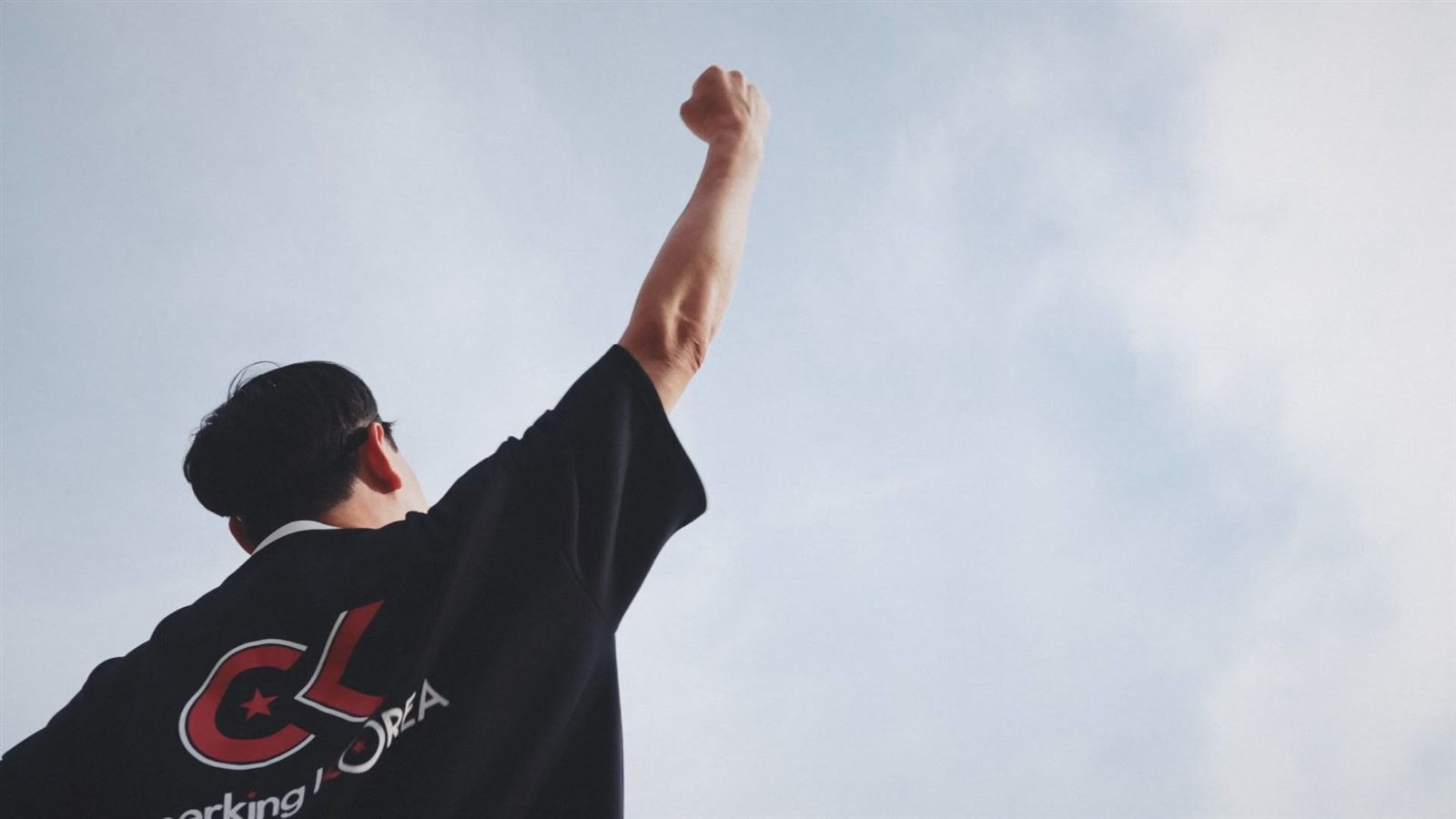
Not the record, not the weather, not the cost — none of it has stopped these ten from showing up.
The reason I’m writing this is simple.
I wanted to say thank you, even if it’s late, to the people who’ve conducted the crowd’s voice from behind the flashy scoreboard.
These captains are employees of their clubs, but there’s no question they’re more fiercely passionate than most people at any job, and that they’re driving the boom the league is enjoying right now.
And yet their working conditions aren’t all that great.
That’s something that needs to improve too.
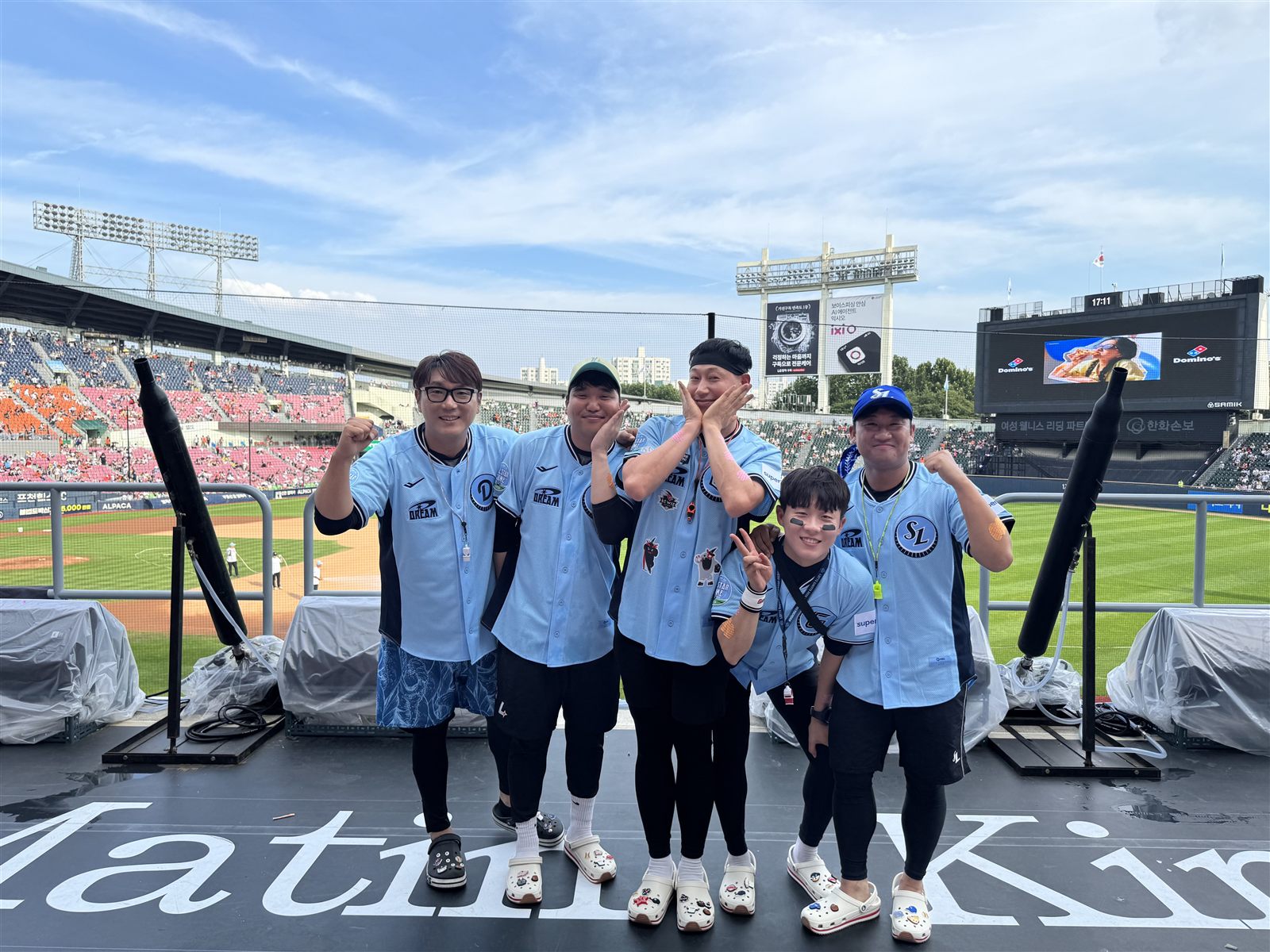
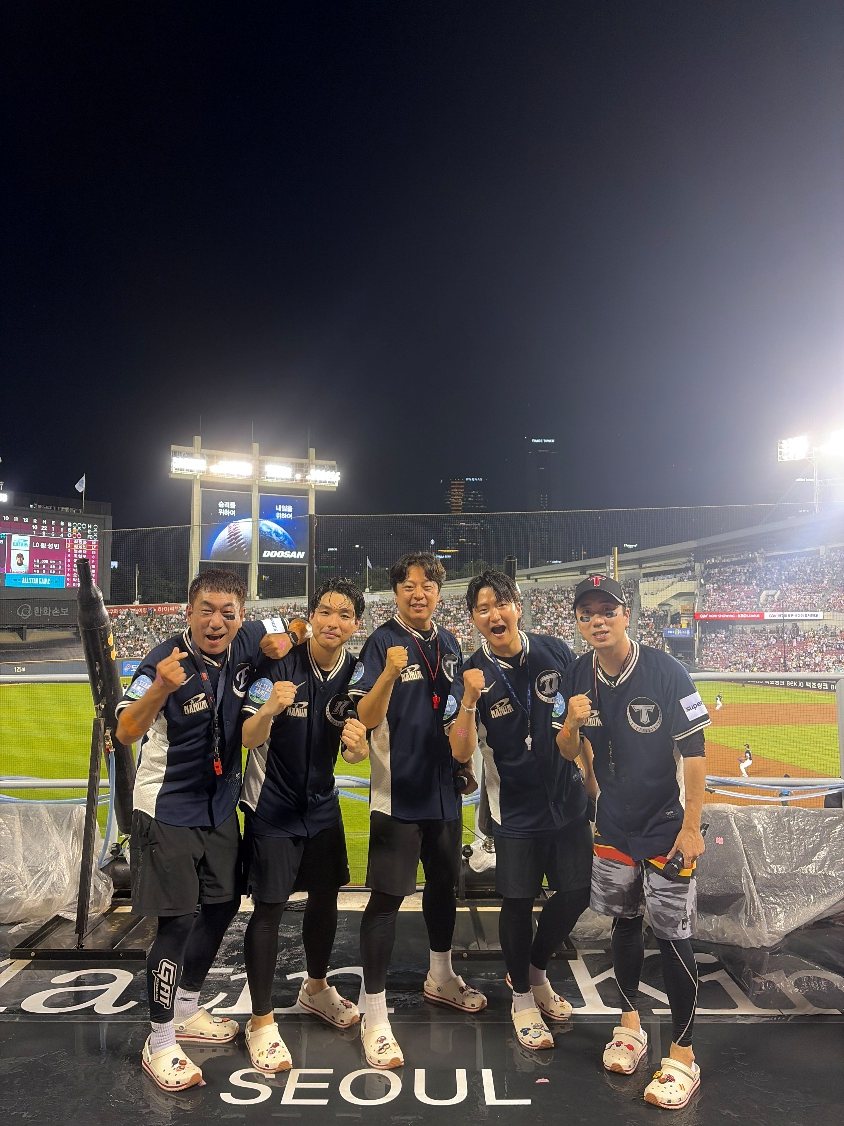
Han Jae-kwon (Doosan Bears), Kim Ju-il (kt wiz), Lee Yun-seung (LG Twins), Park Seung-geon (Kiwoom Heroes), Park Min-su (SSG Landers), Im Jong-deok (NC Dinos), Cho Ji-hoon (Lotte Giants), Hong Chang-hwa (Hanwha Eagles), Kim Sang-heon (Samsung Lions), Seo Han-guk (Kia Tigers).
I’m writing out the names, one by one, of the ten people who are out there right now, in this heat, conducting the stands at their own stadium.
I’m writing this with gratitude and respect.
Leave a Reply