Contents · About 6 min read
- KT AI STADIUM — Project Overview
- AI Scoreboard and Congestion Guidance
- A Strategy Built for Foreign Fans
- AI Bigttori Assistant — Chatbot and Customer Service
- AI-Driven Fan Engagement Content
- Bringing AI In-House for Content Production
- Benchmarked by Clubs Overseas
- How It Worked Without a New Stadium
- Real Results and Closing Thoughts
📱 View as card news
I promised in my Intuit Dome post that I’d dig into kt wiz’s AI Stadium next — so here it is, properly this time.
kt wiz is the youngest club in the KBO League, founded in 2013. Because its parent company is a telecommunications firm, the team naturally developed an image among fans as being “strong on technology,” and when you look closer you realize that image wasn’t just manufactured.
I’d call this team one of the most impressive cases in Korean pro sports — no other club has carried its parent company’s DNA into how it’s run quite like kt wiz has with KT’s.
At the pinnacle of all these efforts is the “KT AI STADIUM.”
KT AI STADIUM — Project Overview
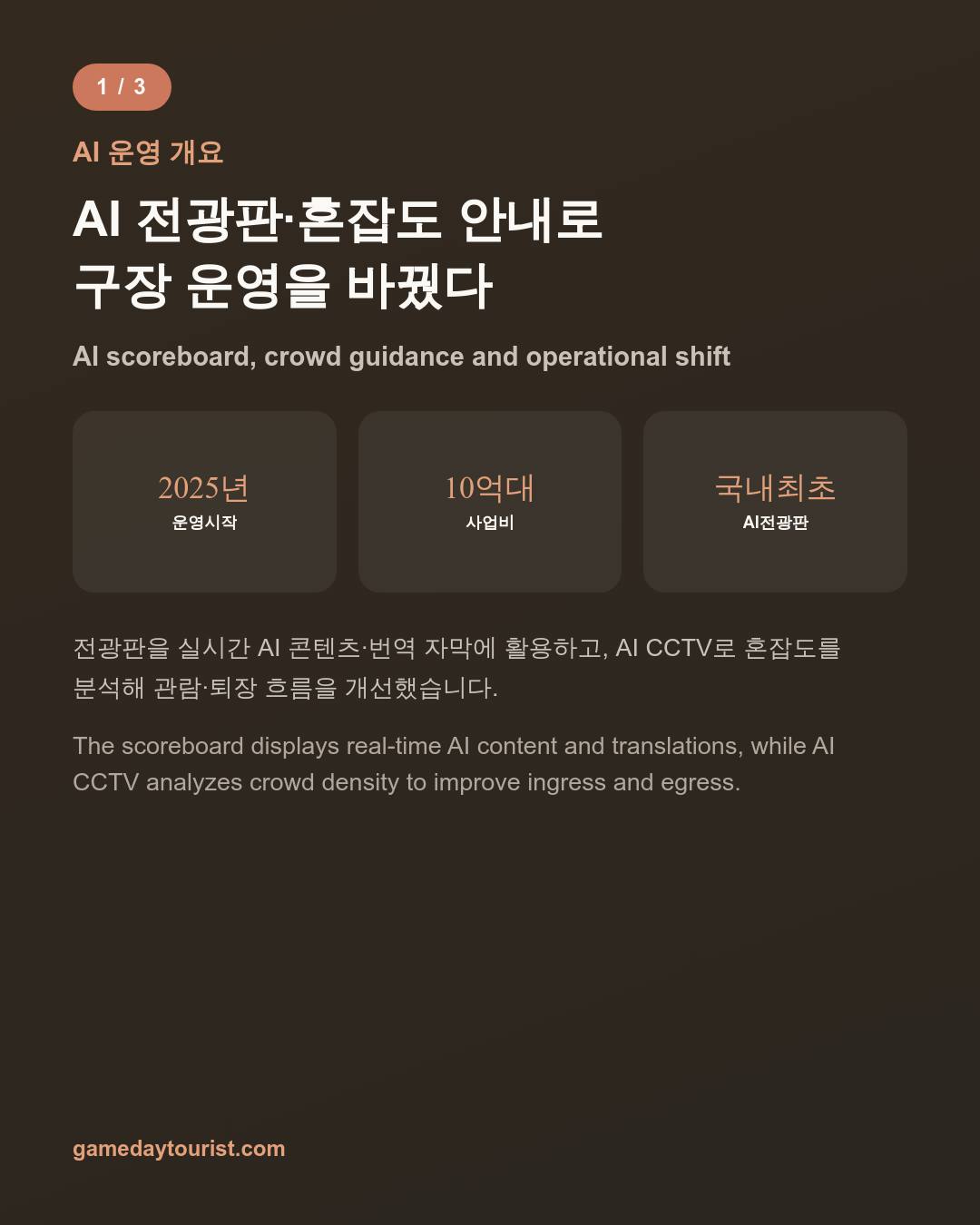
A joint project between kt sports and KT, it began official operation from the 2025 season opener. The total project cost is reported to be in the low billions of won—small compared to the cost of building a new stadium—but it has changed a lot with a relatively modest investment.
In recognition of these efforts, kt wiz received the Prime Minister’s Commendation at the 21st Korea Sports Industry Awards in December 2025. This was their second national-level award after a Presidential Commendation in 2019, confirming that these achievements weren’t made overnight.
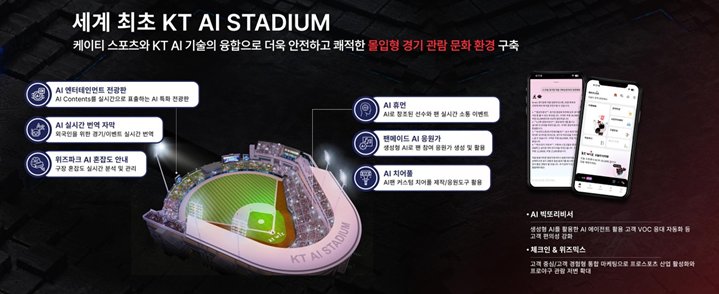
Source: kt sports website
AI Scoreboard and Congestion Guidance
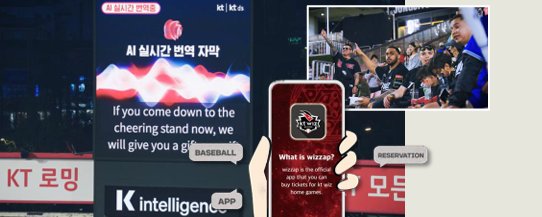
The most striking feature is the country’s first dedicated AI-specialized scoreboard. While traditional scoreboards were used mainly for broadcast screens or ads, this scoreboard was designed to display AI-generated content in real time.
They also added the Wiz Park AI congestion guidance feature, using it to analyze and manage stadium crowding in real time.
The club’s integrated operations center runs an AI CCTV-based video analysis system that tracks object recognition and crowd density together, feeding real-time congestion data to fans on PC and mobile. After the final out, that same scoreboard shows how backed up the exits are. It’s actually preventing safety incidents and easing bottlenecks at the gates — which tells you this isn’t just a flashy feature, it’s solving a real operational problem.
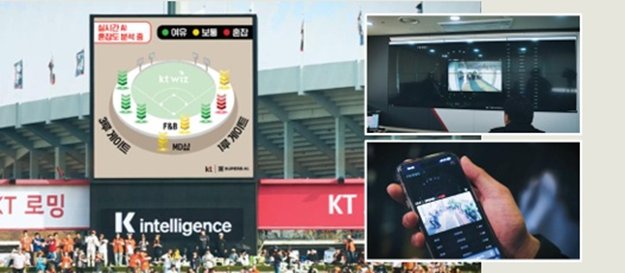
Source: kt sports website
A Strategy Built for Foreign Fans
The characteristics of the Suwon area, where KT Wiz Park is located, are also directly reflected in the club’s strategy.
With the nearby presence of the US Eighth Army headquarters, the ROK-US Combined Forces Command, and the Pyeongtaek Humphreys and Osan US bases, the proportion of foreign fans is inevitably higher here than at other clubs.
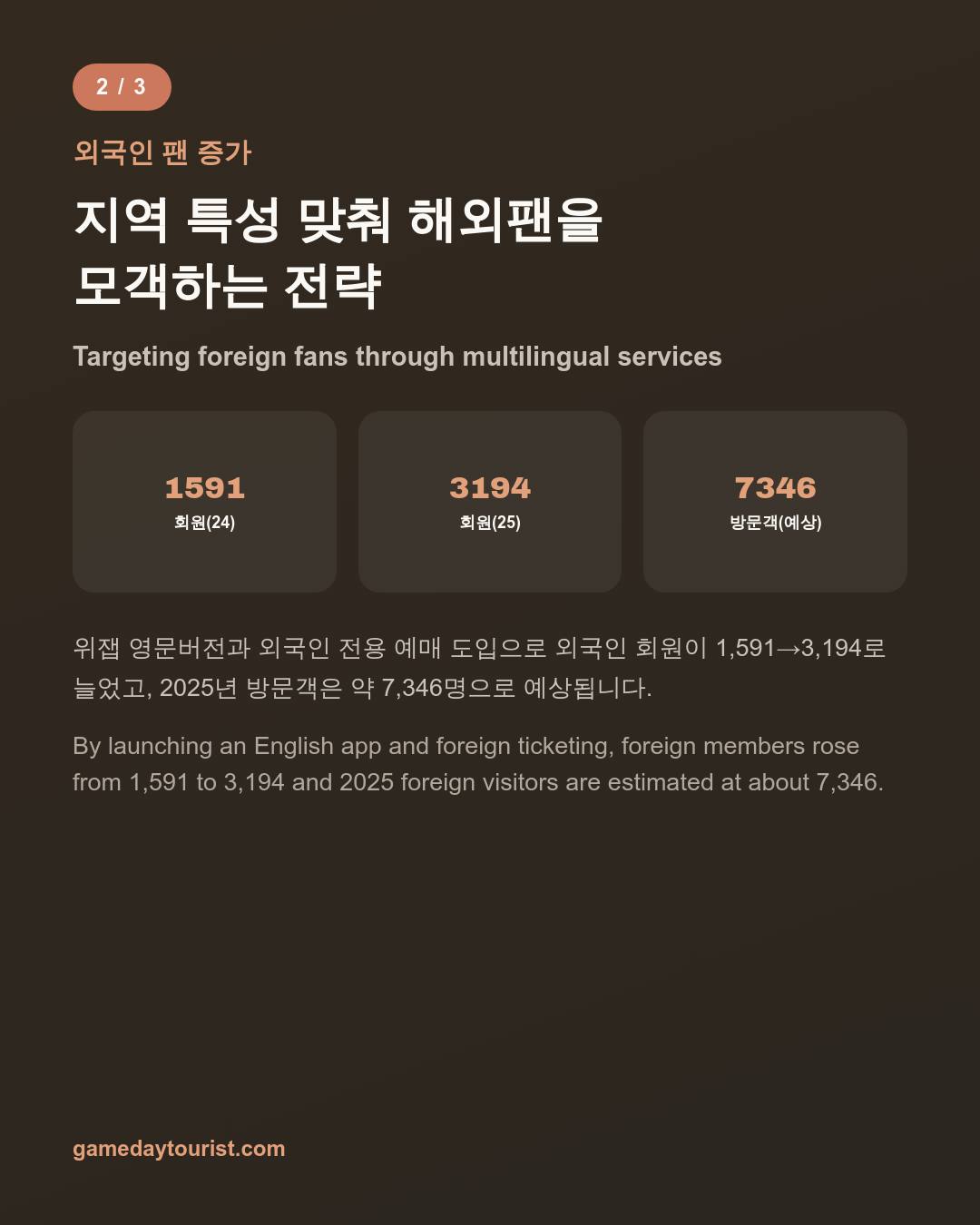
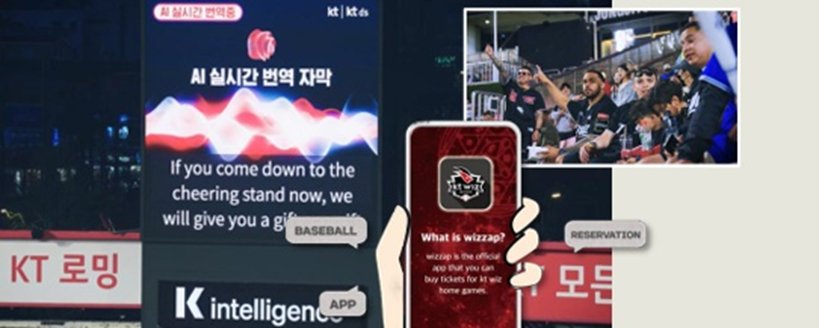
kt wiz addressed this precisely by officially launching the English version of their club app “Wizzap” in March 2024, and they became the first domestic professional club to support an online ticketing system for foreign users.
They even signed a memorandum of understanding with the ROK-US Combined Forces Command to provide sports viewing opportunities for assigned personnel and to promote use of the Wizzap English version. According to officials, foreign membership grew from 1,591 in 2024 to 3,194 in 2025—a 100% increase—and considering average ticket purchases per person, foreign visitors in 2025 are expected to reach about 7,346.
Source: kt sports website
The real-time translated subtitle service using the AI scoreboard fits the same context.
This displays translated text of game announcements and event details so foreign spectators can understand them in real time—directly addressing the inconvenience of foreign fans missing cheering opportunities or hesitating to participate in events due to language barriers.
AI Bigttori Assistant — Chatbot and Customer Service
In customer service, the core was the “AI Bigttori Assistant.”
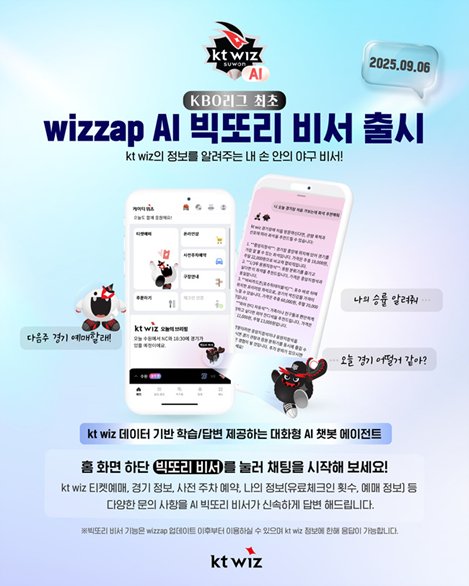
It’s a generative AI agent built into the Wizzap app — first rolled out commercially after an AICC upgrade in May 2025, then relaunched on September 6 as an official feature billed as the KBO League’s first conversational AI chatbot.
It handles ticket reservations, game information, advance parking reservations, and stadium guidance, and can answer questions like “Tell me my win rate” or “How do you think today’s game will go?” by learning kt wiz data.
Older chatbots only reacted to a fixed set of keywords; Bigttori Assistant has been upgraded to learn from real data and get ahead of customer questions before they’re even asked.
Source: kt wiz website
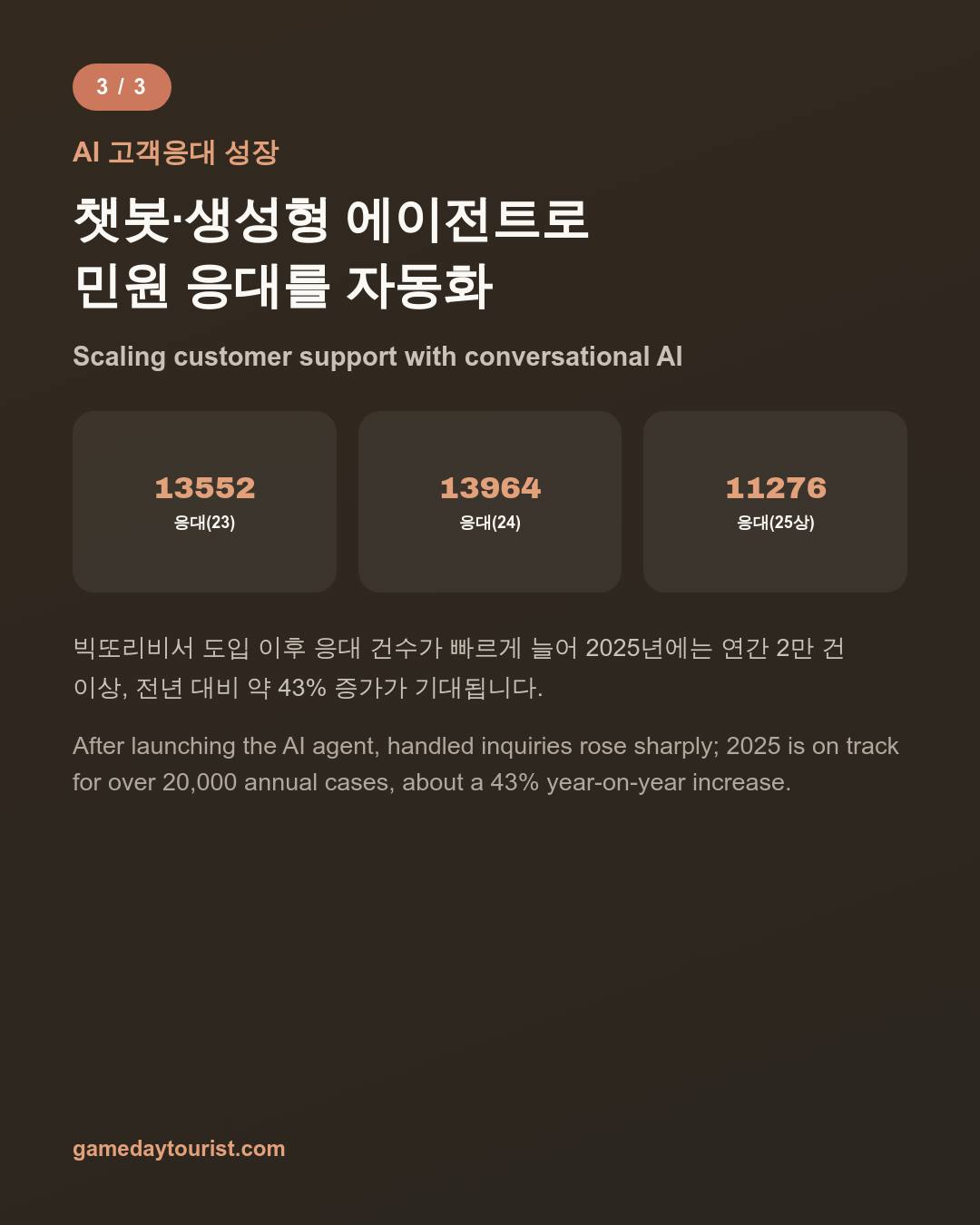
The trend in interaction volume also shows clear growth.
According to marketing staff, interactions rose from 13,552 between March and December 2023 to 13,964 in 2024, and in the first six months of 2025 they had already handled 11,276—projecting over 20,000 annual interactions, about a 43% increase year-on-year. By automating customer service—the most exhausting yet indispensable area in sports marketing—with AI, they improved both customer satisfaction and operational efficiency.
AI-Driven Fan Engagement Content
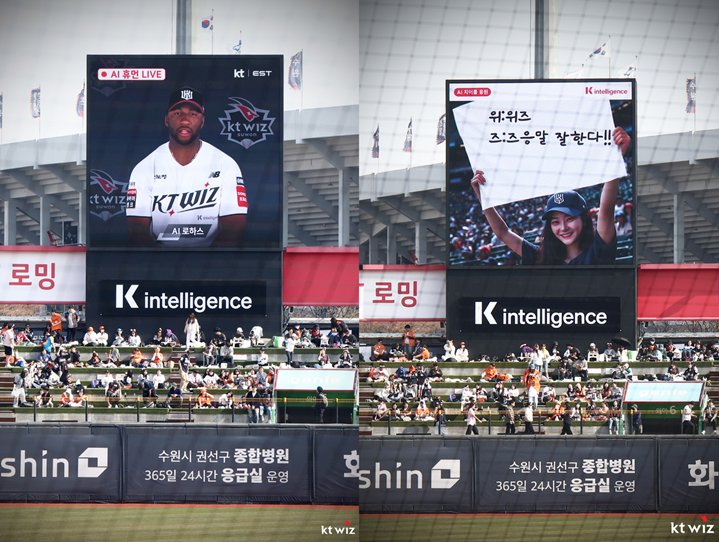
On the fan experience side, the “AI Human” stood out.
An AI-created player character that interacts with fans in real time, it’s highly efficient content because it can maintain fan touchpoints without being constrained by actual players’ schedules or conditions.
They also expanded fan participation by running a generative AI contest for creating “fan-made AI cheer songs,” and offering “AI cheerfuls” that generate custom cheers for individual fans to use as cheering tools—shifting fans from passive consumers to active creators.
Interactive events like AI sketch drawing contests and AI photo booths followed the same trend.
Source: kt wiz website
Bringing AI In-House for Content Production
I was particularly impressed that videos shown on scoreboards throughout the stadium, media walls in stores, and the stadium front media façade are also produced with generative AI.
They need to constantly create new videos for seasonal and game-specific themes, and by bringing part of that production in-house with generative AI, they significantly reduced outsourced production costs. It’s an ideal marketer’s combination—keeping content volume and freshness while lowering costs.
Benchmarked by Clubs Overseas
These achievements became a topic of interest in the Korean and Japanese pro sports industries, and since 2024 teams from the K League and KBL, as well as overseas clubs like the Hanshin Tigers, Rakuten (Japan and Taiwan), and the Seibu Lions, have visited to benchmark kt wiz’s AI Stadium and marketing methods.
Considering how rare it is for a domestic club to be a benchmarking target for overseas teams, you can imagine the scale of change this club has created.
How It Worked Without a New Stadium
There’s one point I want to emphasize here.
Unlike overseas stadiums like Intuit Dome that were built from the design stage with huge capital and AI technology in mind, kt wiz implemented all this on top of an existing stadium built in 1989.
They solved problems that were often thought to require new construction by precisely identifying what customers actually needed and addressing those points one by one. If overseas clubs with flashy new stadiums start by redesigning from scratch, kt wiz took the opposite approach: add only what’s necessary onto what already exists. This difference is a much more realistic reference for most domestic clubs. kt wiz has shown that there’s no need to delay technology adoption simply because you can’t build a new stadium.
Real Results and Closing Thoughts
And the numbers back it up. For the first time since its founding, kt wiz is on the verge of drawing one million spectators in the 2025 season, with 62.6% of attendees coming from Suwon and the wider Seoul Capital Area — a clear sign the club has become a hub for professional sports in the southern Gyeonggi region.
In summary, kt wiz’s AI Stadium isn’t about flashy spectacle — it’s built to cut hassle for spectators and boost fan engagement.
Just proving that you can get this far without the premise of a new stadium makes this a highly meaningful reference for other domestic clubs.
Leave a Reply