Contents · About 3 min read
📱 View as card news
I walked around Fremont Street in downtown Las Vegas.
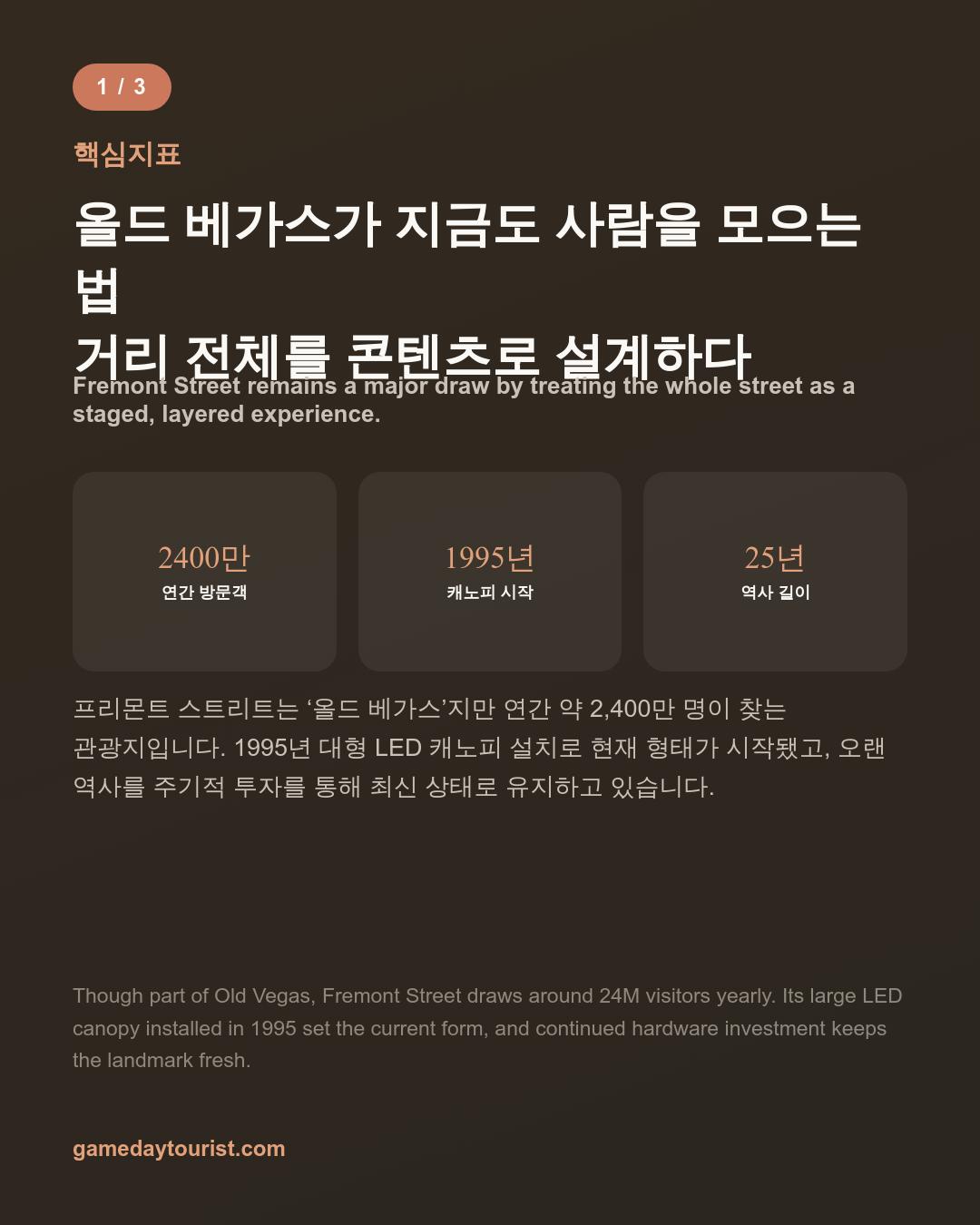
Unlike the strip lined with flashy resorts, this area is the “Old Vegas” where Las Vegas began. I purposely set aside time to walk it because I was curious why this old street still attracts more than 24 million visitors a year.
To get to the point: what impressed me most was that they designed the entire street as a single piece of content, not just one facility.
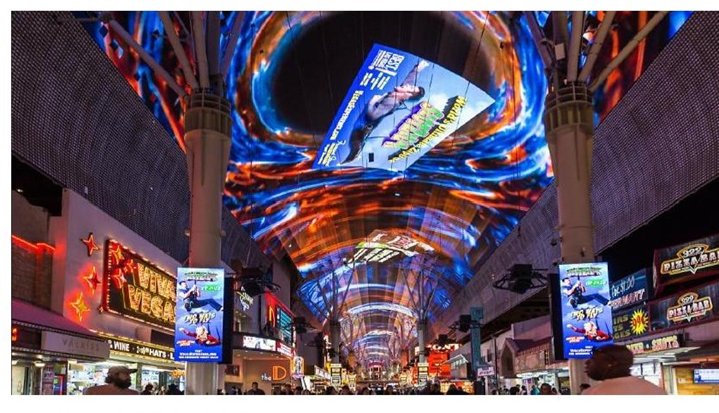
Fremont Street Experience — Putting a Roof Over an Entire Street
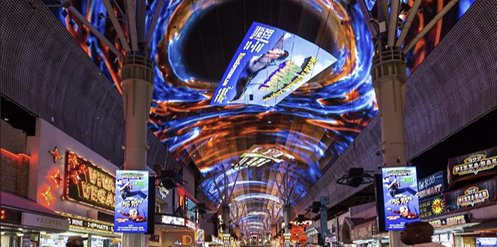
Fremont Street took its current form when a large LED canopy was first installed in 1995.
They covered five blocks of pedestrian-only street with an arched roof and run a year-round free event called the “Fremont Street Experience,” which combines LED screens, speakers, and live performances on that roof.
From a marketer’s perspective, the very idea of closing off an entire road, putting a roof over it, and turning it into a brand asset is something you keep thinking about.
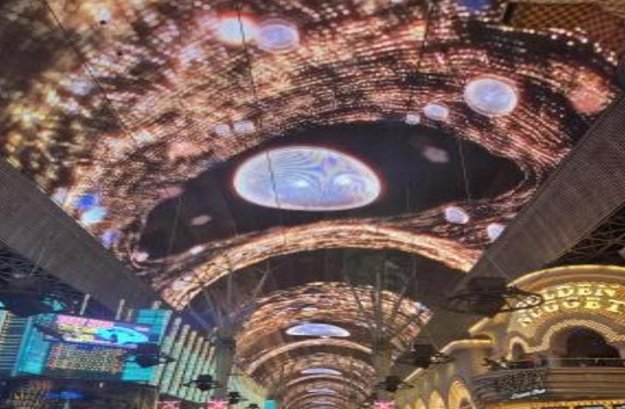
Viva Vision — The World’s Largest LED Canopy
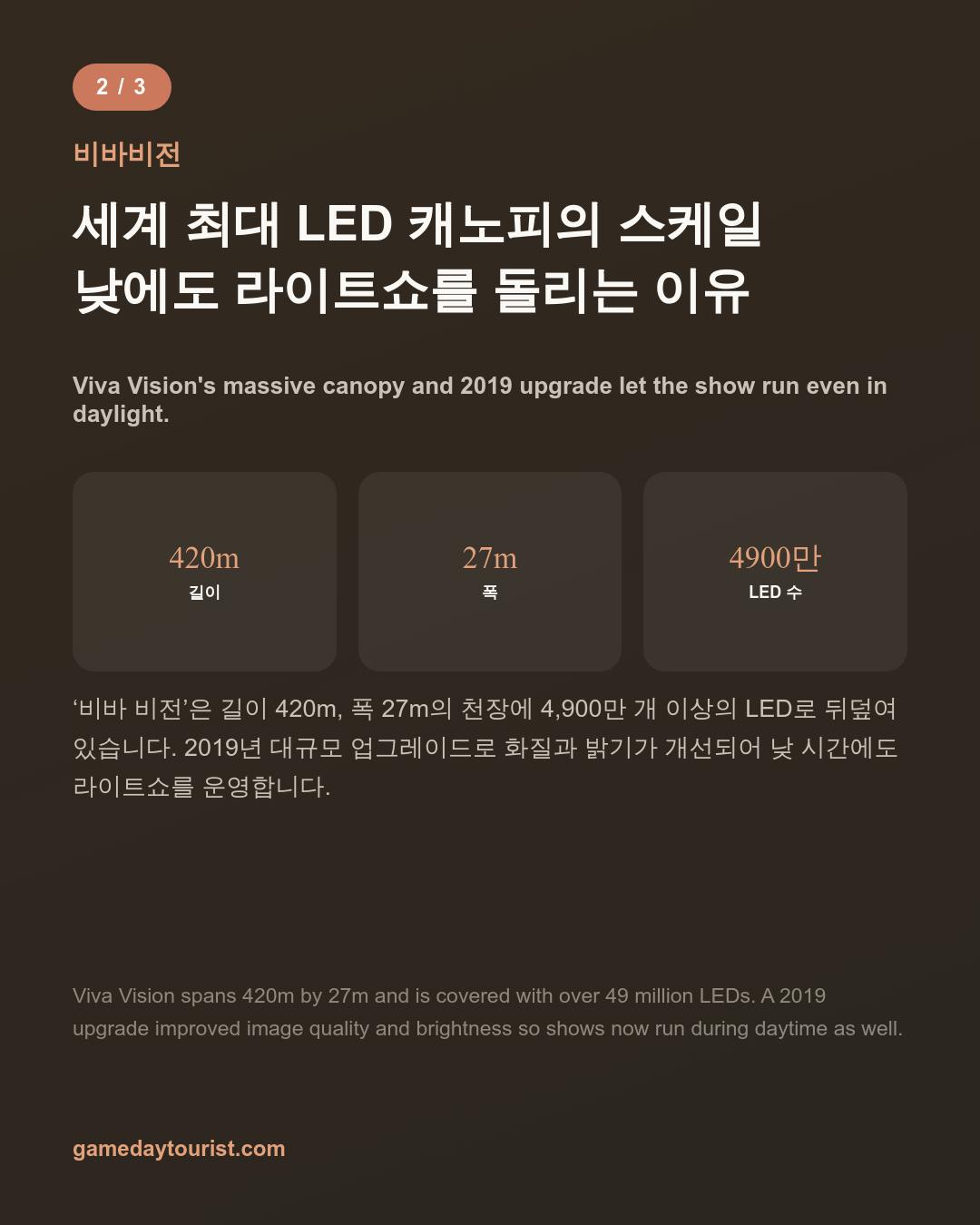
The most iconic feature is the world’s largest LED canopy called “Viva Vision.” The entire ceiling, 420 meters long and 27 meters wide, is covered with more than 49 million LED lamps. After a major upgrade in 2019, the image quality is four times better and brightness seven times greater, so they can now run lightshows not only at night but during the day as well.
They didn’t abandon content that’s been around for over 25 years; they’ve regularly renewed the hardware. The investment mindset to keep a once-built landmark in a state-of-the-art condition stood out.
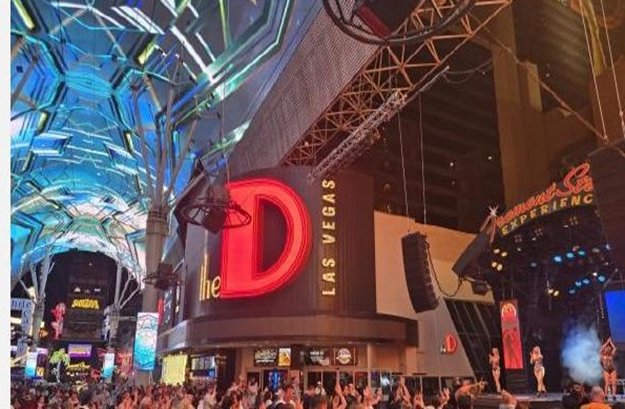
Live Stages That Turn a Street Into a Place to Stay
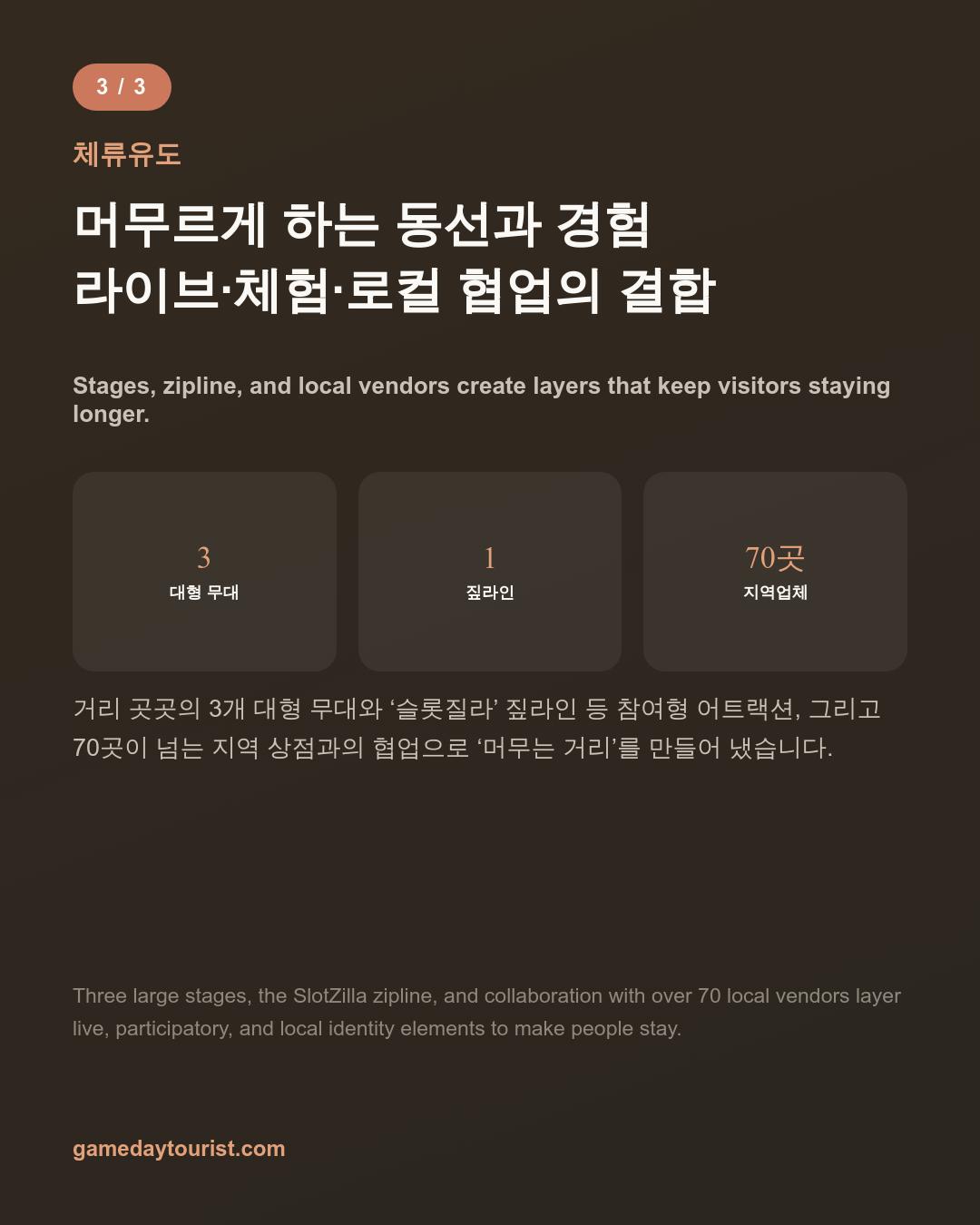
There are three large stages placed around the street, so live performances and music events continue even when there’s no lightshow.
The flow naturally makes you stop in front of performances as you walk, and I was especially impressed that by densely placing participatory content in this pedestrian-only space, they turned it from a street you merely watch into a street you actually want to linger on.
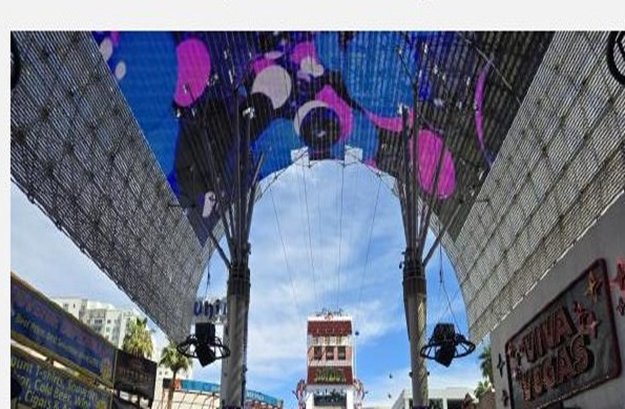
SlotZilla — Pulling Tourists Into the Content
The Zipline attraction called “SlotZilla” fits the same logic. It’s an experiential attraction that flies right beneath the LED canopy, a device that pulls tourists who were only watching directly into the content.
By layering lightshows, live stages, and experiential attractions, the street simultaneously delivers three things—immersive media, participatory experiences, and local identity—which I think is its real competitive strength.
Added to this is the effort to collaborate with more than 70 local small businesses to retain the Old Vegas character, which made it clear why this old street remains a living landmark.
Closing Thoughts — Stacking Content to Extend Dwell Time
The lesson from Fremont Street is ultimately about increasing dwell time by stacking layers of content.
For domestic stadiums, rather than treating media infrastructure like scoreboards or lighting as a one-time build, it’s worth thinking about regularly renewing them and densely placing participatory content around the venue so spectators don’t just pass through but stay before and after games.
Collaborating with local small businesses to create a team’s own local character was another practical hint Fremont Street provided.
Leave a Reply