Contents · About 6 min read
📱 View as card news
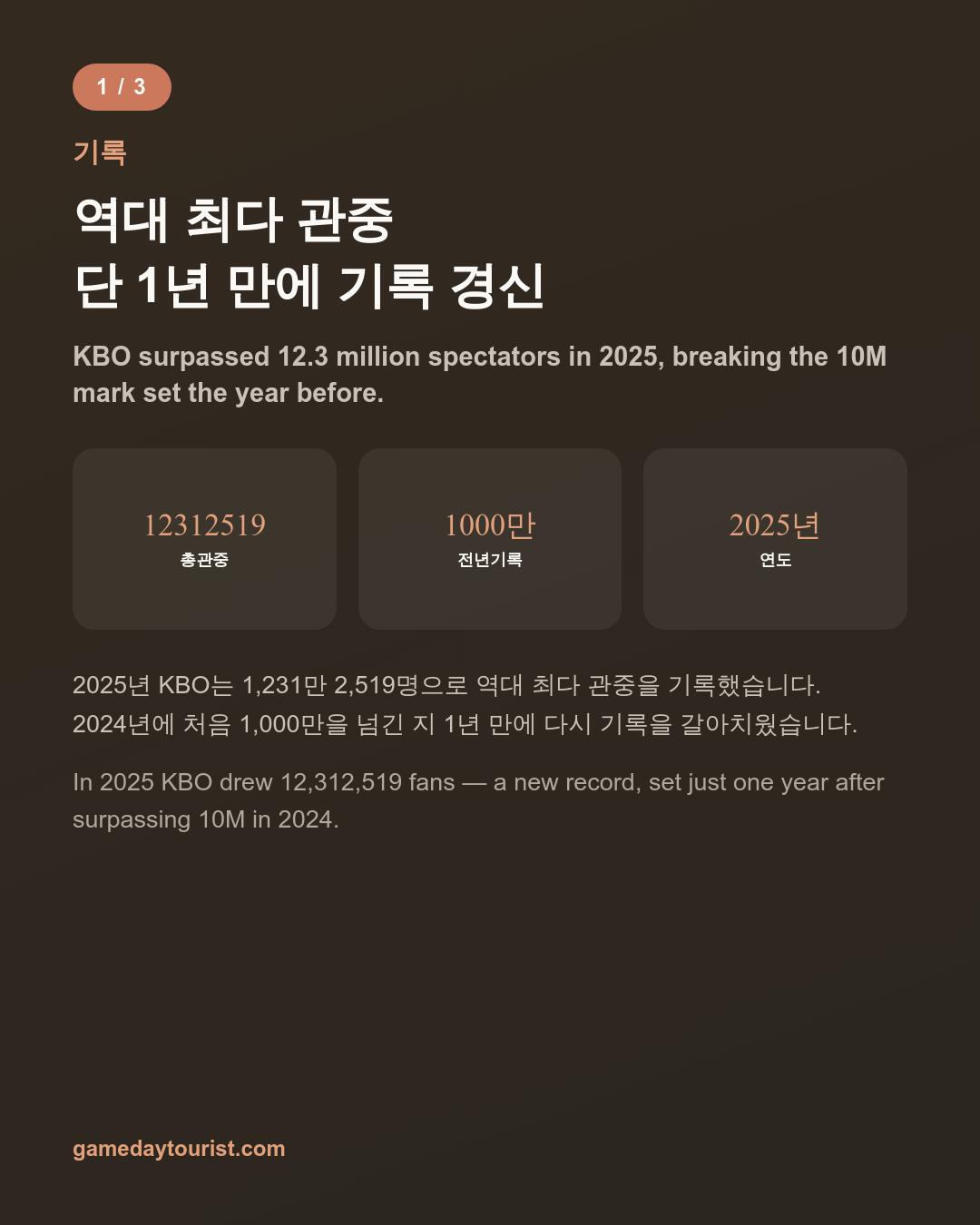

In 2025, the KBO League set an all-time attendance record of 12,312,519 spectators.
It broke the record just one year after surpassing 10 million for the first time in 2024. With strong ticket sales from the start of this season, some are already forecasting a 13-million era. In my 15-plus years in the industry, I’ve never seen attendance explode so rapidly in such a short time. Looking closely at this phenomenon, it comes down to two keywords.
Fairness and sharing.
Fairness — Automated Ball-Strike System (ABS)
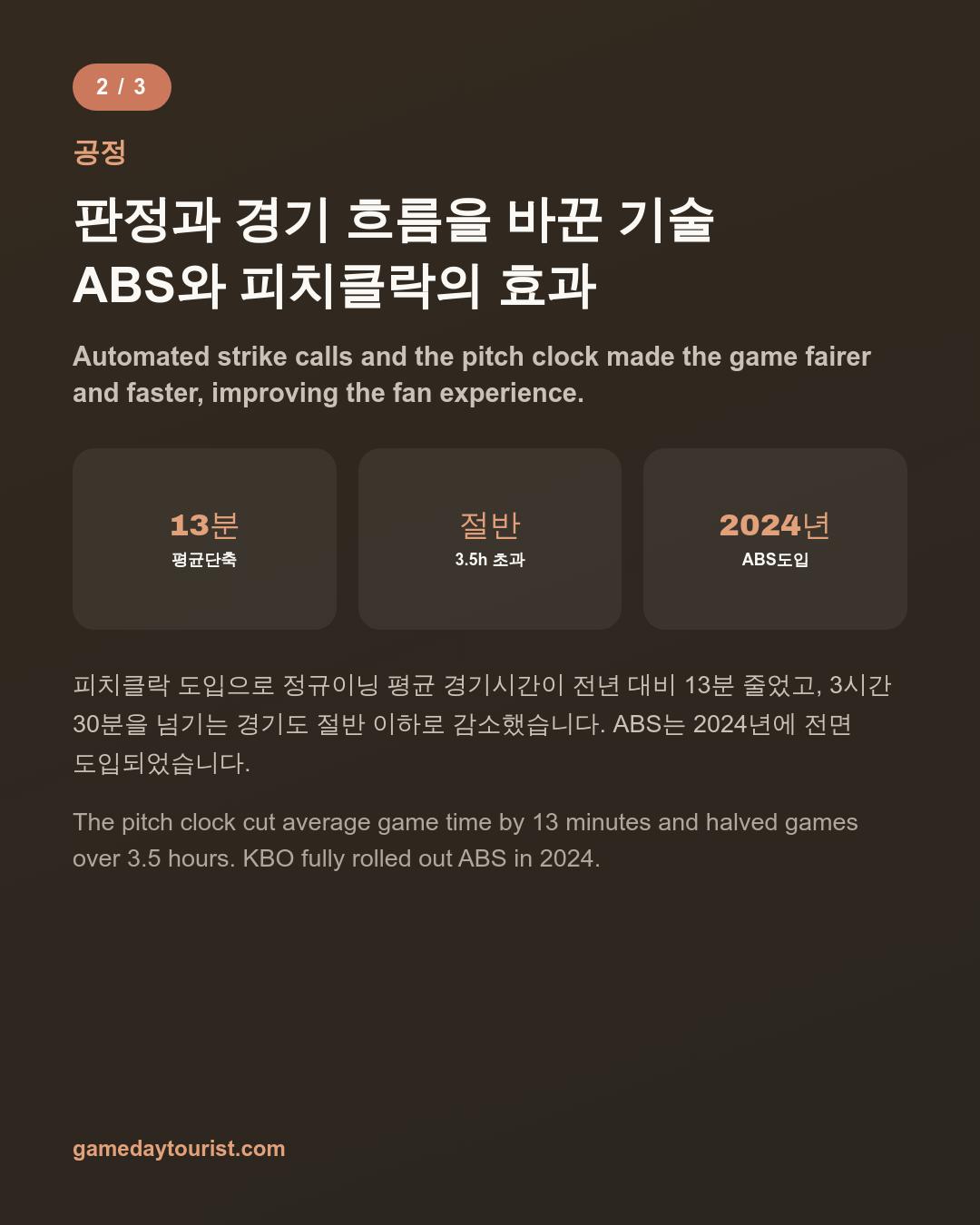
First, fairness. Starting with the 2024 season, the KBO League became the first professional baseball league in the world to fully adopt an automated ball-strike decision system, known as ABS. A tracking system follows the trajectory of the pitcher’s throw to determine balls and strikes; the result is transmitted via wireless earpiece to the home plate umpire, who then announces the call.

#Source: TVING website
During the early rollout, fans consistently complained that the strike zone felt different at each stadium, and adjustments to the zone are still ongoing.
In practice, the system automatically sets the zone using upper and lower reference values based on each player’s height, but there is still debate on these reference points at the field level.
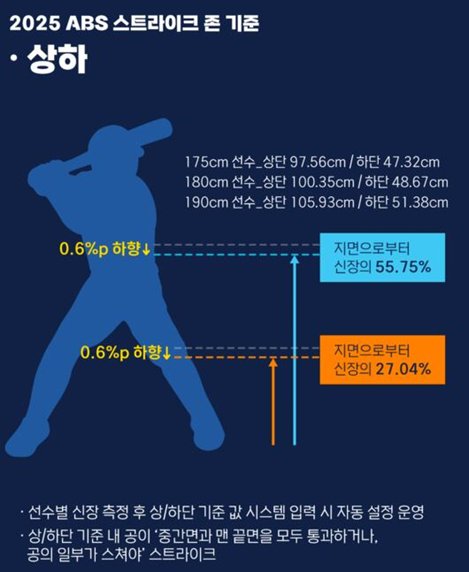
#Source: KBO
Even so, the overall assessment is clearly positive.
Skepticism about calls and corruption controversies such as collusion with umpires have diminished compared to before, and because exactly the same standards are applied to both teams, the league has cemented an image with fans as a “fair league.” The reduction in stoppages for disputed calls and fewer scenes of managers storming out have created an environment where fans can watch games with much greater immersion.
MLB Adopts ABS Too
This trend is now crossing borders.
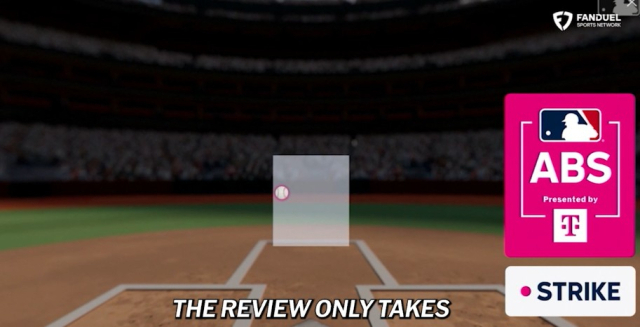
Major League Baseball also adopted ABS starting with its March 26, 2026 opener, though not by handing all calls to machines like the KBO. MLB chose a challenge system that allows each team two challenges per game and one per extra-inning inning, preserving umpire authority while correcting clear errors. Though the approaches differ, both the KBO and MLB are using technology to supplement the fairness of officiating.
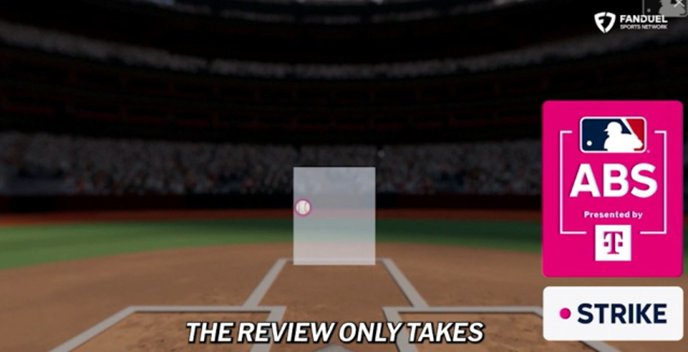
#Source: MLB website
The Pitch Clock — Shorter Games
We should also mention the introduction of the pitch clock.
The KBO ran a warning-focused trial in 2024 and formally implemented it in 2025. Since then, the average game length during regulation innings has fallen by 13 minutes compared to the previous year, and games exceeding 3 hours and 30 minutes have been cut by more than half.
Longer games have always been a field-observed issue because they erode spectator concentration, and the pitch clock has addressed much of that problem. Whether it’s officiating systems or game tempo, we’re seeing how technological progress has reached the point of changing the rules of the sport itself and the viewing experience.
Sharing — A Shift in Broadcast Rights Policy
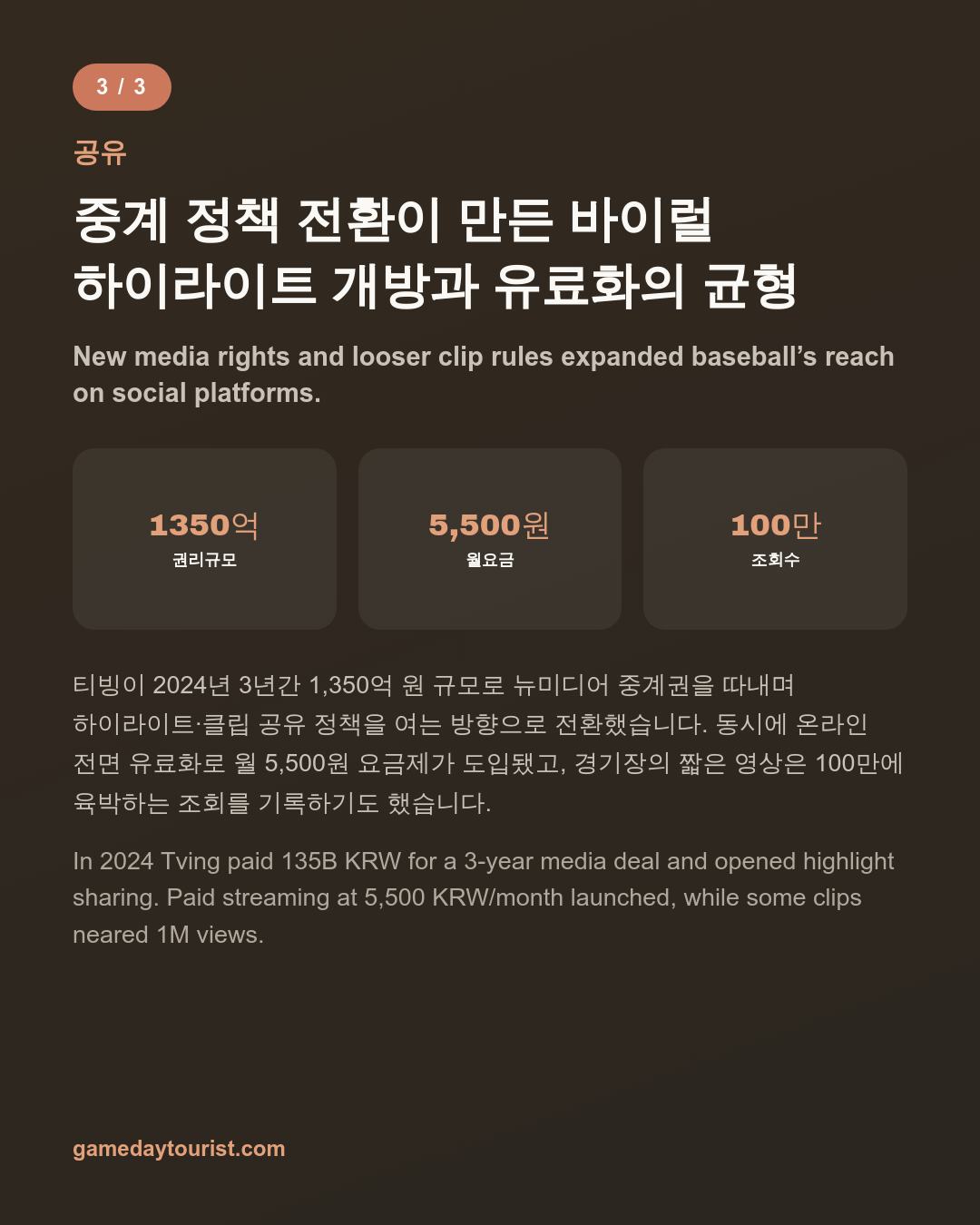
The second keyword is sharing. Early new-media broadcast rights were handled first by Acla and later by a consortium of the three telecom companies and portals for roughly 110 billion won over five years. In that era, fans were strictly prohibited even from capturing game scenes or creating short clips to post on YouTube or social media.
It was normal for clubs or individuals to receive warnings or copyright actions if they used stadium-shot videos or broadcast footage.
When TVING acquired the new-media rights in 2024 for about 135 billion won over three years, that stance changed completely.
While live broadcast footage itself remains protected, the policy shifted to largely allow highlights and clip content, permitting reuse on YouTube Shorts and social media. It’s not unlimited — there are time restrictions, such as clips must not exceed 40 seconds.
Still, compared to the era when such use was completely forbidden, it’s a different world. Clubs and individuals can now freely upload stadium-shot videos and portions of broadcast footage within time limits to YouTube and Instagram, which strongly appeals to younger audiences. This generation is accustomed to consuming baseball via social media even without attending games, and the distribution channels have simply widened.
Paywall Controversy and Settling In
There were, of course, growing pains. From May 2024, online live broadcasts became fully paid, requiring a 5,500 won monthly plan to watch pro baseball, and most viewers initially reacted negatively. There were also service-quality controversies early on, such as sponsor logos being obscured in the feed or baseball terms being miscaptioned, but the service now seems to have settled.
This year, the contracts with CJ ENM and TVING expire, and from next year they are reported to re-sign for five years at more than double the previous contract amount. Considering OTTs spend huge sums to produce 16-episode dramas whose buzz often lasts only a month or two, investing in pro baseball rights — nearly daily broadcasts for six to seven months — does not look like a losing proposition.
But this is not unique to Korea. Many big-market leagues overseas have long implemented paid broadcasts, and Korea is unlikely to escape this global trend. Despite early confusion, I judge that the openness allowing free sharing of highlights and clips has contributed more to the league’s overall publicity and new fan inflow than the backlash against paywalls.
Openness Fuels Viral Content
Thanks to this openness, entertainment elements of the ballpark that were once overlooked are now going viral on social media. Examples include the personal stories of young, attractive players, club-run events like kt wiz’s water festival, and the so-called “ppikki-ppikki dance” by the KIA Tigers’ cheerleaders.
In June 2024, a short video of a cheerleader who was fixing her makeup and unexpectedly flustered by an out song, then awkwardly dancing, was picked up by YouTube’s algorithm and turned into a challenge that spread domestically and abroad. A video of a Dallas Cowboys cheerleader imitating it nearly reached one million views. A small moment at the ballpark that once would have been ignored has become content that crosses borders.
Closing Thoughts
In summary, the current era of 12 million KBO spectators was not created by chance.
It is the result of two intertwined pillars: one securing fairness in calls and game pace through technologies like ABS and the pitch clock, and the other actively sharing content with fans through a change in broadcast rights policy.
Underlying this trend is, ultimately, technological advancement, including AI. Officiating systems, content distribution methods, and the ways fans consume baseball outside the stadium have all been transformed by technology, and in the field we repeatedly see that the young generation is the most responsive to these changes.
Leave a Reply