Contents · About 5 min read
- Rakuten Mobile Saikyo Park Miyagi — The Sponsored Nickname
- A Festival Atmosphere From the Approach — Smile Glico Park
- The Ferris Wheel — A Ride That Became an Ad Medium
- Hands-On Activities — Drawing In Non-Baseball Families
- An Official Goods Shop That Fills an Entire Building
- A Checkout Line That Etches In Championship Moments
- Jet Balloon Cheering — A Device for Unity
- Closing Thoughts
📱 View as card news
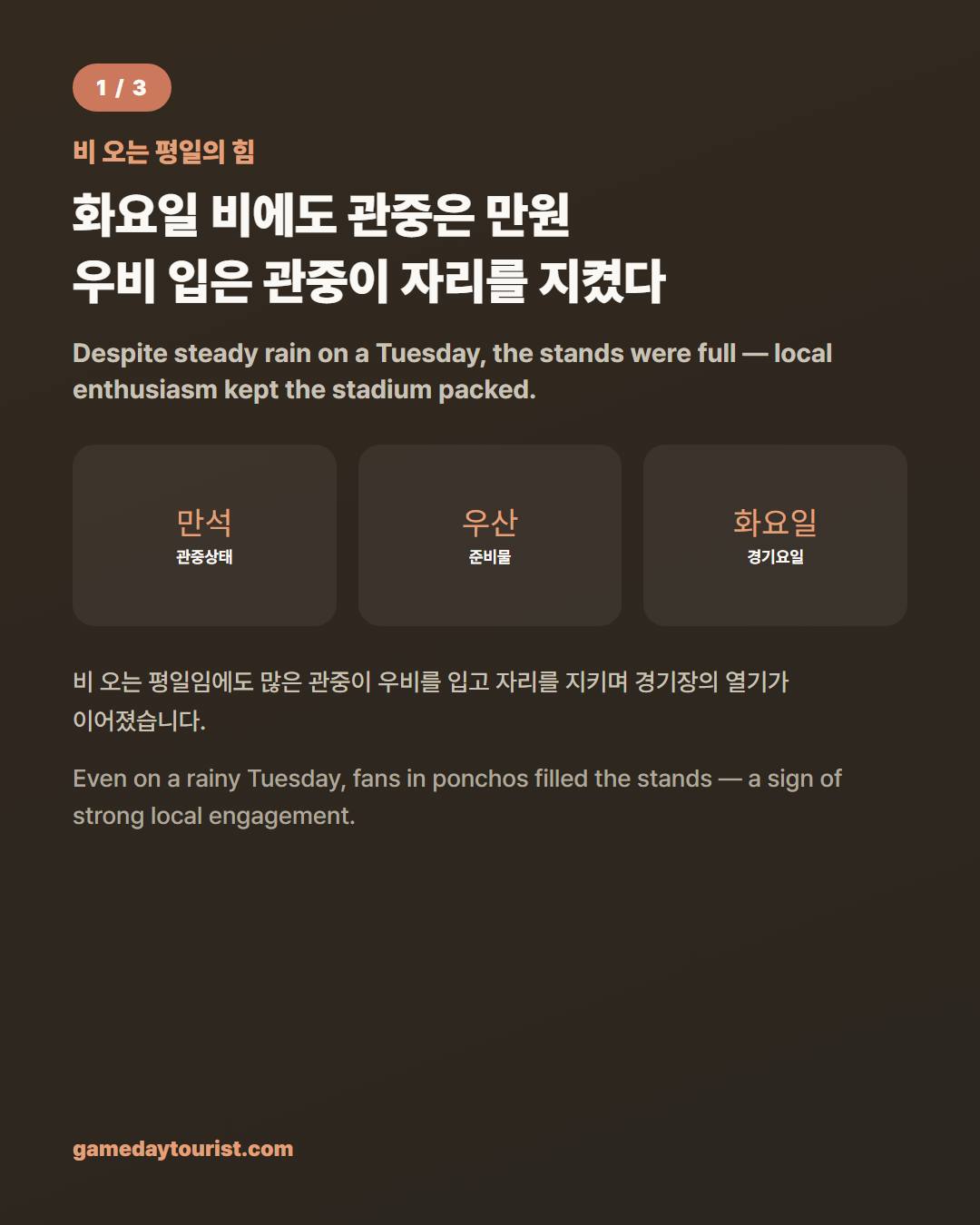
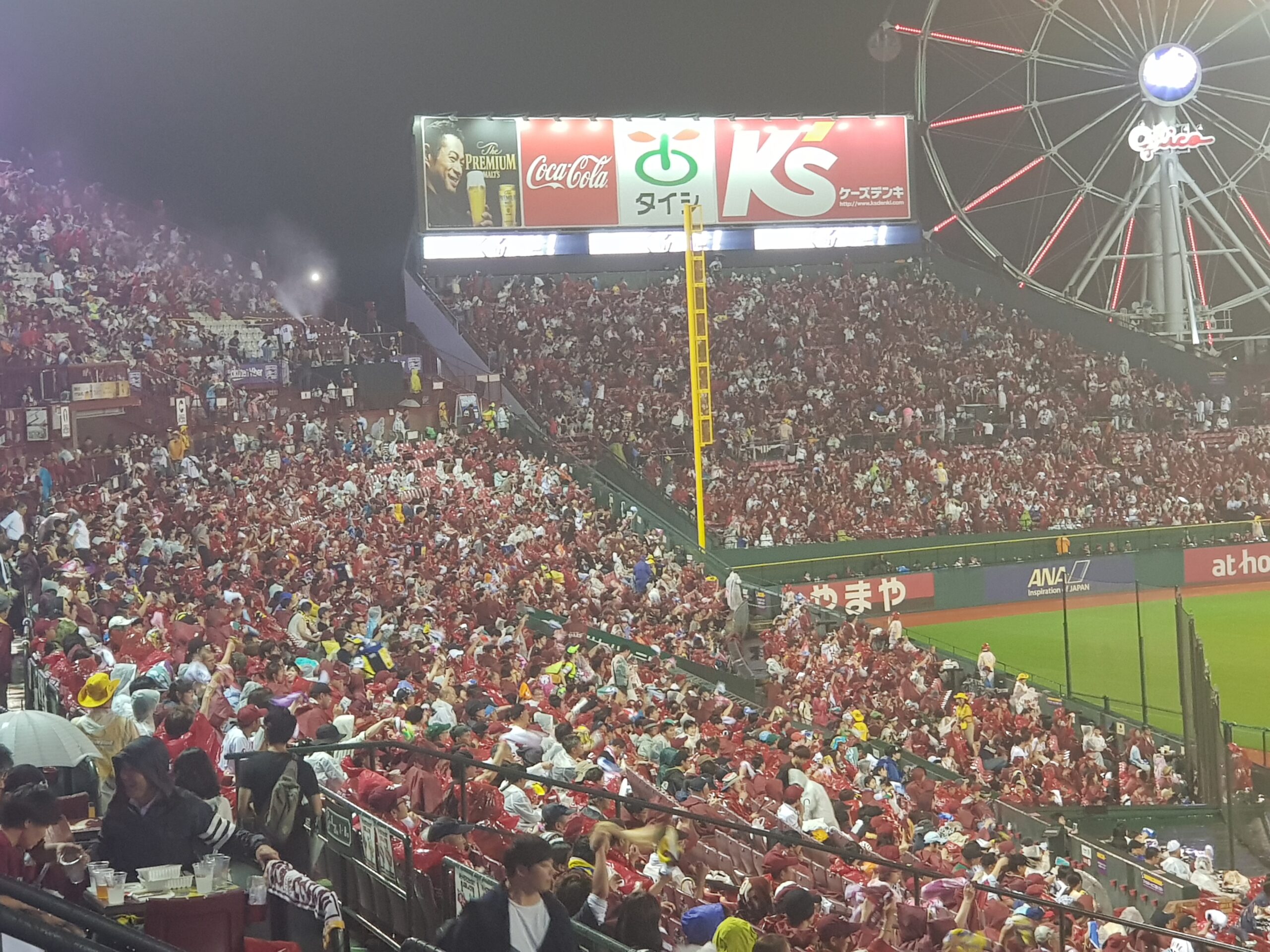
It was a Tuesday with a steady drizzle.
I was nervous that the game might be called off for rain even up until the start, but once the game began those worries felt misplaced — the stands were already full.
It was a Tuesday with a steady drizzle. I was nervous that the game might be called off for rain even up until the start, but once the game began those worries felt misplaced — the stands were already full.
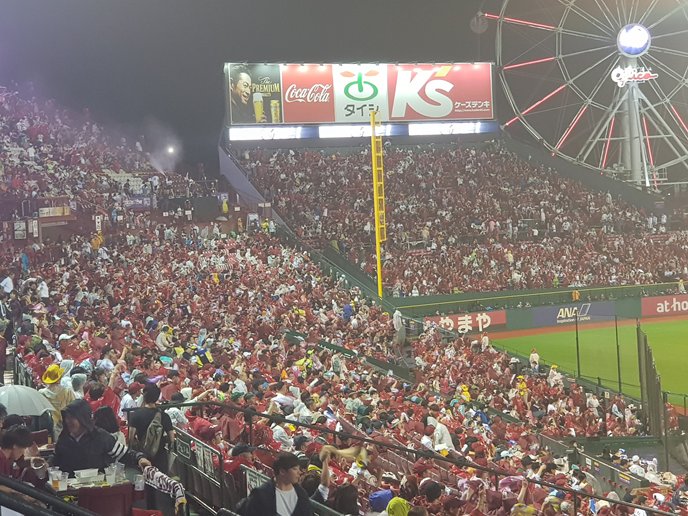
Seeing fans in raincoats staying in their seats despite the rain, I thought it’s rare for a Tuesday night weekday game to generate this much heat.
Rakuten Mobile Saikyo Park Miyagi — The Sponsored Nickname
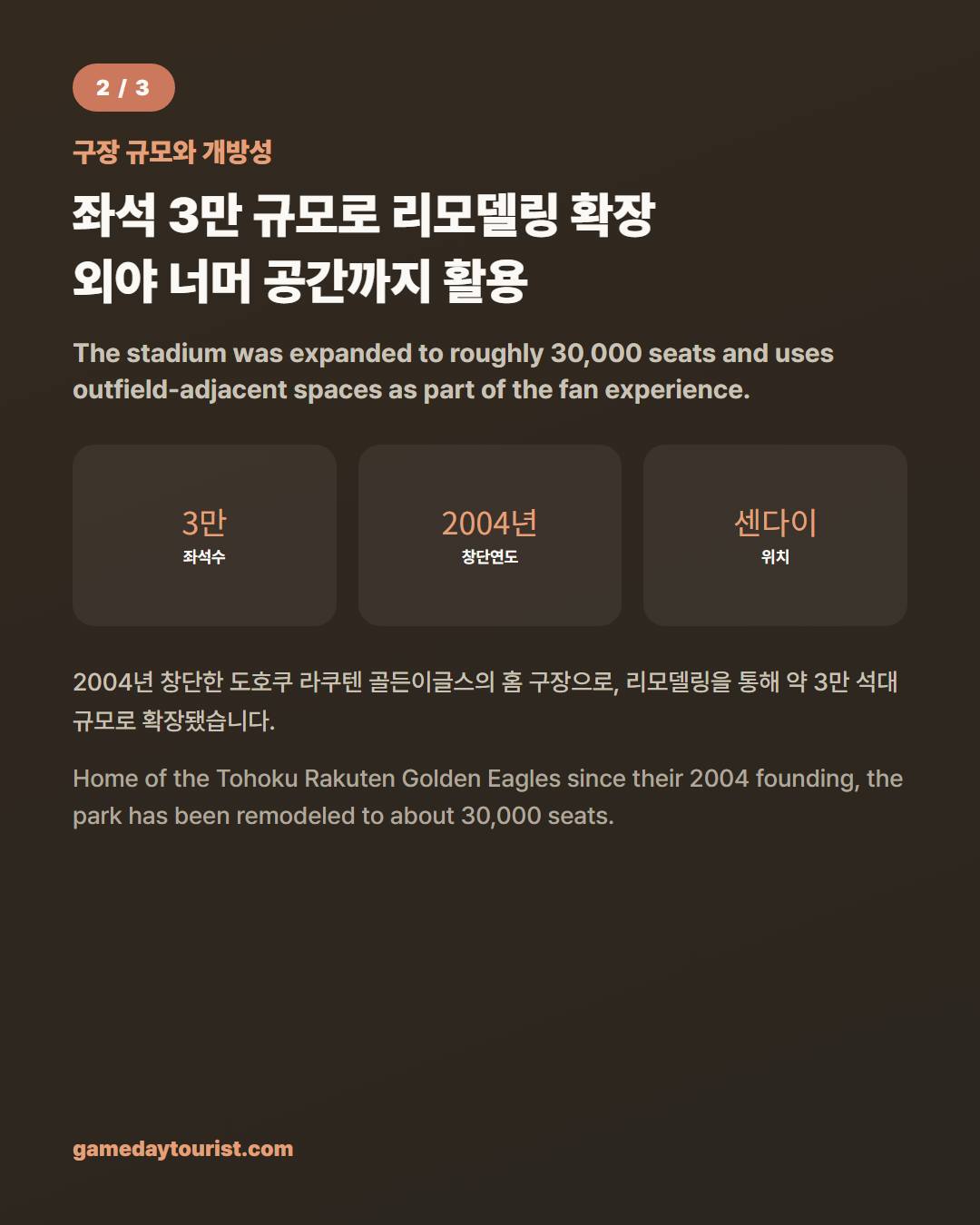
The official name is Miyaginogahara Park Miyagi Stadium, located in Sendai City, Miyagi Prefecture. In practice, however, it’s more often referred to by the sponsored nickname adopted in January 2026: “Rakuten Mobile Saikyo Park Miyagi.”
The Tohoku Rakuten Golden Eagles were founded in 2004 and have used this stadium as their home since the following year. After several remodels the seating capacity grew to around 30,000. The stadium’s nickname has changed several times under sponsorship deals, and since the current agreement runs through 2028, I left with the impression the club keeps attaching commercial value even to its name.
A Festival Atmosphere From the Approach — Smile Glico Park
Although it’s slightly outside the city center, on game days the area around the stadium felt like a local festival market. Food stalls, various attractions, and rides lined the approach, so crowds were gathering long before the game started.
At the center of that was an attached amusement area behind the left outfield called “Smile Glico Park.” It featured a Ferris wheel, a carousel, trampoline-style rides, and interactive athletic attractions — and I was told that anyone with a baseball ticket could use the whole facility for free.
The Ferris Wheel — A Ride That Became an Ad Medium
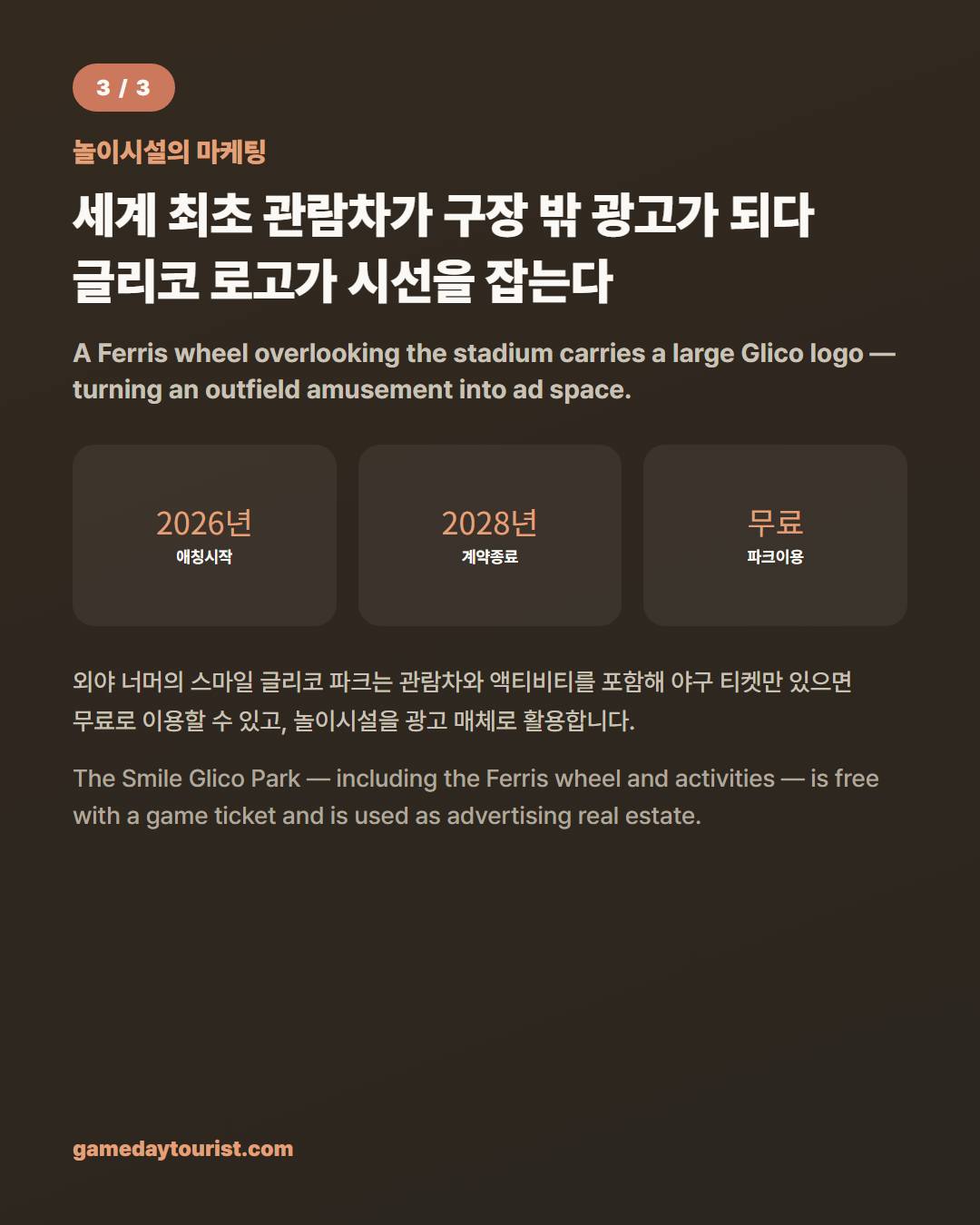
The Ferris wheel left a strong impression: it’s reportedly the world’s first Ferris wheel built inside a baseball stadium that lets you look down into the ballpark. As you can see in the photo, a large Glico logo ad was placed in the Ferris wheel’s center. Accustomed to scoreboard or fence ads inside the stadium, I found the idea that any place holding spectators’ attention — even amusement facilities beyond the outfield — can be used as advertising fresh and eye-opening. They redefined the stadium’s boundaries based on spectator flow and sightlines, an approach worth noting for domestic ballparks as well.
Hands-On Activities — Drawing In Non-Baseball Families
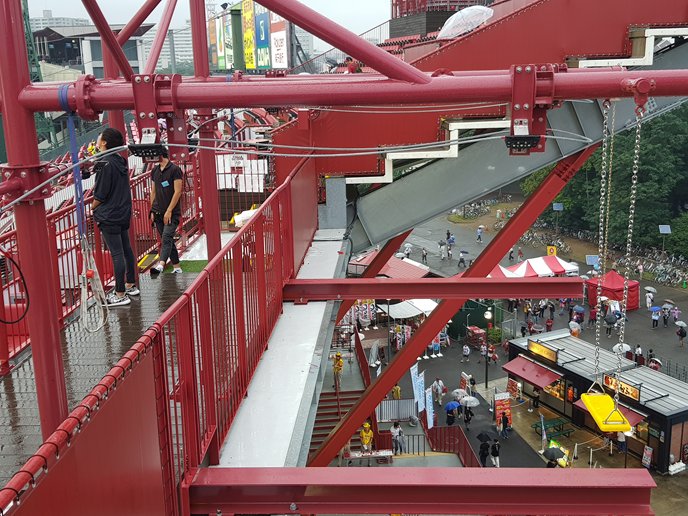
Smile Glico Park also offered hands-on activities.
There was an athletic course where you hang on a safety bar and carefully walk along steel beams, and it was surprisingly fun to walk high above while looking down at the stadium and cityscape. The reason they offer these facilities free together with baseball viewing is clear: they keep people near the stadium even when no game is on, and naturally draw in family visitors who may not be big baseball fans.
An Official Goods Shop That Fills an Entire Building
I couldn’t pass by the official goods shop right in front of the stadium. Unusually for a ballpark shop, it occupied an entire separate building, and stepping inside I was overwhelmed by its size.
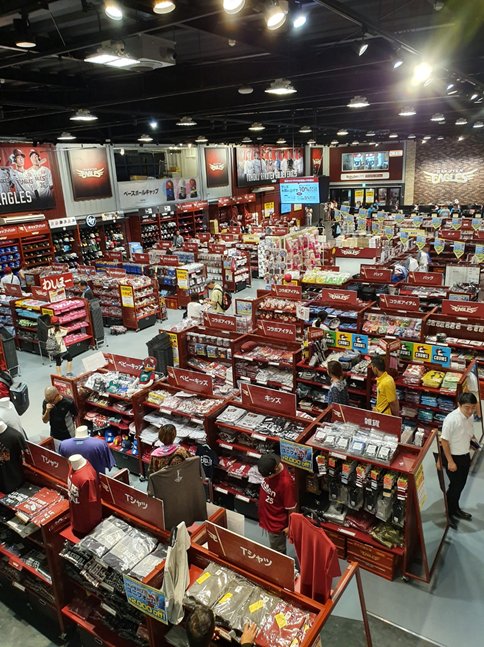
The shop was laid out so you could look down over it from the second floor; hats, uniforms, kids’ items, accessories, and collaboration products were tightly sectioned by category, and the layout seemed to anticipate customer flow between them.
There was a counter that could immediately print a jersey number when you buy a uniform, and several rows of displays dedicated solely to collaboration items with other brands.
As someone who has run goods shops for domestic clubs, I was surprised that a single stadium could handle that scale of space, product mix, and staff.
A Checkout Line That Etches In Championship Moments
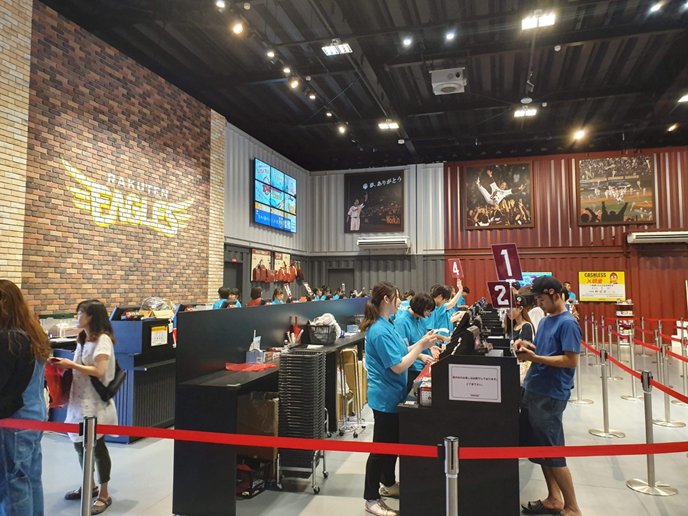
There were four cash registers lined up side by side, and I was struck by the large photos behind them capturing the club’s championship moments. Even the short time spent waiting to pay was used to reinforce the club’s history and emotions.
That wall demonstrated the principle that the more revenue a space generates, the more strongly you should plant your brand message.
Jet Balloon Cheering — A Device for Unity
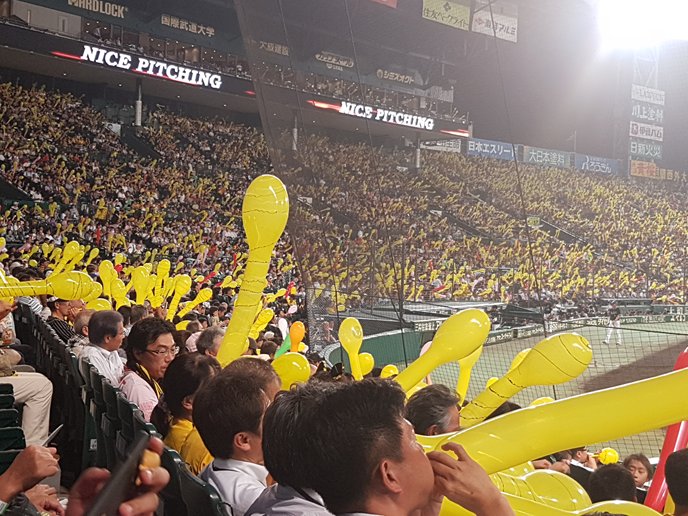
There was also an impressive scene in the way fans cheered. The Rakuten Eagles are famous for the so-called “jet balloon” cheering, and I heard they revived this tradition in 2024 to celebrate the club’s 20th anniversary.
At a designated inning during the game, the entire crowd inflates club-sold balloons with special pumps and releases them into the sky at once; blowing by mouth is prohibited for safety reasons, a small but important operational detail. The moment tens of thousands of balloons rose simultaneously, everyone there instantly shared the feeling of supporting the same team.
Domestic clubs also develop their own cheering tools to create such unity, but seeing tens of thousands move in unison on-site made the impact feel different and more powerful.
Closing Thoughts
In summary, what I learned from this stadium was to broaden the concept of a stadium’s boundaries. Instead of viewing only internal scoreboards and fences as advertising assets, they expanded marketing assets to include outfield amusement facilities and separate merchandise buildings, and used activities and cheering tools to make each spectator personally participate — which is how they fill seats even on a rainy Tuesday.
I left thinking that we shouldn’t just look inside the ballpark fences; we need to reconsider every space touched by spectator flow as potential content, advertising, and revenue assets.
Leave a Reply