📱 View as card news

There’s a number lately that overseas sports business outlets have been reporting on almost in unison.
$2.2 billion — depending on the exchange rate, roughly ₩3 trillion — was the price tag on a new American football stadium.
Whenever a new stadium of this scale shows up, the marketer in me wants to know where that money came from and where it’s going, and the more I dug into it, the more the financing structure behind the Buffalo Bills’ new Highmark Stadium turned out to be a genuinely interesting case in its own right.
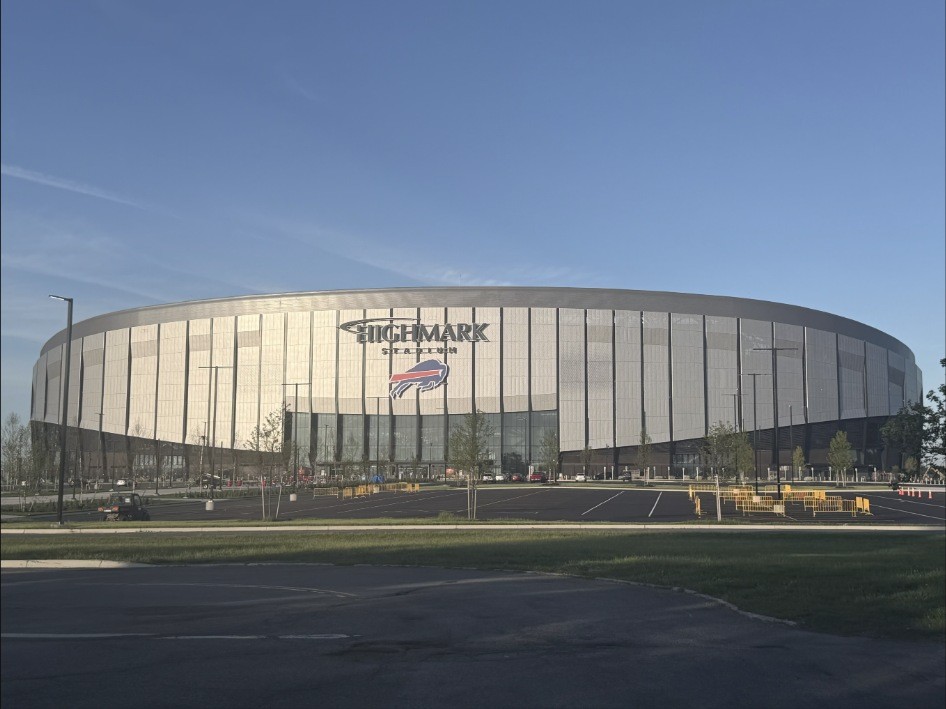
The Bills held the new Highmark Stadium’s first public event on August 8 with an intrasquad scrimmage called “Return of the Blue and Red,” followed by actual preseason games at the venue on August 15 and 27.
The regular season opens on the road against the Houston Texans on September 13, with the regular-season home opener at Highmark Stadium set for September 17 against the Detroit Lions — meaning that as of this writing, the stadium hasn’t yet heard its first regular-season roar.
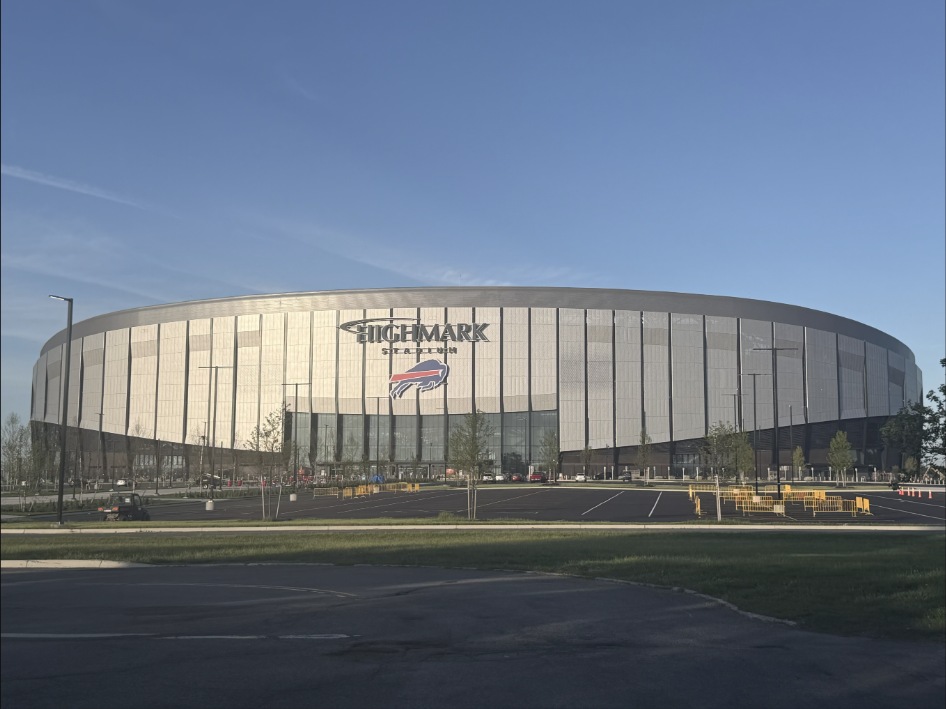
Source: Wikimedia Commons, photographed by Dekema (CC0, public domain), view original · photographed May 25, 2026
Fans and Tickets
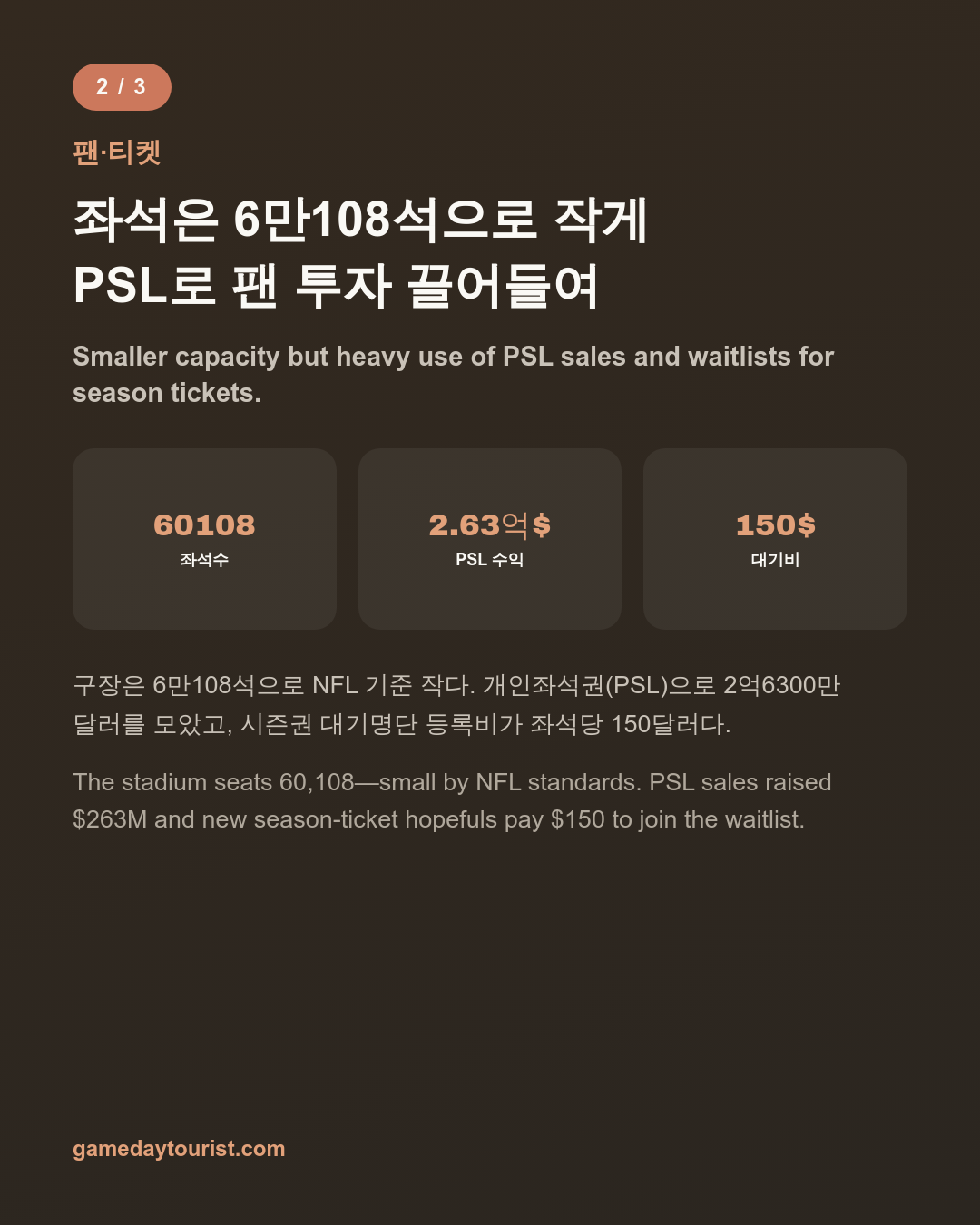
The new Highmark Stadium seats 60,108 — one of the smaller capacities among all 32 NFL venues.
That’s a departure from the recent NFL trend of building bigger and bigger stadiums, and behind it is an American-style financing approach where the club trims seat count while getting fans to put up more money upfront through personal seat licenses (PSLs — a form of seat ownership that grants the right to buy season tickets, a concept that doesn’t exist in Korean pro sports).
Bills owner Terry Pegula thanked fans at the ribbon-cutting ceremony, noting that PSL sales had raised $263 million from fans.
The PSL inventory has already sold out, and any fan wanting a new season ticket now has to pay $150 per seat just to get on a waitlist.
That said, it hasn’t all been rosy.
CNN Business noted that the stadium’s opening brought a wave of complaints about seats with sightlines blocked by stairs or columns, compounded by frustration over rising ticket prices.
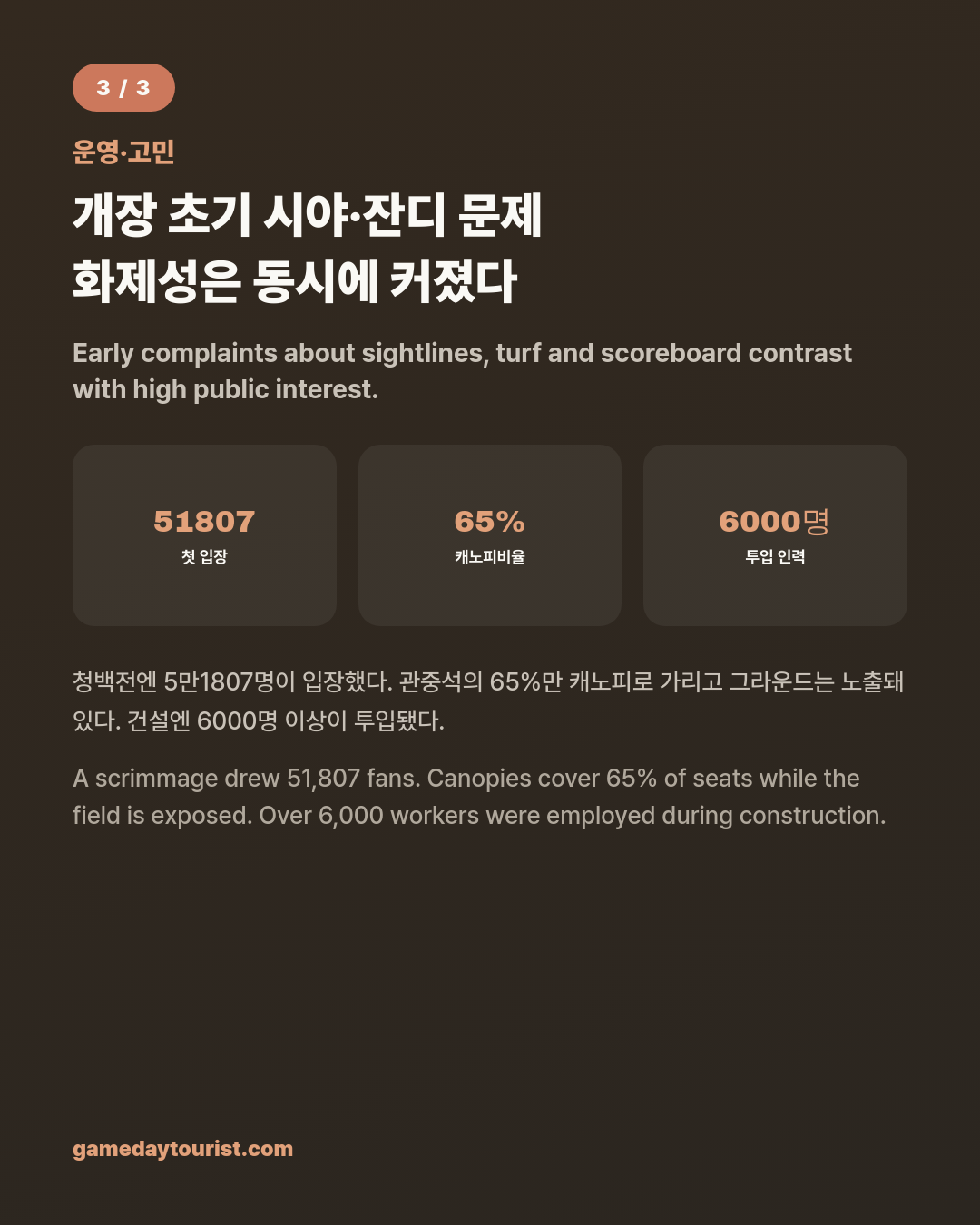
The August 8 scrimmage still drew 51,807 fans — not quite the venue’s first sellout, but a solid turnout nonetheless.
Space and F&B
The concourses (the walkway space behind the seating bowl) were designed so that both upper and lower levels offer a 360-degree view of the field from any point.
The idea is that fans don’t lose track of the game while waiting in a concession line or heading to the restroom — a notable upgrade given the old stadium’s reputation for a shortage of concession stands.
Food service is run by contracted operator Legends Global working with local chefs, and the club says the lineup covers regional staples like Buffalo wings and beef on weck (a Buffalo-area sandwich of thinly sliced roast beef on a kummelweck roll), plus poutine for fans coming across the nearby Canadian border.
Payments are cashless throughout, and several checkout-free stores have been rolled out too, where you tap a credit card on entry and just walk out with your items to be billed automatically.
A local sports travel blogger named the wider concourses and the sharp increase in restrooms as the most satisfying change compared to the old stadium, and for a marketer who’s always thinking about turnover rate and dwell time at retail, it was a good reminder that investment in shrinking foot-traffic flow and wait times translates directly into F&B revenue.
Merchandise and Ad Inventory
The official Bills Store keeps operating from the same location it held at the old stadium, and on top of that, the club entered a new long-term partnership with Fanatics ahead of this season and overhauled its online store.
The most notable thing on the ad inventory side is premium-seating branding.
The Gallagher Founders Club, the Seneca Field Club, the M&T Bank Club, the Pepsi Club, the Toyota Club, and the Dunn Tire Club are separately named premium spaces, each with its own sponsor, spread across multiple levels, and suites go for anywhere from $20,000 to $60,000 depending on size.
The stadium naming rights themselves aren’t a new deal — the club simply carried over its existing Highmark Blue Cross Blue Shield partnership dating back to 2021 into the new stadium, and I found it interesting that even while building an entirely new venue, they chose to stick with an existing partner rather than go hunting for a new sponsor.
Regional Economic Impact and Financing
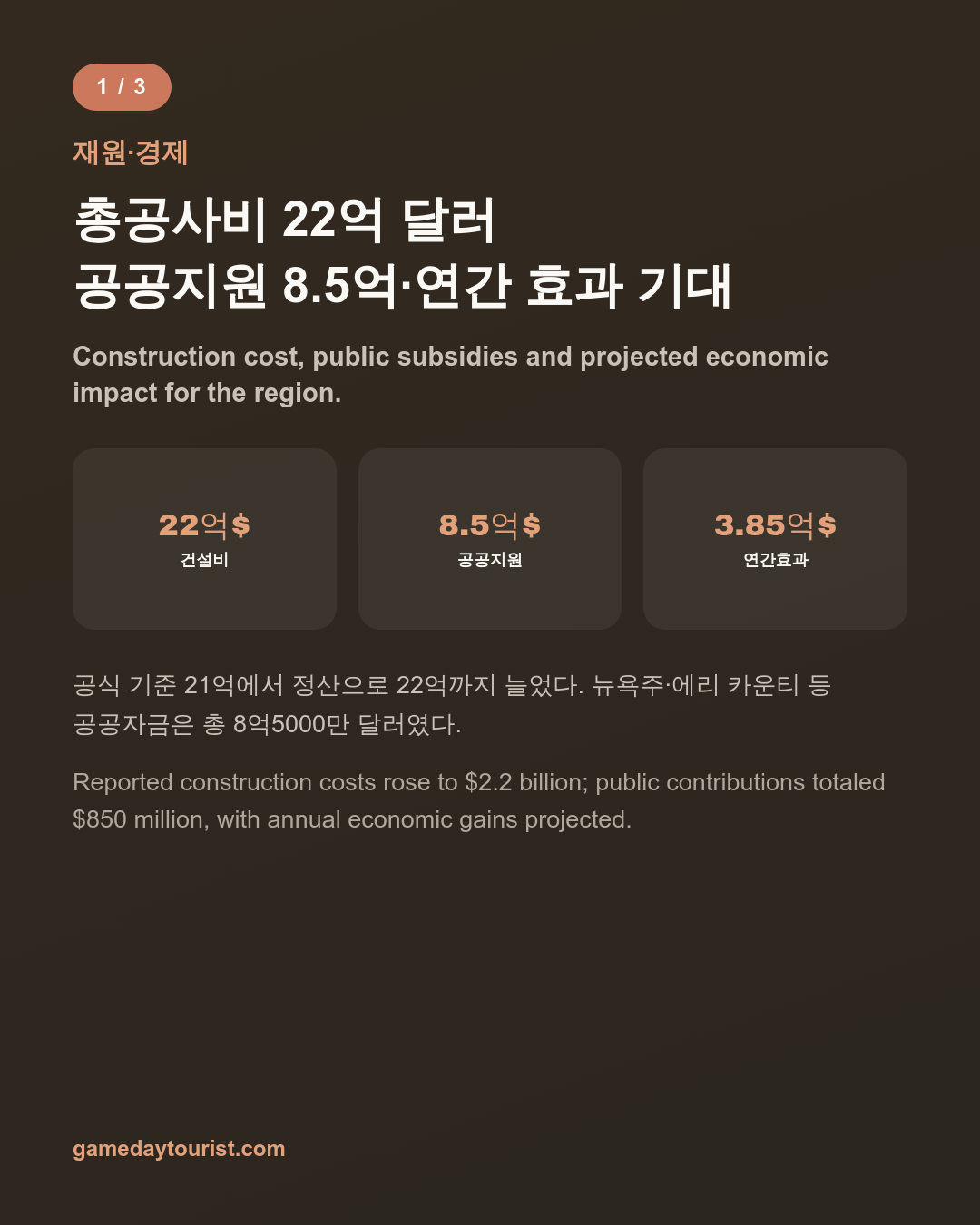
Reports put construction costs at $2.1 billion at the official announcement, later climbing to $2.2 billion once everything was settled.
Of that, New York State put in $600 million and Erie County $250 million, for a combined $850 million in public funding — which, at the time it was announced, was assessed as the largest public subsidy ever committed to a new NFL stadium.
That record didn’t hold for long, though, as talk of even larger public support packages followed for the Kansas City Chiefs and Chicago Bears.
New York State and Erie County have said they expect $385 million a year in economic impact from the investment, adding up to more than $1.6 billion over the 30-year lease term.
More than 6,000 workers were involved in construction, putting in roughly 5 million labor hours — a substantial project just in terms of local employment impact.
The Stadium’s Signature Feature
Three large bison statues stand in the plaza at the stadium’s north entrance, lit up in the team’s blue at night, and they’ve reportedly become a favorite photo spot for fans.
Along one side of the concourse sits a large sculpture depicting a folding table collapsing mid-air — the club’s tribute, built right into the stadium itself, to the “Bills Mafia” fanbase’s tradition of impulsively hurling their bodies through folding tables during tailgates (pregame parties held right in the parking lot).
The Pegula family decided from the start not to put a roof on the stadium, reportedly on the principle that “Buffalo football should be played in Buffalo weather.”
The design covers about 65% of the seating bowl with a canopy while leaving the field itself fully exposed — a decision that turned out to be part of the source of the early-season criticism.
Sure enough, problems with the turf surfaced, prompting a re-sodding effort ahead of the September 17 game against the Lions, some sections drew complaints over sightlines blocked by staircases, and the scoreboard drew criticism for being smaller than those at other recently built stadiums like SoFi Stadium.
From a marketing standpoint, this looks like proof that even a $2.2 billion new stadium hasn’t fully built up its operational know-how in its first season yet, though ironically, this kind of controversy also seems to be adding to the buzz around the new venue.
A Comparison With the KBO and K League
Korean pro sports have no concept equivalent to the PSL at all.
A season ticket there is simply a product you buy as much of as you need for that year, not a way of pre-purchasing separate ownership of a seat.
The financing structure is different too.
Korean stadiums, like Changwon NC Park, are typically funded and owned by local government, with the club then operating under a management contract — a fundamentally different starting point from the American cost-sharing model seen with the Bills, where the club, fans, the state, and the county each carry their own share.
Considering how, in Korea, figuring out how to split the funding always ends up being a recurring headache whenever renovation or new-stadium talk comes up for an aging venue, this approach of drawing fans in as investors, unfamiliar as it may seem at first, does seem worth a look.
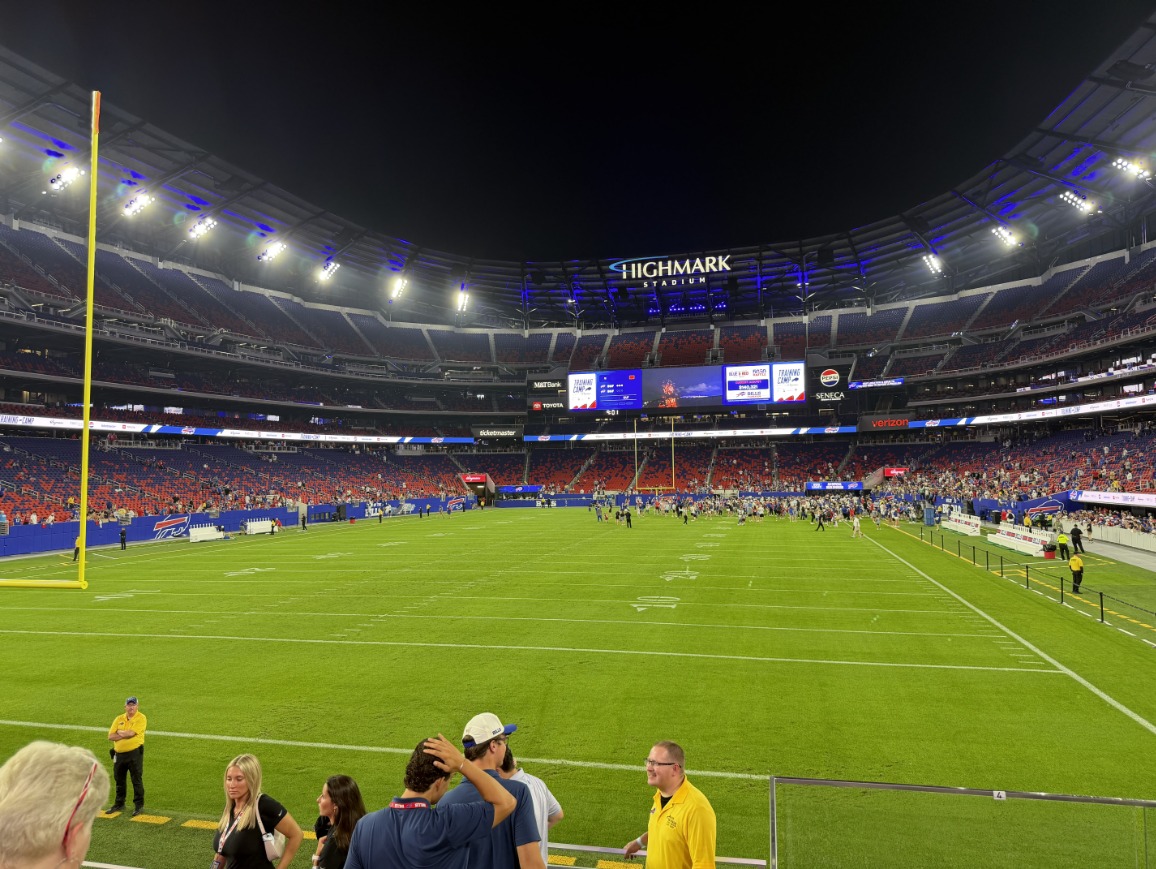
Source: Wikimedia Commons, photographed by Dekema (CC BY-SA 4.0), view original · photographed during the August 8, 2026 Blue and Red scrimmage
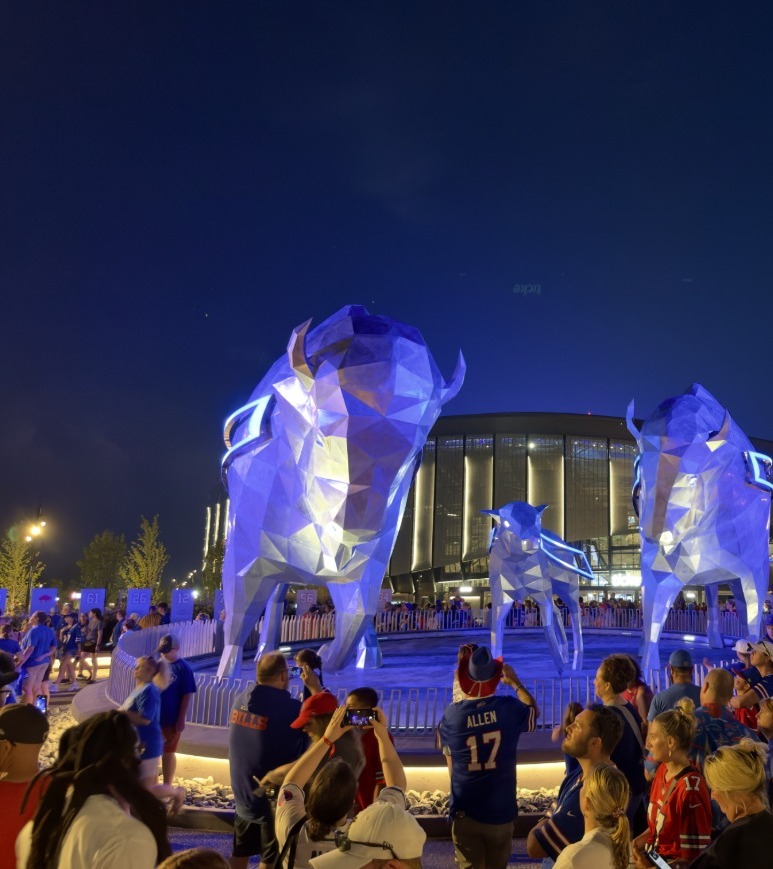
Source: Wikimedia Commons, photographed by Dekema (CC BY-SA 4.0), view original · photographed August 8, 2026
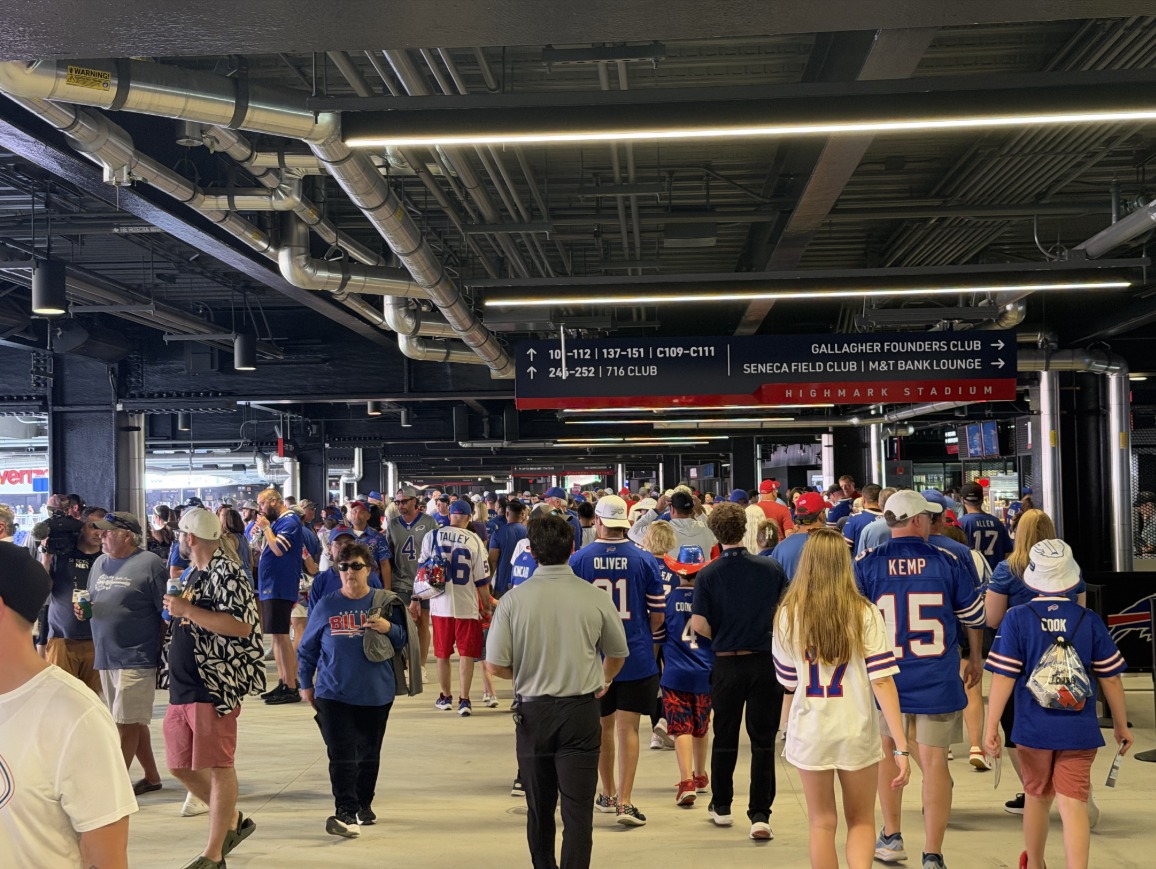
Source: Wikimedia Commons, photographed by Dekema (CC BY-SA 4.0), view original · photographed August 8, 2026
A figure like $2.2 billion can feel like it belongs to someone else’s country entirely, but looking inside it, questions like how much to charge fans and how, whether to renew or replace a sponsor relationship, and what dropping the roof means for brand identity all end up boiling down to marketing decisions.
I’ll be curious, as a marketer, to see what first impression this stadium leaves at the home opener on September 17.
Leave a Reply